CONCEPT
«Blood is a special nectar.» These words belong to Mephistopheles—the architect of Baroque art. Baroque is renowned for its dramaticism. The play of light and shadow creates a unique, intensely captivating effect for the viewer. Vivid emotions, bordering on the vulgar, establish the atmosphere that distinguishes Baroque from other styles. People were tired of the cold, aristocratic Renaissance and took a bold step toward something new.
«The golden, radiant color has now been replaced by a gloomy light falling from above into the basement. Figures, previously calm, are now seized by terror, and something strong, wild, and adventurous emanates from them.»
Throughout art history, artists frequently turned to mythology because this genre allowed people to engage with diverse characters who did not exist in reality—sometimes perceived as mundane or unengaging. Stories of the Olympian Gods or of mortals, though certainly not ordinary people, were depicted during the Baroque era, yet in a completely different manner than in the Renaissance. Artists «grounded» the ancient gods and saints, but the extravagance and lushness were nowhere to be found; the creators deftly balanced these aspects.
Research Question: How did Baroque-era artists depict myths in their paintings?
Goal: To study the myths depicted in Baroque paintings and understand how the narratives of this era differ from those of other periods.
Selection Principle: The painting must illustrate an interesting mythological subject. I pay attention to small details and symbols that hint at what is happening in the painting.
Method: Visual research. I am studying ancient myths as depicted during the Baroque era, using various sources, including art history books.
The core concept is that Baroque artists depicted myths, delving deeply into their histories. Furthermore, it is worth noting that during this era, mythological subjects experienced a resurgence—they unfolded entirely differently under the brushes of various artists.
In my visual research, I turned to the work of Caravaggio, Caravaggio, Artemisia Gentileschi, Peter Paul Rubens, Velázquez, and Rembrandt. Their works most accurately reflect the Baroque era, and it is they who inspired me to deeply explore this subject.
CATEGORIZATION
Concept
Main Body
1. Annibale Carracci, «The Love of the Gods»
2. Caravaggio, «Bacchus»
3. Artemisia Gentileschi, «Judith and Holofernes»
4. Caravaggio, «Narcissus»
5. Peter Paul Rubens, «Perseus Slaying Medusa»
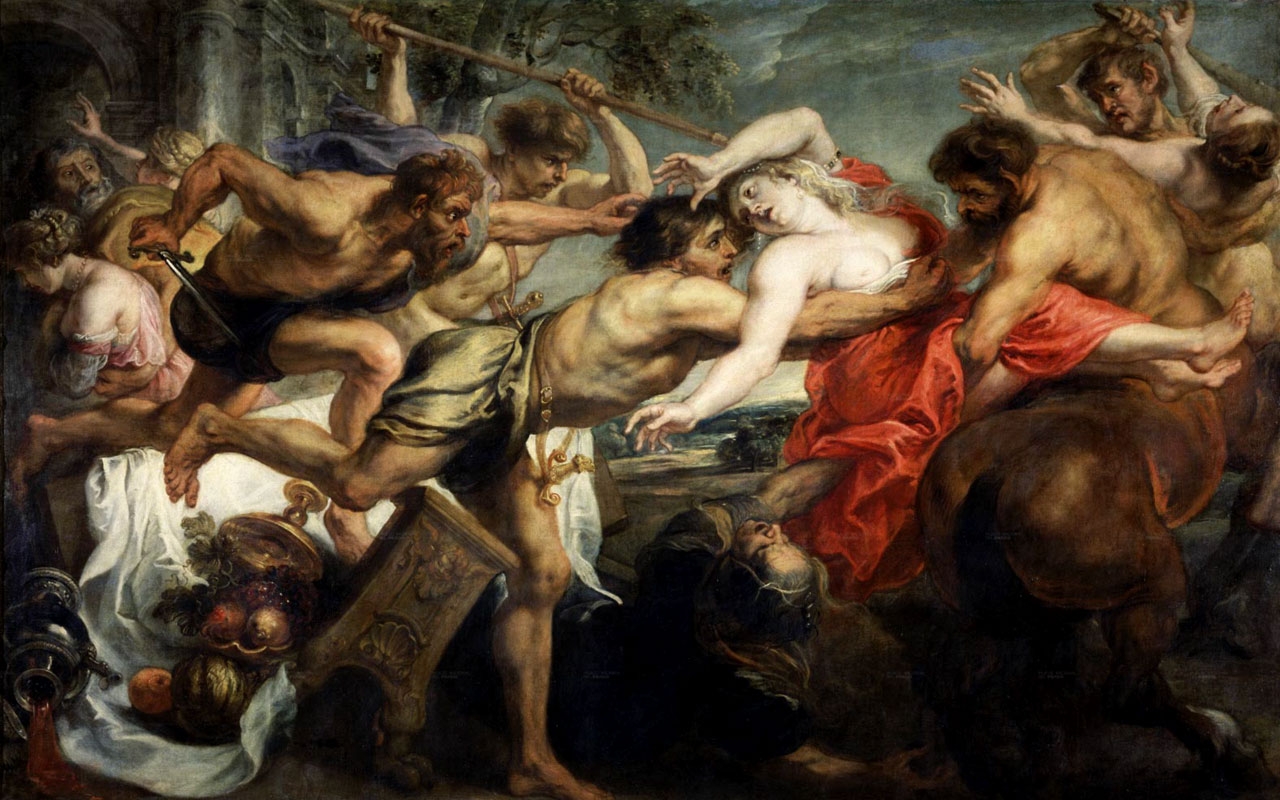
6. Peter Paul Rubens, «The Rape of the Daughters of Leucippus»
7. Diego Velázquez, «The Spinners or the Myth of Arachne»
8. Giovanni Lorenzo Bernini, «Apollo and Daphne»
9. Caravaggio, «Medusa»
10. Rembrandt, «Danaë»
Conclusion
Bibliography
Art historians classify Caravaggio’s work as early Baroque. «Love of the Gods» is one of the most monumental and breathtaking pieces by the artist. The frieze displays 13 narrative compositions, in addition to 12 bronze relief medallions that illustrate further tales of love, tragedy, and passion. In the corners, putti point to the predominantly romantic nature of this cycle.
Annibale Carracci, «Triumph of Bacchus and Ariadne»
This is a central composition depicting a wedding procession of Bacchus (Dionysus), the god of wine, and Ariadne, the Cretan princess. The abundance of grapevines, music, and wild animals emphasize a life-affirming, vibrant love. In the left portion of the painting, Bacchus sits in a golden chariot drawn by two tigers, while Ariadne rides in a silver chariot beside him. Ariadne’s chariot is drawn by white goats, which may symbolize ritual purity, sacrifice, fertility, and a connection to the celestial gods. In ancient art, tigers were often harnessed to Dionysus’s triumphal chariot; here, the predator symbolizes power. Cupid crowns Ariadne with a starry diadem, symbolizing her apotheosis and immortality.
«Pan and Diana»
«Mercury and Paris»
«Jupiter and Juno»
«Apollo and Mars»
«Perseus and Andromeda»
A plot we are already familiar with. But how differently Caravaggio and Rubens depict it. Caravaggio, a representative of early Baroque, shows us the very process of saving Andromeda. She is chained to a rock, and Perseus fights the sea monster using the recently severed head of Medusa the Gorgon.
Caravaggio, «Bacchus»