Concept
The planet is the cradle of the mind, but one cannot live in the cradle forever.
Humanity has been launching various types of spacecraft into space for almost 70 years. Although no living soul has yet reached beyond the Moon, the time is coming when humans will begin to actively explore and master deep space.
The Issue of Natural Habitats
Perhaps the fate of cosmic nomads awaits us in the future. An ecological disaster, a randomly incoming asteroid, or simply the passage of time (since the Sun isn’t eternal) will eventually make life on Earth unbearable or uninhabitable, forcing us to seek survival beyond it. Future technologies could also play a malicious role. A nuclear winter, the beam of a Death Star, or a meteorite artificially accelerated to immense velocities could easily wipe life from the planet’s surface. Life in its natural habitats has become extremely fragile, and currently, there are no technologies capable of protecting it.
To save ourselves—or simply to explore the universe—humans need somewhere to live. To work, sleep, eat, exercise, and simply spend leisure time. This can be done in many ways, and this study, using examples from various films, games, and graphic novels, will examine the diversity of artificial habitats in space. We will consider the following questions:
- What might space settlements look like in such a scenario?
- How will their variations differ from one another?
- How will they affect the daily life and culture of their inhabitants?
Orbital Stations
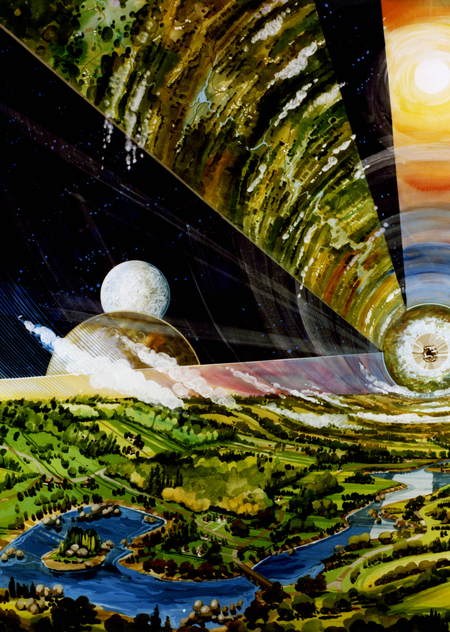
The simplest type of space settlement, which humanity is likely to see during the 21st century. The most common designs take the form of rotating tori or cylinders.It is no secret that zero-gravity conditions create many problems and limitations for conventional human life. Since controlled gravitational fields have not yet been invented, generating artificial gravity in such stations is proposed through centrifugal force, which is produced by rotation.
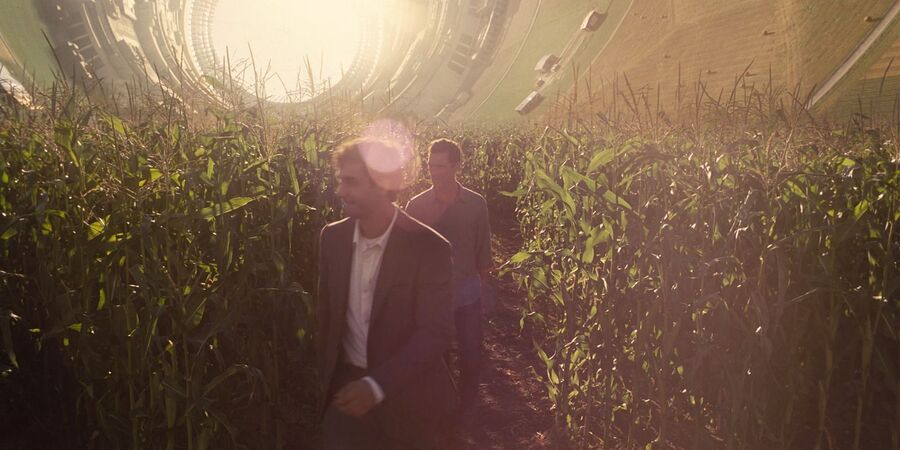
Interstellar (2014), Cooper Station
The complexity of constructing such structures lies in their sheer size (O’Neill Cylinder reaches 8 km in diameter), and enormous amounts of energy would be required for rotation.
Social Impact
The film «Elysium — Paradise Not on Earth» depicts a class conflict between the wealthy, who traveled to one of these stations, and the poor, who were not accommodated. In the world of Elysium, it proved easier for people to create a new habitat from scratch than to fix the situation on Earth, which suffered an ecological catastrophe.
Elysium — Paradise Lost (2013). Flight over the station
The slums where people from the «lower» economic strata live
Science fiction and futurology don’t just try to predict what future technologies might look like; they also warn about the potential impact these technologies could have on our lives. There is a non-zero probability that, in some form, at least for the initial period, access to such stations will be severely limited by a person’s status or budget. We hope that automation, the lowering of production costs, and new advancements in aerospace technology will eventually make space travel and exploration more affordable, enabling us to avoid participation in scenarios like the action movie depicted.
Cosmic Cities
A slightly more fantastical approach is to take a ship or a structure of an arbitrary shape and transform it into a small city.
Stargate: Atlantis
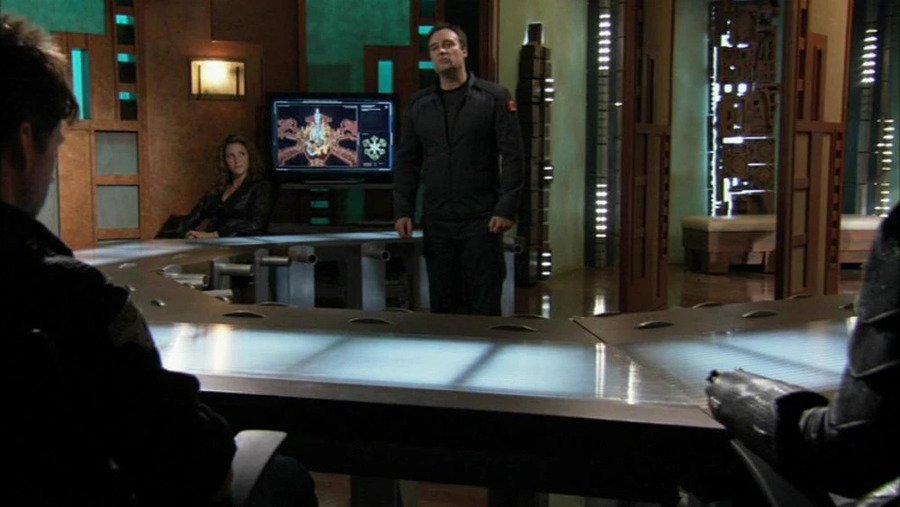
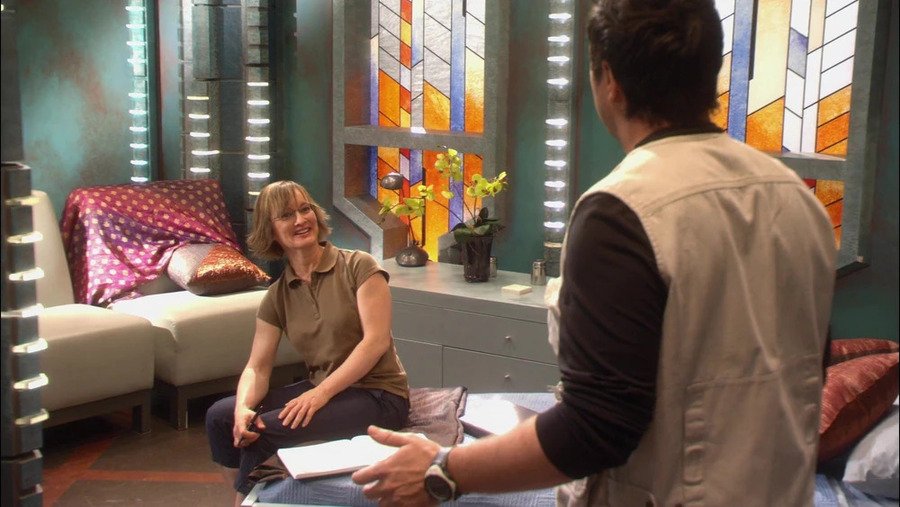
In the series, the team finds the lost Atlantis—however, it is not on Earth, but in another galaxy. It is a vast, technological city built by the Ancients, which they left at the bottom of the ocean, and when the team from Earth reaches it, the city rises to the surface.
Even though most of the city in the series is on the surface of the water, it has everything necessary to leave it and change its location. It can exist in space, perform simple maneuvers, possesses a powerful shield against external threats, and its city sections can isolate from one another during flooding, damage, or other issues (capture, infections, etc.).
Atlantis was not built by humans, nor was it built for humans. The Atlantis team was forced to adapt the space to themselves and, over time, learn to use the city’s technologies.
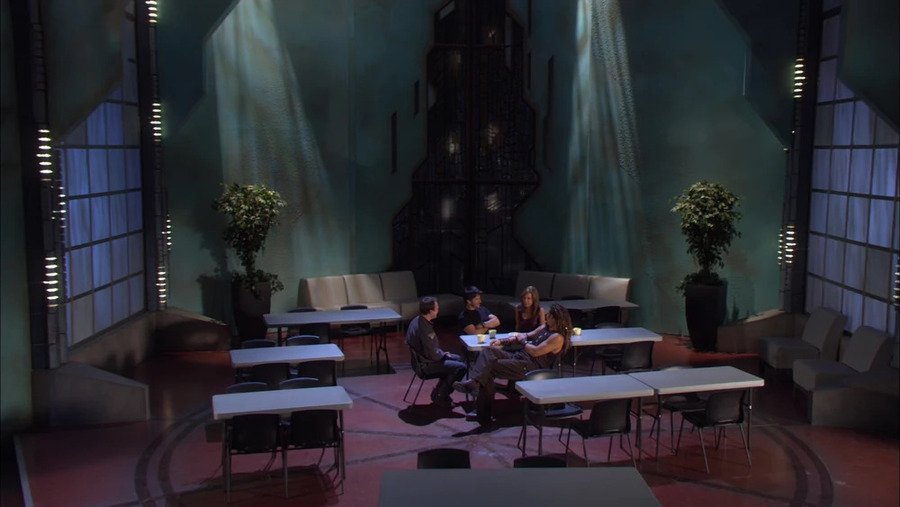
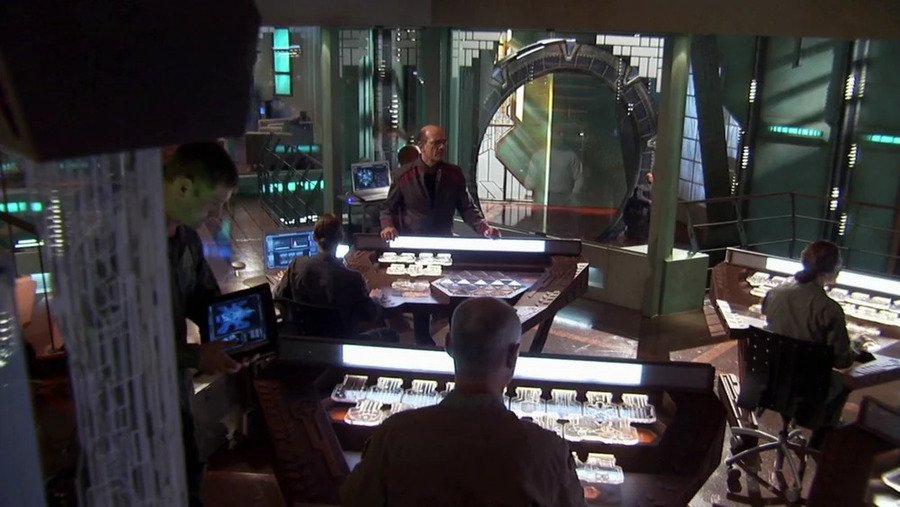
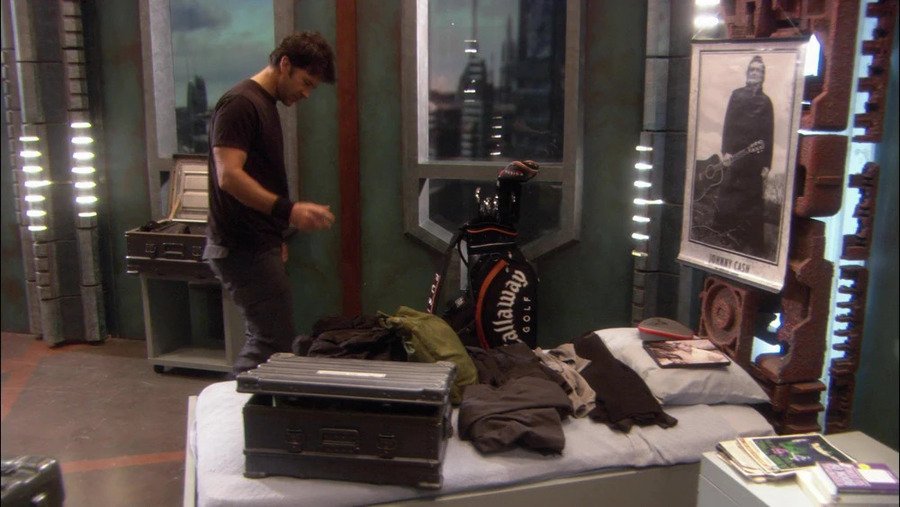
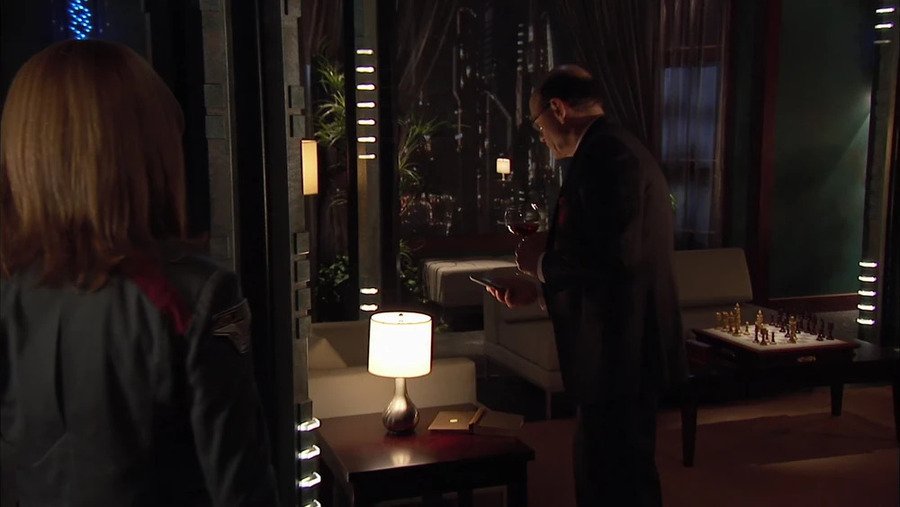
The Outer Worlds
Pioneer—the first colonial ship to enter the Alcyone star system. Over time, it transformed into a habitable orbital station, maintaining independence from the corporations. It serves as a port city. Ships belonging to corporations and private entities dock there, and people from across Alcyone conduct their business on this neutral territory.
In the game, the idea of triumphant capitalism is built up to an absurd absolute. This ship is the only place that has managed to maintain independence from the Alcyon corporations, yet the influence of capitalism is evident even there. Enormous, glowing neon signs advertising venues and services are strung across the entire city, and people toil endlessly for mere pennies.
Operational Challenges
Resources and personnel are insufficient for comprehensive control and maximum security. The ship has compartments where bandits hide, and various hidden corners that allow the player character to sneak into areas they are not supposed to see or access.Maintaining such massive structures requires a huge amount of resources and manpower (or robots). Since everything is inaccessible in an isolated colony far from Earth, sacrifices must be made to preserve the «territories» in order to survive.
Arks
Up to this point, we have primarily examined static structures. But what if a community—a nation, a company, a university, or even all of humanity—has a goal located very far from here? Or what if there is no such goal, but there is no home left to return to? Let’s examine several examples of ark-like vessels.
Stargate: Universe