Navigation
[0] Concept
[1] America Consumes the Other. Batman & Dracula
[2] America Produces the Other. American Vampire
[3] America Rejects the Other. 30 Days of Night
[4] Conclusion
Concept
The vampire, as a cultural archetype, has long and deeply sunk its fangs into our necks, penetrating our days and nights, slipping like a swift shadow into our bedrooms—a source of paralyzing nightmares and sweet dreams. The Vampire is the Jesus of our time: messiah and antichrist, monster and seducer.
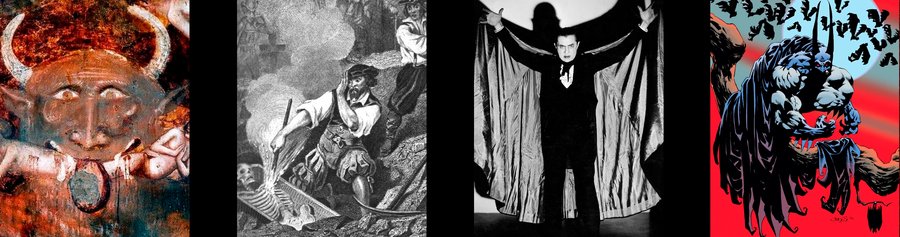
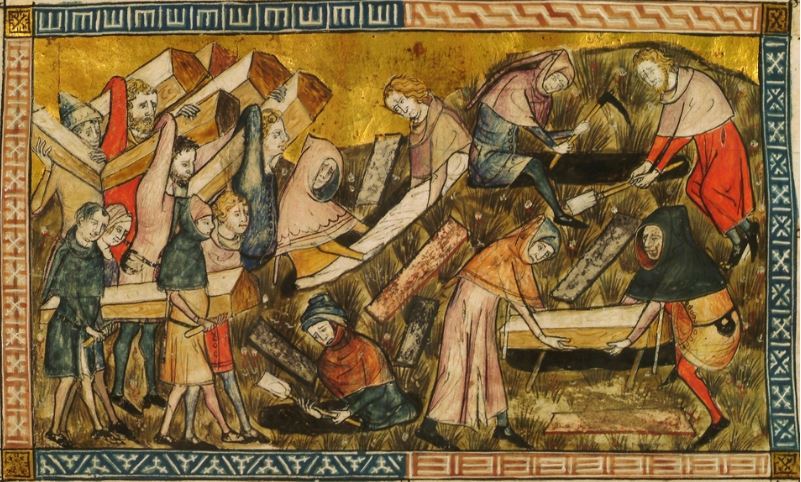
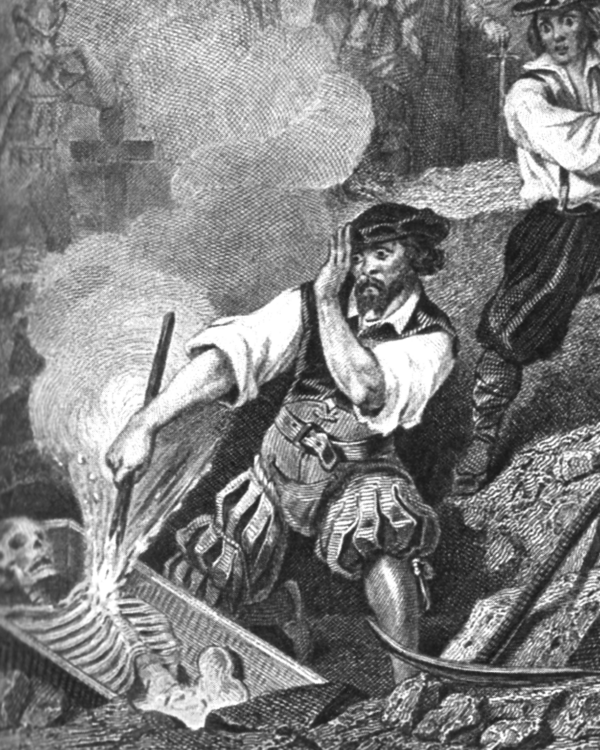
Rising from a damp, nameless grave in tattered rags, emitting a sickening putrefaction, the Vampire—or rather, the Upir—appeared to the world as a hideous child of the endless bloodletting wars between the Ottoman and Austrian Empires and the epidemics that swept across the Balkans between the 17th and 18th centuries. Death, like an avalanche, crashed into dilapidated huts, flooded fields and granaries, and birthed a new monstrosity that robbed the Serbian and Vlach peasants of sleep.
Along with Ernst Frombald’s report, dispatched by the Austro-Hungarian crown to investigate vampire hysteria in the Serbian village of Kisilevo, the Upir appeared on the pages of European newspapers and gradually captured the minds of the enlightened European public, transforming into the Vampire.
With the blossoming of Romanticism, the image of the living dead began acquiring traits familiar to us all: through the efforts of Lord Byron and John Polidori, the Vampire evolved from a grotesque corpse into a pale, eternally youthful blood seducer.
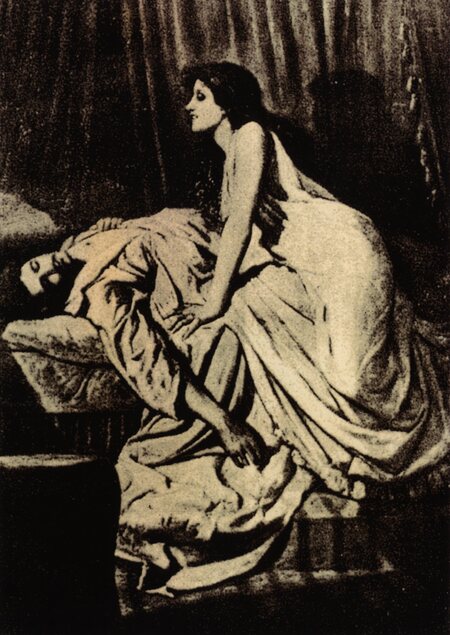
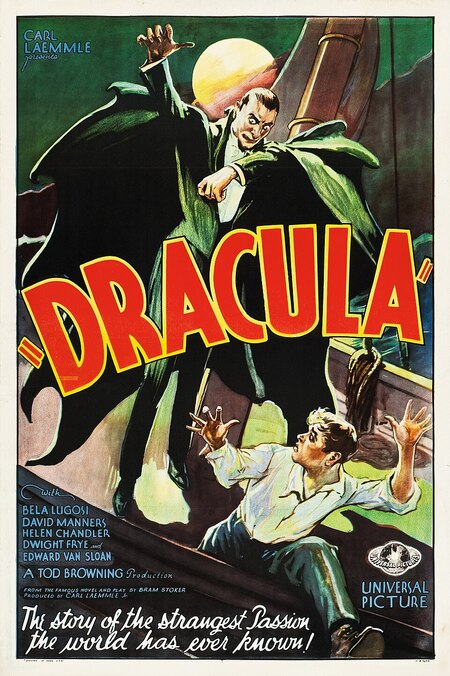
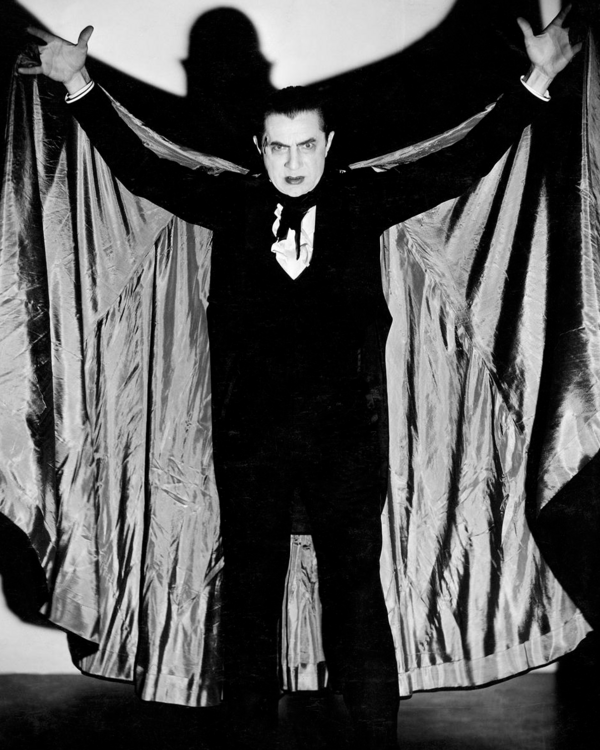
Bram Stoker’s Dracula is the greatest vampire in human history, and remains so. He didn’t just evolve a romantic archetype; he inflicted a cultural trauma upon a constrained Victorian society desperately resisting colonial conflicts and women’s emancipation. Dracula embodied the nightmare of the English aristocracy: a barbarian, a savage creature from the East, invaded the world of telegraph poles and starched collars, seeking to seize our lands and corrupt our women—transforming demure ladies into sexual predators.
America, the trendsetter of a Western-centric world, borrowed, appropriated, and transformed the Vampire in the 20th century. From a debauched nobleman, it evolved into a Hollywood star, and from the silver screen, it moved onto the pages of the quintessential American medium—the comic book.
The comic book—the flesh and blood of 20th-century America—perfectly represents the integration of the Vampire, who has traveled from a folkloric Upir to recognized literature, into popular culture. Having undergone so many changes, the Vampire has nevertheless maintained his essence—otherness, foreignness. The Vampire belongs fully neither to the world of the living nor to the world of the dead; he is always outside, he is always The Other.
The Other, conceived as a philosophical category introduced into cultural discourse by Hegel and significantly developed by Lacan—and echoed in this study following Stuart Hall—is understood as the quintessence of the alien, the unfamiliar, the «incorrect, ” or the „perverse“ order. If life is taken as the baseline, then the Other is death; if the West, then the East; if human, then nonhuman.
No group defines itself as the Whole without opposing the Other.
In our current climate, where the festering wound of xenophobia, national discord, and anti-immigration panic is about to burst, and popular culture shapes our perception of reality, a discussion about difference and otherness—using a super-popular cultural archetype in the media products of the main provider of mass culture as an example—seems timely and necessary.
We understand what it means to be British, not just through specific national characteristics, but also through distinction from one’s «Others.»
The research material consisted of three American comics in which vampires and vampirism play a significant narrative and visual role. The first—a product of popular culture, the most massive genre of American comics—is superhero fiction, representing the appropriation and transformation of an external image. The second demonstrates the creation of the Other within one’s own culture; the third portrays the Other as a radical external threat.
America Consumes the Other. Batman & Dracula
Batman, as a character, from almost the moment Bob Kane’s final pencil stroke completed the bat silhouette, has been steeped in a vampiric spirit: nocturnal lifestyle, dual identity, claim to aristocracy (ancestral manor, personal butler), tragedy and alienation, isolation, loneliness, a frightening image, and finally, identification with the flying mammal.
In superhero discourse, the formula Zorro + Dracula = Batman is often used, and it is not devoid of truth.
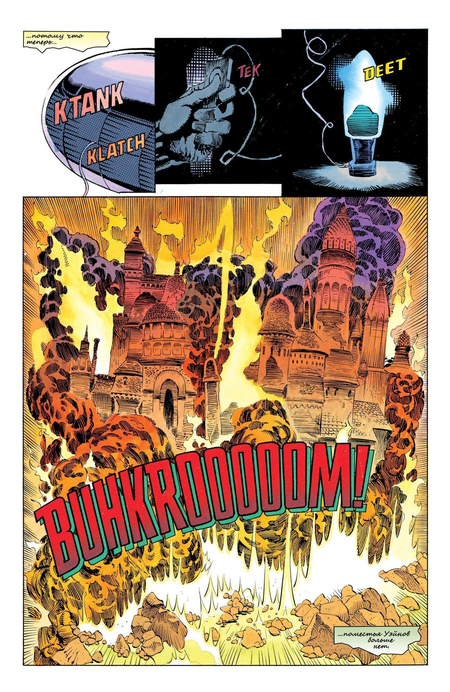
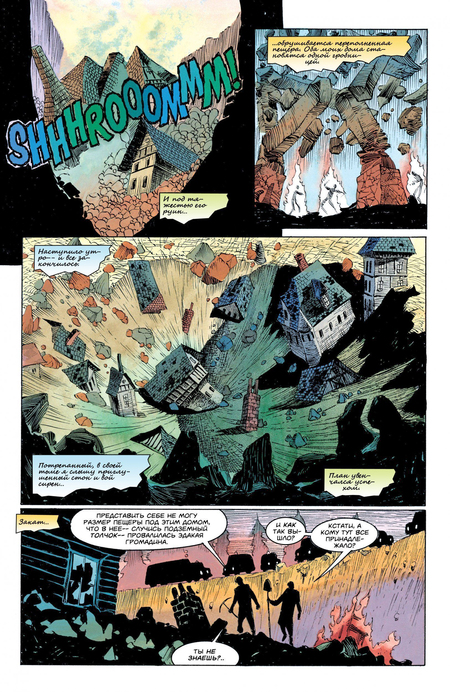
In 1991, DC Comics released Batman & Dracula: Red Rain—a story where one of America’s premier superheroes meets the most recognizable vampire from European literature. The comic was created by writer Doug Menzel and artist Kelly Jones. Later, the story received two sequels: Bloodstorm (1994) and Crimson Mist (1998), evolving into a trilogy about Batman’s gradual transformation into a monster.During the dark era of 90s Batman, Doug Menzel and Kelly Jones’s creation of the vampire «Elsword» felt like a completely natural progression for the character.
The appearance of Dracula in Gotham echoes a familiar trope of the outsider invasion. In Bram Stoker’s novel, the vampire arrives from Eastern Europe into Victorian England, threatening its established order; here, a native of Gothic Europe invades an American metropolis that feels more like a medieval city.
Gotham seemed to be awaiting its sanguinary guest—its appearance amidst the dark narrow streets, sharp spires, and heavy arches was as natural as Batman’s. Kelly Jones depicted Gotham as initially grim, like a veritable vampire’s lair. Dracula felt at home here; it was as if he had returned.
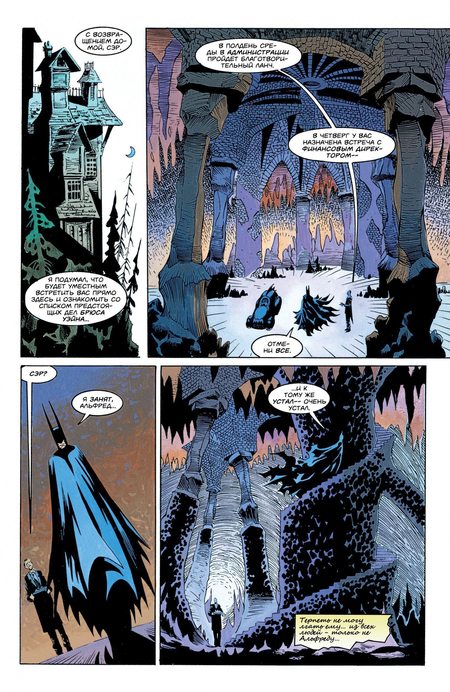
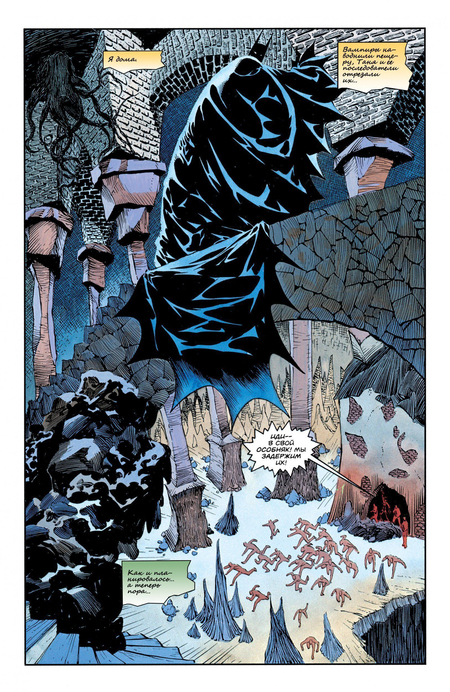
Batman’s lair is a gothic cathedral and a medieval castle rolled into one.