CONCEPT
The study of the influence of ancient and ancient African cultures on 20th-century art remains one of the most fascinating tasks in art history. It is known that many famous artists of the early 20th century, such as Pablo Picasso and Paul Cézanne, were influenced by Cycladic and African art.In the case of Amedeo Modigliani, African and Cycladic sculpture became not merely a tribute to primitivism trends, but a foundation for creating his own visual language. Analyzing this influence allows us to understand how the artist developed abstract female images while retaining the emotional depth inherent in European portraiture.
Which specific visual elements from ancient African sculpture—such as the oval face, the absence of pupils, and the shape of the nose and mouth—did Modigliani incorporate into his painted female portraits, and how do they converse with the European tradition of psychological portraiture?
Modigliani utilizes visual forms inspired by African culture, not for ethnographic mimicry. The artist deliberately creates a hybrid image: an outer geometric structure combines with the traditions of Post-Impressionism and classical Italian Mannerism (which accounts for the elegant curves of the arms and neck, and the soft, lyrical mood).
The objects of study were female oil portraits and sculptures by Amedeo Modigliani, created between 1911 and 1919. The research focused on the process of visual transformation and adaptation of African art forms in Modigliani’s portraiture. For visual analysis, 15 female portraits (including portraits of Jeanne Ebûtern, Luni Chekhovskaya, and Anna Akhmatova), 7 sculptural works by Modigliani (the «Heads» series), and 10 photographs of African and Cycladic masks and figurines were selected for comparative analysis.
Because this research sits at the intersection of art history and visual studies, the theoretical framework was divided into three groups.The first group consists of foundational works on the history of Modernism and the Parisian School (such as works by M. Herman), which establish the historical context. The second group comprises scholarly articles from peer-reviewed databases (CyberLeninka, eLibrary) specifically dedicated to primitivism and the influence of African sculpture on 20th-century painting. The third group includes catalogs from major museum exhibitions (MoMA, Tate), which are necessary for accurate attribution and visual analysis of the selected portraits. The exclusive use of academic and museum sources (in accordance with research project requirements) ensures a high degree of credibility in the conclusions.
Sculptural Period
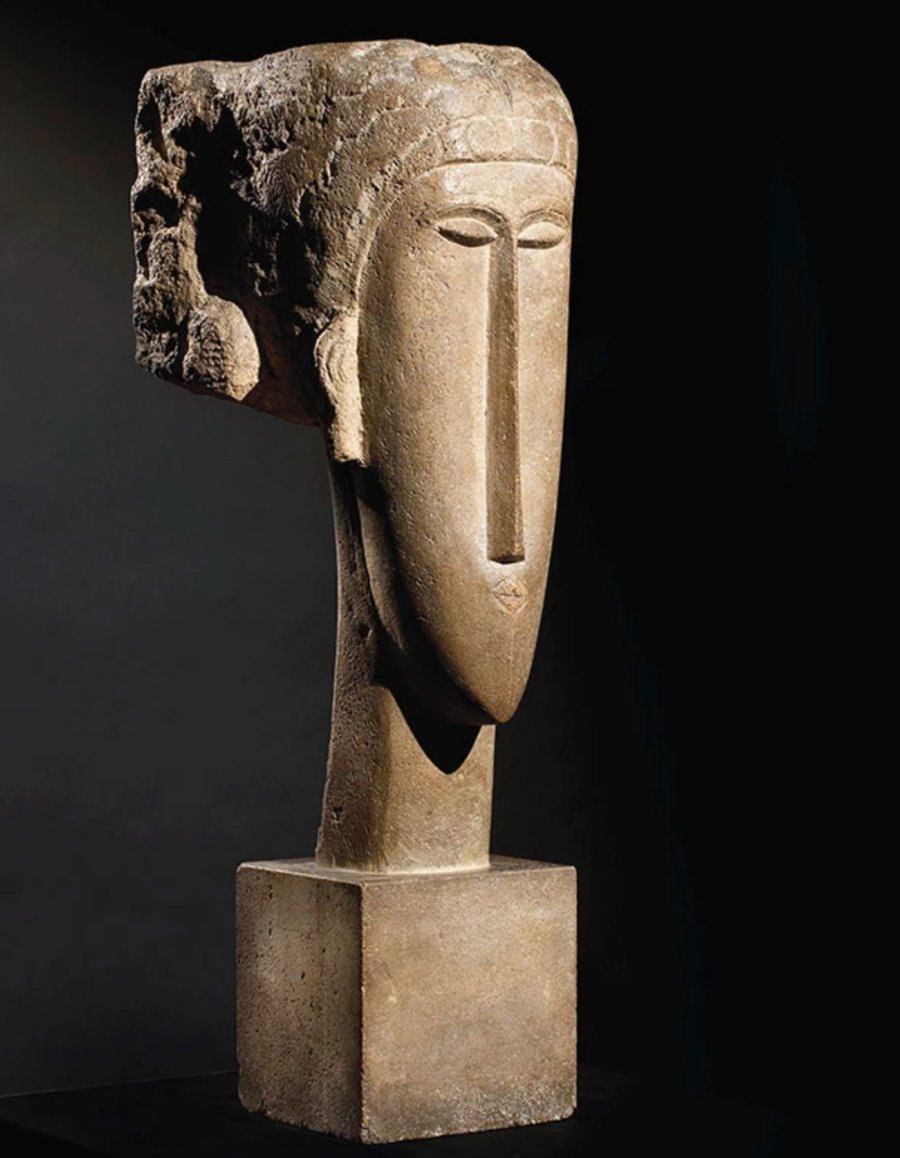
«The Head,» 1911–1912
In the 1910s, Modigliani largely set aside painting for several years to begin working with stone. His famous «Heads» constitute a direct visual dialogue with archaic forms. What attracted the artist was not the exoticism, but the form of the image—the face in these sculptures loses its softness and volume, becoming flat and geometric. This approach later formed the basis of his artistic language.
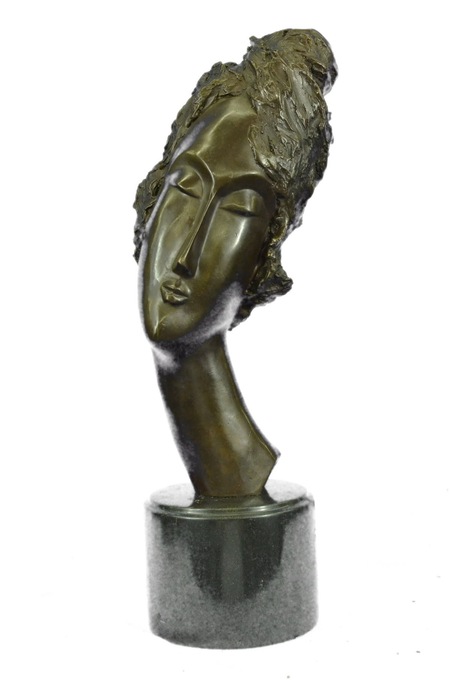
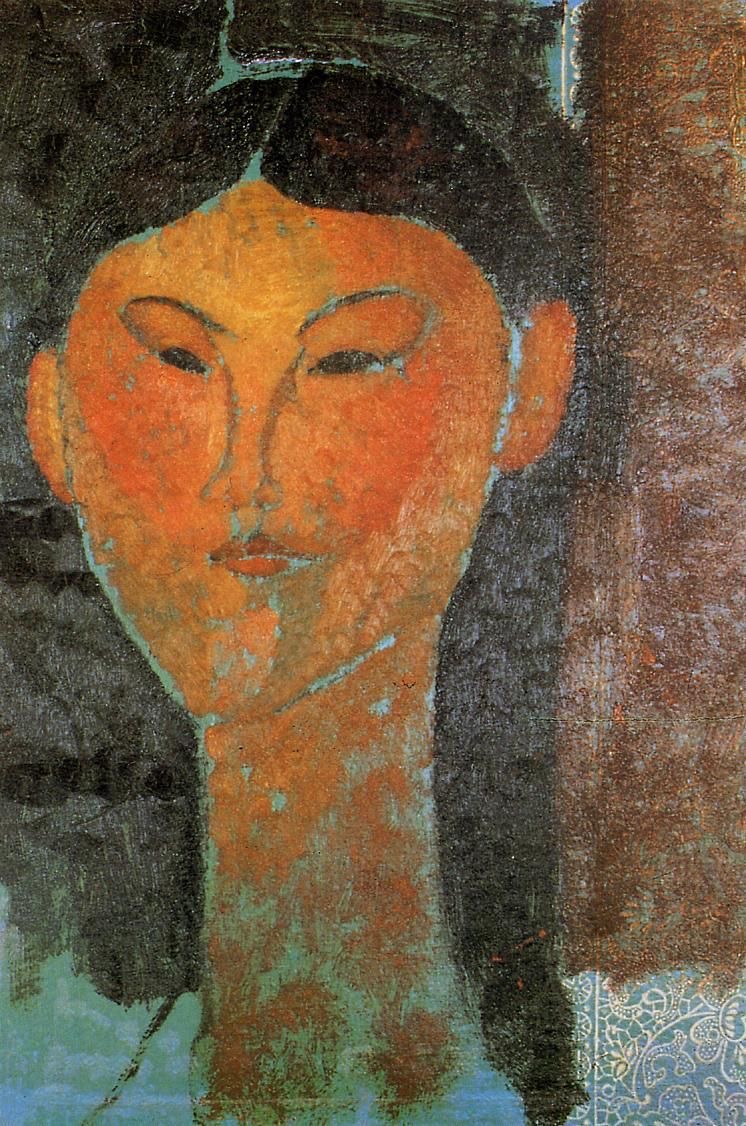
A comparison between Modigliani’s sculptural «Heads» and traditional African masks reveals a striking similarity in composition. The oval of the face is elongated vertically, the nose transforms into a triangular prism, and the eyes become flat and—critically and characteristically—lacking pupils. The sculptor dissects the face, retaining only the most «necessary» features, stripped of any particular characteristics of the depicted woman.
Under the guise of a portrait
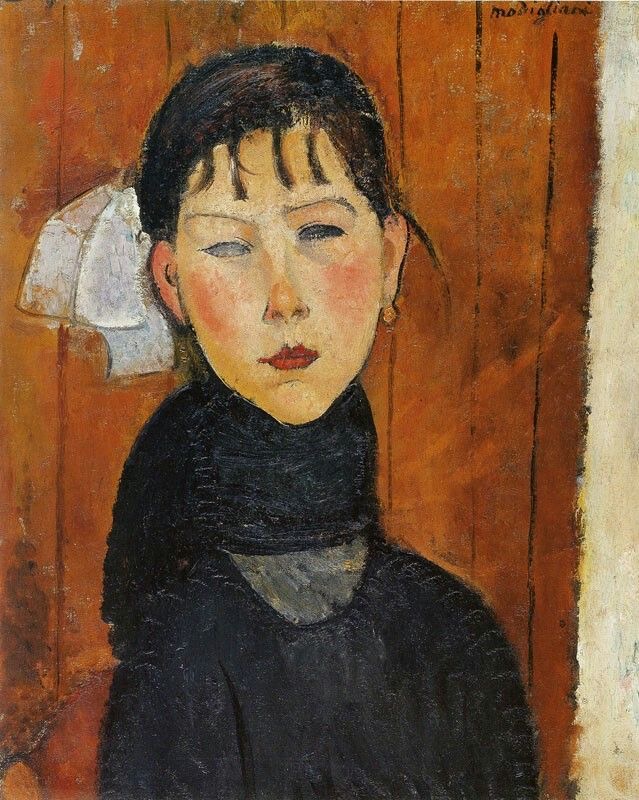
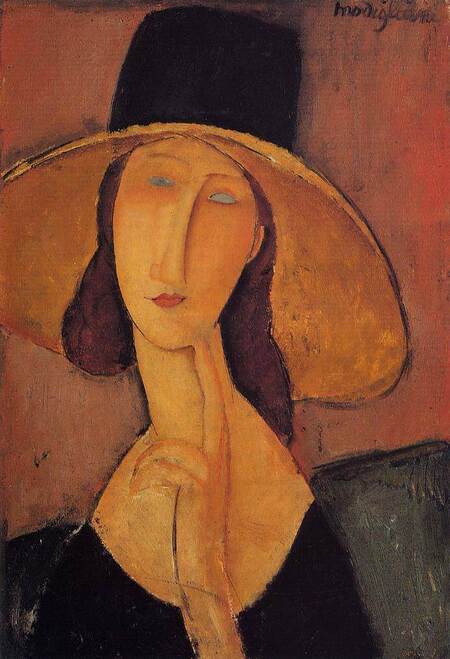
Returning to the canvas, Modigliani transfers sculptural geometry onto female portraits. He deliberately simplifies facial features, «flattening» them, stripping them of academic volume and chiaroscuro modeling. This technique of reduction allows him to distance himself from everyday realism. The face in his paintings ceases to be merely a portrait of a specific individual; it transforms into a visual sign, a symbol, which brings Modigliani’s painting closer to the semiotics of archaic art.
A key visual element borrowed from archaic styles is the technique of elongation—the artificial lengthening of proportions. The necks and oval faces of Modigliani’s heroines become stretched, connecting them to ancient idols and totems. However, while this is tied to cult and ritual in African sculpture, Modigliani uses such features to evoke a sense of fragility, aristocratic refinement, and melancholy. The elongated line becomes the artist’s primary expressive device.
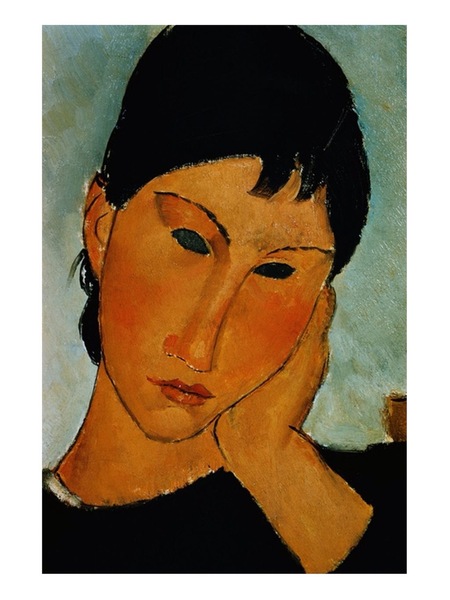
The image of vacant eyes without drawn pupils and tightly pursed lips renders the models impenetrable to the outside world. The viewer cannot discern their emotions from their facial expressions. This visual «blindness» sharpens our perception of the heroines' inner lives, shifting the focus from external content to internal experience.
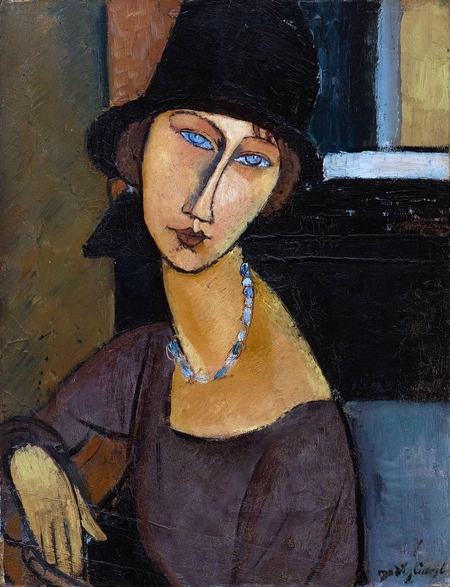
The most compelling visual effect in Modigliani’s portraits emerges at the intersection of two cultural codes. The flat, geometric face, reminiscent of a mask, contrasts with the details of European attire: voluminous hats, high collars, and pearl necklaces. This contrast lends the women’s images a mysterious and detached quality from everyday life.