November 27 | Monday
Izvestia of the Central Executive Committee and the Petrograd Council of Workers' and Soldiers' Deputies, No. 237 For the City Elections By decree of the Council of People’s Commissars and resolution of the Central Executive Committee of Workers', Soldiers', and Peasants' Deputies, the Petrograd City Duma has been dissolved, and new elections are set for November 27. All enemies of the proletariat and peasantry have decided to boycott these elections. Citizens of Petrograd. Workers, peasants, and soldiers. All laborers, oppressed, and exploited!… To the front!
November 28 | Tuesday
Morning Russia, No. 272 News from the Headquarters Mgolyev (Own Correspondent). Krylenko traveled to Petrograd for a meeting with Lenin, leaving the military physician Sklyansky, a very young man, as his deputy… There is complete silence at the headquarters… No major events can be expected until the negotiations with the Germans begin. The last American officers left on November 27…
Details of General Kornilov’s Escape Mgolyev (Own Correspondent). I am reporting the details of General Kornilov’s escape that I received here: the Tekins divided into several detachments and traveled different routes. One detachment of 120 people was surrounded on all sides in Chernihiv Governorate by ten thousand soldiers, but the Tekins fought like lions; 40 were killed and 120 were taken prisoner, but General Kornilov was not among them; he traveled to Novocherkassk by train, disguised as a common soldier.
The Siege of Grozny by Chechens Ladikavakaz (Own Correspondent). …The city is surrounded by trenches; shooting is everywhere. The Chechens are demanding that the garrison disarm, accusing the soldiers of murdering two Chechen officers, which was the beginning of the events… The siege of the city could begin at any minute. The population is in indescribable panic. Reports are coming in of mass casualties during the fire at the oil fields; they claim that the new fields have burned down completely.
November 28–29
Civil War
Early Morning, No. 260, 261
The Civil War has begun. The catalyst was a mysterious attack on the Soviets during the night… Around 8 casualties on both sides. In the morning, the streets looked like a battlefield. The city was outwardly under the control of the garrison and the «Red Guards,» who were conducting searches and disarming officers. There are no signs of civilians or Cossacks… The night passed relatively peacefully. Rifle skirmishes were heard. Now, artillery fire is ringing out. Rumor has it that Cossack units have arrived in Nakhichevan.
…At dawn, the first clash occurred between the workers of the Leslie factory and the Cossacks. Rumor suggests many killed. Black Sea trawlers equipped with light artillery are shelling Nakhichevan, towards which units of General Kornilov are allegedly approaching, according to Bolshevik intelligence. …The city is relatively calm for now. The train station and post office are occupied half by Cossacks and half by soldiers, who seem to be getting along quite well… The shops are closed.
November 29 | Wednesday
The first meeting of the Founding Assembly members took place yesterday.
Morning Russia, No. 273 | Gazette of the Central Executive Committee and the Petrograd Council of Workers' and Soldiers' Deputies, No. 239 | Early Morning, No. 261 National Celebration All the homes along Nevsky Prospekt are adorned with red flags… Here are workers, soldiers, and people of intellectual professions. …Not a single military unit of the Petrograd garrison dared to address the Constituent Assembly, nor share in the general elation and celebration with the entire populace. …The banners of civil servants draw attention—banners proclaiming that they do not recognize the power of the invaders and devote all their efforts to the Constituent Assembly, whose opening they welcome and whose will they intend to implement in every way… At noon, all of Nevsky is covered with people; streetcars have stopped, and the balconies of the buildings are crowded with spectators. Photographers and cinema operators have set up on the roofs and balconies… At one o’clock in the afternoon, a procession… accompanied by music from the Volyn Regiment, led by the city head Schreider and the spokesmen of the Petrograd Duma, approached the Tauride Palace…
Manifestation of Representatives of the Union of Credit Institution Employees on the Day of the Inaugural Assembly
The demonstrators consisted of the general public strolling along Nevsky Prospect, alongside disaffected party members—SRs and Mensheviks—saboteur officials, lawyers, and speculative profiteers. Several thousand (fewer than 10,000) demonstrators, led by former city mayor Schreider and about ten delegates to the Constituent Assembly, marched toward the Tauride Palace.
What was striking about this «demonstration» was the complete absence of workers and soldiers. It was ludicrous to hear these demonstrators singing the revolutionary songs so unevenly. Their faces and attire bore no resemblance to the lyrics: «March, march forward, working people…»
A rally took place outside the palace. Several gathered members spoke. Deich spoke about a conspiracy against the Constituent Assembly, allegedly organized by the Bolsheviks. Many notorious figures offensively attacked the Council of People’s Commissars, exploiting the sympathy of a crowd composed almost entirely of intellectuals.
The soldiers guarding the palace viewed the rally rather skeptically.
All entrances to the Tauride Palace were guarded by soldiers of the Latvian regiment, as instructed by the Military Revolutionary Committee. Most of them did not speak Russian. Initially, they held people back from the palace garden, but later they allowed the public entry without hindrance. The soldiers stated that they did not wish to be enemies of the Constituent Assembly and would not disperse it.
Pushing aside the crowd, one of the soldiers fired a shot by accident. The bullet hit no one, but it had a stunning effect on the crowd.
«They’re shooting! Forward!»
It seemed that in another minute, the crowd would charge the troops unarmed. However, at that moment, the picket chief jumped onto the fence and shouted:
«Citizens, calm down! The shot was accidental…»
G. I. Schreider, who arrived at that time, suggested that the soldiers lower their rifles, which they immediately complied with.
Around midday, a crowd of roughly 1,000 people gathered at the main entrance of the Tauride Palace. They pushed through the guard detail, and a small number of people managed to get into the Tauride Palace. Among them were about 20 members of the Constituent Assembly. This crowd flooded into the meeting hall as a mixed mass, not even occupying a tenth of all the seats… Citizen Schreider took the chair and declared the high assembly, «convened in accordance with the decree of the Provisional Government, ” open… The assembly resolved that only it itself could decide the issue of the legitimacy of those present. Therefore, the gathered delegates must convene daily at 1:00 p.m. at the Tauride Palace, and when they deem the number present to be sufficient, they will set the date for the first plenary session… …The question of arresting three members of the Constituent Assembly—Kokoshkin, Shingarev, and Dolgorukov—was discussed. The attendees found it „beneath their dignity“ to protest such an act, but they nevertheless adopted a resolution on the matter… Having adopted several resolutions without a vote, the assembly adjourned „until one o’clock the following day.“
To all workers and exploited GOVERNMENT STATEMENT
The bourgeoisie, led by the Cadets Party, marshaled all its forces for a counter-revolutionary coup by the time the Constituent Assembly was convened. In the Ural and Don regions, Kornilov, Kaledin, and Dutov raised the banner of civil war. … The civil war is open, initiated and directed by the Cadets Party. The Central Committee of this organization is currently the main headquarters of all the country’s counter-revolutionary forces. This work, which directly threatens the cause of peace and all the achievements of the revolution, is being conducted under the guise of protecting the Constituent Assembly… The Council of People’s Commissars resolved to convene the Constituent Assembly as soon as half of its members were gathered—that is, 400 out of 800. This resolution was the best refutation of the vicious slander that the Council of People’s Commissars… did not wish to convene the Constituent Assembly. But it was precisely because of this that the bourgeoisie could not wait for the peaceful, legitimate convocation of popular representation. Several dozen individuals, calling themselves deputies, without presenting identification, stormed the Tauride Palace building on the evening of November 28, accompanied by armed White Guards, junior officers, and several thousand bourgeois saboteurs and officials. The goal of the Cadets Party was to create a supposedly «legal» cover for the Cadet-Kaledin counter-revolutionary uprising… The Council of People’s Commissars informs the entire populace about this conspiracy… … The Council of People’s Commissars declares the Cadets Party to be an organization of counter-revolutionary rebellion—a party of the people’s enemies… The Council of People’s Commissars
The Active Army: A Separate Truce on the Romanian Front Our peace delegation returned to Iași from Focșani. The pause in military action is conditional until the Constituent Assembly resolves the issue of the war’s destiny… The delegation was struck by the external polish of the German army—the men’s bearing, the soldiers’ robust appearance.D. Sokol
November 30 | Thursday
Moscow Leaflet, No. 260 Theater Matters The financial situation in our Moscow theaters is not cheerful at the moment. For instance, at the Bolshoi Theatre, the «cost-of-living» bonuses have still not been issued. The major artists have also not received their allowances. They have only now been satisfied by taking 35,000 rubles from the advance ticket sales revenue. The ballet company artists have found themselves in a truly tragic position. As is well known, the salaries of ballet performers are already quite meager. For example, the corps de ballet members receive a mere hundred rubles something. How can one survive on such a salary nowadays? In the past, they were granted a «cost-of-living» bonus. But now, with money scarce even to cover the basic salaries, this supplemental bonus for the ballet artists has not been issued… L. V. Sobinov, A. I. Yuzhin, and the conductor of the Bolshoi Theatre, Shmuklovsky, are currently in Petrograd. They are lobbying for a subsidy of 500,000 rubles for the state theaters of Moscow. The success of these efforts determines whether the artists will receive their December pay. Ticket sales are excellent in both state theaters right now, but the forced, nearly month-long inaction of the theaters has affected their budgets…
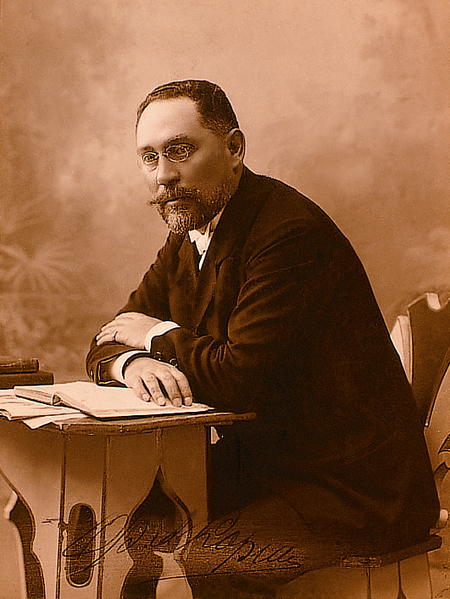
Moscow’s Most Prominent Theatrical Figurehead Fedor Adamovich Korsh is retiring as an impresario. The founder of the first Russian «private theater, ” who held the banner for 35 years without fail, is finally letting it go, feeling that he has worked enough… One of Moscow’s capitalists, Mr. Shlugleit, purchased the Korsh enterprise, including all its theatrical assets, for a considerable sum of half a million rubles. However, even after ceasing to be an impresario, Korsh remains a shareholder in his former theater. From the half-million he receives as his share, he allocates one hundred thousand. N. M. Radin has been invited by the new owner to manage the artistic direction of the theater. New, major acting troupes are being brought into the cast. By handing over his „child“ to other hands, Korsh made the condition that the theater’s activities and character be preserved. This condition was accepted. And this is entirely understandable, considering that an entire generation of Muscovites was nurtured at Korsh’s theater…
Photo: F. Korsh
Moscow Without Museums The glass roof, the secondary glass floor beneath it, and the glass ceiling of the Alexander III Museum of Fine Arts were damaged by three shrapnel shells. …The museum was impossible to heat and had to be closed. The halls of Olympia and Christian Revival were damaged by the shells… The Historical Museum is closed after sustaining some damage during the civil massacre. The Rumyantsev Museum and its reading rooms are closed due to a lack of fuel.
01.12 | Friday
Founding Assembly
Russian Gazette, No. 263 Chronicle of Events • Bolshevik decree prohibiting any meetings in the Tauride Palace • Private meeting of members of the Constituent Assembly • Ensign Blagonravov’s demand to close the meeting • Deployment of troops into the assembly hall
Trotsky’s Statement on the Current Moment … Regarding the Constituent Assembly, Trotsky stated that Soviet power would fully support and approve its resolutions only if the majority of its members stood in favor of the interests of the masses. If, however, the Constituent Assembly featured an anti-popular majority, the Council of People’s Commissars would override it.
Civil War
On the Don Bolshevik Commissar of the 5th Army, Sklansky, reports via direct wire to the commander of the Petrograd Military District: «…Rostov, Nakhichevan, Taganrog are in the hands of the revolutionary troops and the Black Sea Fleet… Kaledin, Lukomsky, Rodzyanko, Denikin, and Alekseev are in Novocherkassk… Around Rostov is a ring of Cossacks from the Don region. There are 50,000 Cossacks armed. Mobilization is underway among the older men. New Cossack units arrive daily. There is unrest within the Cossack units regarding the mobilization. Infantrymen are being discharged. Coal is being mined from the bituminous mines. The Muscovites have sent an armored train and the Belgorod Polish Regiment to that area… which is now being called the first Polish Revolutionary Regiment…»
Russkiye Vedomosti, No. 264 Near Belgorod Kharkov (From our correspondent). A woman soldier arrived in Kharkov, having broken through from Belgorod. According to her… the situation of the soldiers is hopeless. They are surrounded on all sides. All the soldiers are doomed to certain death. A representative of the assault battalion protests against the designation of «kornilovtsy» (attackers)… In a letter to the editor of «Yuzhny Kray,» the soldier writes: «Doomed to death are those heroes who bravely fought on the front in the name of the revolution’s conquests.»
Day, No. 211 From the Caucasus to Petrograd The situation in the Caucasus is worsening… Cossacks are destroying native villages. Some aul are completely annihilated. In turn, the natives are burning Cossack stanitsas. Fires are burning in Grozny. A face who arrived from Baku today relays the following details. The train that left Baku on November 23 traveled without much incident to Gudermes station. From this station to Beslan, the train was under continuous shelling by Chechens and Lezgins. …When they reached Beslan station, the track had been torn up, forcing the train to take a detour. Later, the train entered the area of military action between the Cossacks and the Bolsheviks. There, at Kavkaz station, the wine warehouse located near the station was found smashed and devastated. The entire platform was literally strewn with drunk bodies. Some soldiers who were still able to stand out to sell vodka in the cars. An eyewitness who arrived noted that, to great shame, almost all passengers drank themselves into oblivion with the purchased vodka, and the train arrived in Rostov almost entirely in a death-like state of intoxication. Upon arrival in Rostov, the train came under fire. They were shooting from Kolkhida. At one o’clock in the afternoon, soldiers with machine guns arrived at the station and began shelling the building next to the station where the Cossacks were located. Panic erupted on the train. Everyone started to run. Some hid under the train. The soldiers on the train were breaking the window panes, climbing out, and running without looking back, literally trampling women and children. Despite the commotion and panic, the soldiers did not forget to take the belongings of others. Half an hour later, the shooting stopped. Gradually, the frightened passengers returned to the cars. None of their belongings were there… They traveled for a whole day without food or water, without warm clothes, without heating, hungry and cold. In Kharkov, they received food for the first time. From there, they reached Petrograd under conditions that, by today’s standards, could be called favorable.L. K-o