Детский город
Можно ли отпустить московского восьмилетку одного за хлебом
There is a simple way to assess the quality of the urban environment, and you don’t need a certified urban planner for it. Ask yourself: would you let an eight-year-old child wander into a bakery alone?
Right now, it’s just down the block, two yards over. If something is constricted inside, the city has been diagnosed—and no beautification ratings can override that. A child without an adult is the strictest reviewer of the street: they need safe crosswalks, functioning traffic lights, a clear view free from parked «Soboli, ” and friendly pedestrians. We looked at how Moscow is taking this test: what has happened to the courtyards, what have the playgrounds turned into, and why the road to our school is still noted in our diaries.
Freedom that ended in a single generation
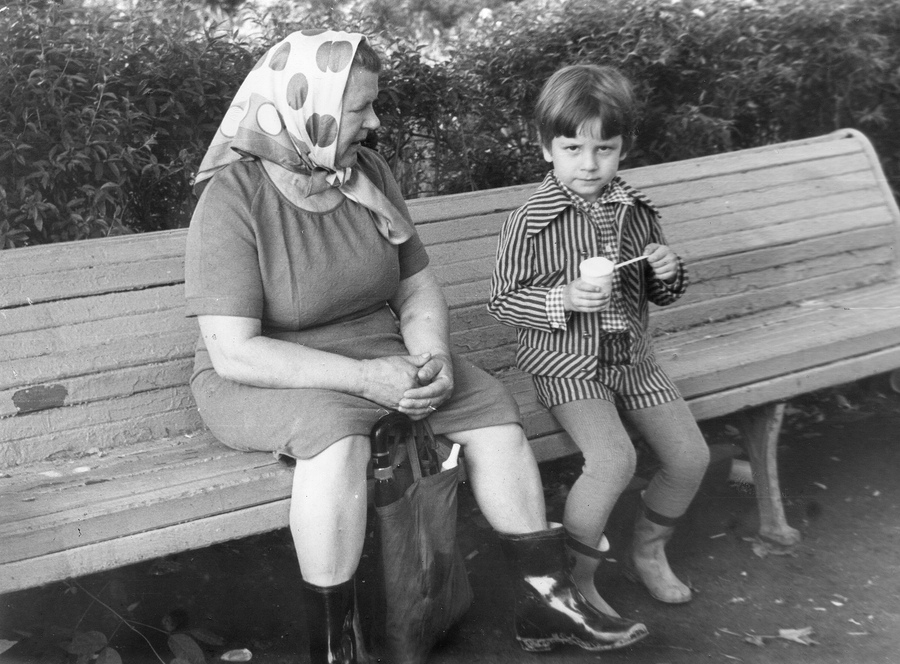
Older generations remember how it was. «No going out the door!» Mom would shout from the window. Key around her neck, soup on the stove—get back before dark. So, the feeling that «kids used to be let loose, but now they aren’t» is confirmed by science, with frightening accuracy. In 1971, English researchers surveyed parents of seven-to-eight-year-old schoolchildren: 80 percent of children walked to school alone. In the 1990s, they repeated the survey and couldn’t believe their eyes—only 9 percent of seven-year-olds went independently. The freedom of an entire childhood evaporated in a single generation.
What follows is even more interesting. Meyer Hillman’s study, «One False Move, ” uncovered a disturbing statistical trick of that era: the number of cars on the roads doubled, while child mortality halved. Officials took credit for this until Hillman explained that there was nothing to boast about: children didn’t stop dying in the streets, and children didn’t stop appearing there. The roads became „safer“ in roughly the same way a flat becomes quieter after everyone has moved out.
By © Vyacheslav Argenberg / http://www.vascoplanet.com/, CC BY 4.0
Following these discoveries, the concept of the child-friendly city emerged. In 1996, at a UN conference in Istanbul, children’s well-being was declared the primary indicator of a city’s health. UNICEF launched the «Child-Friendly Cities» program, and today more than 900 cities participate. The point is not simply playgrounds. A city is considered child-friendly when an eight-year-old can safely navigate their neighborhood and when city officials—the adults from the municipal government—seek their opinion. Bonus: an environment safe for a second-grade student is automatically convenient for a grandmother with a cane, a mother with a stroller, and everyone else.
Where an eight-year-old goes alone
To provide a vision of what to aspire to. The same institute that studied English children compared 16 countries in 2015. Finland took first place, and the Finnish figures sound like fantasy to a Moscow parent: at seven years old, most local children ride and cycle around the district; at eight, they cross major roads and return from school; at ten, they ride city buses—all without adults, alone, every day. Following them in the rankings are Germany, Norway, Sweden, Japan, and Denmark.
magnific.com
Japan is a unique delight. There, first-graders commute to school by subway, and no one faints: crime rates are low, routes are thoughtfully designed, and the entire neighborhood looks out for the child—from the vendor in the convenience store to the crossing guard. They even film TV shows like «Old Enough,» where toddlers go to the store for the first time, and the country watches with sentimental affection. The Netherlands takes a different approach: UNICEF reports that Dutch children are the most prosperous in the world year after year, and not least because they travel across the city by bicycle on their own starting in elementary school. To be fair, even in Finland, childhood freedom has diminished over the past twenty years, and researchers are already calling Finnish students the «last free children.» But at least they measure it there. In our country, speaking ahead, they don’t measure it at all.
Yard: From Common Ground to Commodity
The Moscow courtyard lived three lives over sixty years. First, no one designed it: the distance between the Khrushchyovka blocks was determined by lighting standards, and everything else developed organically—lines strung with laundry, a table for dominoes, a hockey rink, and children playing late into the night. Then, cars occupied the courtyard, and by 2010, they were squeezing between bumpers, while the sandbox sat right next to a thoroughfare where neighbors rushed past, late for work in the mornings.
Now the courtyard has a third life: it has become a commodity. «Car-free courtyard» is written in promotional brochures using the same font that used to advertise «Euro-renovation”—the concept has descended from luxury housing to the comfort class, and renovation promises the same thing: transport outside the perimeter, lawns and age-specific playgrounds inside, and surveillance cameras. For a child, this is a clear win: where there are no cars, there is no primary danger in the yard. But a beautiful picture comes with a price, and it isn’t just in the mortgage. The new courtyard is almost always locked down: a fence, a barrier gate, and card access. A space that was communal for half a century is turning into an annex to a purchased apartment. The child gets a sterile, guarded courtyard and a completely unfamiliar city beyond the fence.
Platform: The End of the Rocket Slide Era
The iron rocket, the swings that have knocked out generations of teeth, and the fungus with peeling paint are fading into the past; in their place are sprouting two completely different futures. The first is catalog-based: anti-vandal plastic in acid colors, rubber flooring, identical sets from Butov to Kurkin, assembled from a catalog, much like an IKEA kitchen. The second is project-based: play landscapes designed by architects, sometimes in collaboration with the children themselves. In Russia, the «Druzhba» bureau, among others, is working on children’s environment principles; following this logic, the play boulevard in the Shagal quarter on the former ZIL site was created—there are no ready-made «toys,» but rather relief and space where you invent the play yourself. Global practice has gone further, inviting children to be co-creators: in Marseille, schoolchildren built a pavilion on the city square after a year of workshops. Moscow also has teen architectural programs, although these are currently more exceptions than a system.
The Way to School: A Responsibility Entered in the Diary
Now, here is the main Moscow document for children’s mobility. It is stapled to your child’s diary on the first page and is titled «Safe Route Home — School — Home.» Parents draw the map: they walk the route, mark dangerous spots, and outline crosswalks. The tips in the guides are helpful, by the way: the traffic light is more reliable than the crosswalk stripes, a parked minibus blocks visibility, and a car might shoot out from an archway. One problem is that the city itself is absent from this structure. The family and the second-grade student bear full responsibility for the route, while the environment essentially shrugs its shoulders: «I am what I am, learn to navigate around me.»
Europe starts from a different angle. The Dutch woonerf has been leveling the playing field between pedestrians and cars on residential streets since the 1970s, and «school streets» in European cities are simply blocked off to cars at the beginning and end of lessons. With us, what has been added to the paper map is at best a digital leash: geolocation on a phone, parental apps, or the «entered school» notification from the Moskvyonok card. Autonomy seems to be returning, but it comes bundled with constant remote supervision, and childhood researchers are seriously debating whether such freedom can truly be called freedom.
What an eight-year-old sees in the end
magnific.com
The Moscow child lives in a city of paradoxes. They have the country’s best parks, free transportation until age seven, playgrounds their parents never dreamed of, and a camera on every corner. Yet, their personal geography has shrunk to a triangle: school—activity center—home. The yard is open to the map, and the right to go out alone to get bread has to be bargained for with parents for years, like a salary raise.
Italian educator Francesco Tonucci, who conceived the «City of Children» project in 1991, proposed a simple exercise for mayors: look at your city through a child’s eyes. A city from which wandering children have disappeared is sick, and no amount of paving can cure it. The British received their diagnosis in the 1990s when they compared data over twenty years. Moscow has not yet run the tests: no one has published comparable measurements of children’s independence here. So, on the main question—can an eight-year-old in Moscow be sent to get bread—the city remains silent. The parents answer, each for themselves, and judging by the empty yards, the answer is the same for most.