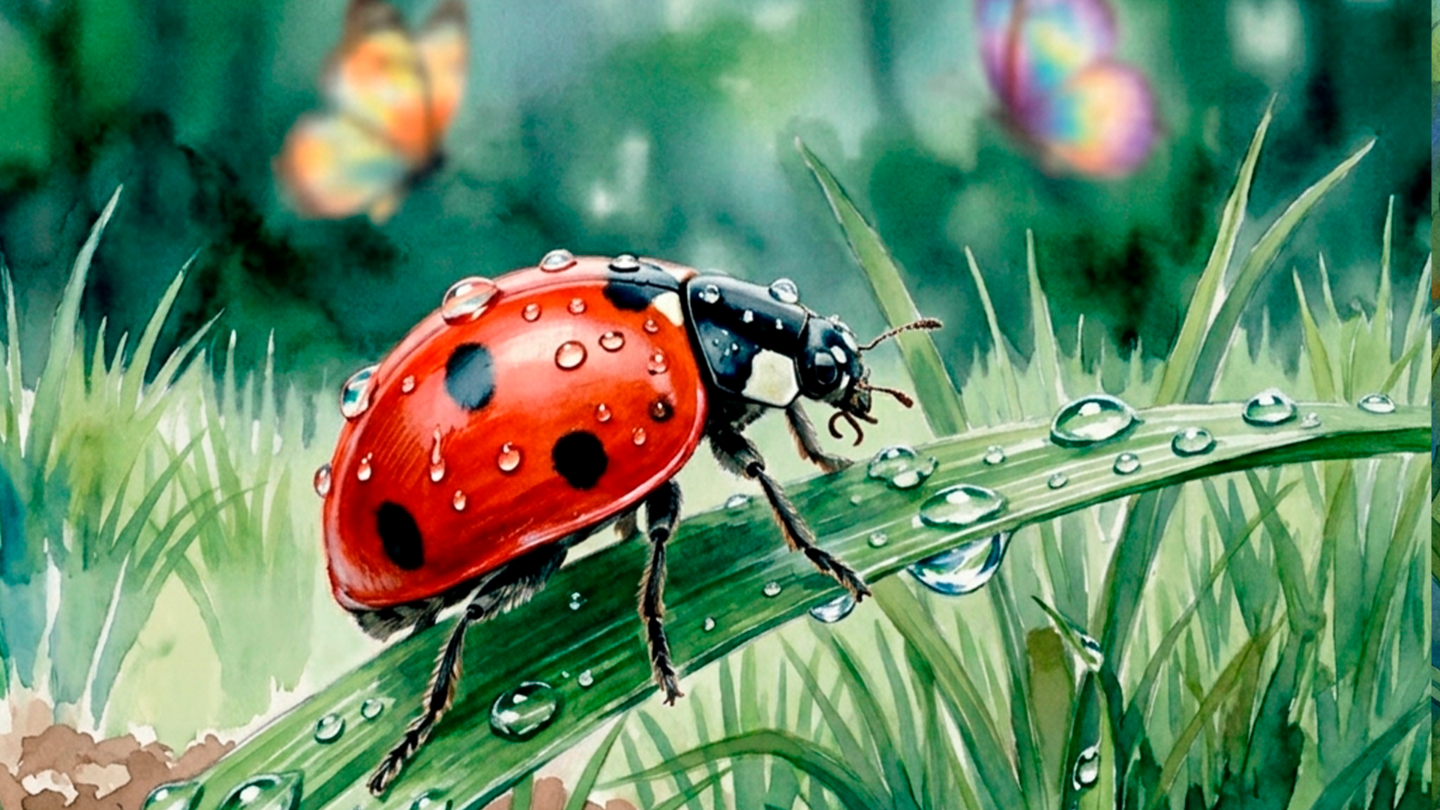
Concept
«Entosphere» is a popular science media outlet focused on entomology and related applied fields. The project publishes material about insects, their biology, distribution, and interaction with humans. The goal of the project is to provide users with structured and verified information about insects, their biology, and human interaction.
Thematic Plan
Platforms:
1. Website — the main platform for publishing long-form articles, articles on migration, podcasts, species distribution maps, and morphological 3D models.
2. Telegram Channel — urgent updates on the appearance of new or invasive species, short scientific facts, and material announcements.
3. Telegram Bot — a tool for identifying insects from an uploaded photo and providing a brief summary.
4. Video Hosting Sites (YouTube / RuTube) — documentary macro videos and lectures by invited experts.
Weekly Content Release Schedule
Monday: Telegram: Fact Card (light start to the week). Tuesday: Website: Publication of an analytical long-form article. Telegram: Announcement of this long-form article with a brief summary. Wednesday: Telegram: Quick update (if there is news) OR a helpful safety tip. Thursday: YouTube/RuTube: Publication of a new video (macro-shot or lecture). Telegram: Video announcement featuring the most interesting preview frame. Friday: Website: Publication of an interactive special project (map, 3D model) or a new podcast episode. Telegram Bot: Short «Weekend Insect» mailing for opted-in users.
Six-Month Thematic Plan
The plan is built taking into account the seasonal activity of insects and the classroom calendar, starting in October.
1 Month (October) — «Roommates»Topics: • Marble bug in Russia • Who overwinters in your home • Silverfish and scale insects • Roaches 2.0: insecticide resistance • Invasive species by regionFormats — longreads, interactive apartment map, macro video, instruction cards, podcast, situational updates.
Month 2 (November) — «Hibernation: How Insects Survive the Cold»Topics: • Insect Antifreeze • Three Survival Strategies • Cryobiology: What Larvae Teach Us • Diapause vs. Hibernation • Larvae That Survive Complete FreezingFormats — longreads with infographics, video lectures, fact cards, podcast, and documentary macro-video.
Month 3 (December) — «Entomology Archives: Great Discoveries of the Past»Topics: • Maria Sibylla Merian • Linnaeus and the Birth of Taxonomy • Jean Henri Fabre • Amber as a Time Machine • How a New Species is DescribedFormats: Long-form articles with reproductions, video lectures with a historian, podcast, story cards, interactive special projects, 3D models.
Month 4 (January) — «Entomology in Culture»Topics: • Nabokov as an Entomologist: How the great writer described butterflies • Kafka’s «Metamorphosis»: Which insect was the author really referring to? • The Scarab Beetle in Ancient Egyptian Culture: From dung beetle to symbol of eternal life • Insects in Painting: From Dürer to the Surrealists • Werner Bernhard’s «Ant Colony Empire» and other novels about swarm intelligence • Crickets and Cicadas in Poetry: From antiquity to HaikuFormats — long-reads featuring reproductions and archival materials, a video lecture with a literary scholar, a podcast with a cultural theorist, gallery cards, the documentary video «Insect in Frame, ” and an interactive quiz „Guess the Insect from a Painting or Excerpt.“
Month 5 (February) — «Insects and Medicine: From Toxin to Therapeutic»
Topics: • Maggot Therapy • Venom as Medicine • Forensic Entomology • Entomotoxicology • Cantharidin • Chitin in Medicine
Formats — longreads, video lectures with physicians, podcast with a pharmacologist, rating cards, documentary video, and infographics.
Month 6 (March) — «First Awakenings: Who Emerges from Hibernation»Topics: • Queen Bumblebees • Regional Emergence Calendar • Photoperiodism • Early Spring Butterflies • 2027 Tick Season • Early PollinatorsFormats — Long-reads featuring macro photography, an interactive map, video lectures, photo cards, a podcast with an infectious disease specialist, and documentary macro video.
Content Samples
Example 1 — Winter Antifreeze: How Insects Don’t Freeze at –30°C
Concept: Insects survive freezing not due to sheer «toughness,» but through complex biochemistry: cryoprotectants, antifreeze proteins, and controlled freezing. We will explore these mechanisms and demonstrate how this knowledge is applied in medicine and cryopreservation.
Format: Popular science long-form article (text + infographic).
Structure:
- Introduction: Why freezing is lethal to most organisms
- Two Survival Strategies: Avoidance versus Controlled Freezing
- Cryoprotectants: Glycerol and Sugars in Hemolymph
- Controlled Freezing: Nucleating Proteins
- Antifreeze Proteins: Halting Ice Crystal Growth
- Cold Champions (Upis ceramboides, Arctic Vole)
- How Insects Know When to Prepare (Photoperiod, Diapause)
- Applications in Medicine and Biotechnology
- Conclusion: Evolution as the Engineer-Designer
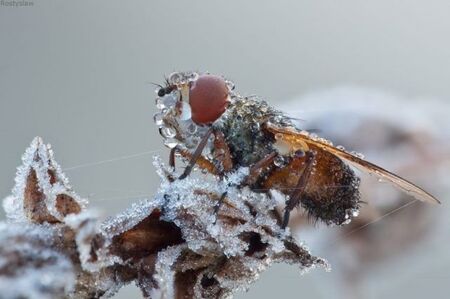
When temperatures drop below freezing, a predictable thing happens to living organisms: the water in their cells turns into ice. Ice crystals are sharp—they puncture cell membranes, tear tissue, and the organism dies. For most animals, sub-zero temperatures are a death sentence. But not for insects. Right now, as you read this, millions of insects somewhere in a snowdrift near Moscow or in the permafrost of Yakutia are in a state that is difficult to classify as either life or death. They do not move. They do not breathe in the way we understand it. They do not eat. Their bodies have frozen down to –20, –30 degrees, and in some record holders—even down to –70 degrees Celsius. And in the spring, they will wake up. How do they manage it? The answer has proven to be more complex and ingenious than biologists imagined half a century ago.
Sample 2 — Fleas and Cockroaches: The Evolution of Insecticide Resistance
Concept: Insect resistance to pesticides is not «adaptation» or magic—it is classic, real-time natural selection. We examine exactly how insects circumvent chemistry (behavior, enzymes, target mutations), why bed bugs and cockroaches are particularly successful in this race, and what control strategies work against resistant populations.
Format: Popular science longread.
Structure:
- Introduction: Insects as ancient survivors and the emergence of chemical warfare
- The history of the arms race: From DDT to pyrethroids and new classes
- The three lines of insect defense: behavioral, metabolic, and target resistance
- Bed bugs: Biology ideally suited for rapid evolution
- Cockroaches: Masters of survival with multi-resistance
- What to do when pesticides fail: Principles of IPM (Integrated Pest Management)
- New development approaches: Biopesticides, pheromones, and genetic methods
- Conclusion: Evolution as a continuous process requiring smart strategy
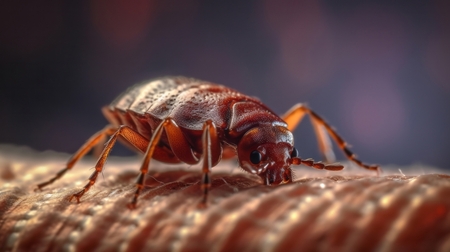
They were here before us. Cockroaches appeared on Earth about 300 million years ago—long before the dinosaurs. Bed bugs may have appeared along with humans or even earlier, parasitizing cave dwellers. Over hundreds of millions of years, these insects have survived numerous catastrophes. But the most serious threat to them arose in the 20th century—when humanity invented chemical weapons. Insecticides. First DDT, then pyrethroids, neonicotinoids, phenylpyrazoles. Every new compound seemed like a silver bullet. And each time, the insects found a way to survive. Today, in many cities around the world, bed bugs and cockroaches are resistant to most available insecticides. This is not just a problem for sanitation services—it is one of the clearest examples of real-time evolution happening right in our apartments.
Sample 3 — Amber as a Time Machine: What the Petrified Resin Preserved
Concept: Amber is not merely a beautiful stone; it is a unique natural archive, preserving three-dimensional «photographs» of creatures that lived tens and hundreds of millions of years ago. We explore how resin transforms into a time machine, what is found within inclusions (from insects to dinosaur tails), the modern techniques used to study the samples, and the ethical challenges science faces regarding the extraction of Burmese amber.Format: Popular science long-read.Structure:
- Introduction: Amber as a three-dimensional photograph from the past
- What is amber: fossilized resin, not a mineral
- How a drop of resin becomes a time machine: the fossilization process
- What is found in amber: from extinct insects to the tail of a dinosaur
- Why amber is unique: three-dimensional preservation, color, behavioral scenes
- How amber is studied: micro-CT, confocal microscopy, spectroscopy
- Fakes and the ethical issues of extraction (especially Burmese amber)
- Conclusion: Amber as a window into ancient ecosystems
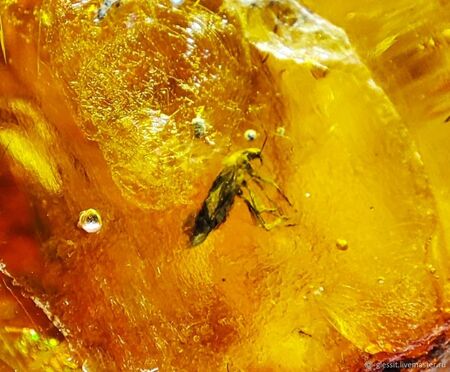
The first thing to understand is that amber is neither a mineral nor a fossil in the usual sense. It is fossilized resin. Millions of years ago, coniferous trees (or legumes, in the case of Dominican amber) secreted a viscous sap. This was their defense mechanism: when the bark was broken by wind, gnawed by insects, or infected by fungus, the resin sealed the wound, acting as a natural antiseptic. Sometimes the sap would run down the trunk, trapping everything in its path—flies, ants, spiders, pieces of bark, pollen, and even small lizards and tadpoles. A drop would fall to the ground, be covered by sediment, and the millions-of-years-long process would begin. The sap is an organic substance, a mixture of terpenes and other compounds. Over time, it loses volatile components, polymerizes, and hardens, transforming into amber. This process is called fossilization, but strictly speaking, amber is not a fossil, but a subfossil material. It is younger than true fossils and preserves organic matter much better. The most famous type is Baltic amber, or suzukinite. It is about 40–50 million years old (Eocene epoch). It is found along the Baltic coast in the Kaliningrad Region, Poland, Germany, and Denmark. Dominican amber is younger—15–20 million years old (Miocene). And Burmese amber, or bitumite, is one of the oldest—around 99 million years old, Cretaceous period. This was the time of the dinosaurs.
Example 4 — Insects in Painting: From Dürer to the Surrealists
Concept: Insects in European painting are not random decoration; they are a mirror reflecting how humanity’s perception of nature has evolved. From medieval fear and symbolic interpretation—through the Renaissance’s scientific curiosity—to the unsettling imagery of Surrealism. We examine why artists have embedded flies, butterflies, and ants in their works for centuries, and what these small creatures tell us about ourselves.Format: Popular science long-form article.Structure:
- Introduction: Insects as hidden protagonists in European painting
- The Middle Ages: The fly as a symbol of sin, the butterfly as a sign of resurrection
- Dürer and the Renaissance: The birth of a scientific gaze upon the insect
- 17th-Century Dutch Still Lifes: Beauty, decay, and hidden meanings
- Maria Sibylla Merian: The artist who merged art and entomology
- The 19th Century: Between Romanticism, Pre-Raphaelites, and scientific illustration
- Surrealism: Dalí's ants as a symbol of anxiety, decay, and subconscious fear
- Why artists are drawn to insects: Omnipresence, symbolic flexibility, and visual complexity
- Conclusion: From Dürer to contemporary installations—insects as a material for contemplating life
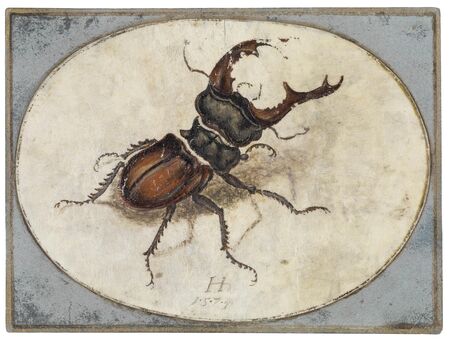
In medieval European art, insects were rarely depicted for their own sake. They functioned as symbols—and most often, negative ones. The fly, for example, is one of the most persistent motifs. In religious painting, the fly symbolized evil, sin, and decay. It was believed that flies emerged from rotting flesh—they self-generated, as they thought back then. Anything born from rot could not be good. On icons and altarpieces, a fly might be perched on the hand of a pagan idol—a sign that the deity was false, that decay lay beneath it. The butterfly, conversely, held positive meaning. Its life cycle—caterpillar, pupa, winged creature—was associated with resurrection and the immortality of the soul. Therefore, butterflies were often painted in religious scenes, particularly near the infant Christ or saints.
Sample 5 — Why does a cockroach live without a head for 7 days?
Idea: To debunk the popular myth of cockroach «indestructibility» by demonstrating that its ability to survive without a head is not magic or a superpower, but a logical consequence of its simple and effective biological structure.
Format: Fact card for Telegram/social media (text + diagram/illustration).
Structure:
- Statement of the myth
- Three reasons for survival: respiration through spiracles, low blood pressure, decentralized nervous system
- The true cause of death—dehydration, not starvation
- Conclusion: the body’s autonomy as an evolutionary outcome
Annotation: A cockroach can indeed survive for about a week without a head—but not due to mystic resilience, but because of its anatomical features: it breathes through openings in its abdomen, does not lose blood due to low pressure, and is controlled by nerve ganglia in every body segment. It dies not from hunger, but from dehydration—it cannot drink without a mouth. This card breaks down the three biological reasons for this phenomenon and explains why the cockroach’s «indestructibility» is actually just sophisticated natural engineering.