Navigation
- Index
- Concept
- Intuitive Biology
- Cell Anatomy
- The Age of Genetics
- The Laboratory as Canvas
- Conclusion
Concept
The theme of my visual research is: «The Aesthetics of the Invisible: The Microcosm and Biomorphic Abstraction.» This topic was chosen due to its contemporary relevance; today, biology and technology are penetrating our daily lives more deeply than ever, and the aesthetics of the microcosm is emerging as one of the primary visual codes of modernity. This visual research aims to analyze this transition—how the space invisible to the eye became a source of new formal structures and altered the very nature of artistic expression. The narrative logic and the research structure are built along a chronologico-conceptual vector, demonstrating art’s phased immersion into the structure of living matter. The material is divided into four sequential logical blocks, each reflecting a predictable shift in visual paradigm.
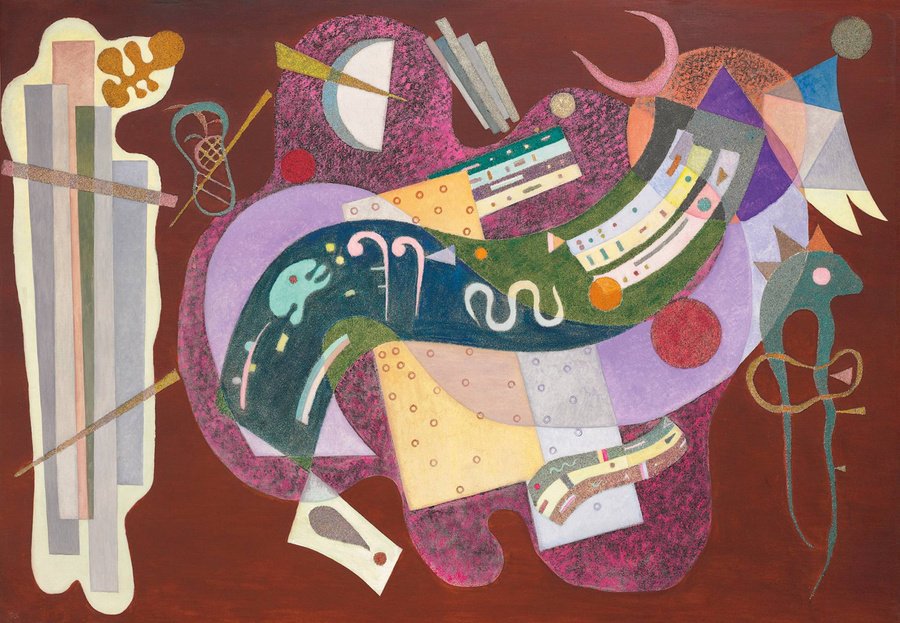
Wassily Kandinsky, Straight and Curved, 1941
In the early 20th century, against the backdrop of global industrialization and a fatigue with the rigid geometry of machinery, art turned toward hidden biology. Even before detailed micrographs became accessible to mass culture, artists began to intuitively visualize the microscopic world. The pictorial space on their canvases lost gravity, filling with pulsating, weightless forms reminiscent of simple microorganisms and dividing cells. Soon, this «liquid» universe gained volume: sculpture abandoned right angles in favor of organic growth. Streamlined shapes, porous textures, and open voids emerged, visualizing cell membranes, budding processes, and the hidden dynamics of living tissue. Art of this period attempted to imitate the external morphology of invisible life. A turning point in visual culture was the discovery of the DNA structure and the rapid development of genetics in the latter half of the century. Artists began not just to be inspired by organic form, but to depict the structure of biological connections themselves—molecular lattices, spirals, and histological networks. In the 21st century, in the era of postbiology and genetic engineering, the distance between art and the microcosm has vanished completely. A radical shift has occurred: art has moved beyond mere imitation and has changed its very medium. The artist’s toolkit has expanded to the scale of a scientific laboratory. Contemporary creators are literally working with microflora, bacterial colonies, and genetic code.
Key Question and Hypothesis
In my research, I posed the question: precisely how has scientific progress in microbiology and genetics transformed the visual forms and material mediums in fine art over the past century? In response, I proposed the following hypothesis: as science penetrated ever deeper into the structure of life, art followed a predictable evolutionary path—from intuitive imitation of biological forms to structural analysis of genetic networks, and finally to the physical appropriation of biological processes. The result of this evolution was the transformation of living matter itself, moving from being an object of representation to becoming a legitimate artistic medium.
Intuitive Biology
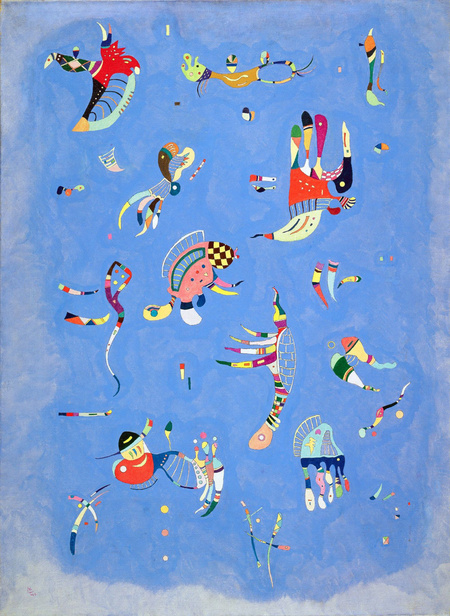
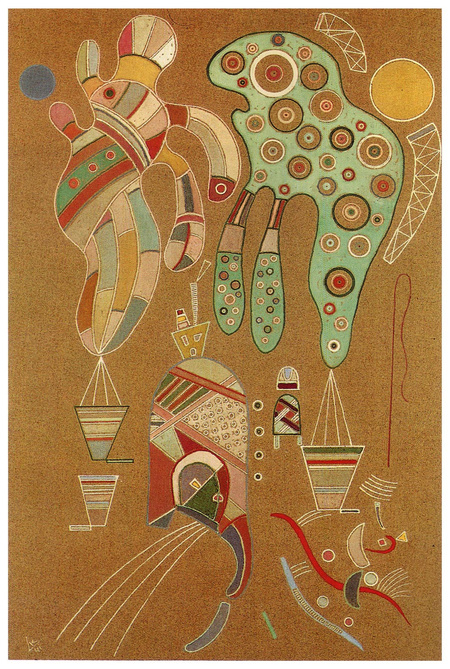
V. Kandinsky, Blue Sky, 1940 / Composition, 1941
During his later (Parisian) period, Kandinsky tired of the «cold» Constructivism. He began studying encyclopedias on zoology and embryology. The canvases from this period are literally microscope slides, on which whimsical organisms float in a liquid medium.
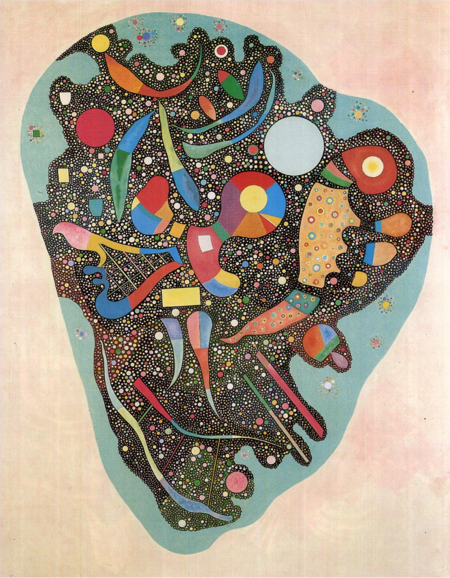
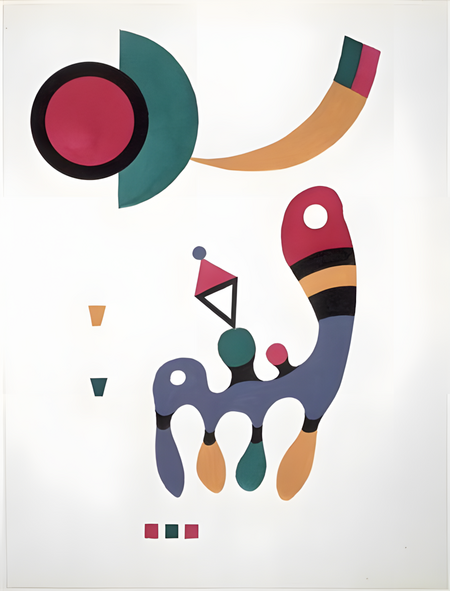
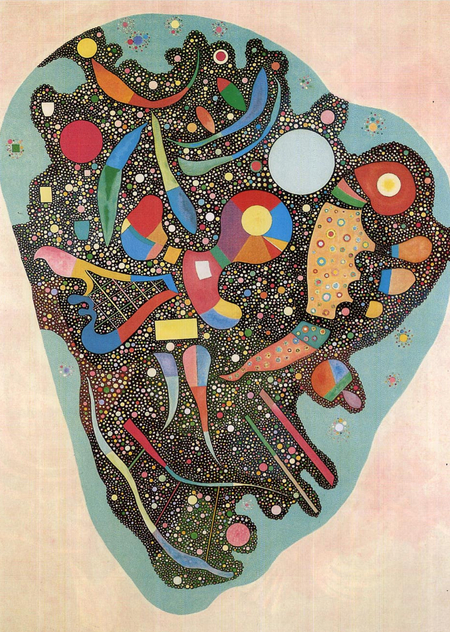
V. Kandinsky, Colorful Ensemble, 1941 // V. Kandinsky, Composition, 1944
In the painting «Colorful Ensemble, ” Kandinsky works with the motif of the cell nucleus and membrane. The forms in the painting are enclosed within envelopes, inside of which are smaller colored elements (vacuoles, nuclei, chromosomes).
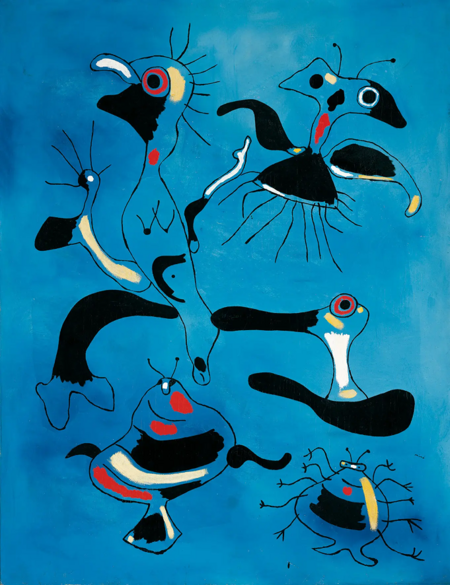
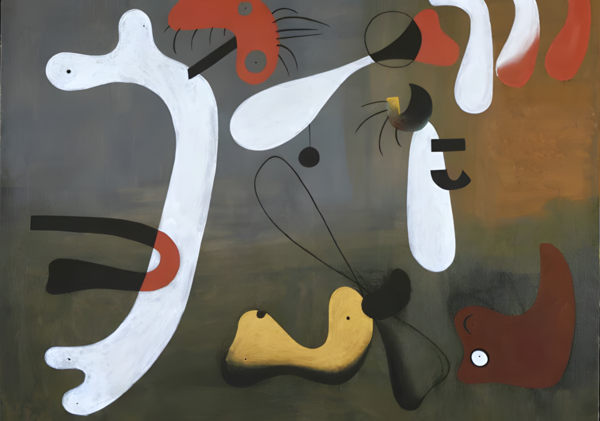
Joan Miró, Birds and Insects, 1938 // Joan Miró, Painting, 1933
Miro possessed a unique vision: he viewed the world of stars and insects, and painted them as if they were atoms and microbes. He reduced every form of life to the simplest biological sign. Black dots connected by thin lines resemble neural connections or cell nuclei. Smooth, amoebic contours and floating «antennae» in space evoke bacterial flagella.
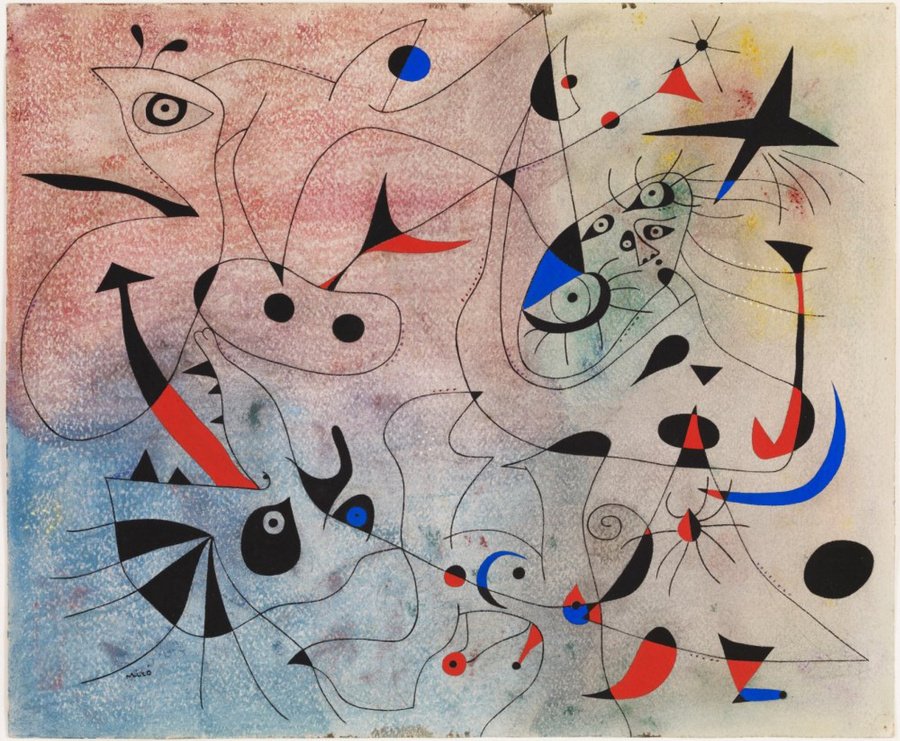
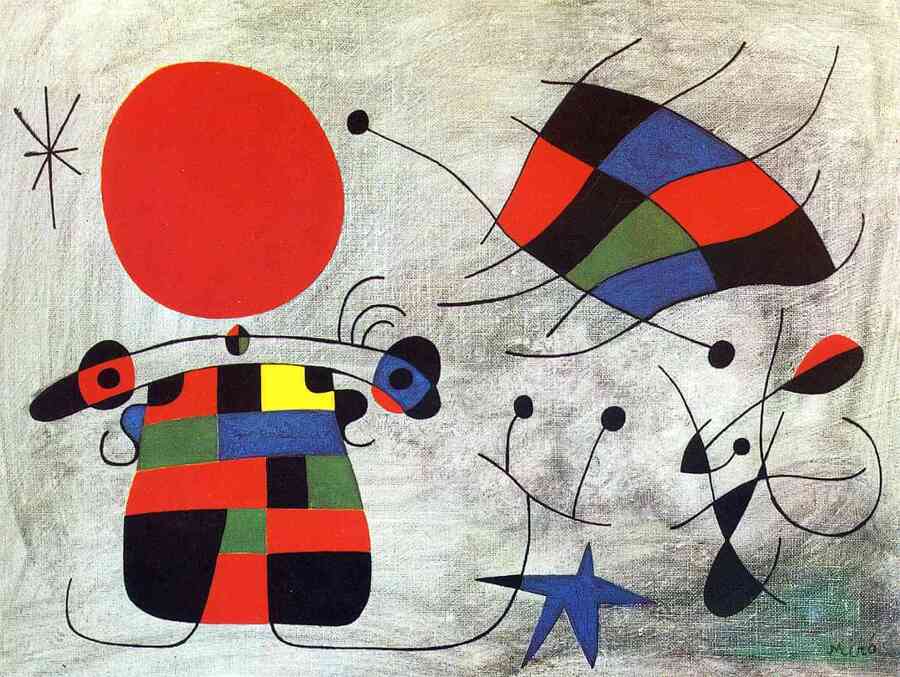
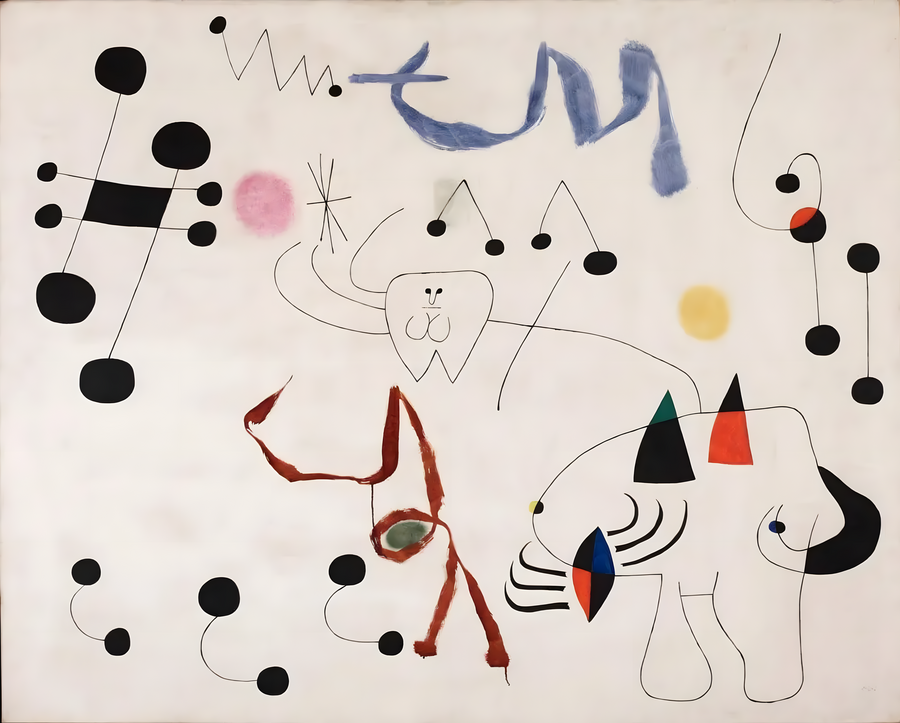
Joan Miró, Smile of Burning Wings, 1953 // Woman Dreams of Escape, 1945 // Morning Star, 1940
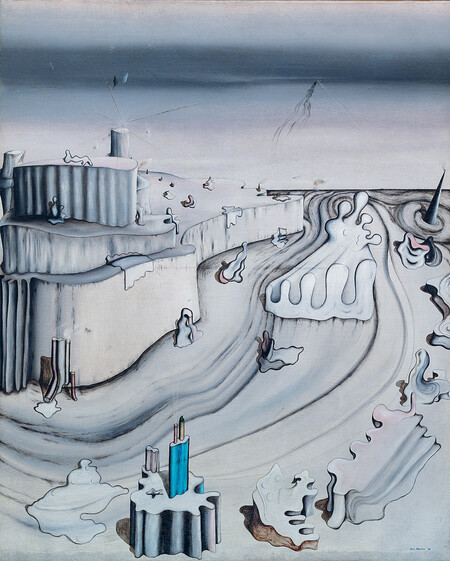
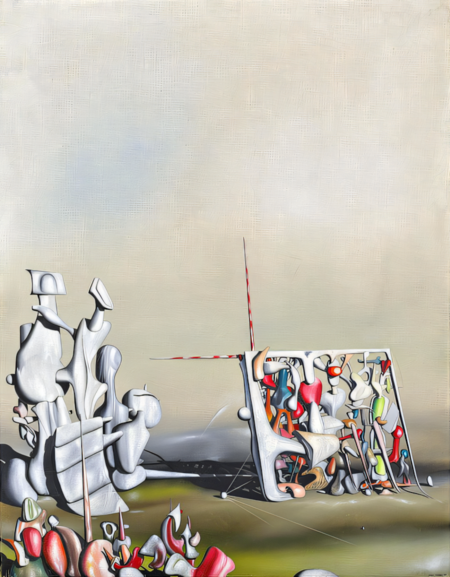
Yves Tanguy, Palace on the Cape, 1931 // Yves Tanguy, Where Movement Has Not Yet Ceased, 1945
Iv Tanguy, Multiplication of Arcs, 1954
In Miro’s painting, «Multiplication of Arcs,» the canvas space up to the horizon is densely packed with tens of thousands of small, similar, yet slightly varied biomorphic forms. This strongly resembles an uncontrolled colony of bacteria or mold that endlessly divides and consumes everything around it.
Cell Anatomy
Jean Arp, Human Concretion, 1935
«Human Concretion» by Jean Arp illustrates the embrace of organic abstraction through biomorphism, combining natural inspiration with artistic innovation. The smooth, undulating curves of the sculptures recall the forms of nature—cellular structures. Arp’s minimalist approach discards detail, focusing instead on the essence of growth and life, creating a piece that is simultaneously primitive and contemporary. [1]
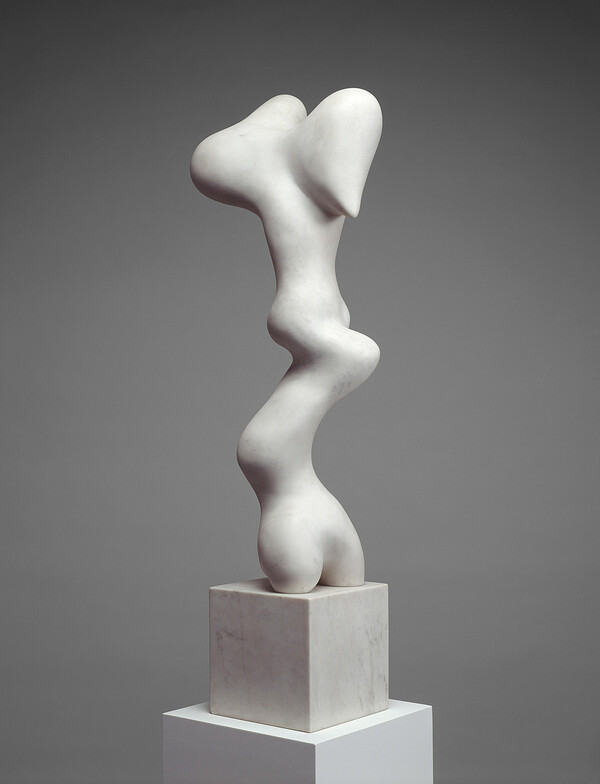
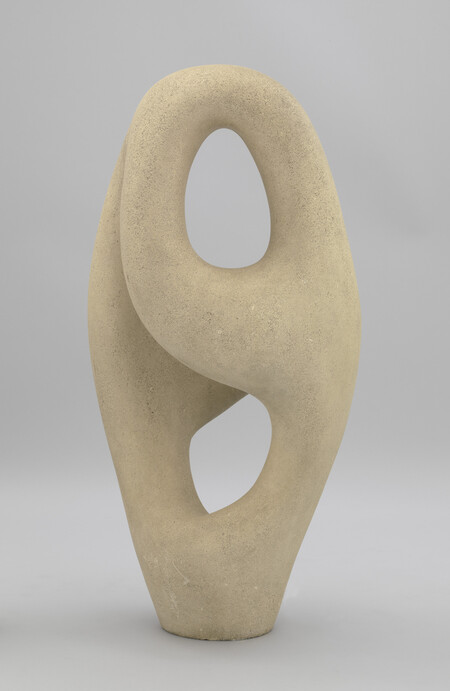
Jean Arp, Growth, 1938//Jean Arp, Ptolemy, 1953
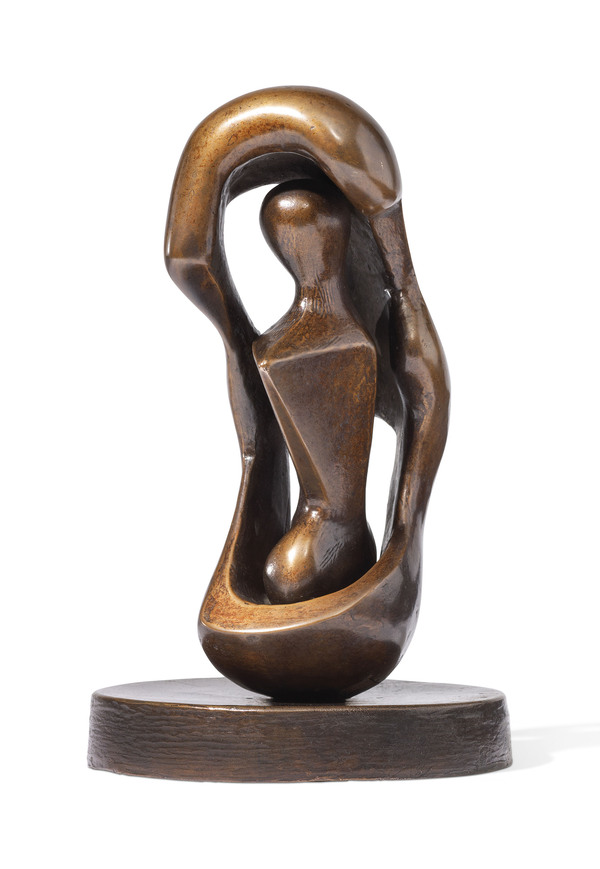
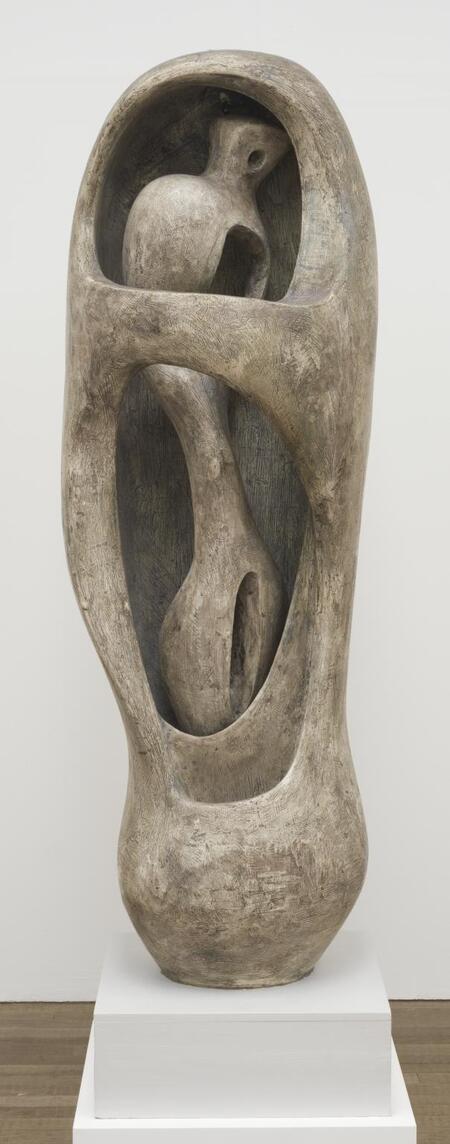
Henry Moore, Upright Continuous Forms, 1951–53//Henry Moore, Vertical Internal/External Form, 1952–53
Henry Moore spent his life exploring the classic motif of the «Mother and Child.» However, if we view this motif through the lens of microbiology, especially in his abstract works from the 1950s, we see not people, but the anatomy of a cell: the protective shell (the membrane) and what is hidden inside it (the nucleus).
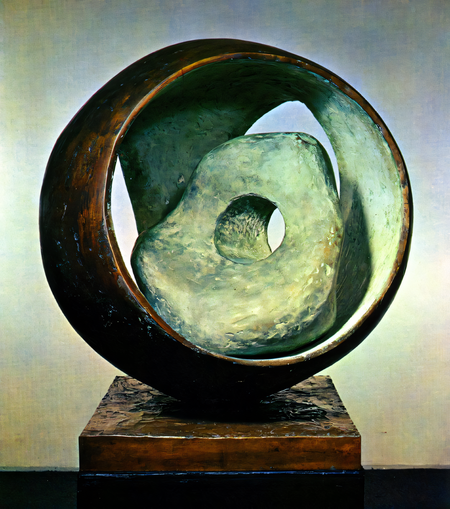
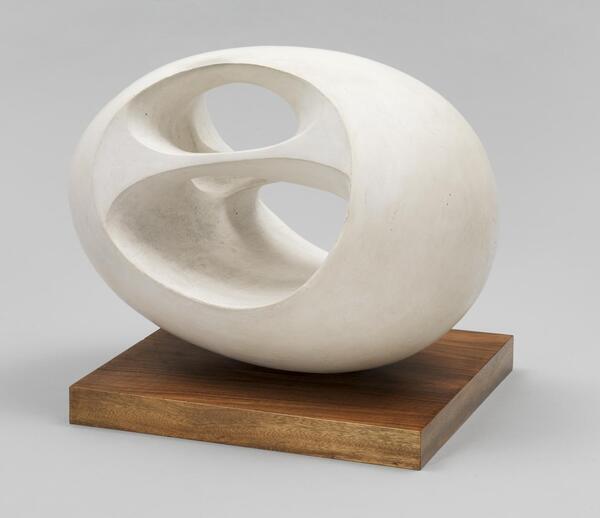
Barbara Hepworth, Sphere with Internal Form, 1963 // Barbara Hepworth, Oval Sculpture (No. 2), 1943, Cast 1958
Barbara Hepworth, Pelagos, 1946
The Age of Genetics
Salvador Dalí, Galacidalacyclodextrin, 1963
Inspired by the original Watson and Crick paper in Nature (1953), Dali literally paints the DNA helix, composed of molecules and human figures, illustrating how a scientific discovery instantaneously infiltrates pop culture and the canvases of great artists.