Китайские пирамиды
Chinese imperial kurgans are giant mounds shaped like truncated pyramids, constructed from tamped earth. These pyramids, similar to their Egyptian counterparts, served as tombs for rulers. Construction began around 4700–2900 BCE, with the latest ones built in the 18th century. The appearance of the pyramids varies significantly due to different dynasties and the characteristics of the era.
Differences from Egyptian Pyramids.
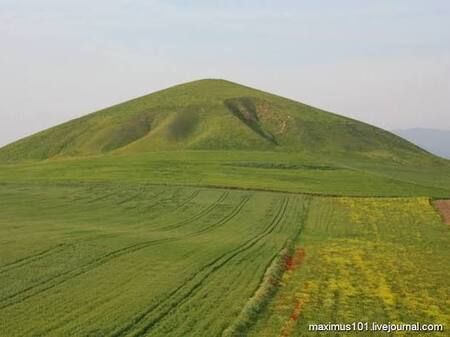
Unlike the pointed stone pyramids of Egypt, Chinese pyramids are massive mounds with flat tops, built by compressing earth and clay. Over time, their slopes have been overgrown with forest, making them resemble ordinary hills. Furthermore, the emperor’s tomb in China—rich with offerings and armies of statues—was not located inside the mound but deep underground, and most of these structures remain unexcavated and closed to tourists.
Differences from Egyptian Pyramids.
Unlike the sharp-peaked stone pyramids of Egypt, Chinese pyramids are immense mounds with flat tops, constructed using rammed earth and clay. Over time, their slopes grew covered in forest, making them resemble ordinary hills. Furthermore, the emperor’s tomb in China, rich with offerings and armies of statues, was located deep underground rather than inside the mound, and most of these structures remain unexcavated and closed to tourists.
Neolithic Period
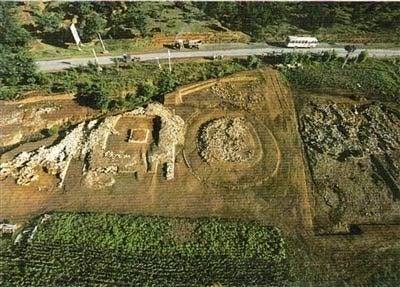
XUANGLING COMPLEX (circa 2900–4700 BC) The oldest known burial mounds in China belong to the Neolithic Hongshan culture in northeastern China, across Liaoning and Inner Mongolia provinces. These structures served as elite tombs. Circular and square stepped mounds, constructed from layered stone, were erected over them. Various ritual artifacts made of jade were discovered within the burials.
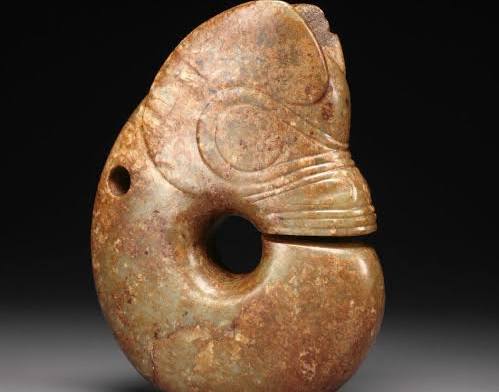
Jade «Pig-Dragon» (Zhulong)
Giant burial mounds from the Era of Warring States (5th century BCE — 221 BCE)
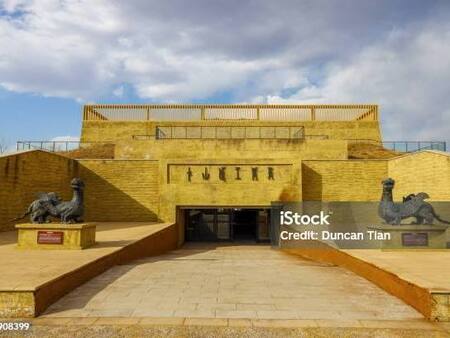
Unlike the Neolithic period, during this era, pyramids were not small structures (up to 15 m) made of rough-hewn stone, but large mounds (up to 75 m) constructed from clay with wooden frameworks. They were also more truncated and possessed a dense, smooth surface in an ochre-yellow or grayish hue. Due to ancient Chinese religious beliefs about the afterlife, the lack of construction stone, and the necessity of protecting treasures from robbers, their main body was situated underground. The upper section served merely as an external marker, while the burial itself was located in a pit chamber.
новодел
оригинал
Terracotta Army of Qin Shi Huang (3rd Century BCE)
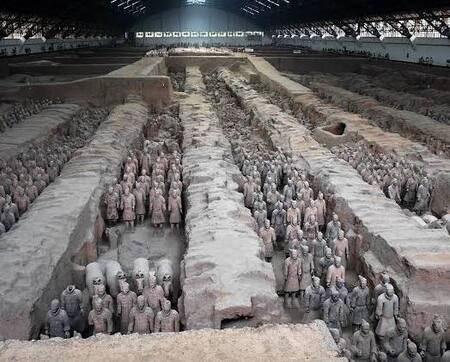
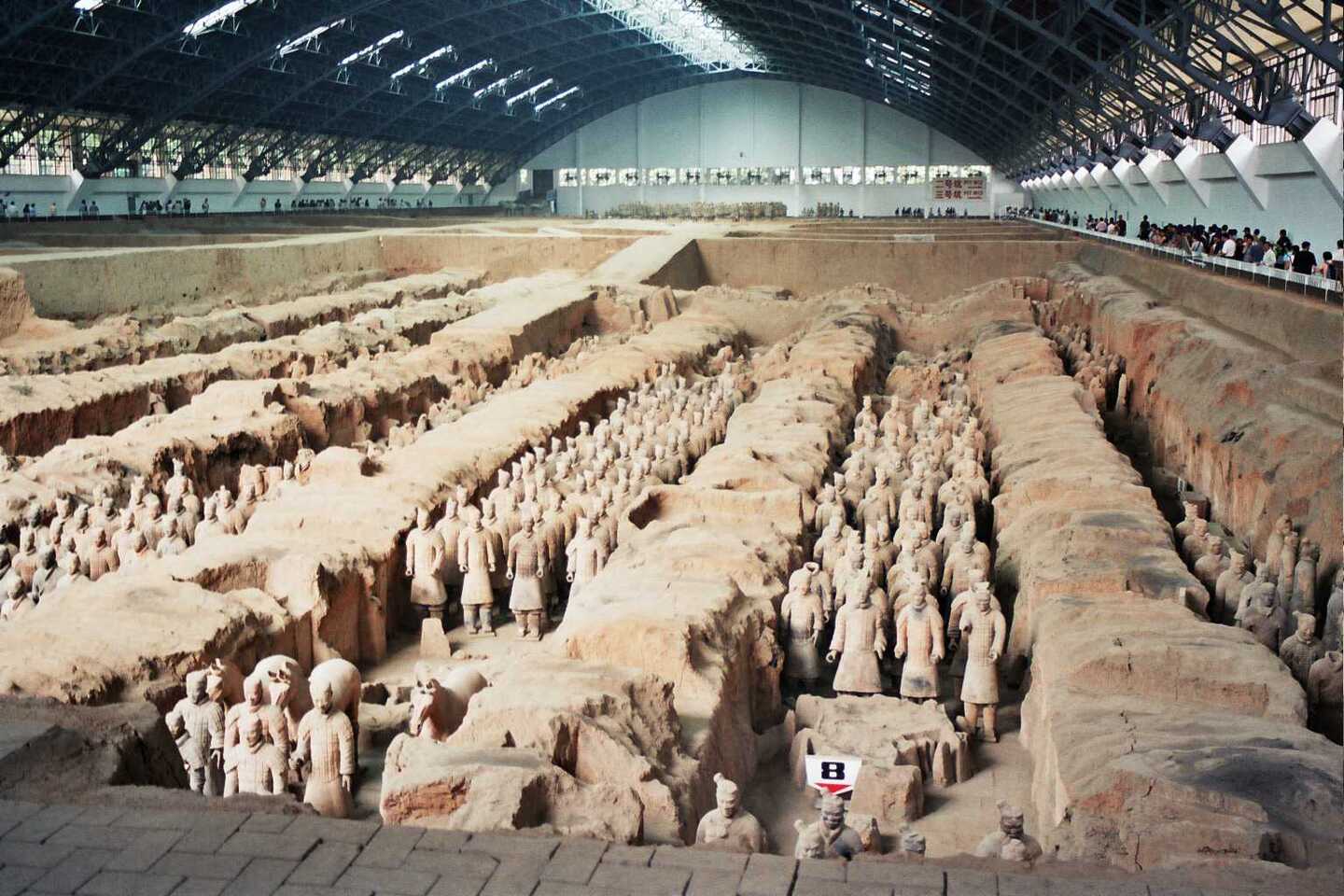
The Terracotta Army is the world’s largest individual burial site, covering an area of approximately 56.25 square kilometers. The burial contains around 8,000 statues. The monument is divided into three excavated sections and one unexcavated area. The first excavation is an elongated rectangle (230 × 62 m) and contains about 6,000 soldiers and horses. The second excavation is an L-shaped bunker with approximately 1,400 soldiers and chariots. The third excavation is the smallest, but critically important to the «immortal army,» housing 68 high-ranking officers, bodyguards, and a ceremonial chariot.
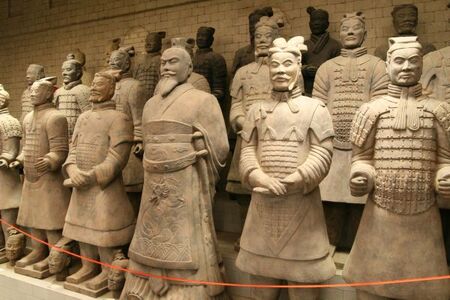
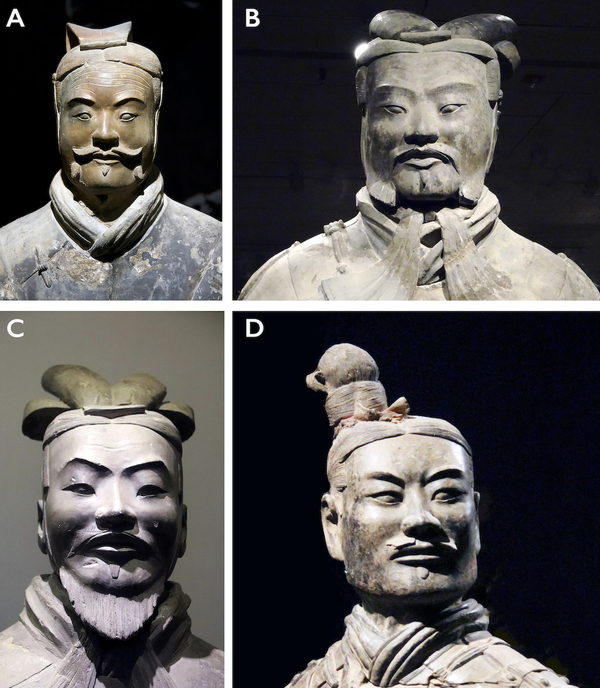
The uniqueness of the Terracotta Army lies in its combination of mass production and portrait individuality. When creating over 8,000 full-sized statues (standing from 175 to 195 cm), the ancient masters employed a modular method. The legs were molded from solid clay for stability; the hollow torsos were assembled from clay strips, using a potter’s wheel principle, while the hands and heads were made separately in basic molds. However, after the initial assembly, sculptors took over, responsible for the individuality of each soldier. They meticulously refined every head, creating unique facial features, nose shapes, eye cuts, mustaches, and hairstyles. Visual analysis allows for the unambiguous determination of a warrior’s rank: simple infantrymen wear modest hair buns without headwear, mid-ranking officers wear flat caps, and generals are clad in elaborate, multi-layered armor featuring decorative knots and high headpieces reminiscent of a pheasant’s tail.
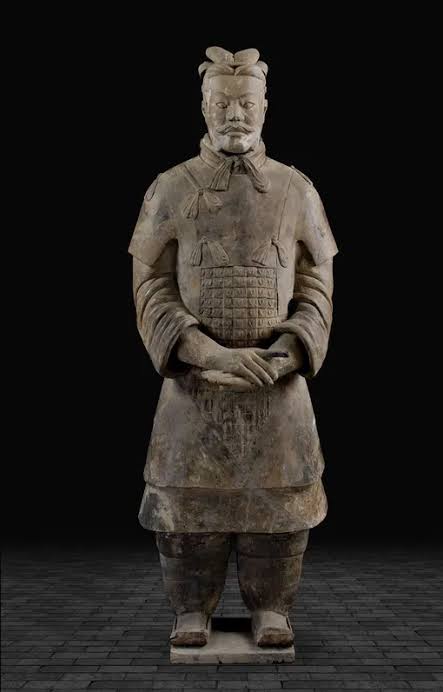
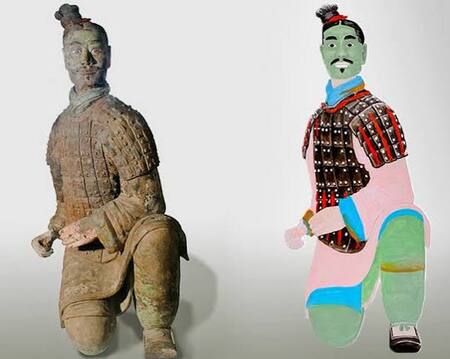
Currently, the Terracotta Army appears monochromatic. However, in the 3rd century BCE, this army dazzled with a riot of color. Each figure was coated with a layer of dark varnish, over which vibrant mineral pigments were applied: cinnabar, malachite green, azurite, ochre, and a unique synthetic pigment—“Chinese purple» (barium-copper silicate)—the formula of which Western chemists only deciphered in the late 20th century. The initial problem in the excavations was that after two thousand years in moist soil, the varnish layer dried and rapidly contracted upon contact with dry air, taking the ancient paint with it. Today, archaeologists use specialized preservatives and work in mobile laboratories directly at the excavation sites, preserving fragments of the original polychromy.
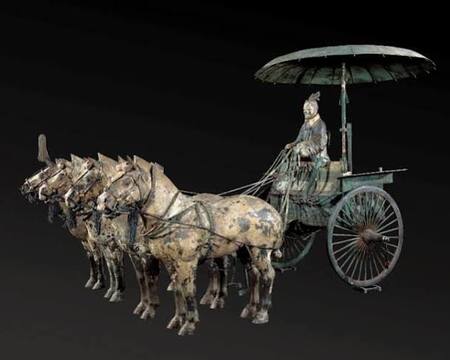
The warriors held authentic, battle-ready weaponry that retained its sharpness after two millennia. Bronze swords, spearheads, and crossbow bolts were covered with an ultrafine layer of chromium oxide—an anti-corrosion technology patented in Europe and the United States only in the 20th century. Furthermore, all components of the crossbow triggers were completely interchangeable thanks to strict state standards. The pinnacle of casting artistry was reached by two bronze chariots, each drawn by four horses, discovered in 1980 west of the burial mound. Rendered at half scale, together they comprise over 6,800 parts, including gold and silver ornamentation, movable window panels, and the finest bronze reins.
The central element of the complex—the pyramidal tomb of Qin Shi Huang—remains unexplored. The ancient Chinese historian Sima Qian wrote that the burial chamber contains a model of the celestial realm, complete with rivers and seas of mercury, a ceiling mapped with the night sky, and traps. Modern geochemical soil samples have confirmed an anomalously high concentration of mercury in the mound. Scientists are deliberately postponing the opening of the tomb until technologies are available that will allow the internal décor to be preserved without damage.
Thus, the Chinese pyramids evolved over nearly 4,000 years from humble Neolithic burials to monumental tombs.
Wikimedia Commons File: Xian guerreros terracota general.JPG
Photo A: David Carter, CC0 1.0); B: Maia S, CC BY-NC 2.0; C: Gary Todd, CC0 1.0; and D: James H., CC BY-NC 2.0) https://smarthistory.org/the-terracotta-warriors/
Asian Art Museum in San Francisco Educational Collection Page — China’s Terracotta Army