CODE: Red — media that explains which rare species live near you and how to behave if you encounter them.
Content Plan
Last time, I developed six content categories: «Bookworm of the Day, ” „Found in Nature: What to Do, ” „Return Heroes, ” „My Region, ” „What Everyone Can Do, ” and „Myth or Fact.“ Each category will be published one to two times a week, filling the TG channel with information.
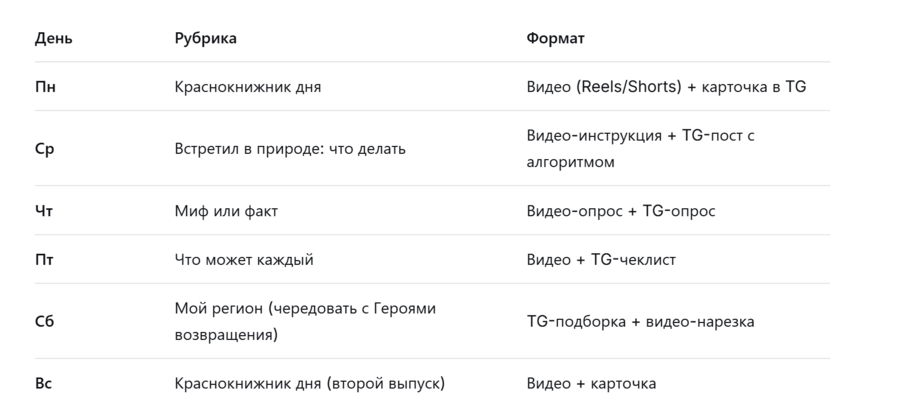
The main principle: the categories remain constant; only the content changes. Seasonality dictates what types of visuals and scenarios to showcase.
Seasonal commitment for 6 months (half a year)
Month 1 (November): «Who Stayed and Who Left»
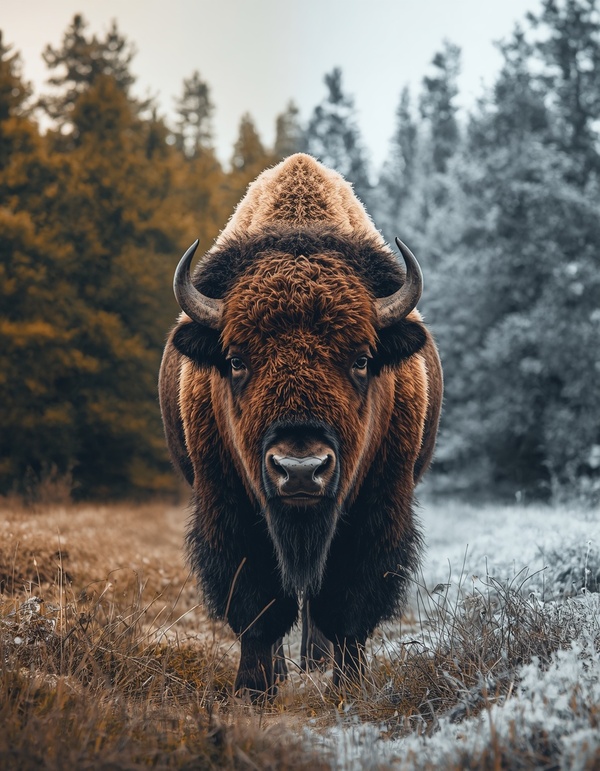
Focus: migrations, winter preparations, final encounters before the snow.Red Book Spotlight: late migrants (waterfowl, cranes), animals preparing for hibernation (groundhog, badger), endangered fungi and lichens, overwintering insects.Nature Encounters: «A bird hit a window in the autumn, ” „Found an endangered plant—can I photograph it?“, „Met a hedgehog in late fall—it shouldn’t be active, ” „Someone left a feeder with bread—what should I do?“Myth or Fact: „Is bread good feed for birds?“, „Can everything that grows be collected in the autumn?“, „Does a hedgehog carry apples on its back?“What Everyone Can Do: window decals to prevent bird strikes, proper feeders (seeds, not bread), do not disturb hibernating animals.My Region: Autumn profiles—who migrates through your region, and who stays to overwinter.Heroes of Return: European bison, white crane—stories of recovery, and „how a species survives winter.“
Month 2 (December): «Winter: Tracks and Survival»
Focus: Snow as a book of tracks, wildlife feeding, hibernation.Red Data Book Animals of the Day: animals in the snow (snowshoe hare, lynx, wolverine), wintering birds (owl, kingfisher), red data book plants under the snow.Encountered in Nature: «Found tracks—how to identify who passed through?», «Bird on the balcony in winter—what to do?», «Found a sleeping hedgehog/badger—don’t wake it up, ” „Injured bird in winter—a box, darkness, silence.“Myth or Fact: „Do birds need bread in winter?“, „Does a bear suck its paw?“, „Do snakes hypnotize?“What everyone can do: proper feeding (seeds, unsalted lard), not disturbing hibernating animals, not stepping on ice in habitats of rare species.My Region: wintering red data book species in your region, „who winters in your yard.“Heroes of Recovery: „How bison survive winter in reserves, ” „Saving the Siberian crane in winter.“
Month 3 (January): «Deep Freeze: Who is Near Us»
Focus: urban and suburban encounters, tracks, feeders.Red-listed creatures of the day: titmice, urban owls, rare wintering ducks (Mandarin ducks), and endangered mosses and lichens.Encounters in nature: «Owl on the balcony—it’s not injured, it’s sleeping, ” „Winter duck in the marsh—what to do?“, „Found a frozen bird—can it be saved?“, „Someone is feeding a fox in the yard—how dangerous is this?“Myth or fact: „Does an owl look drunk during the day—is that normal?“, „Do bats drink blood?“, „If I pick one flower, will nothing happen?“ (a preview for spring)What everyone can do: feeding feeders without bread, not feeding foxes or raccoons, window stickers.My region: „Who winters in your city”—a collection by region.Heroes of recovery: „How the population of wintering birds is being restored.“
Month 4 (February): «Before Spring: The Last Frosts»
Focus: Preparation for awakening, the first signs of spring, traces.Red Book entry of the day: the first spring wildflowers (snowdrop, pasqueflower) — «soon,» overwintering insects, rare birds beginning to nest.Found in nature: «Found a wildflower in February — can I take a photo?», «A bird started building a nest on the balcony — what should I do?», «Someone woke up a sleeping hedgehog — what should I do?»Myth or fact: «Do chicks fall out — were they abandoned?», «Do snakes hypnotize?», «Is bread good food for birds?»What everyone can do: don’t pull up wildflowers, don’t touch nests, hang a feeder before the heat.My region: «The first spring red book species of your region.»Heroes of the return: «Bison: from zero to thousands» — the season’s final story.
Month 5 (March): «Awakening»
Focus: spring encounters, nests, and early wildflowers. Wildflower of the Day: early blooms (snowdrop, pasqueflower, meadowsweet), returning birds (skua, black stork), awakened insects (stag beetle, mnemonist butterfly).Nature Encounters: «I found an early bloom—can I take a picture and leave?», «A bird built a nest on the balcony—what should I do?», «I saw a snake on the trail—three steps back», «An injured bird—step-by-step guide.»Myth or Fact: «If I pick one flower, will anything happen?», «Chicks are falling out—were they abandoned?», «Do snakes hypnotize?»What Everyone Can Do: don’t pick early flowers, don’t touch nests, keep dogs on a leash in the woods.My Region: Spring collections—who is returning to your region.Heroes of Return: «Cranes: how white cranes are saved», «Badger: return to the rivers.»
Month 6 (April): «Activity and Conflict»
Focus: summer encounters, snakes, wild boar, foxes, fledglings.Book of the Day: snakes, lizards, rare butterflies, beetles, night birds.Encountered in Nature: «Saw a snake—three steps back, ” „Boar on the trail, ” „Fox approached humans, ” „Wounded bird—a box, darkness, silence, ” „Fledgling on the ground—don’t rescue, parents are nearby.“Myth or Fact: „Do snakes hypnotize?“ „Do bats drink blood?“ „Does a hedgehog carry apples on its back?“What Everyone Can Do: don’t feed wild animals, keep dogs leashed in the woods, don’t trap insects in a jar.My Region: summer selections—who lives near the water, in the steppe, in the forest of your region.Return Heroes: „The story of restoring rare predatory birds.“
Content Examples
1. Bookworm of the Day: Lobaria pulmonaria
Card + video close-up. Lichen on the bark of an old tree in an autumn forest. Text: «This is not moss. This is a Red Data Book species. It only lives where the air is clean.»
This is not moss. This is a rare book collector. It only lives where the air is clean.
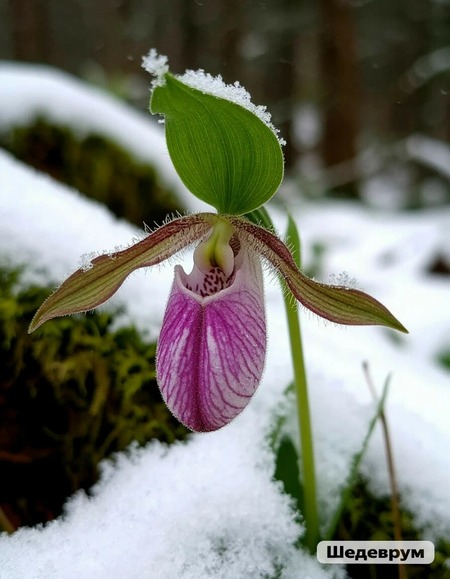
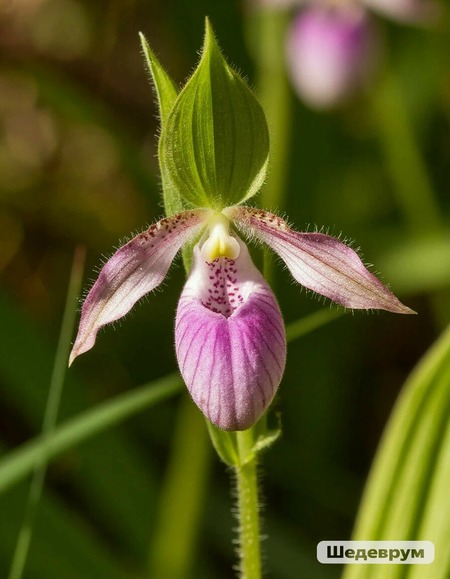
2. Bookworm of the Day: The True Venus’s Slipper
Photo of last year’s stalk under the snow + text «It sleeps in winter. But it is here. Don’t trample it.» Or a summer photo with the reference «remember summer»
Зимой он спит. Но он здесь. Не топчи
Вспомни лето
3. Encountering Wildlife: What to Do—A Chick on the Ground—Do Not Rescue
Video. Shot: a fledgling in the grass, an adult bird nearby (or a hint of one). Text: «He didn’t get lost. Parents are nearby. Back off.»
4. Return Heroes: The Bison — «From Zero to Thousands»
Video story. Shot: a moose in a winter forest, snow on its back. Text: «In the 1920s—zero. Today—thousands. But the forest is still fragile.»