Concept
Decay is often perceived as the loss of something valuable. Yet, in art, the traces of time, wilting, and disintegration frequently become sources of a unique beauty. This study explores how artists across different eras have approached images of ruin: initially depicting transience and ruins, and later beginning to use decay itself as a means of artistic creation.
1. The Beauty of the Inevitable End
Бренность и увядание в искусстве
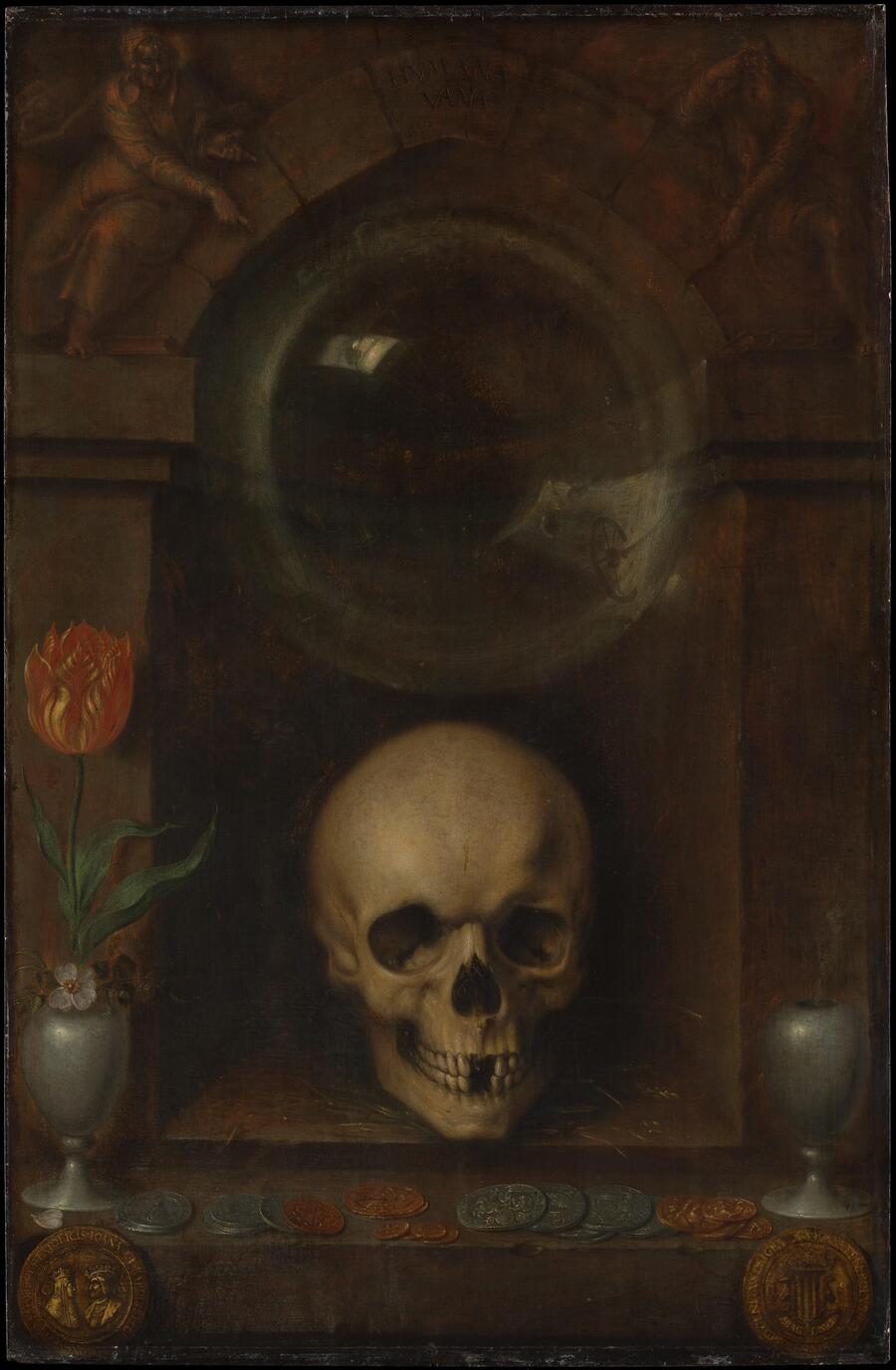
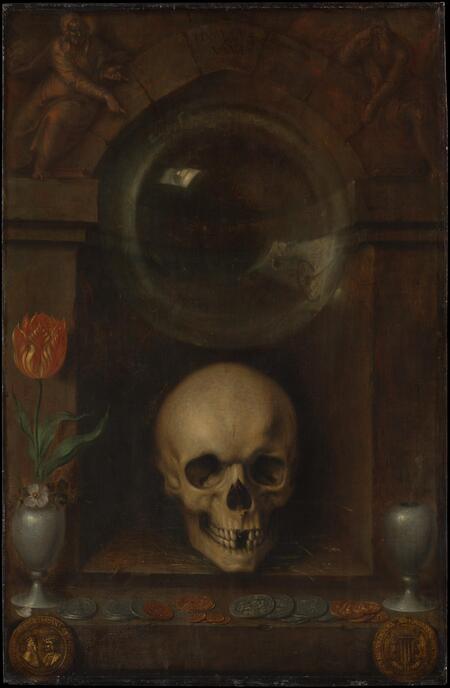
Jacob de Gheyn II. Still Life «Vanitas.» 1603.
A soap bubble can burst at any moment, flowers can wilt, and life can end. Beauty here is inseparable from its fragility.
Ideal Nature
Ambrose Boskhart Sr. «Bouquet of Flowers in a Window.» Circa 1618.
In one bouquet, the artist combines flowers that naturally bloom at different times. Painting creates an impossible moment—all of them are simultaneously at the peak of their beauty.
Symbols of Passing Time
Peter Clas. «Vanitas Still Life.» 1630.
In vanitas still lifes, ordinary objects become reminders of life’s transience. A skull, an extinguished candle, a clock, and an empty glass all suggest that everything that exists will eventually disappear.
Final Moments
Peter Klas. Details from the painting «Vanitas Still Life.» 1630.
The candle has gone out, but the clock continues to count the time. Through these subjects, the artist illustrates what cannot be seen directly—the gradual approach of the end.
The Inevitability of End
Harmen Steenwyck. «Still Life. Allegory of Human Frivolity.» Circa 1640.
A beam of light illuminates a skull, books, musical instruments, and precious possessions emerging from the darkness. Everything a person strives to accumulate and preserve turns out to be temporary. Even knowledge and pleasure cannot halt death.
Two Images of an Extremity
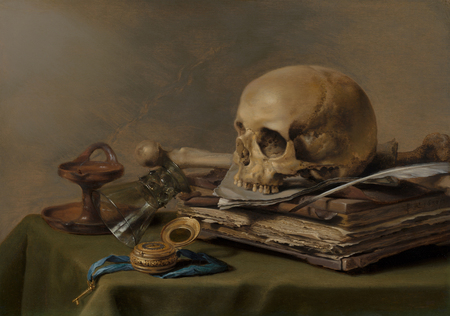
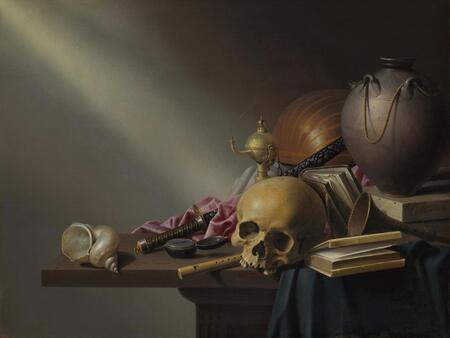
Left: Peter Claas. «Vanitas Still Life.» 1630. Right: Harmen Steenwyck. «Allegory of the Vanity of Human Life.» c. 1640.
Both artists address similar symbols, yet they evoke different moods. In Klass’s work, the objects are immersed in a calm twilight, whereas Stenweyk’s sharp light transforms the still life into an almost theatrical scene.
Life at its peak of beauty
Jan Davids de Heem. «Vase with Flowers.» c. 1670.
The lush bouquet seems overflowing with life. The flowers bend and spill out of the vase, and insects hide among the petals. The artist portrays nature at the moment of its peak bloom—a moment that cannot last forever.
Flowers Near Death
Maria van Oosterweck. «Vanitas Still Life.» c. 1675.
The painting features flowers alongside a skull, clock, book, and religious symbols. Unlike a typical bouquet, the beauty of nature here is directly juxtaposed with the contemplation of death and eternity.
Early signs of wilting
Rachel Ruysch. «Flowers in a Glass Vase on a Marble Ledge.» 1710.
Nestled among luxurious roses and tulips is a sunflower with a broken stem. Its wilting petals disrupt the impression of a perfect bouquet. Here, beauty already bears the signs of its own dissipation.
Rachel Ruysch. Detail from the painting «Flowers in a Glass Vase on a Marble Ledge.» 1710.