Медиа издание о моде «Снято с производства»
Media Concept
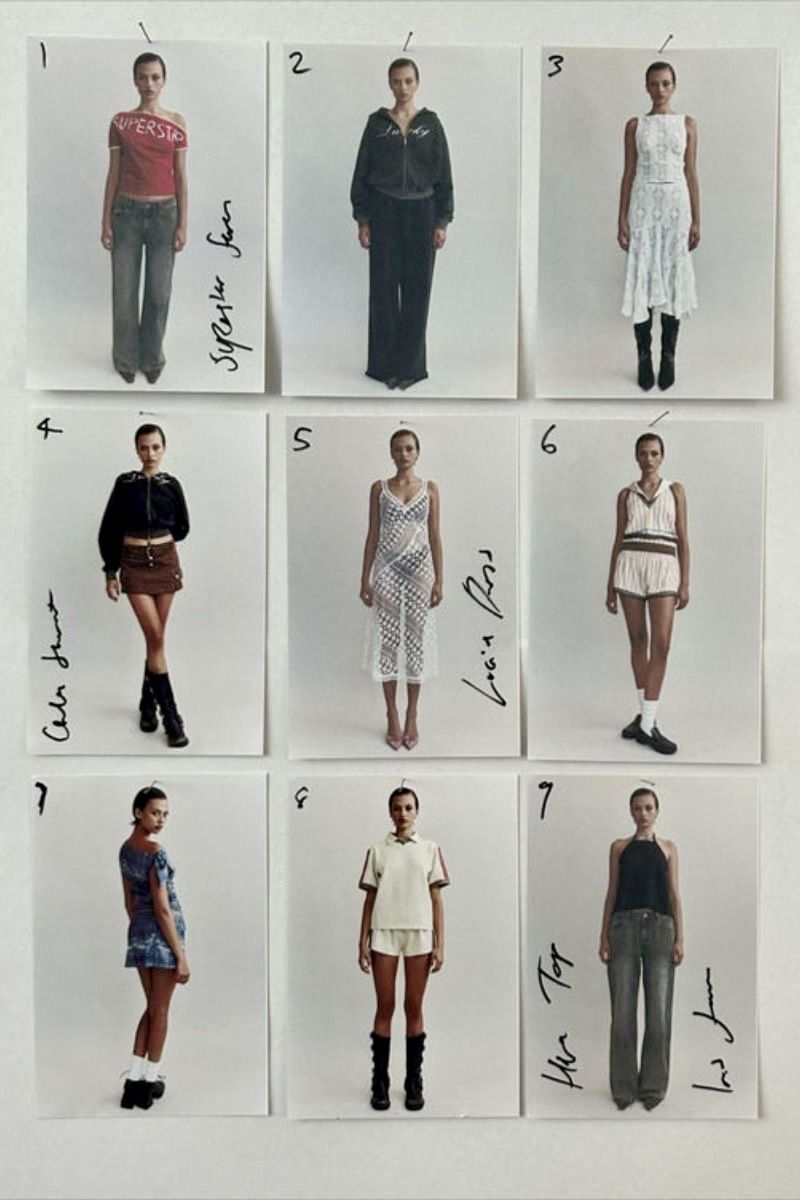
«Discontinued» is an author-driven Telegram media outlet focused on contemporary fashion, the Moscow fashion scene, and the people who shape it.
We cover local brands, designers, stylists, and other representatives of the creative industry, exploring the intersections of fashion with art, music, cinema, and urban culture.
The core of the media is a blend of professional insight, irony, and clear communication. We don’t just report the news—we analyze why what’s happening matters, how trends emerge, and what lies behind a beautiful image.
Half-Year Thematic Plan
Each month is dedicated to a different direction within the fashion industry. Within each theme, we utilize various formats: author columns, news with commentary, interviews, curated selections, visual assets, and analytical breakdowns.
November — Who is Shaping Moscow FashionThe first month focuses on the individuals who form the local fashion scene. We introduce young designers, stylists, photographers, and independent brands. We explore how they find their audience, create projects, and become visible within the industry.Main formats: interviews, highlights of new talent, authorial observations, and short news pieces.December — Fashion as a Cultural CodeWe investigate the connection between fashion and music, film, art, and urban culture. We look at clothing not just as a consumer good, but as a means of expressing ideas, belonging to a community, and relating to the world around us.Main formats: cultural analyses, visual selections, author columns, and recommendations.January — Behind the Scenes of the Fashion IndustryWe talk about the processes that usually stay off-camera: organizing photo shoots, producing collections, the work of stylists, editors, and PR specialists. We show how the industry operates and why the final result doesn’t always match the initial idea.Main formats: interviews, professional deep dives, industry stories, and ironic observations.February — Fashion and IdentityWe examine how personal style is formed, why new aesthetics emerge, and how trends influence self-expression. We discuss subcultures, visual codes, and the contradictions of modern fashion.Main formats: author columns, trend breakdowns, cultural observations, and visual selections.March — New Russian FashionWe focus on local brands, young designers, and the shifts in the Russian fashion market. We explore how smaller labels build their own visual language, promote collections, and compete for audience attention.Main formats: brand selections, analytics, interviews, and collection reviews.April — The Future of the Fashion IndustryWe discuss the influence of technology, artificial intelligence, and digital culture on fashion. We consider new ways of creating and promoting collections, changes in fashion media, and the role of social networks in shaping trends.Main formats: analytical features, author columns, reviews of digital projects, and discussion pieces.
10 Content Samples
- Young Designers, Old ProblemsIt seems like today it’s easier to launch your own clothing brand than to explain to relatives what you do. Social media allows you to build an audience even before the first collection, and small-scale manufacturing has made entering the industry more accessible.But behind the beautiful campaigns are still rather mundane questions: where to find fabrics, how to organize production, and why creating a great piece doesn’t guarantee it will sell.We are used to discussing local brands through aesthetics, when in reality, behind each one is not just a design idea, but also an attempt to build a functioning business.Perhaps the most interesting thing about contemporary Russian fashion today is not how the collections look, but how their creators learn to exist.2. Looking like you didn’t try—that’s work tooFashion is once again asking us to look as effortlessly natural as possible. Messy hair, loose silhouettes, pieces that seem to have gathered together by accident.The paradox is that carefully curated carelessness has long become its own aesthetic. To look like you don’t care, sometimes you have to try exceptionally hard.We no longer want to display perfection directly. The image of a person with such an interesting life that they supposedly don’t have time to think about clothes seems much more attractive.Of course, selecting that very outfit might take the whole evening.3. Why Every Trend Feels FamiliarIt seems fashion has finally mastered time travel. Every new season brings back something from the past: 90s silhouettes, Y2K aesthetics, or items that were recently considered hopelessly outdated.But the return of a trend is rarely literal. Familiar elements are given a new context, styling methods change, and cultural associations shift.Therefore, the question isn’t so much why fashion repeats itself, but why we specifically want to look a certain way right now.Sometimes a new aesthetic is simply an old idea that has found a more successful name.
- Local Does Not Mean Small
The word «local» in fashion is often perceived as a synonym for something small, intimate, and somewhat experimental. However, locality fundamentally refers to the context in which the brand exists—the city, the people, the cultural codes, and the environment from which its visual language emerges.
Russian brands are increasingly cultivating their own identity, rather than simply replicating international trends. And this unique recognizability can become their greatest advantage. A strong local brand doesn’t necessarily have to depict Moscow on every print; sometimes, it is enough to show how deeply it understands the people who live there.
- Why Musicians Have Become Fashion References
Today, a musical artist can influence an audience’s wardrobe just as much as a designer. Album covers, concert looks, music videos, and even candid photographs become part of the visual language of an entire generation. Clothing helps musicians create personas, and it helps listeners feel a sense of belonging to a particular culture. Furthermore, fashion borrows not just garments from music, but also moods—from ostentatious luxury to deliberate nonchalance. Perhaps this is why it is sometimes easier to convey the desired aesthetic through the title of an album than by listing specific clothing items.
- Fashion Photography: Expectation Versus Reality
Behind one photograph that appears to be a spontaneous moment from a beautiful life can be weeks of preparation. Scouting the team, finalizing the concept, selecting the clothing, locations, lighting, and models—all for an image the viewer will scroll past in two seconds. Fashion photography exists at the intersection of art and commerce. Its purpose is not merely to showcase clothing, but to create a story worth believing in. It is particularly ironic when the primary demand for a shoot is the feeling of absolute spontaneity.
- A Brief Glossary of the Fashion Industry«It’s very conceptual”—but no one has quite grasped what is actually happening.„We advocate for conscious consumption”—the next collection drops in two weeks.„We need a raw, natural shot”—please, repeat this candid pose another forty times.„This isn’t a trend; it’s a new aesthetic”—it’s a trend, but with a more convincing presentation.„We want to create something timeless”—preferably by Friday.Every industry has its own language. Fashion, in particular, is adept at transforming mundane work scenarios into artistic statements.8. Why Beautiful Clothes Are No Longer EnoughToday, a brand competes not only with other brands but with every piece of content that appears on a potential buyer’s phone daily.Therefore, a good collection is only part of the equation. History, visual language, communication, and the ability to spark interest beyond the product itself are equally vital.Some labels create their own media; others collaborate with artists and musicians; a third transforms runway shows and campaigns into cultural events.As a result, the contemporary fashion brand is increasingly selling not just clothing, but a specific worldview.The question is whether the physical item will retain a place within that narrative.9. Moscow as a Fashion BackdropThe Moscow fashion scene exists beyond showrooms, studios, and new collection presentations.Its visual language is shaped in the metro, in old courtyards, in contemporary public spaces, in small galleries, and in places that were never conceived of as fashion destinations.The city itself becomes part of the image—sometimes the architecture amplifies the aesthetic, and sometimes it intentionally clashes with it.This is why an engaging fashion shoot doesn’t always require a perfect studio. Sometimes, all it takes is viewing familiar Moscow as a space with its own distinct character.
- It seems that now every brand has to be somewhat of a media entity. Previously, fashion brands only needed to release collections and promote them through advertising and magazines. Today, they are expected to deliver much more: compelling narratives, a recognizable voice, visual content, cultural collaborations, and a constant presence in the information sphere. Brands are creating films, publishing magazines, hosting exhibitions, and building their own communities. The line between fashion, media, and entertainment is becoming increasingly blurred. Consequently, modern designers sometimes have to consider not just what people will wear, but what they will want to discuss. And it seems that this second question is gradually becoming as important as the first.