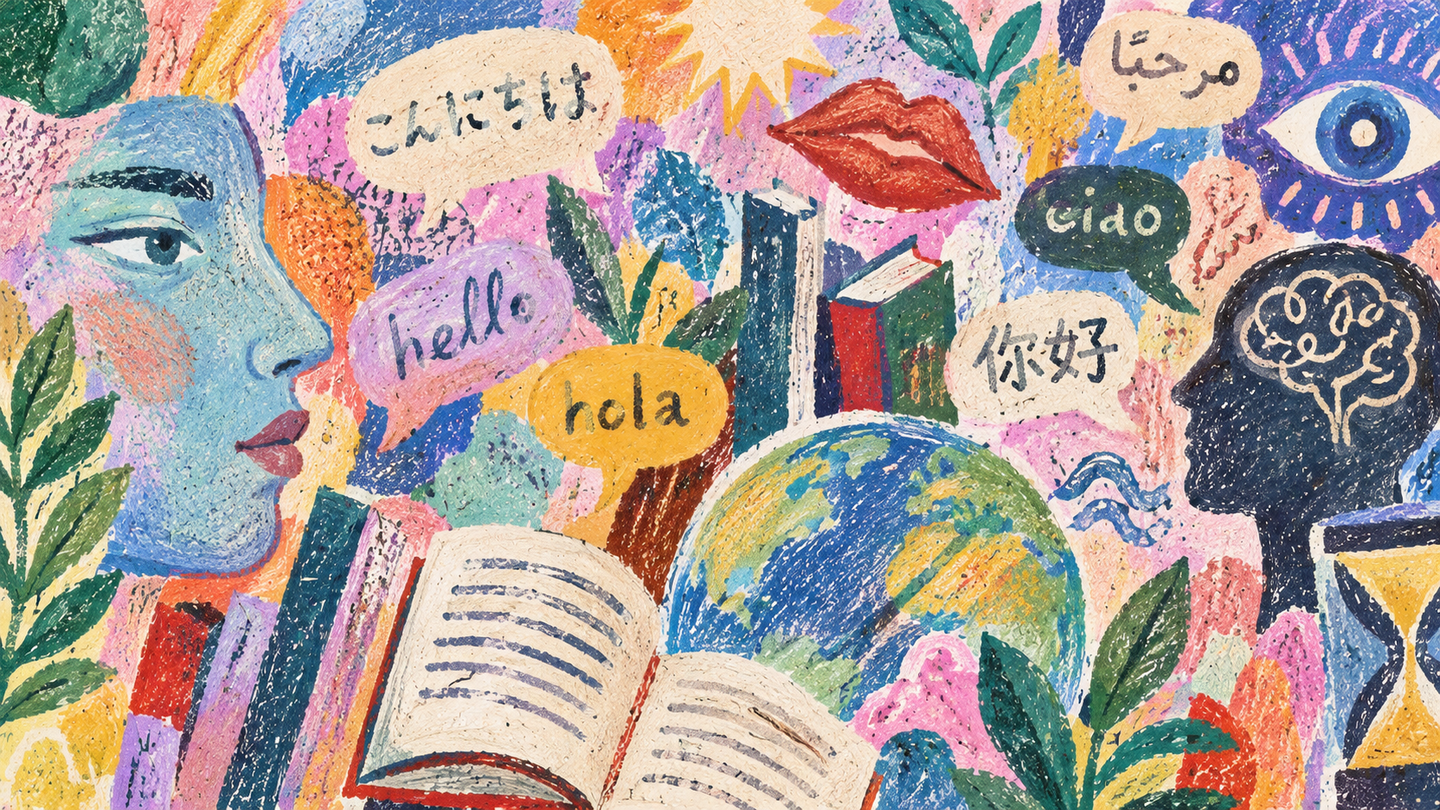
concept
We are accustomed to perceiving language as a tool for communication: through it, we express thoughts, convey information, and understand each other. But what if language is also a way of viewing the world? Why are some feelings difficult to put into words? Why does one language have a distinct word for a certain state, while another requires an entire sentence to explain it? Can a person feel differently when speaking another language? And how do the words we use every day reflect the culture in which we live? The media project «Between Words» explores the space between language and human experience. Through narratives, scientific research, cultural phenomena, and everyday observations, it invites readers to look at familiar words and expressions from a new perspective and contemplate how we understand ourselves, other people, and the world around us.
Unique Selling Proposition
Exploring the link between language and human experience through questions of everyday life. Media helps reveal the cultural nuances, ways of thinking, and modes of feeling hidden within familiar words, transforming language study into an investigation of how a person perceives themselves and the world around them.
Semester Thematic Plan
The «Between Words» thematic plan is not a compilation of random interesting facts about languages, but rather a six-month exploration of how language relates to our perception of the world, our emotions, our identity, and our culture.
November — Language and World Perception
We explore whether language influences what we notice, how we perceive space, color, and time.Video Essay: «Do we truly see the world differently because we speak different languages?» Podcast: A conversation with a linguist about the link between language and thought. Telegram: Polls on words that are difficult to translate into another language. Website: Introductory article «Can language change our perception of the world?»
December—Language and Feeling
Let’s explore how we name our feelings, why some experiences are difficult to articulate, and what is lost in translation.
Video Essay: «Why Is It Sometimes Impossible to Find the Right Word?» Podcast: A conversation with a translator about conveying emotions and intonations. Telegram: The «Feeling Beyond Translation» column—words from different languages with explanations of their meanings. Website: A visual study on «How Different Languages Name Internal States.»
January — Language and Identity
Exploring whether our behavior changes depending on the language used, the environment, and the conversation partner.Video Essay: «Why do I feel like a different person in another language?» Podcast: Stories of bilingual individuals about how languages connect to their identity. Telegram: A discussion of expressions that people use only in one language. Website: Article «Is there a separate version of ourselves for each language?»
February — Language and Culture
We explore how cultural concepts, historical events, and societal habits are preserved within language.Video Essay: «What Do Everyday Words Tell Us About Culture?» Podcast: A discussion on the origins of phrases and the evolution of their meanings. Telegram: An analysis of expressions whose meaning cannot be understood without cultural context. Website: A visual map of a single concept across multiple languages and cultures.
March — Translation and Untranslatability
We approach translation not as a mechanical substitution of words, but as an attempt to convey cultural and emotional meaning. Video Essay: «What Cannot Be Translated From One Language to Another?» Podcast: A translator dissects a single text across multiple versions. Telegram: The game, «How Would You Translate This Word?» Website: A comparative analysis of several translations of one literary passage.
April — Language, Society, and Power
We explore how words reflect relationships between people, shape social norms, and evolve alongside society.
Video Essay: «Who decides which words are correct and which are not?» Podcast: A conversation about slang, linguistic norms, and generational shifts in speech. Telegram: An analysis of new words and expressions that recently seemed unfamiliar. Website: A study on «How the changing meanings of words reflect societal change.»
10 pieces of content
Can you see what has no word?
Category: «Language and Perception» Article: Website / Zen

We are accustomed to thinking that we first perceive the world and then label it with words. But is it really that simple? When we learn to distinguish shades of color, classify emotions, or notice the details of our surroundings, language can become part of that process.
Some languages have separate terms for shades that are grouped under a single word in other languages. Does this mean that native speakers of those languages literally see different colors?
Not exactly. Research indicates that language can influence how quickly we distinguish and categorize certain visual stimuli. However, this does not mean that a person cannot see a corresponding shade without a specific word.
The central question of this article is: does language create the boundaries of our perception, or does it help us notice differences that already exist?
Visual Presentation: comparisons of color scales, brief explanations, and an interactive test for shade differentiation.
Words That Don’t Translate Well
Category: «Feeling Without Translation»

Example carousel with four cards:1. 木漏れ日 — komorebi JapaneseSunlight filtering through tree leaves. One word—and an entire scene instantly unfolds in your mind.2. Hygge DanishAn atmosphere of coziness, comfort, and pleasant time spent, whether shared or alone. It’s more than just a soft blanket; it’s an entire concept of comfort.3. Saudade PortugueseA feeling of longing for a person, place, or time that is absent—a complex emotion where sadness and tenderness can merge. Not all forms of longing are the same.4. Question for the Reader Now it’s your turn Is there a word in your native language that cannot be translated with a single expression? Write it in the comments and tell us what it means to you personally.
Why do I feel like a different person in another language?
Video Essay YouTube / VK Video

Duration: 4–5 minutesScript Excerpt«Have you ever noticed that you joke differently, express emotions in a different way, or become a little braver in another language?Perhaps it’s not that two different personalities live inside you. Language is connected to the situations in which we use it, the people we speak with, and the memories it associates with.One language might be the language of childhood and family conversations, while another might be the language of studies, work, or a new country. Along with the language, the context changes—and sometimes our usual way of behaving changes too.But does grammar and vocabulary really change our personality? Or are we simply expressing different sides of ourselves in different ways?»
Is it possible to convey a feeling without losing meaning?