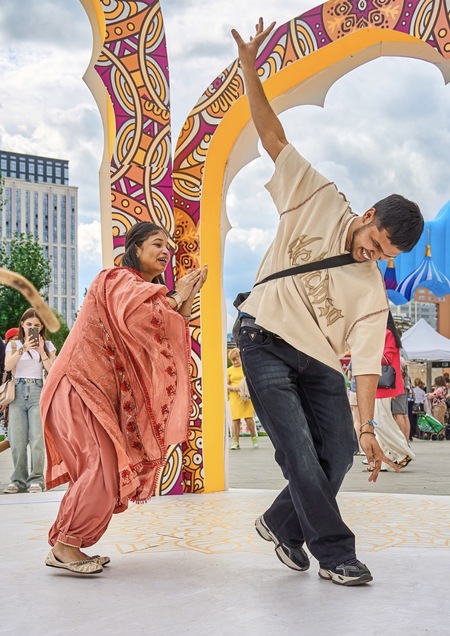
The Indian community in Moscow is structured paradoxically.
According to Sammy Kotwani, president of the Indian Business Alliance and owner of the «Imperial Tailor» boutique, there are only 500 to 1,000 Indian families living in the city. Adarsh, a student at MAI who came to Moscow to study aircraft construction, estimates the Russian community at around 30,000 people, approximately 25,000 of whom are students. Furthermore, India Day in 2025 attracted 2.7 million visitors, Bollywood blockbusters are screening in multiplex cinemas every one to two weeks, and Indian fast food is available at mall food courts. In terms of community size versus its visibility, Indians are perhaps the most disproportionately visible diaspora in the city.
They don’t have a single «ethnic district,» but rather several enduring focal points, each with its own audience: the student southwest neighborhood around RUDN University, the Krishna temple in Khoroshovskiy District, the sixteen-story market in the former Olympic hotel, the Sikh Gurudwara near Nagatinskaya, and the large August festival. We have compiled a map of Indian Moscow.
Author: Mos.Foto Editorial Staff
«Hindustani Samaj»: The First Wave, 1957
The oldest Indian institution in Moscow, predating RUDN. The expatriate community «Hindustani Samaj» was founded in May 1957 by the first Indian specialists who came under intergovernmental agreements to work as radio hosts at Radio Moscow and translators at the Publishing House of Foreign Literature. The community is still active today: it engages with the embassy, organizes translation contests between Russian and Hindi, and, together with the Department of Indian Philology at ISAA Moscow State University, organizes the conference «Hindi in the Modern World.»
Author: Mos.Foto Editorial Team
This same wave of professionals includes the family of Mataru Harjinder Singh, the current president of the Indian Diaspora association: his father, Jaswant Singh, came to Moscow in 1968 as a radio announcer and Urdu translator. He was originally set to stay for three years but worked there for thirty-five. Within the community today, Hindi, English, and regional Indian languages are spoken, while Russian remains a marker of longevity.
National Hotel: Five Days in 1971
The history of Hinduism in Russia began in the issue of «Natsional.» In June 1971, the 75-year-old founder of the International Society for Krishna Consciousness, Swami Prabhupada, visited Moscow for five days: the Soviet embassy in India issued visas to him and two assistants, seemingly mistaking the guru for an Indian politician and his entourage. He was visited at the hotel by the son of a staff member at the Indian embassy and his acquaintance, Anatoly Pinyaev, a 23-year-old Muscovite, who became the first Soviet devotee of Krishna and subsequently traveled across the country to preach after the teacher’s departure.
By 1980, the KGB took an interest in the movement: Andropov referred to the community in a report to the Central Committee as the «most radical» of the Eastern mystical groups in the West. Arrests, camps, and psychiatric hospitals followed. In 1988, the followers of Krishna were rehabilitated, and the Moscow community was registered just one week before Reagan’s visit. The current temple on Kuusinen Street is a direct descendant of the people who gathered then in the «National.»
Miklukho-Maklay Street: Student India
The southwest area near RUDN remains the main Indian hub in the city since the 1960s: the university was created for students from Asia, Africa, and Latin America, and Indians continue to come here, mainly for medical faculties. According to the Ministry of Science and Higher Education, approximately 30,000 students from India study medicine in Russian universities, and a noticeable portion of them stay in Moscow dormitories. «Most students from India study medicine and IT, ” confirms Adarsh (the following is a translation from English), although he himself chose a different path and is studying aircraft construction at MAI, meaning that Indian students have long since extended beyond RUDN.
By Mos.ru, CC BY 4.0
The campus hosts a community hub, and since 2014, the Indian Film Festival has been held here. During Diwali, the main building transforms into a festival of lights. Furthermore, the first Indian spice shop, «Vijay, ” opened here in 1993, founded by Ponnucheem Jeevanathham, a graduate of the Peoples' Friendship University. Today, „Vijay“ operates six stores in Moscow, including a location on Sukharevskaya Street in Pankratyevsky Lane, branches in Tver and St. Petersburg, and its own restaurant, „Sivarus.“
Jawaharlal Nehru Square: Bronze India
All of Moscow’s Indian monuments are grouped in the southwest, near the RUDN University Indian community and Moscow State University. Jawahar Lal Nehru Square, located by the Bolshoi Moscow Circus, has held this name since 1982; students have long shortened it to «Jawa.» Dmitry Ryabichev’s bronze statue of Nehru has stood here since 1996. In 2014, the circus director, Edgar Zapashny, proposed relocating the monument to prevent audience members from assuming that the pensive figure on the pedestal built the circus—a proposal that was not supported.
Unveiling the Indira Gandhi Monument in Moscow, 1987 Author: Vyacheslav Runov pastvu.com
A few stops away, in Indira Gandhi Square, stands a 1987 statue by Oleg Komov. Gandhi was an honorary professor at Moscow State University, which perhaps explains the proximity. Walking through Lomonosov Prospect from her is Mahatma Gandhi, a 1988 gift from the Indian government, created by the Indian sculptor Gautama Pala. Moscow residents frequently list Indira and Mahatma as relatives by surname. The fourth figure, Rabindranath Tagore, by the same artist, Pala, has stood in Friendship Park near the River Station since 1991.
Kuusinenen, 19A: Temple of the Society of the Blind
DAILY DARSHAN Photo from the organization’s website
The Krishnaitis Cultural Center for Indian Culture, located near the Zorge metro station, was opened in 2014 by the Indian Ambassador, Pankaj Saran Raghavan. Since then, it has become the primary religious hub for the Hindu community in Moscow. The history of this location is complex: an old temple built in 1945 near Dinamo was demolished for residential development, and the promised one-hectare plot near Khodynka was never provided to the community; the land allocation in the Molzhaninovsky district was revoked in 2009. Consequently, the center rents space within the cultural and sports complex of the All-Russian Society of the Blind. The interior is authentic—services begin at 4:30 AM, darshans are held during the day, and lectures take place in the evening. Entry is free, and a vegetarian café operates at the temple. According to Kotvani, this is where the community observes the major festivals of the year.
Bolshaya Yushunskaya, 1A: Vertical Bazaar
The «Sevastopol» hotel and four sixteen-story panel buildings near the «Sevastopolskaya» metro station were constructed for the 1980 Olympics. In 1994, the complex was privatized, and a marketplace sprang up in the buildings. Afghan refugees had been living in the hotel since 1989, so Muscovites call it an Indian bazaar—a slight exaggeration—since Afghans, Pakistanis, and Iranians also trade there. Everything is organized vertically: former guest rooms have been converted into stalls, and restrooms serve as storage areas. An experienced shopper takes the elevator to the top floor and walks down, browsing the rows.
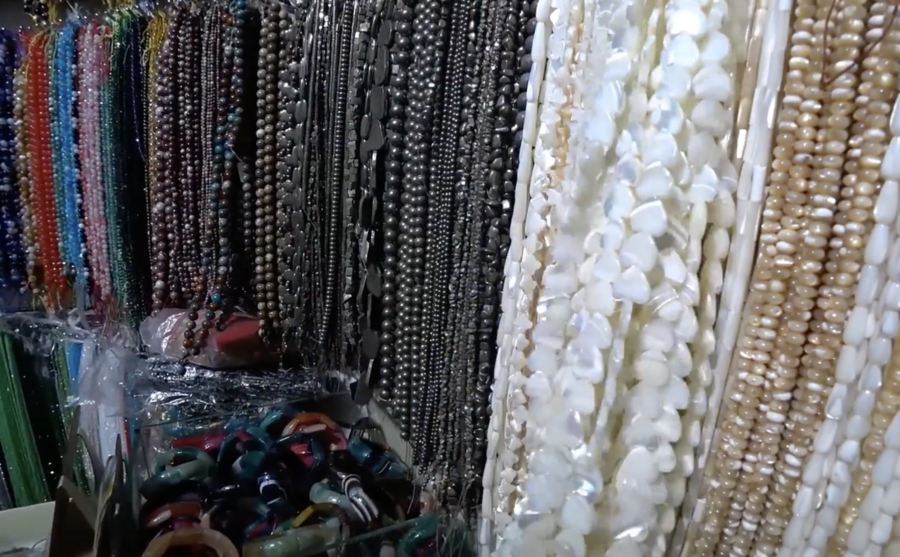
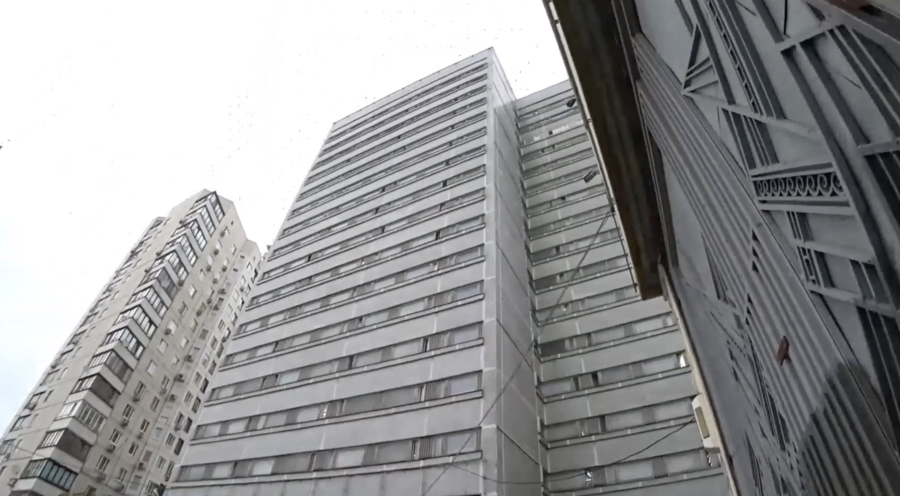
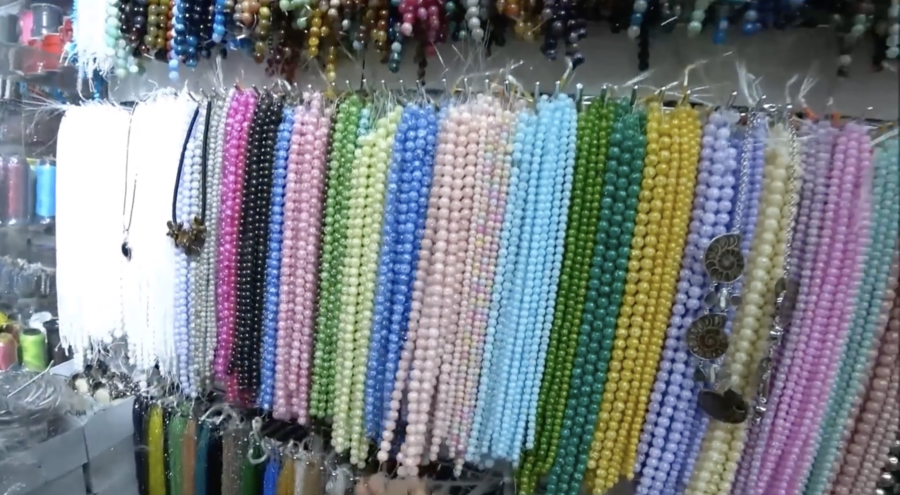
Stills from Irina Hindi Life’s channel
They sell semi-precious stones and cabochons, beads, incense, saris, bindis, hookahs, and ready-made Dal Makhani in boxes; from here, the goods are distributed to small shops throughout Moscow and Russia. Residents of neighboring buildings have been filing complaints with Rospotrebnadzor and the Ministry of Emergency Situations for years—the market has weathered it all. By spring 2026, the ground floors have been renovated, and some buildings still host guests like a standard hotel.
Warsaw Highway, 34: Gurudwara in the Baths
The Sikh Cultural Center has occupied space in the Warsaw Baths building near Nagatinskaya for over twenty years. There is no signage; the entrance is on the side, and there is a security booth at the entrance where a passport check is mandatory. The community primarily consists of Punjabi businessmen and their families; services are held on weekends—Saturday evenings and Sunday afternoons. After the prayer, everyone, including random guests, is invited to langar: a free vegetarian meal that Sikhs consider a community duty. You must cover your head and remove your shoes; everything that is laid out is meant to be eaten.
Indian Business: From Tailor to Fast-Food Chains