На стипендию
Media Concept
On the scholarship: Moscow, which is sufficient for
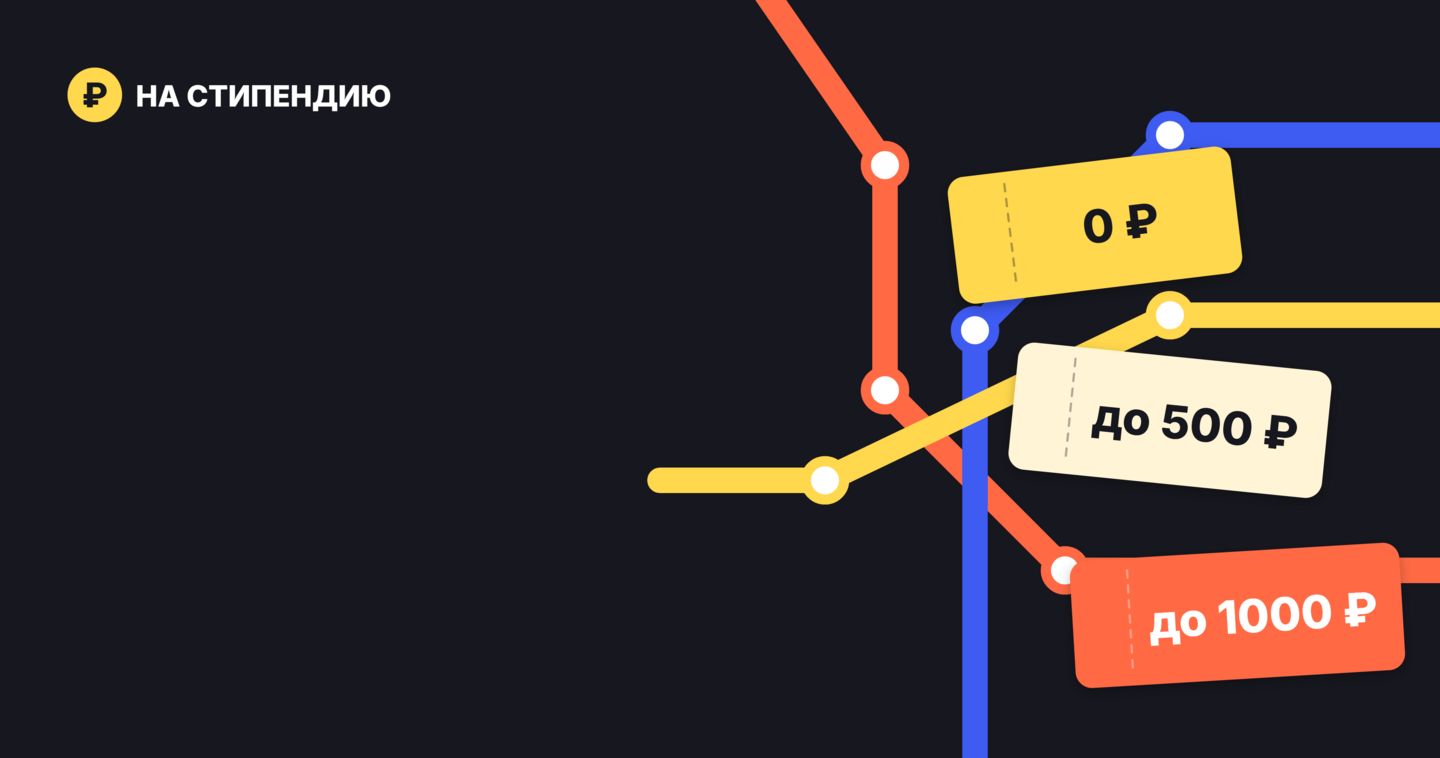
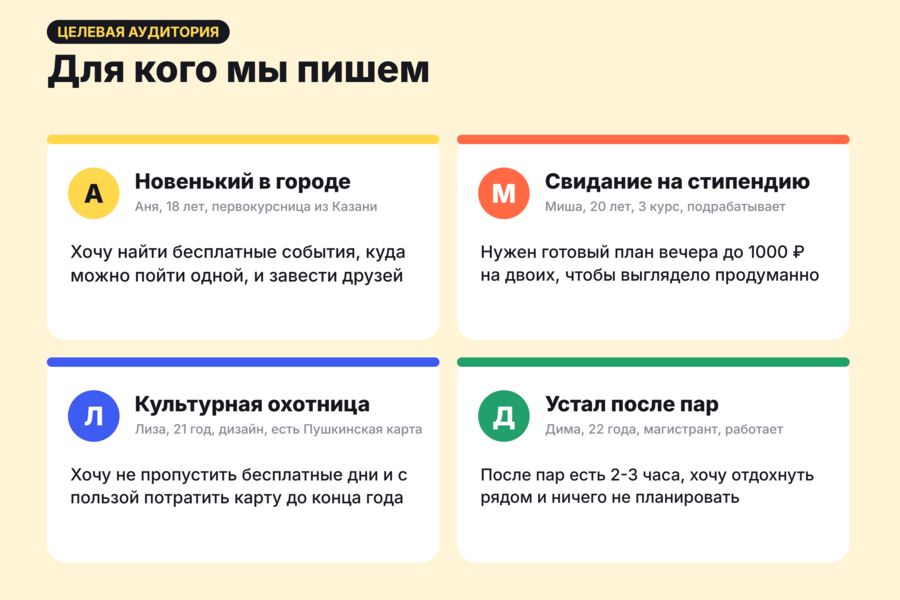
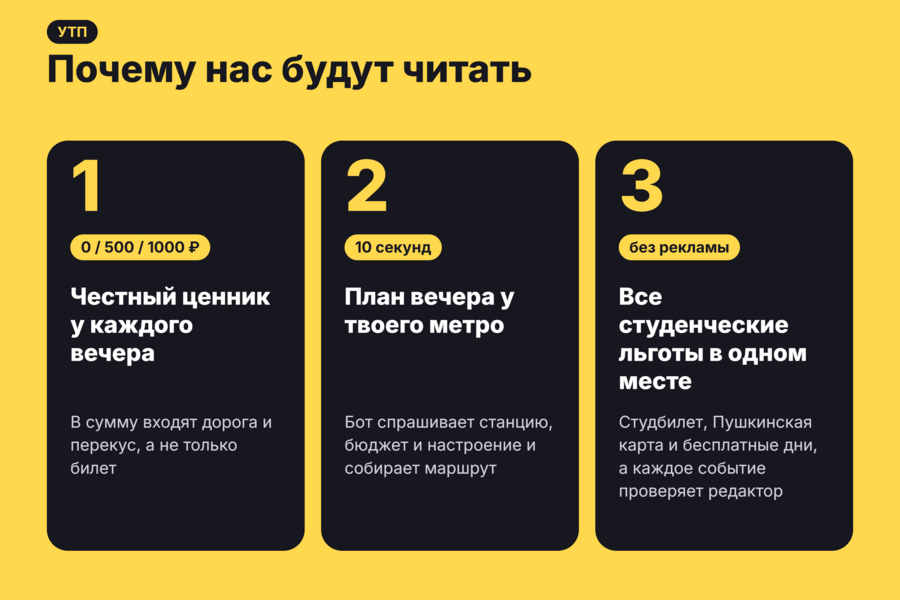
What is this? It is a Telegram channel and bot dedicated to free and low-cost entertainment in Moscow for students aged 17–23. We originated this concept during our first design assignment and have made almost no changes to it.Goal. We want students to spend their free time meaningfully without exceeding their scholarship budget, because currently, many just stay home believing that everything in Moscow is too expensive.Topic. We write about events, locations, and itineraries costing between 0 and 1,000 rubles, always taking into account student benefits: student passes, the Pushkin Card, free museum days, Night of Arts, and Museum Week.Channels. Our primary platforms are the Telegram channel @nastipendiyu and the bot «Soberi vecher» (Put Together the Evening). For broader reach, we create short videos on VK Clips, and in MAX, we maintain an adapted mirror of the channel.Tone. We write like an upperclassman who has explored everything and is telling younger students about it—informal, honest, and with a dash of irony about budgeting, avoiding bureaucratic jargon and boilerplate promotional phrases, because being thrifty is smart, not poor.
Content Categories and Matrix
R1. Weekend Plan. Our main column, published every Thursday, that categorizes events into three buckets: free, under 500 rubles, and under 1000 rubles. R2. Weeknight Under 300 ₽. A single spot or event near a specific subway line for today—perfect for those who are tired after classes and don’t want to plan anything. R3. Discount Holder. We break down discounts: how the Pushkin Card works, where you can go with a student ID, when museums have free days, and where registration is required. R4. Date on a Budget. A pre-planned itinerary for two that stays under 1000 rubles. R5. Moscow for Beginners. Advice for freshmen from other cities on how the city works, what you can see for free, and helpful insider tips. R6. Tried and Tested. The editors’ honest reviews on whether an event is worth attending, what the lines are like, and any pitfalls—this segment is written by a single staff member. R7. Where Should We Go? Polls, memes, ticket giveaways, and votes for the next route. R8. Free Calendar. Once a month, we compile all the free dates for the month onto one image.
Content Matrix
We develop topics using a matrix from a lecture: horizontally, we have formats (collection, guide, itinerary, honest review, and interactive); vertically, we have themes, and at the intersection, we get a post idea. Then, we vet each idea by asking: «Will this interest our audience?»
Museums and Exhibitions: 5 exhibitions with free entry, how to get into a museum with a student ID, a free museum day in Zamoskvorechye, and what it was like queuing for Night of Arts. Lectures and Cinema: Free lectures of the week, where to find a film screening with discussion, an evening combining a lecture and coffee near the subway, and whether it’s worth attending an open lecture at a university. Music and Parties: Free concerts in conservatories and colleges, how to get on the guest list, and what actually happens at a free stand-up. City and Walks: 5 observation points without a ticket, a checklist for your first winter in Moscow, a free itinerary through VDNKh, and whether you should visit Zaryadye in winter. Food and Coffee: Where to eat for under 300 rubles near universities, how to stop spending 3,000 a month on coffee, and an itinerary with snacks and a walk. Socializing: Clubs you can attend alone, how not to be afraid of going to an event without friends, and reader meetups. Sports: Free ice skating rinks and running spots, a rink with hot tea for 500 rubles, free yoga in the park, and a 10,000-step challenge across Moscow.
How We Create Content
1. Data Collection. The script gathers events from open sources (Timepad API with a free token, posters from mos.ru and Mosbilet, websites and Telegram channels of museums, conservatories, and libraries), and we source dining locations and prices from Yandex Maps. 2. Analysis. The neural network extracts the date, time, address, metro line, price, discount eligibility, and registration requirement from the announcement, and then organizes the event by budget and theme within the matrix. 3. Draft Generation. We write the prompt according to the schema from the text generation lecture (topic, format, volume, role, audience, and style) and ask for 3–5 variants from which we select the best. 4. Editing. A person cross-references the date, price, and registration details on the venue’s website, cleans up jargon and bureaucratic language in the main text, checks spelling using Gramota, and reads the text aloud. 5. Publishing and Analysis. We monitor views, saves, and shares to determine what resonates best and replicate successful approaches.
Prompt Example for the «Weekend Plan» Section
You are the editor for a city student media outlet. You have the role of earning a stipend. Write a post for Telegram for the «Weekend Plans» section based on the list of events below, adding nothing of your own, and keeping the length under 1200 characters. Organize the events into three blocks (Free, Up to 500 Rubles, and Up to 1000 Rubles), and for each event, include the date and time, location and metro station, price, and any discounts or registration requirements. Your audience is a student aged 18–22 with a small budget. Write informally, in a friendly tone with light irony—avoid bureaucratic language and phrases like «a rich program awaits you.» Finally, suggest three options for the opening line.
Six-Month Thematic Plan
Overall plan logic for November 2026–April 2027
Each month has a major theme tied to the season and the academic calendar (exams, breaks, semester start), and we draw news hooks from real city events. Our primary metric is saves and shares, because people usually save these collections for later or send them to friends. Within six months, we aim to gain 5,000 followers, maintain an Engagement Rate (ER) of at least 10%, and bring 1,500 people into the bot.
Weekly Publication Rhythm
Monday. A short list of what’s free this week. Tuesday. Weekday evening events under 300 rubles near one subway line. Wednesday. The Concessionary Card or Moscow for Beginners. Thursday, 6:00 PM. Weekend plans—this is the main post of the week, and it will be published without fail. Friday. Scholarship dates or Tested by Us. Saturday. Poll, meme, or giveaway. Sunday. Rest day—only the bot is active.From our lecture on content marketing, we took several principles: publishing regularly, repackaging one piece of material into different formats (an article turns into a carousel, a video, and a bot response), collecting reader stories once a month, growing through external platforms like university media outlets, student councils, Dzen, and vc.ru, and avoiding paid placements in recommendations.
Month 1. November
Theme: Moscow for Free, Let’s Get Acquainted
Goal: To launch on a major free informational event, explain who we are and why people should subscribe to us, and acquire the first 1000 subscribers.
— A manifesto stating that Moscow is expensive, but not entirely (R5) — Arts Night, November 3–4, and three routes without queues (R1, Sample 1) — 5 mistakes we made during Arts Night (R6, Sample 6) — How to spend 5,000 rubles on the Pushkin Card before December 31st (R3, Sample 2) — Launch of the «Weekday Evening for Under 300 Rubles» series along the Sokolnicheskaya line (R2) — Free concerts by conservatory students (R1) — 7 free things for a first-year student during the first month (R5, Sample 10) — Ice rink openings (R1) — Survey on how much you spend on leisure each month (R7)
Month 2. December Theme: Winter Scholarship
Goal: To be useful during the busiest and most financially strained month—the one filled with exams, holiday gifts, and New Year’s celebrations—and to reach 2,000 subscribers.— A free December calendar (R8, Sample 9) — Where to study for exams for free and warm (R5) — The last chance to use the Pushkin Card before December 31st (R3) — 4 ice skating rinks near the metro where skating and hot tea cost 500 rubles (R1, R2) — New Year’s activities on a scholarship: decorated trees, illumination, and routes through the city center (R4, R1) — Gifts under 500 rubles from local brand markets (R1) — A voice prompt about the first winter in Moscow (Sample 7) — Giveaway for tickets to the New Year’s concert (R7)
Month 3. January
Theme: Holidays and Students' Day
Objective: Capture peak engagement during the holidays, launch the «Collect Evening» bot, and reach 3,000 subscribers and 500 bot users.— Where to spend the new 5,000 rubles using the Pushkin Card (R3) — Launching the «Collect Evening» bot (Sample 3) — Where students can go for free on January 25th, Student Day (R3) — 5 trips outside the city by commuter train for under 500 rubles (R1) — Winter route through VDNKh for 0 rubles, presented as a video (Sample 4) — An honest review of a free stand-up (R6) — A meme about the expectation versus reality of the holidays, including a poll (R7, Sample 8)
Month 4. February
Theme: New Semester, New Faces