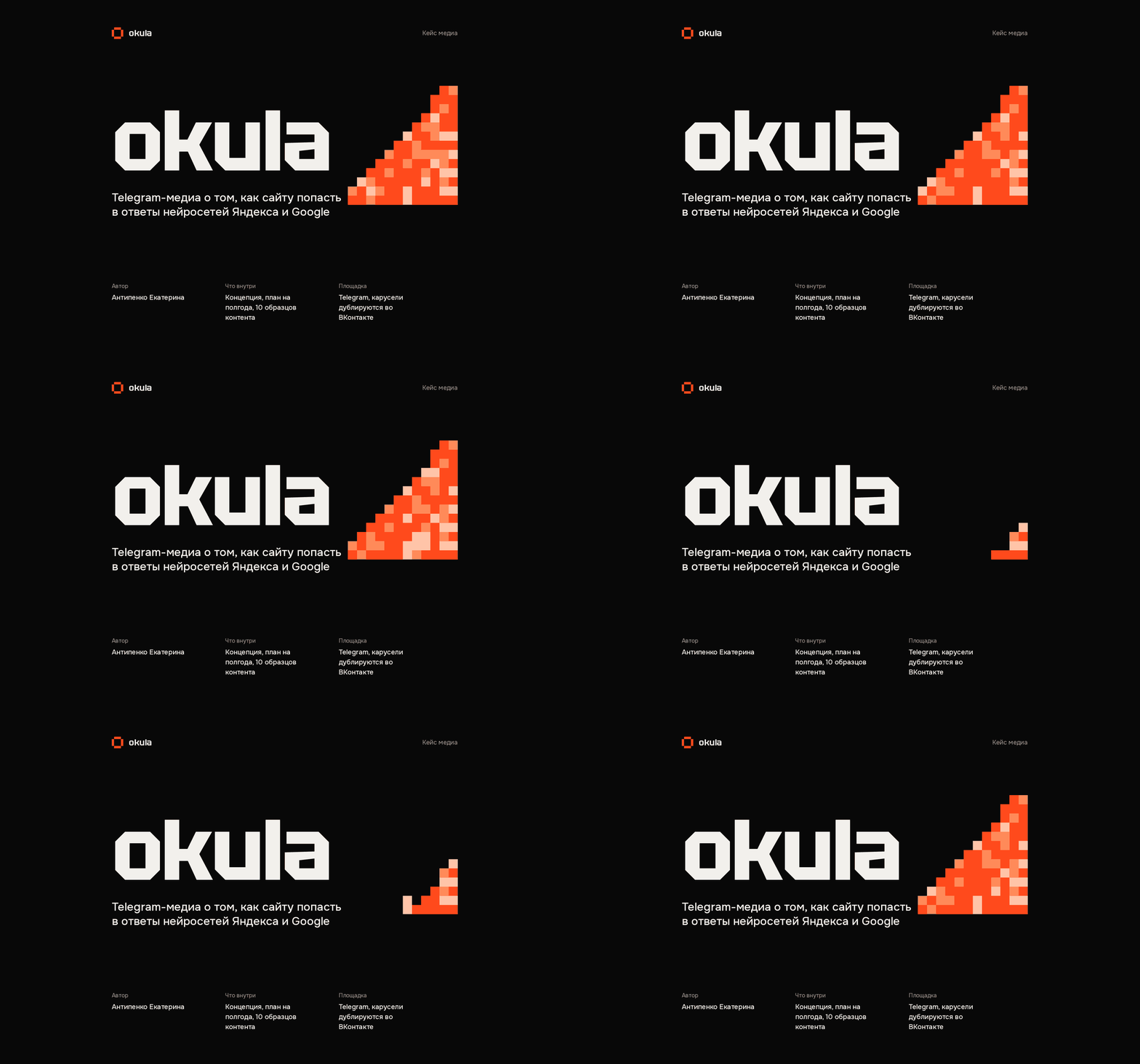
Task
Develop a concept for a piece of media and demonstrate how it will look and sound. The assignment has three parts: the media concept, a six-month thematic plan, and ten content samples. The media will be related to my future product: a GEO/AEO service built on Ruby on Rails that checks a website’s visibility in AI responses and suggests ready-made edits. The channel will function as its sales funnel.
Why Now
People are increasingly finding answers directly in search results and not navigating to websites.
— In Yandex, neural answers are displayed for approximately 43% of commercial and 68% of informational queries (Habr). — In early 2026, 68% of Google searches in the US ended without a click on a website, compared to 60% in 2024 (SparkToro). — On May 15, 2026, Google officially stated that GEO and AEO are essentially the same as SEO, and consultants are selling «AI optimization» as a separate service.
For a business owner amid this noise, it is difficult to know what actually works. The school becomes a translator and filter for them.
Concept: What Has Changed
In the first assignment, the media was called Seelo. The theme remained the same: how to get a website recognized by neural networks. Based on my research, I changed several design decisions.
Title
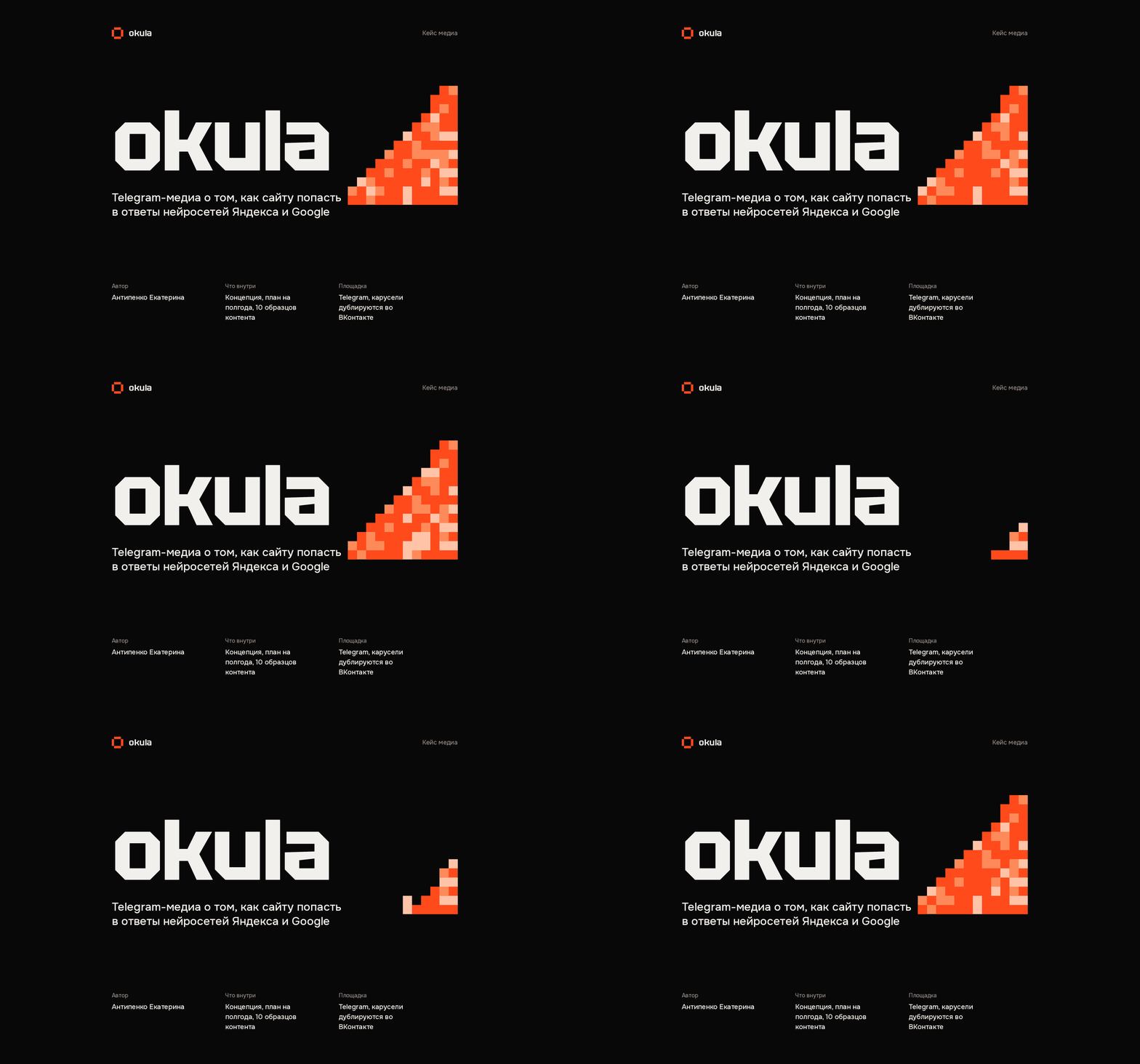
Seelo became a school. The short word became embedded in the identity: the symbol—the letter o—is constructed from pixel squares.
Author
In the first design challenge (DZ), there was a fictional expert named Gleb Kravets. Channel analysis showed that people were being cited, not products: authorial channels had a citation index of about 37, while product-related channels had one of about 2.5. Therefore, I am now the face of the media—the designer and web developer who creates the GEO/AEO service.
Studio
In the first phase of the design project, there were four B2B segments: small business owners, marketers, web developers, and SEO agency owners. Now, the primary audience consists of SMB owners and marketers, with secondary audiences being entry-level SEO specialists, developers, and designers. SEO agencies have remained competitors rather than readers.
Unique Selling Proposition
The final edits, including the code, have been retained in every post and have become the «Code Recipe» column and the «Do It Today» section. Before/after measurements became case studies in February. The free website audit has been transformed into the «Your Website Analysis» column.
Channel
Unchanged: the primary Telegram channel; carousels are duplicated on VKontakte.
Media Portfolio
— Mission: To explain AI search in simple terms and provide solutions, not just a list of problems. — Primary Audience: SME owners and marketers with websites who generate clients from search but notice a drop in traffic. — Secondary Audience: Aspiring SEO specialists, web developers, and designers. — Pain Point: Traffic is declining without an apparent reason, and agency audits cost hundreds of thousands of rubles only to highlight issues. — Promise: Every post concludes with an actionable step you can take today. — Author: Ekaterina Antipenko, designer and web developer. — Tone: Simple, honest, and supported by sources and dates. We will say if something is unknown. — Role for the product: MVP and the funnel for a GEO/AEO service, waitlist, and audience Q&A.
What sets us apart
— SEO channels write for SEO specialists in their jargon. We write for the business owner. — Agencies sell audits. We provide the finished code and text for free, and the service automates the same thing via subscription. — Media about neural networks writes about models. We write about how the website appears in the AI’s response and what needs to be changed on the page.
Eight Categories
Each section has its own format, frequency, and pixel icon.
Rhythm of Departure
3–4 publications per week. Monday is for neuro-news, Wednesday is for the carousel, Friday is for a code recipe or teardown, and every other Sunday is for the service diary.
Identity
Pixels and Code Windows: the channel sounds like a person who both designs and codes the website. The color palette is near-black, signal orange with two light variations, and warm white. Fonts: Tektur for headings, Onest for body text, JetBrains Mono for code.— Each slide features a pixel illustration relevant to the content: a cursor, a magnifying glass, a document, a checkmark. — The illustrations are separated from the text and code by a 56 px margin. — The code is displayed in white windows with orange borders and a black header. — The motion design is built in a grid, and the text types out like in a terminal.