Media Concept
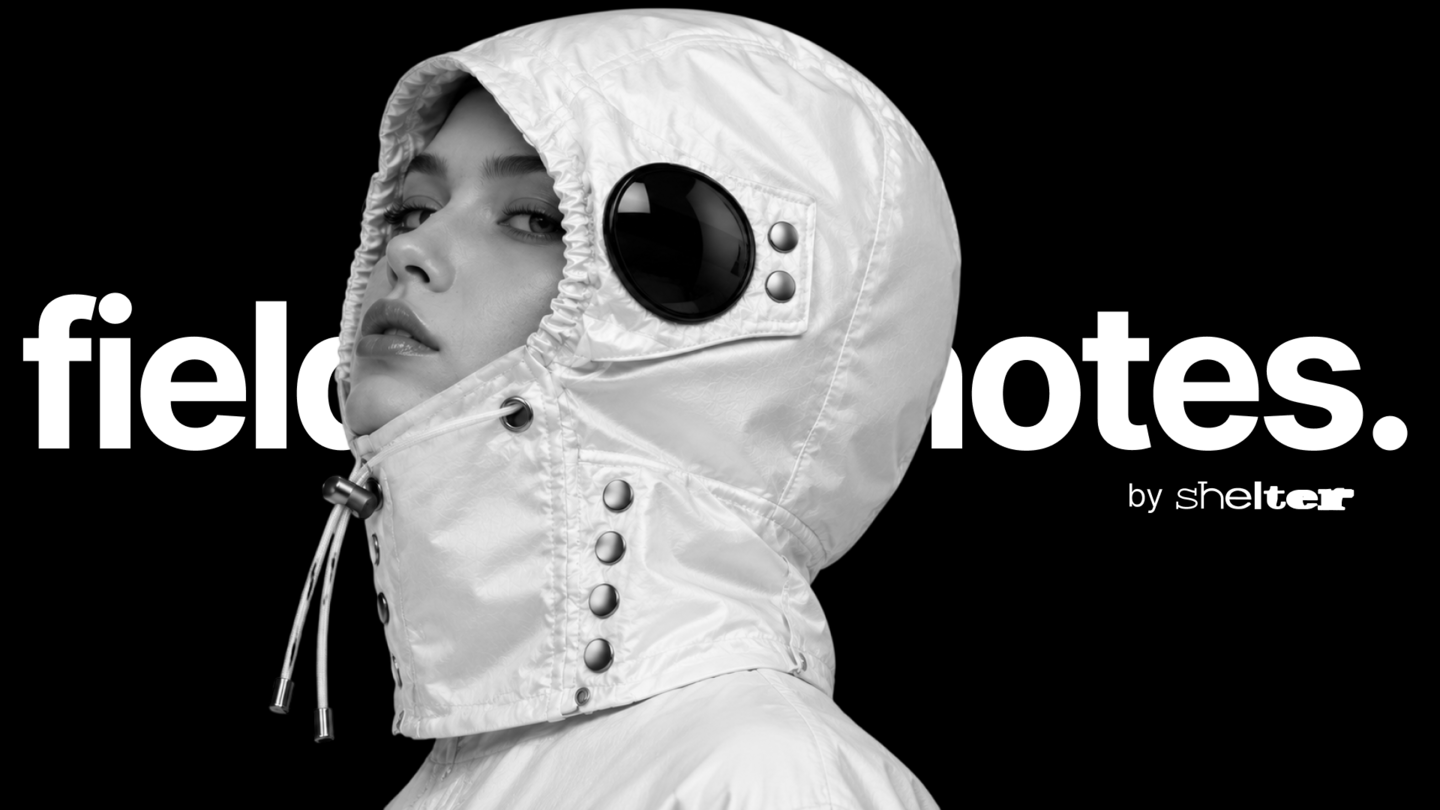
Shelter Field Notes — an editorial diary on humanity, clothing, and the environment. The media is built at the intersection of functional, stylish apparel, urban anthropology, visual research, and the practices of daily life.
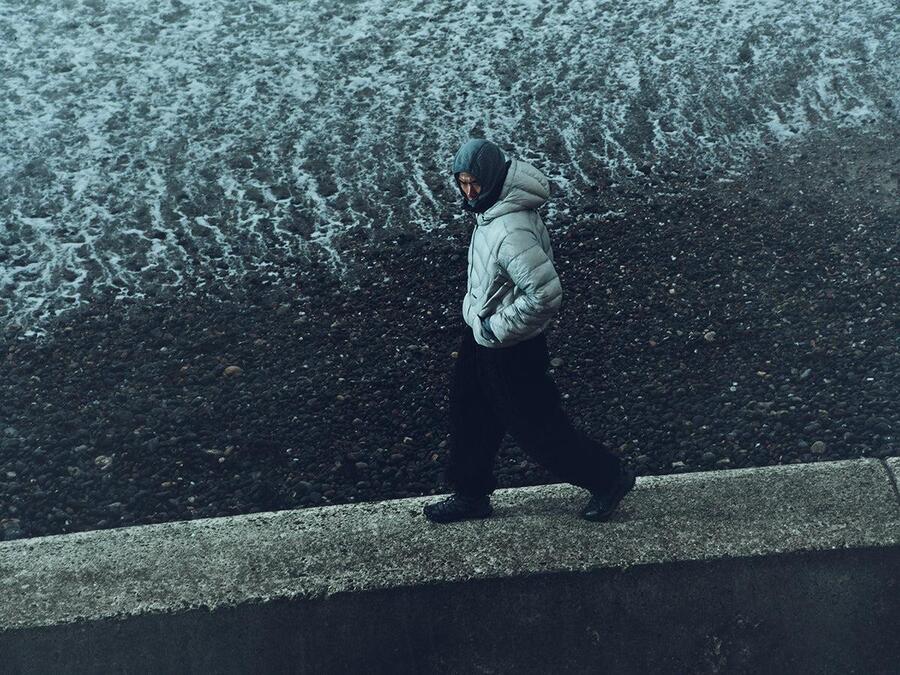
Shelter Field Notes — an independent editorial space for the Shelter brand. It explores the experience of living in a mutable environment: the wind, the cold, the rain, travel routes, bodily sensations, and the objects that help a person maintain agency.The name Field Notes references the field notes of a researcher: brief observations, journals, documentary photography, experiments, and conclusions drawn in real-world conditions.The core idea is to investigate how the environment influences human behavior and how one can adapt to it without sacrificing individuality.The media’s editorial principle is not to tell people what to buy, but to help them observe their environment more closely, understand their own needs, and choose things more consciously.
Six-Month Thematic Plan
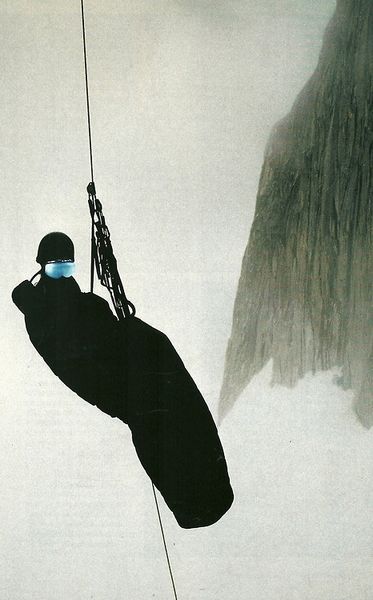
The thematic plan for Shelter Field Notes is structured as a sequential study of the relationship between humans and their environment. Over six months, the media observes how weather, urban space, and the characteristics of daily routes influence human behavior, sensations, and clothing choices. The focus is not on clothing as a product, but on the experience of interacting with it: how effectively it helps adapt to changing conditions, maintain freedom of movement, and feel comfortable without sacrificing individuality.Each month constitutes a separate chapter of this research, linked to a specific aspect of the human-environment interaction. The themes progress from external conditions to personal experience: the media first examines the influence of weather and the city, then turns to clothing construction, bodily sensations, and daily habits, subsequently exploring movement, adaptation to unstable conditions, and finally, the concept of freedom of movement. Thus, the content plan forms a unified editorial narrative where each subsequent month complements the previous one, revealing new facets of the overarching concept.
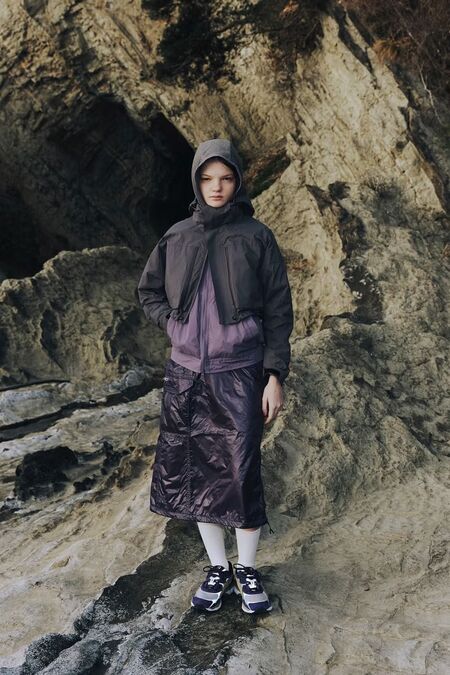
The content is fundamentally based on field observations, documentary photography, interviews, object studies, practical materials, and authorial essays. The diversity of formats allows for a single theme to be examined from multiple angles: through personal human experiences, the design of functional objects, the characteristics of the urban environment, and real-life daily situations. Crucially, the media maintains an investigative character. It does not propose universal solutions or impose a specific lifestyle; rather, it invites the reader to observe, ask questions, and draw their own conclusions.The primary goal of the six-month content plan is to establish a recognizable editorial voice for Shelter Field Notes and position functional clothing as part of a broader conversation about the human experience, space, and everyday life. By the end of this period, the media should evolve from merely a source of information about clothing into an independent visual archive of how people interact with their environment.
November. «Wednesday Dictates the Terms»
The first month is dedicated to observing the environment and its subtle influence on daily life. As the cold weather sets in, the wind intensifies, and weather conditions change, people begin to perceive familiar spaces differently. They change their routes, quicken their pace, seek shelter, redistribute their time outdoors, and choose their clothing in new ways. Since most of these decisions are made automatically, November serves as the starting point for the research: the medium learns to notice what usually remains at the periphery of attention.
The main objective this month is to introduce the audience to the research approach of Shelter Field Notes and demonstrate how an ordinary city walk can become a source of observation. The focus is on weather conditions, urban architecture, and people’s behavior in inclement weather. Through photo documentation, short diary entries, and documentary stories, the media captures how the daily environment changes and what strategies people use to interact with it.
December. «Architecture of Protection»
In December, attention shifts from the external environment to the objects that help humans interact with it. Clothing is viewed as a functional system composed of many interrelated elements. Hoods, collars, cuffs, fastenings, seams, and layers of material perform specific tasks and shape a particular way the body interacts with surrounding space. Moreover, an item’s functionality depends not only on its individual characteristics but also on how all the elements work together.
This month’s challenge is to uncover the constructive aspects of clothing and teach students to perceive it not just as a visual image, but as the result of thoughtful design. Through the analysis of details, object photography, and material research, the media illustrates which design solutions help protect against wind, precipitation, and cold, and which ones ensure comfort and freedom of movement. Special attention is given to the interplay between form and function: how a structural feature simultaneously solves a practical problem while influencing the garment’s appearance.
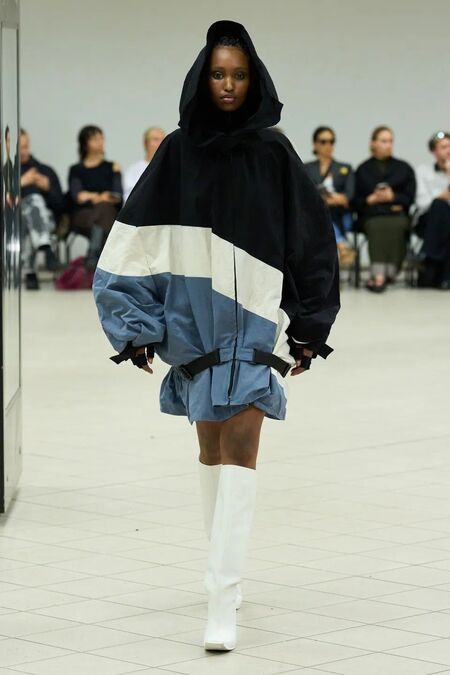
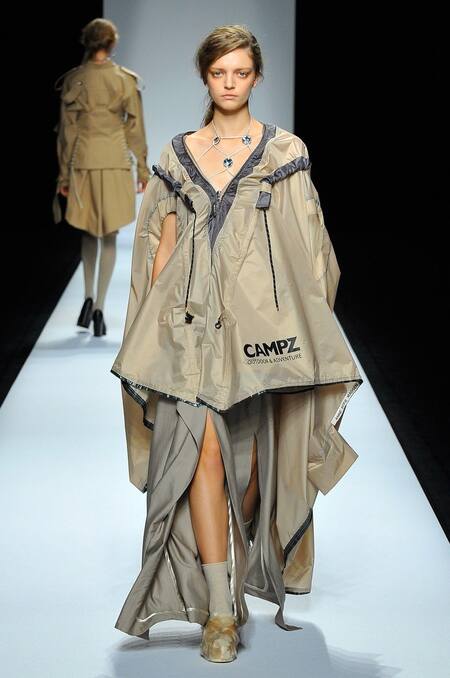
The main focus of December is visual analytics. Clothing is studied almost as an architectural object—through details, connections, proportions, and principles of spatial organization around the body. This month, a visual atlas of functional elements is developed, which may later become a standalone part of the Shelter Field Notes archive. It is important not to limit oneself to merely listing characteristics, but to explain why a specific construction solution exists and in what situations it proves useful.
January. «Body in the Cold»
In January, the study turns its attention to the human being and their physical experience. Cold is examined not merely as a weather condition, but as a sensation that influences movement, habits, attention, and spatial perception. At low temperatures, people may move faster, spend less time outdoors, choose shorter routes, or avoid certain activities. Clothing acts as a mediator between the body and the environment, but its significance is primarily revealed through daily actions and sensations.A special emphasis is placed on the subjectivity of experience. Comfort cannot be fully described by a set of technical specifications, as it depends on the individual’s activity level, the duration spent outdoors, personal feelings, and the specific situation. Therefore, the media does not aim to formulate a single instruction for everyone, but rather collects diverse stories and modes of interacting with the cold. An additional outcome of the month is a map of winter habits, where daily actions and personal observations coalesce into a broader picture of life in a cold environment.
February. «Between the Dots»
In February, the media explores movement across various spaces and conditions. Urban daily life rarely confines itself to a single environment: a person leaves the house, uses transportation, is indoors, ends up outside again, and may travel between neighborhoods or cities. Temperature, humidity, wind, and activity levels change throughout the day, meaning clothing must suit not one predefined situation, but a sequence of diverse scenarios.The focus for this month is to investigate how functional clothing and personal belongings help people maintain mobility during constant transitions. The materials cover travel, urban routes, organizing items on the go, and selecting pieces that can be used in different situations. Interviews with people who frequently move through the city or travel allow us to uncover what they deem truly necessary, which items they use regularly, and which items they prefer to leave behind.
The main focus is on versatility and adaptability. The media explores not minimalism as an end in itself, but the possibility of functioning with fewer specialized items without a significant loss of comfort. It is important to understand how an object performs when the scenario changes, how convenient it is to store and carry it, and how easily it can be adapted to new conditions. The practical materials help the reader approach clothing selection and the organization of personal belongings more consciously, based on their own routines and habits.
March. «Instability»
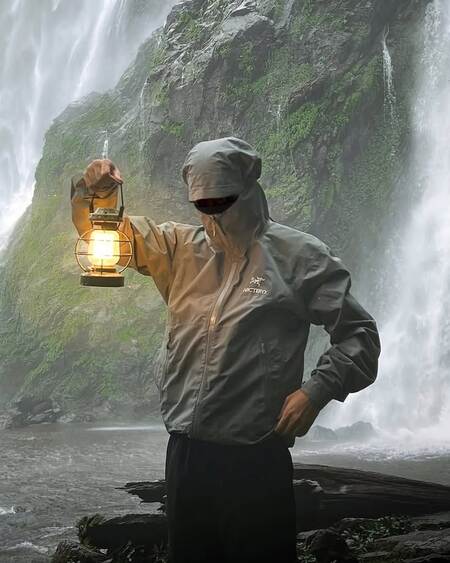
In March, uncertainty becomes the central subject of investigation. The transition from winter to spring is accompanied by thaws, rain, stronger winds, and sharp temperature shifts. Weather conditions become less predictable, and usual seasonal solutions no longer perform consistently throughout the day. In this situation, the human capacity to adapt to change—without overloading oneself with things or limiting one’s own activity—becomes particularly important.Special emphasis is placed on testing assumptions and paying close attention to facts. For instance, when studying fabric behavior in the rain, the media differentiates between visible changes in the material and conclusions about its technical properties. Observing droplets on a surface may prompt an investigation, but by itself, it does not prove the fabric’s waterproofing. This approach underscores the research nature of the project and builds trust in the publications. The visual motif of the month becomes the city after the rain, when water alters the texture of surfaces, reflections, and the familiar perception of space.
April. «Freedom of Movement»
The main goal of the month is to unify collected observations into a cohesive understanding of functionality and individuality. Shelter Field Notes gathers readers' stories, analyzes daily routes, and returns to objects that accompanied the person throughout the season. Special attention is paid to which items proved genuinely useful, which solutions aided in different conditions, and how initial perceptions changed through personal experience.
April concludes the first editorial cycle of Shelter Field Notes while laying the groundwork for its continuation. The accumulated archive serves as a starting point for new observations, themes, and research questions, making the medium a space where the relationship between human, object, and environment is explored as a continuous process.
Content Samples