What is this media?
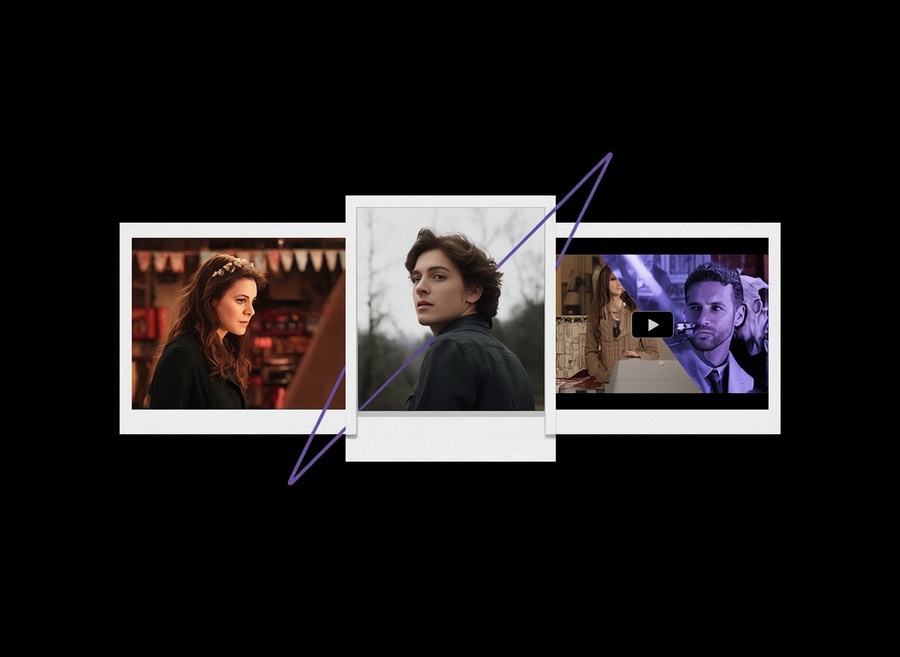
A Telegram channel dedicated to photography, film, and music videos.
We don’t just show «beautiful shots» for the sake of beauty. We analyze why a shot works: how light creates mood, how negative space communicates more than the subject, how editing establishes rhythm, and how color alters meaning.
The three themes—film, photo, and music videos—are not about academic trivia. They are there to help you see the underlying principles: the same technique works whether it’s in a movie frame, your photograph, or a video you are editing.
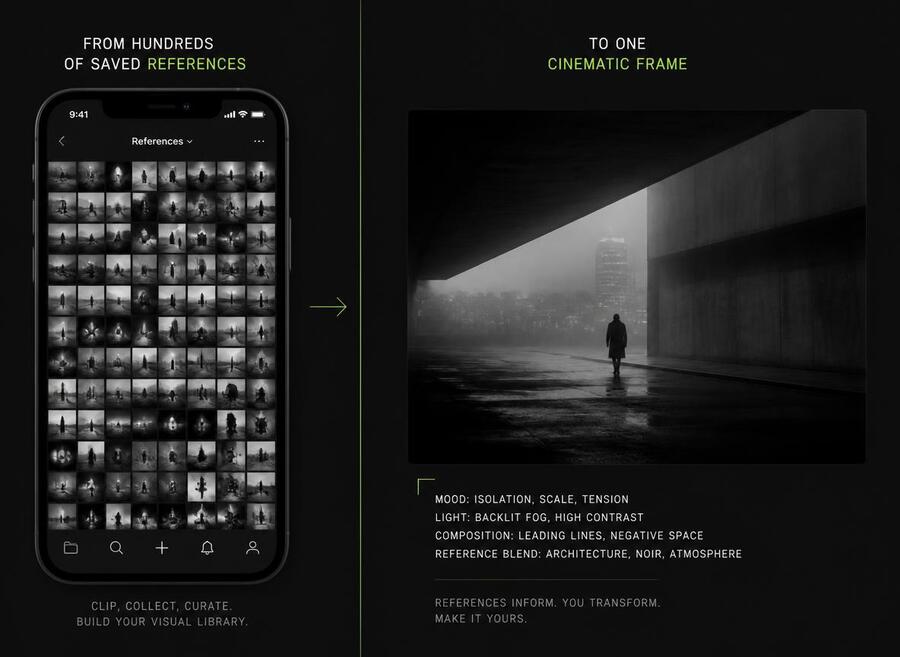
Problem and Solution
The Problem.
You watch a lot. You save shots, references, and clips. But when you sit down to shoot or edit your own work, you don’t understand why your shot «isn’t working,» while the saved one did.
References pile up, but they aren’t translated into a language of action. Your exposure remains passive.
The Solution.
Short analyses: why this shot/photo/clip fragment works, and how to replicate the technique in your own material.
Not, «Look how beautiful this is.» But, «Here is the technique, here is why it’s here, and here is how to recognize it in other material.»
Goal and Audience
Goal. To create an original Telegram media outlet that helps us transform visual literacy from passive accumulation into a tool for visual thinking and creative practice.
Audience. People aged 18–35. They shoot with phones or cameras, edit short videos, and study design, film, or photography. They write about visual culture. They are already well-informed but seek a structural language to articulate what they see.
Tone. Precise, yet not academic. Without snobbery. Respectful toward the reader who wishes to understand, rather than just scroll through beautiful frames.
Content Formats
Frame Analysis. One frame from a film, photo, or clip + text: why it works, what technique is used, how to apply it.
Material Comparison. Two frames side-by-side. One technique in different contexts. Question for the reader: what changes?
Mini-Exercise. Weekend Assignment: film one object under three different lighting conditions and describe the three saved frames in one sentence.
«One Frame—One Question.» A frame without analysis. The question is in the post. Analysis in the comments tonight.
Clip Deconstruction across Three Axes. Light / Movement / Editing. How each element contributes to the overall feeling.
Six-Month Thematic Plan
The program is structured in six four-week blocks. Within each block, there is one axis of visual analysis that runs through film, photography, and music videos. The reader perceives overarching principles rather than isolated examples.Month 1. Light as a Solution. Film: hard vs. soft light in key scenes. Photography: natural light in street photography. Music Videos: from neon to ambient light.Month 2. Frame and Void. Film: negative space in composition. Photography: the air in photography—when emptiness functions. Music Videos: space within the frame—figure and background.Month 3. Camera Movement. Film: stasis vs. motion—why the camera moves. Photography: captured motion. Music Videos: hand-held, steadicam, whip pan—what and why.
Month 4. Montage as Rhythm. Film: in-frame montage and cutting. Photography: a sequence of frames as montage in a photo-story. Music Videos: the clip’s rhythm—cut on beat versus cut on emotion.
Month 5. Color and Feeling. Film: palette as character. Photography: color correction—warm versus cool. Music Videos: monochrome, duotone, film grading.
Month 6. The Character’s Gaze. Film: POV and subjective camera. Photography: portrait—where the subject is looking. Music Videos: looking at the camera—contact versus distance.
Publication Schedule: 3 posts per week. Monday—Analysis. Wednesday—Comparison. Friday—Exercise or question.
One slot per week remains open for relevant material: a new music video, an exhibition, or a recent film.
10 content samples (summary)
1. Frame Analysis (Film). «Why this shot works without motion»: a face is snatched from the darkness by a narrow beam; there is no background—the eye cannot rest. Technique: light as the sole source of information.
2. Comparison (Photo + Clip). «Emptiness that speaks more than the subject»: a small figure in a vast space reads as loneliness/freedom. Question for the reader: what changes if you move the figure to the center?
3. Exercise (Photo). «One object, three lights»: photograph an object under harsh, soft, and mixed lighting without changing the framing. Send the shot—we will analyze it.
4. Clip Analysis. «Rhythm without rapid cutting»: the medium shot lasts for eight seconds, but the clip doesn’t lag—the internal movement within the frame sets the rhythm, not the editing cuts.
5. «One Shot—One Question.» A frame without analysis + a question: what does it reveal about the character before the first line of dialogue? Analysis will follow in the comments this evening.
6. Photo Analysis. «Why this portrait doesn’t need sharpness»: the focus is on the shoulder, not the eyes—the softness is an ethical choice, not a flaw.
7. Comparison of Two Clips. «Two ways to shoot movement»: the camera follows the protagonist vs. the protagonist moves through a static frame. Who is in charge—the camera or the person?
8. Color Analysis. «Why warm light isn’t always cozy»: a yellow lamp in an empty room creates stagnation, not comfort. Color means nothing without context.
9. Camera Movement. «Why move the camera when you can stay still?»: movement connects two spaces into a single experience—don’t cut, drive.
10. Invitation to Practice. «Observation becomes thought when you name what you see»: for the three saved frames, write one sentence explaining what works and why.
Platforms, Metrics, and Finale
Platforms.
Telegram — primary: analysis, comparisons, exercises, Q&A.
VKontakte — supplementary: video clips, photo albums, announcements.
Website — archive: full breakdowns, sources, topics.
Adaptation: one topic → TG post → short VK video → full site analysis.
Metrics.
Audience growth (subscriptions, traffic), engagement (views, shares, saves), discussions (comments, submitted shots), feedback (reviews, analysis requests). After the first few weeks, we will adjust the frequency and topics.
Conclusion.
Media is not about what to watch. Media is about how to watch.