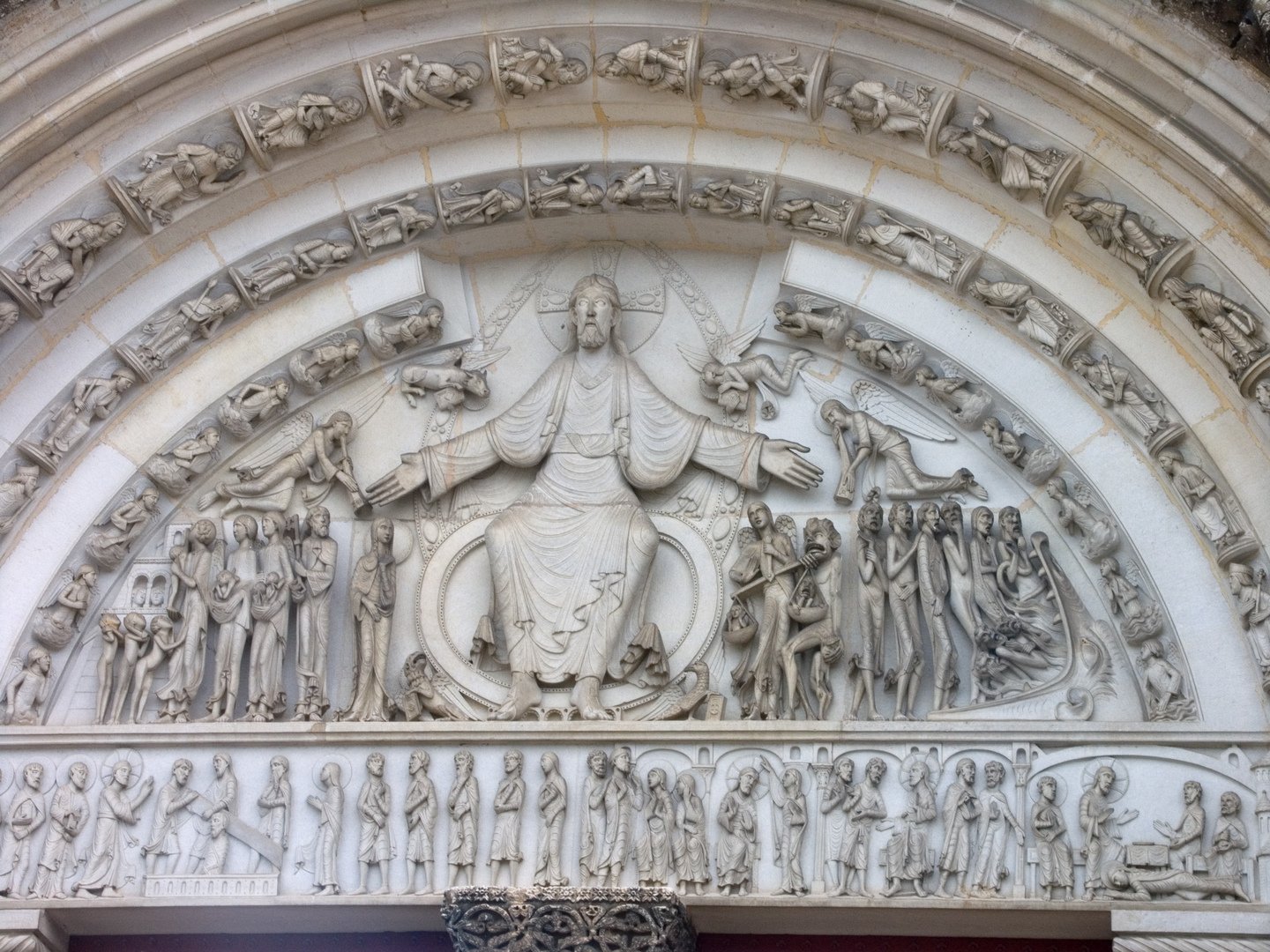
Писание для мирян: скульптура французского храма романского периода
«For what the writing presents to the reader, the image shows to the viewer, the simple person. In the picture, even the uneducated see what they ought to follow; with the picture, the illiterate read.» [1]
During the Early Middle Ages, the barbarian kingdoms, which grew from the ruins of the Western Roman Empire, gradually formed a unique symbiosis of native pagan traditions and adopted «civilized» Latin culture. By the 10th–11th centuries, this symbiosis reached a stage where a distinct style in art began to emerge. Christianity became the unifying element, allowing the inhabitants of Western Europe to consider themselves members of a single global culture, unlike during the barbarian kingdoms. A pressing task became maintaining the fundamental cultural layer of Christianity: teaching drawn from a unified Latin scripture needed to be conveyed to the masses, who lacked the ability to perceive it in the original language. This created a need to construct large, capacious churches. To solve this architectural problem, masons referenced the experience of ancient Roman architecture. This gave the period its name—Romanesque. [2]
Concept
The Romanesque church became not only the center of civic and religious life in the city, but also a center of art. The clergy were the primary patrons of architecture, monumental painting, and sculpture. Moreover, the building guilds often consisted of monks. [3]
The hypothesis is that the need to preach Christianity amid the congregation’s widespread inability to understand Latin spurred the illustration of biblical narratives within the church’s sculptural ornamentation.
The aim of this study is to identify the visual means by which Romanesque sculpture rendered biblical content comprehensible to the congregation, as well as to determine the most significant themes and didactic ideas for the ecclesiastical commission. Material selection was organized based on regional characteristics because the preconditions for cultural development across various areas of medieval Europe differed. Southern France inherited a close connection to the Greco-Roman tradition and preserved a large number of ancient monuments; this continuity is less pronounced in northern France. Germany proved least susceptible to the influence of the ancient heritage—it reached it primarily through the lens of Carolingian and Ottonian culture. Italian art, while directly linked to the ancient tradition, developed under the influence of political fragmentation and the struggle for influence among the German emperors, the Normans, and Byzantium.
Navigation
I. Concept II. France III. Germany IV. Italy V. Conclusion VI. Bibliography
II. France
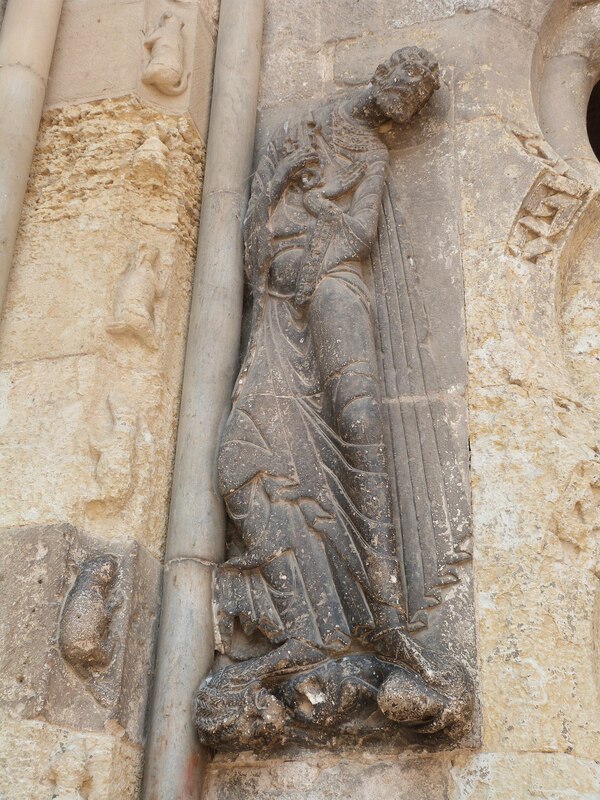
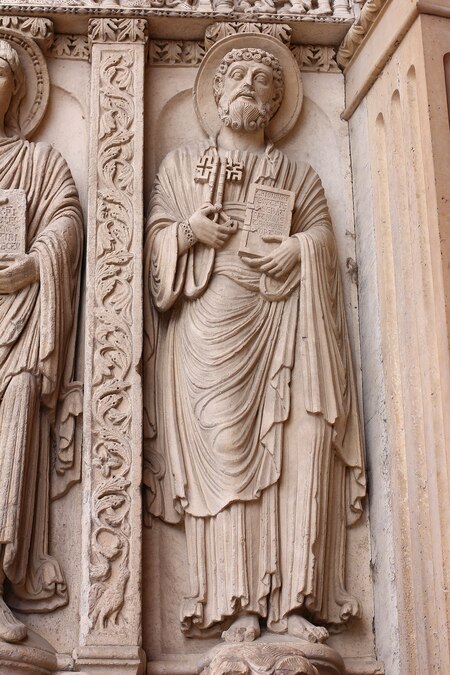
1. St. Peter. Support column of the south portal of the Abbey of Saint-Pierre in Muasseque. Languedoc, circa 1115–1131. 2. St. Peter. Portal support column of the Church of Saint-Trophime in Arles. Provence, late 12th century.
Feudal fragmentation, the diversity of regional historical conditions, and the influence of major monasteries and orders led to the division of Romanesque sculpture in France into distinct schools. During this period, the Burgundian, Languedocian, and Provençal schools held the most significance. [4] The distinctions between them are clearly observable when comparing the statues of the Apostle Peter from the portals of the Church of Saint-Trophime in Arles and the Abbey of Saint-Pierre in Maucasson.
Bourgogne School
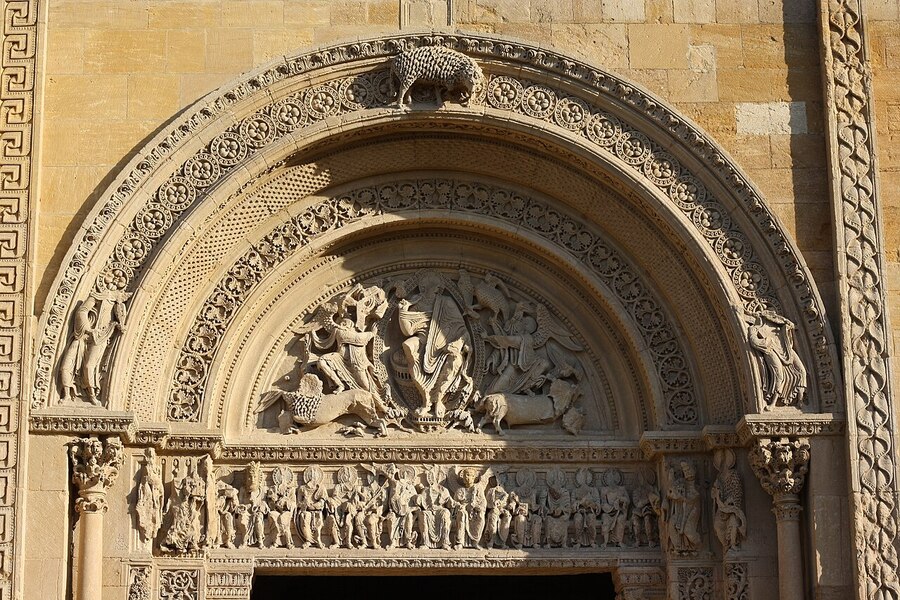
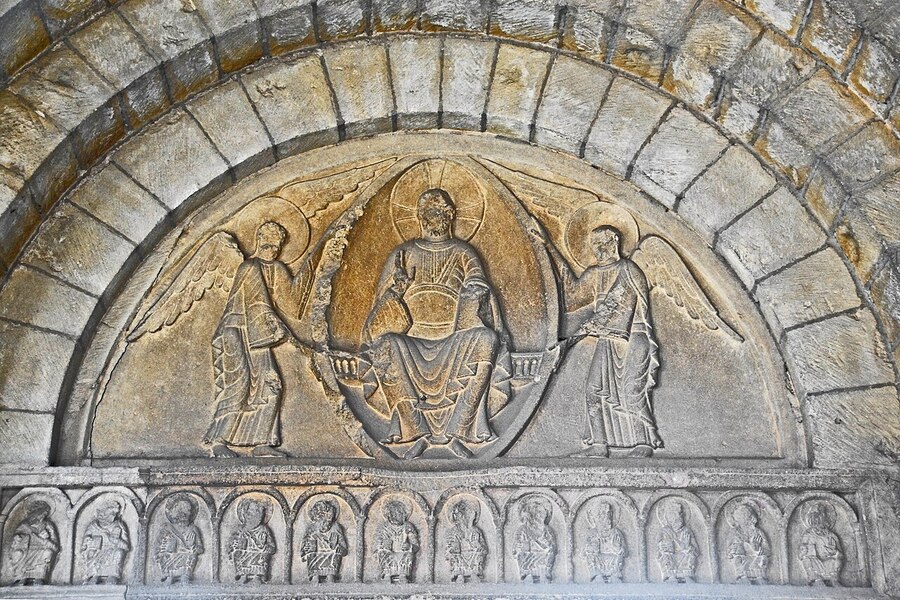
1. Tympan of the west portal of the Abbey of Saint-Fortunat in Charolles. Burgundy, 1090. 2. Tympan of the north portal of the Abbey of Saint-Fortunat in Charolles. Burgundy, mid-12th century.
Bernard Clervaux. Apologia to Abbot Wilhelm // History of Aesthetics: in 5 vols. / edited by M. F. Ovsyannikov [et al.]. — Moscow: Academy of Arts of the USSR Publishing House, 1962–1970. Vol. 1: Antiquity. Middle Ages. Renaissance. — 1962. — p. 281.
3. General History of Art: in 6 vols. / USSR Academy of Arts; under the general editorship of B. V. Weimar and Yu. D. Kolpinsky. — Moscow: Iskusstvo, 1956–1966. Vol. 2: Art of the Middle Ages. Book 1. — 1960. — 508, LXXV pages. — Text: primary. [2], [4]
Gregory I the Great. On Icons: [Letter to Seranus, Bishop of Massilia (Marseilles)] / Gregory I the Great; translated from Latin by P. A. Pashkova // Azbuka Very: Orthodox Library: [Electronic resource]. — URL: https://azbyka.ru/otechnik/Grigorij_Dvoeslov/ob-ikonah/ (date of access: 11/14/2026). [1]
Dmitrieva, N. A. A Brief History of Art: Essays. Vol. 1: From the Most Ancient Times to the 16th Century / N. A. Dmitrieva. — 3rd ed., revised. — Moscow: Iskusstvo, 1985. — 319 pages, illustrations. — Text: primary. [3]
Romanesque Art. Architecture. Sculpture. Painting / edited by R. Toman; translated from German by T. Azarkovich [et al.]. — Cologne: Könemann, 2001. — 484 p.: ill. — Text: primary. — ISBN 3-8290-2564-5.
Benoît, J.-K. Tympan of the exterior facade of the Saint-Madeleine Abbey in Vézelay: [photograph] / J.-K. Benoît; Wikimedia Commons website. — URL: https://commons.wikimedia.org/wiki/File:Abbaye_Vezelay-tympan.jpg (Accessed: 11/14/2026)
Saint Peter. Statue on the jamb of the south portal of the Saint-Pierre Abbey in Muasson: [photograph] / photo by Thérèse Gaigé; Wikimedia Commons website. — URL: https://commons.wikimedia.org/wiki/File:Sculpture_de_Saint-Pierre.jpg (Accessed: 11/14/2026)
Apostle Peter. Statue on the jamb of the portal of the Saint-Trophime Church in Arles: [photograph] / photo by Ponyterr; Wikimedia Commons website. — URL: https://commons.wikimedia.org/wiki/File:Apostle_Peter_(portal_Saint_Trophime).JPG (Accessed: 11/14/2026)