
ON SEAMS
The History of Fashion Brands Through Objects and Details
Concept, Six-Month Thematic Plan, and 10 Content Samples
Media Concept
Why is a handbag recognizable by its strap, yet a fashion house by the silhouette of its jacket? Familiar objects carry within them design decisions, the circumstances of an era, and human histories.
«Po Shvam» is an educational media outlet that tells the story of fashion brands through specific items and details.
Each episode is dedicated to a single piece: how the item originated, why it looked the way it did, and the significance it gained for the brand.
Concise texts and illustrations allow readers to gradually become familiar with fashion history. The reader does not need prior knowledge of designer names or professional terminology; the necessary context is provided within the narrative.
The title «Po Shvam» refers to the construction of clothing and close attention to detail. Through form, material, fastener, or stitch, the media reveals the history of an entire garment.
Media Mission
To help the reader explore the history of fashion through short narratives about familiar items and brands.
Studio and its needs
The primary audience is students and young professionals aged 18–30 who are interested in fashion, design, and visual culture but lack systematic knowledge of brand history.
Typical reader scenarios:
Recognizing an item in a photograph but not knowing its origin.
Hearing fashion house names but confusing the designers' names.
Wanting to understand the references in collections and fashion publications.
Encountering an interesting story but unsure about its credibility.
Preferring to engage with a topic gradually, through short-form content.
«Po Shvam» offers an accessible entry point: one item, one story, and several details to help remember it.
Primary Formats:
A short post on one episode from an object’s history.
A detailed close-up analysis of a recognizable element.
Text cards offering sequential explanations.
A comparison between an archived object and its later interpretation.
A poll or a small research assignment.
Topics, Frequency, and the Role of AI
Media Features:
«The Object’s History”—how a specific item emerged and what role it played in the brand’s history.
„Close-Up”—one specific detail: its construction and significance.
„Materials with a Story”—why designers selected certain fabrics and materials.
„People and Objects”—the stories of designers, craftspeople, and individuals connected to famous designs.
„Let’s Deconstruct It Together”—reader surveys, assignments, and observations.
Frequency: twelve core publications per month. We plan for 72 pieces over six months.
Each month features four thematic blocks. Within each block, we publish a short story, a visual analysis, and a piece engaging our audience.
AI assists in systematizing collected information, suggesting text structure, and creating explanatory illustrations. The editor verifies dates, names, and circumstances using museum records, brand archives, and other reliable sources.
Archival photographs are credited with their source. Images generated by AI are labeled as illustrations.
The tone of communication is curious, friendly, and specific. Unfamiliar terms are explained within the narrative.
Thematic Plan: Months 1 and 2
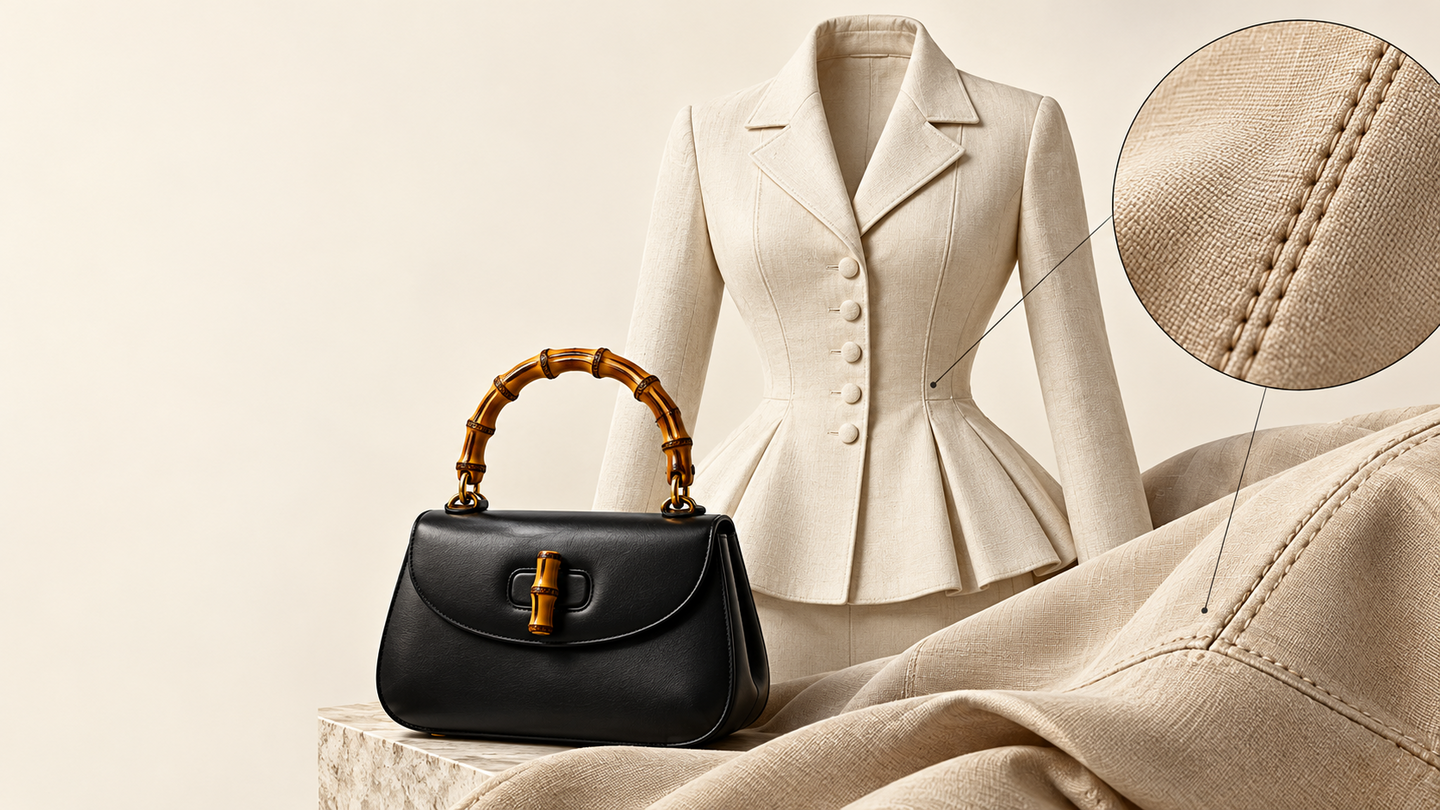
Month 1. Familiar Objects and First StoriesThe objective is to show how a single item can serve as a gateway to understanding the history of a fashion house.Thematic Modules:CHANEL 2.55: What is hidden in the bag’s name.Bar Jacket: How a silhouette becomes a Dior icon.Kelly: How a person’s name becomes the name of an item.Gucci Bamboo: Why the bag’s history begins with its handle.Material Examples: A short narrative about a model’s name, cards analyzing a silhouette, and a survey about items whose history students are curious about.
Month 2: Details That Define a Brand The goal is to teach the reader to notice the small elements that contribute to an item’s recognizability.Thematic blocks:The rivets on Levi’s and their original function.The split toe of Tabi shoes.The plaid lining of Burberry.The hidden chain in a CHANEL jacket.Material examples: close-up images of details, explanation of their function, and an assignment to identify an item from a fragment.
Thematic Plan: Months 3 and 4
Month 3. Materials and Design SolutionsThe objective is to demonstrate how material properties influence the look of an item and the development of a brand.Thematic blocks:Burberry gabardine and outerwear for adverse weather.Prada nylon and a new conception of luxury.Gucci bamboo: material, processing, and recognizable form.Levi’s denim: fabric and construction of workwear.Material examples: comparing textures, discussing material processing, and surveying the connection between material and the impression of the item.
Month 4. People and the Objects They OwnThe objective is to introduce readers to figures in fashion history through specific objects.Thematic Modules:Grace Kelly and the origin of the name Kelly.Jane Birkin and the concept behind the Hermès tote.Christian Dior and the creation of the Bar silhouette.Jacob Davis, Levi Strauss, and the riveted work pants.Material examples: short narratives featuring a single protagonist, sequences of key events, and questions exploring how an individual influences an object’s image.
Thematic Plan: Months 5 and 6
Month 5. Objects and the Context of the EraThe goal is to connect the appearance of objects with the needs and conditions of the time in which they emerged.Thematic blocks:Workwear and the reinforcement of pockets with metal rivets.Military heritage in the trench coat’s construction.Post-war restrictions and the search for materials at Gucci.Dior’s New Look in the context of post-war fashion.Material examples: a narrative about a single practical task, a comparison of a detail’s function then versus now, and a discussion of the relationship between form and context. Month 6. Archives and the New Life of ObjectsThe goal is to demonstrate how brands revisit their classic models and how the reader can independently analyze these references to the past.Thematic blocks:The Bar Jacket and its interpretation by Ralph Simons.Gucci Bamboo in the work of contemporary artists and craftspeople.Prada’s nylon and the development of the Re-Nylon project.Independent analysis of one object using a media framework.Material examples: comparing an archival piece with a later one, detail cards for preserved elements, and a final assignment for the readers.
Content Sample #1
Rubric: «The History of Things» Format: Text Post
The date worn on the shoulder
The name CHANEL 2.55 conceals a date: February 1955. This is when this bag model was introduced. V&A
Look closer at it: a rectangular body, a quilted surface, a flap closure, and a long metal chain.
The chain allows the bag to be worn over the shoulder, freeing up the hands. This practical solution simultaneously becomes a noticeable part of its aesthetic.
The 2.55 model also features the characteristic rectangular Mademoiselle clasp. Together with the clasp and the chain, it helps to identify this bag. CHANEL
Try looking at the object as a whole first, and then close everything except one detail. Which detail would allow you to recognize the model?