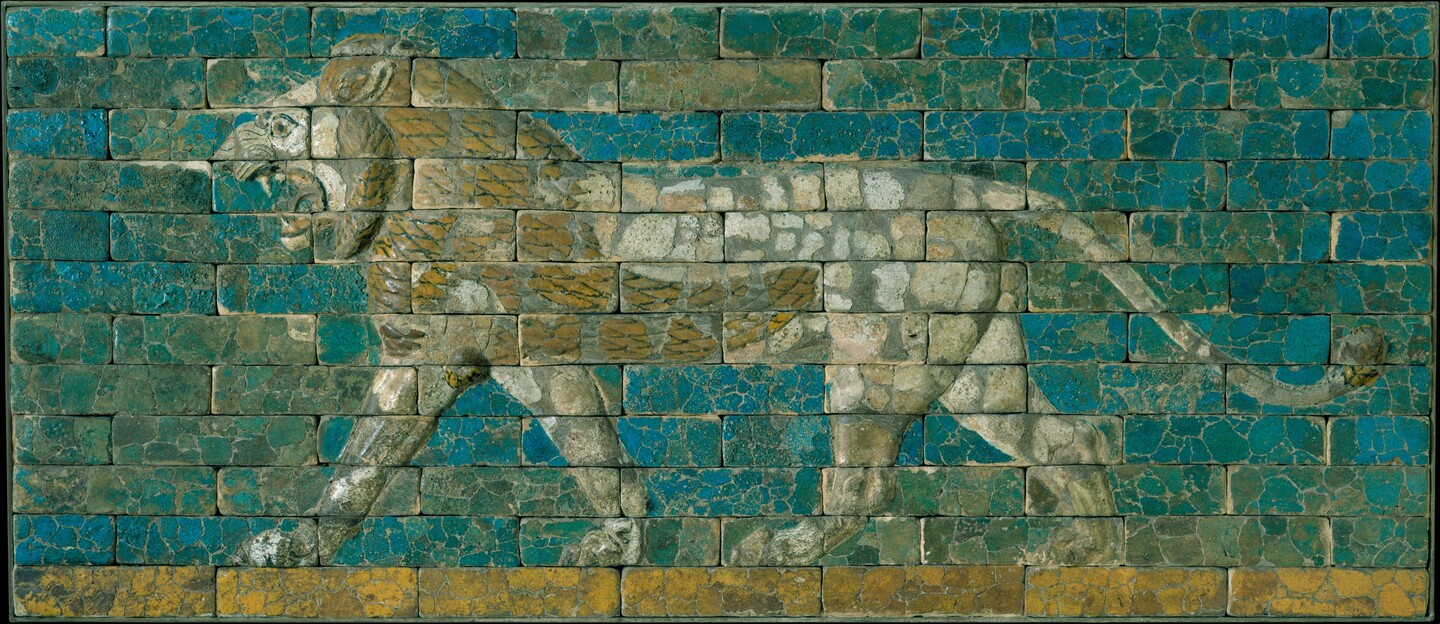
Животные и мифические существа в искусстве Месопотамии как демонстрация власти и процветания
(0)
INDEX
(0) Navigation(1) Concept (2) Monumental Sculpture and Architectural Reliefs (3) Polychrome Architectural Decoration (4) Glyptic Art (5) Small-Scale Sculpture (6) Conclusion(7) Bibliography (8) Image Sources
(1)
CONCEPT
The Lamassu sculpture and the lion pierced by an arrow.
What might connect the statue of a giant winged bull guarding the palace entrance with a skillfully carved scene of a lion hunt?
Despite differences in size and material, zoomorphic figures in Mesopotamian art served a unified ideological function. The figures transmit two complementary motifs. On one hand, the image of the hybrid guardian, the Lamassu, becomes a symbol affirming that the state situated between the Tigris and Euphrates rivers is powerful because it is under the patronage of mythical beings who protect the borders of its domain. On the other hand, scenes of royal hunts visualize the absolute power of the ruler, before whom even the lion—king of beasts—is brought low. Through this, the viewer perceives the image of a mighty empire. Thus, animals and mythical creatures become not merely decorative motifs but a visual language that communicates ideas of state superiority and strength.
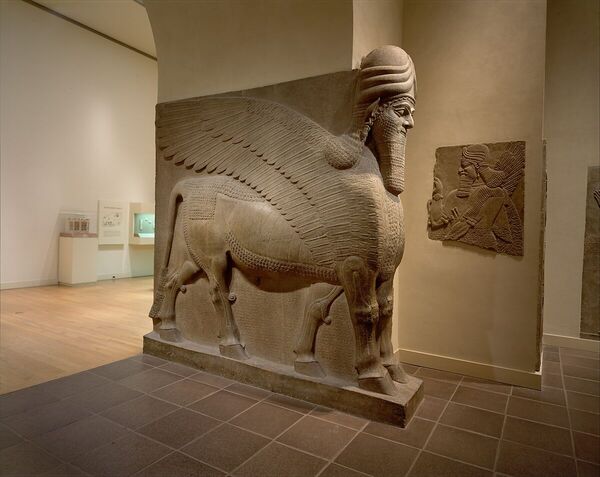
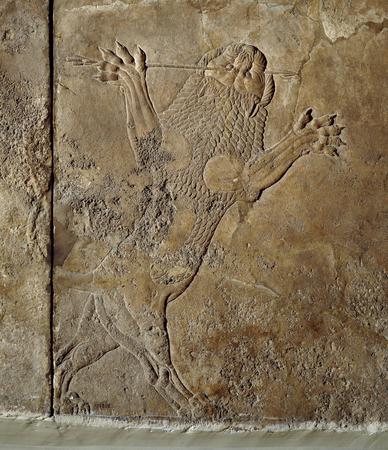
1. Winged bull with a human head (lamassu), c. 883–859 BCE. 2. Scene of King Ashurbanipal hunting lions, c. 645–635 BCE.
Visual propaganda is not a modern invention. Before the advent of mass media, ancient states sought ways to influence people’s consciousness and therefore utilized art as a primary tool for shaping a particular ideology.
The central question of this visual study is: how did images of animals and mythical creatures in Mesopotamian art demonstrate the power and prosperity of the empire?
Visual Research Hypothesis: The depiction of animals and hybrid creatures was not random, but rather adhered to a hierarchy and followed a specific idea, suggesting the use of symbolism and particular stylistic choices.
Furniture plaque featuring a bas-relief of a deer grazing among vegetation, circa 9th–8th century BCE.
Principle of Material Selection for Visual Research and Principle of Work Categorization:The visual study incorporates works from the 10th to 6th centuries BCE, as it was during this period that the zoomorphic code achieved maximum systematicity and was utilized for propaganda. The work is divided into four sections, each covering a specific functional-material category. By studying each, one can observe how the same ideological motif unfolds across various scales and materials.Images from digitized collections of leading international museums were used for the visual presentation, ensuring the reliability of the archaeological attribution of the selected objects. The analysis will cover monumental sculpture and architectural reliefs, polychrome architectural decoration, glyptic art, and small-scale sculpture created during the reigns of the Neo-Assyrian and Neo-Babylonian empires.
During the project, textual sources were utilized in which authors provide detailed descriptions of Mesopotamian culture, geography, and mythology. Analyzing these texts helps answer the question of why creators of the past depicted certain creatures in a particular way and what place animals and mythical spirits held in people’s consciousness.
(2)
MONUMENTAL SCULPTURE AND ARCHITECTURAL RELIEFS
DEFENDERS OF PALACE AND CHURCH COMPLEXES
Winged lion with a human head and winged bull with a human head, c. 883–859 BCE.
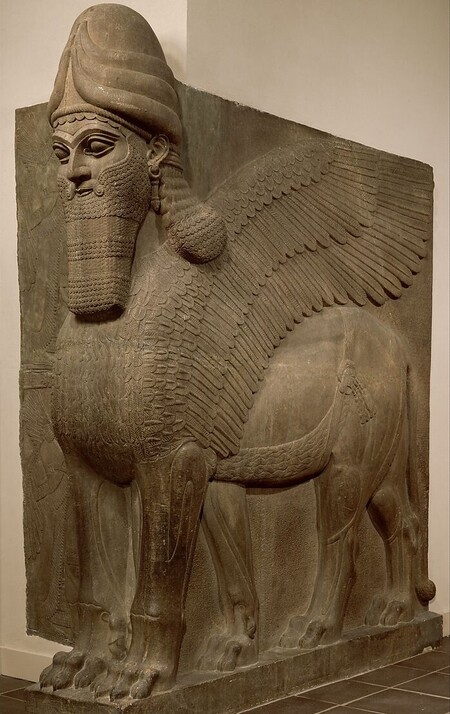
Winged lion with a human head, c. 883–859 BCE.The sculpture was located in the palace of Ashurnasirpal II and served as a symbolic guardian for the king [1]. The creature’s calm expression helps establish the image of an unwavering and wise sentinel protecting the master’s domain. Furthermore, the animal part of the sculpture—a massive leonine body with clawed paws and large wings—grants it an advantage over an ordinary human. The depiction of the winged lion suggests that it is superior to a typical guard, as it possesses not only human intellect but also the strength of mighty beasts.
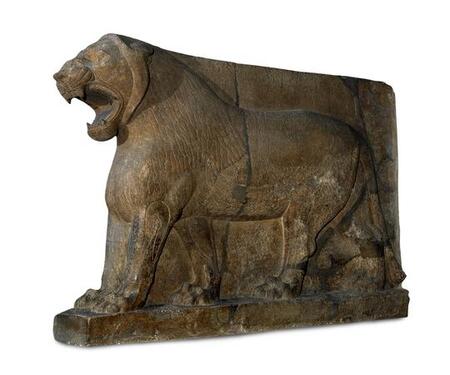
Relief wall panel depicting a colossal lion, c. 865–860 BCE.
Similar to the winged creatures guarding the grounds of Ashurnasirpal II in Nimrud, lions guarded the entrance to the Temple of Ishtar Sharru-Nift. The animal stands in a confident yet tense posture, signaling the beast’s readiness to protect a sacred site. The main emotional focal point is the lion’s open maw, as if warding off evil with its roar.
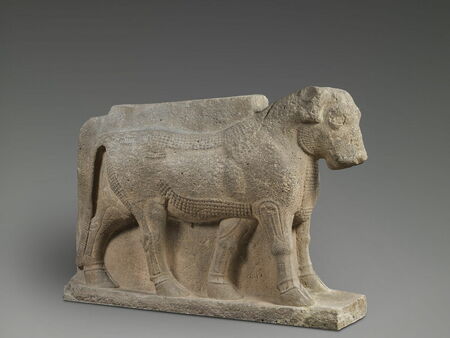
Statue, 744–727 BCEBull at the entrance to the Temple of Ishtar.
All these statues serve one function: they depict the magnificent and powerful beings who stand guard for their master, thereby making the image of the ruler or goddess formidable and invincible.
ANIMALS AS A GIFT
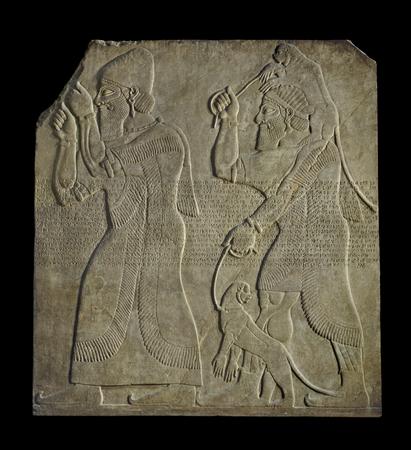
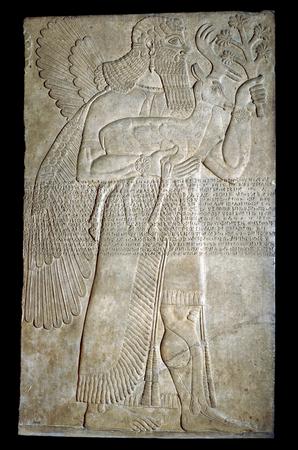
1. Relief on a plaster wall panel: a carved image depicting people offering homage, 865–860 BCE. 2. Relief on a plaster wall panel: depicting a protective deity carrying a deer and a palm frond, 865–860 BCE.
Reliefs often depicted people or mythical creatures holding animals. The titles of such works and the appearance of the figures reveal the significance of animals in the empire’s life. For example, monkeys became valuable gifts for rulers, a detail meticulously portrayed on palace reliefs. Furthermore, a mythical creature holding a fawn served as the entrance to the throne room, potentially symbolizing the heavens' patronage ushering in bright and fertile times.
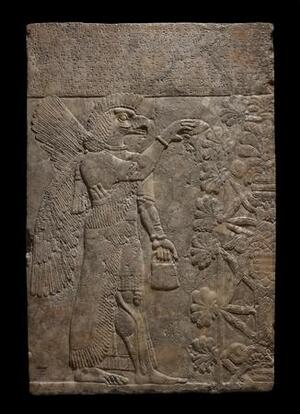
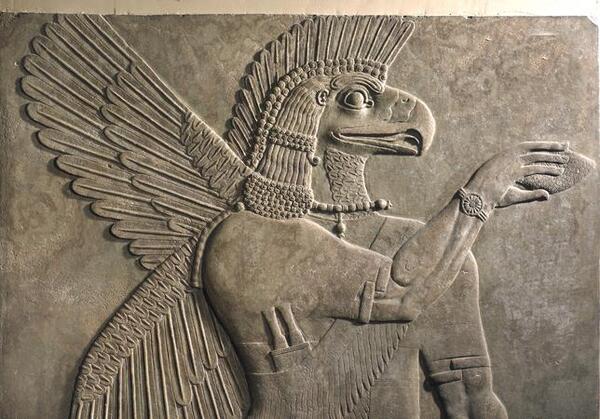
Relief plaster wall panel depicting a winged patron deity with an eagle’s head pollinating a date palm, 865–860 BCE.
Birds or mythical creatures with human bodies and eagle heads signified divine presence. Relief plaques depicting them were often associated with the Tree of Life—a sacred plant connecting humanity and time. The winged deity held a small bucket of water in one hand and an object resembling a pinecone in the other. He pollinated the tree and brought success and prosperity to all who passed by him. This is why such bird imagery was placed at the entrance to the temple or palace [2].
ANIMALS AS SYMBOLS OF BOUNDLESS POWER
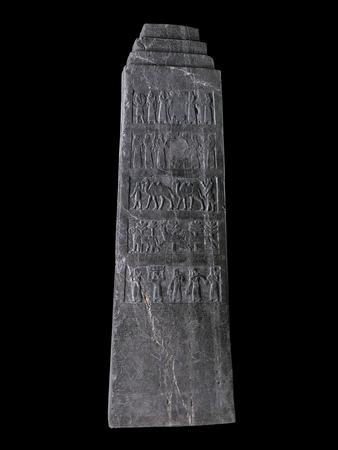
Black Obelisk of King Salmanasar III, circa 825 BCE.
The obelisk is dedicated to the victories of King Salmanasar III, illustrating the results of his conquests. The upper section consists of a series of reliefs that visually evoke the architecture of ziggurats. The obelisk features carved figures of people from various nations who submitted to the king’s will. As tokens of submission, they present various animals: elephants, camels, monkeys, and others [3].
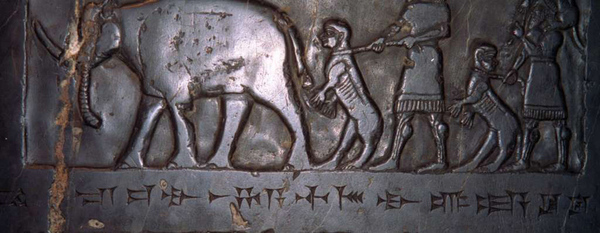
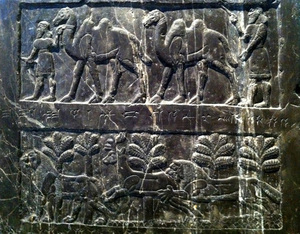
Details of the Black Obelisk of King Salmanasar III, c. 825 BCE.
The animals on the Black Obelisk symbolize the victory of the head of state and the acquisition of new territories that previously belonged to other peoples.
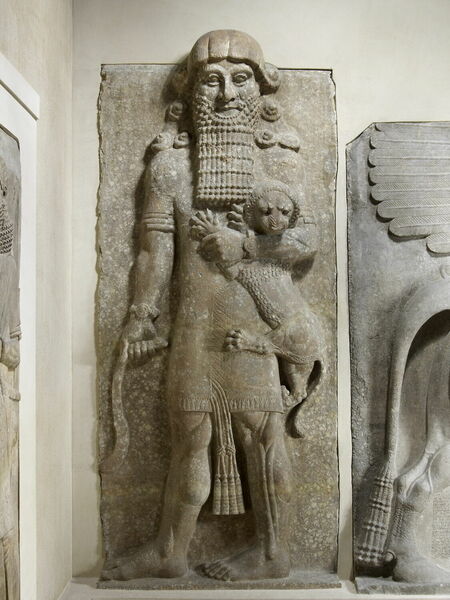
Gilgamesh with the Lion, 721–705 BCEThe high relief illustrates how boundless strength and power can coexist with serenity and reason within a single image. The hero stands in a confident posture, holding a weapon in his right hand and the lion in his left, embracing it as if it were a child. Gilgamesh does not kill the animal; rather, he subjugates it, as if demonstrating his ability to master the forces of evil. The ease with which he holds the beast with one hand contrasts sharply with the tension and assurance of the entire figure.