Aesthetics of Fear
What visual means did medieval artists use to create the image of the demonic, and what role did these images play?
Introduction
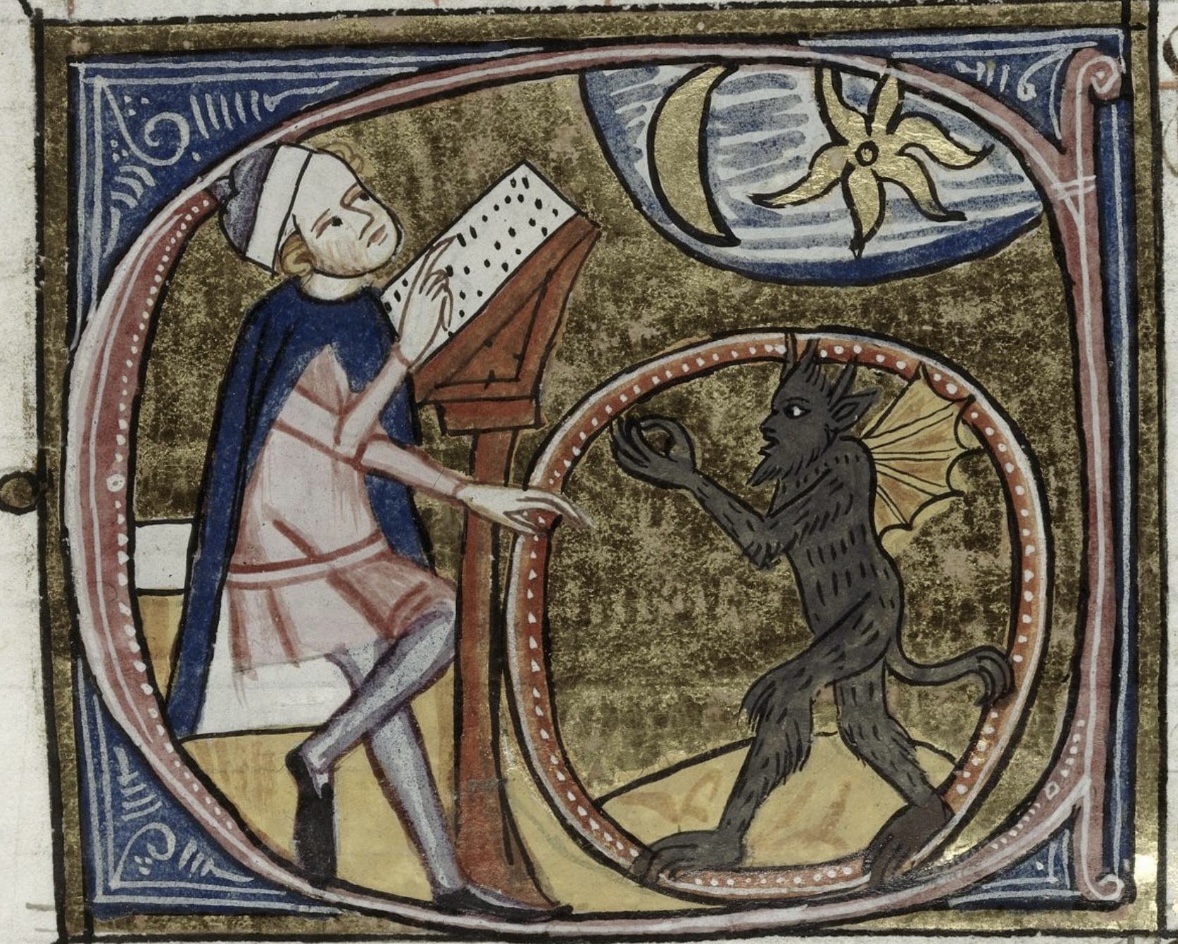
In medieval art, the depiction of the demonic holds a special place. Fantastic creatures become important elements of the era, illustrating sin and evil. This theme is particularly pronounced in Romanesque art from the 11th and 12th centuries. Researcher Kirk Ambrose notes that monstrous figures could express religious, social, and political ideas. This study will focus specifically on the deformation of the human body, the rendering of jaws and claws, and the composition of monstrous arrangements.
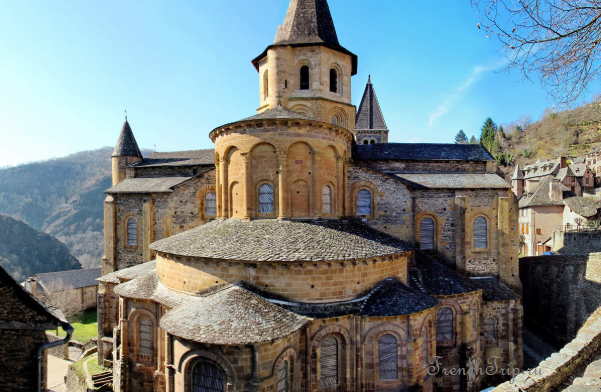
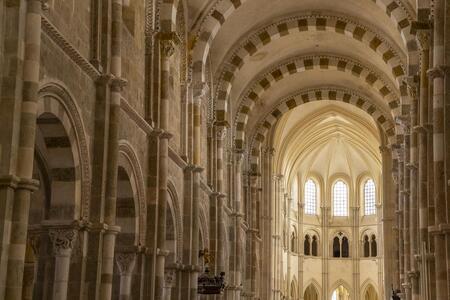
Romanesque Architecture. Saint-Foy Church.
Deformations
One of the primary means of creating a frightening image was the deliberate distortion of the human body. In Romanesque sculpture, figures were often depicted with disproportionately large heads, elongated limbs, unnaturally curved backs, and sharp movements. Such deformation was not an accidental error by the artisan; rather, it helped distinguish the ordinary human form from the monstrous. Faces were particularly expressive—wide-open mouths, bulging eyes, sharp teeth, and tense features. These details intensified the sense of aggression.
Saint-Foy, Conques, France, 12th century.
Demonic creatures on Saint-Lazare Cathedral in Otte.
Hybrids
Another distinctive feature of Romanesque art was the depiction of hybrid creatures—figures that merged human and animal parts. Church sculpture features beings with human faces and animal bodies, winged monsters, centaurs, and fantastic beasts.
Centaur, mythical creature, France.
Such images disrupted conventional perceptions of nature. They merged incompatible forms, creating a sense of something alien and unpredictable.
Roman capital.
However, not every fantastical creature should be classified as a demon. Some animals and hybrids may have held symbolic or decorative significance. Therefore, it is crucial to consider the figure’s specific placement and the scenes it is associated with.
Maw and Claws
Specific bodily details played a crucial role in creating the terrifying image. In depictions of monsters, enormous jaws, sharp teeth, claws, and elongated limbs were particularly emphasized. The maw could become the central element of the composition—it seemed to either engulf human figures or transform into a symbol of passage into the realm of hell.
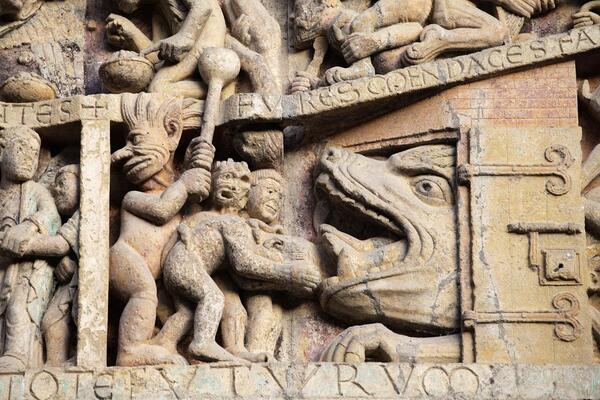
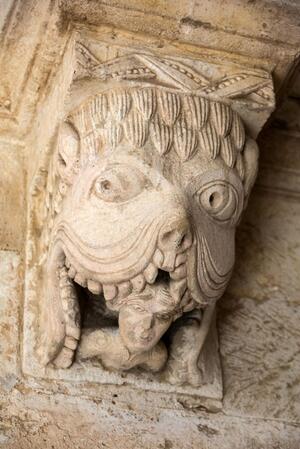
Claws and teeth signaled physical danger, while the monsters' sudden movements created a sense of attack. In scenes of infernal torment, fear became particularly palpable. Human bodies were depicted in helpless positions, as demons grasped, held, and tortured them.
Judgment Day
One of the most striking examples of the depiction of fear is the tympanum of the Last Judgment at Saint-Foy Church in Conques (France, 12th century). The composition is divided into several semantic zones, which illustrate Christ as judge, as well as the saved and the condemned.
Tympan of the Judgment of God at Saint-Fua Church in Conques.
In the image, the figures are closely grouped, their movements are sharp, and the interaction between the demons and the damned appears violent.
Address
The space of paradise, by contrast, is organized more systematically. Because of this juxtaposition, the viewer could perceive hell as a place of chaos, suffering, and the disruption of established order.
Paradise.
Monsters in Architecture
Demonic and fantastic figures were depicted not only in large narrative compositions but also on architectural elements: capitals, portals, and columns. The capitals are particularly interesting—the tops of columns that could feature scenes of combat, animal attacks, and depictions of fantastic creatures. Since these images were placed at eye level or higher, viewers perceived them as an integral part of the temple’s space itself.