HSE Art and Design School Faculty at the Changzhou Photography Biennale
A. Meshcheryakov, V. Efimov, I. Mukhin, P. Samokhvalov, P. Stadnik, M. Kharshak
The International Biennial of Photography in Fujian (China) opened on 12 December 2025, marking its third edition. The Fujian Art Photography Museum is located in the large coastal city of Changzhou and opened its doors during the COVID 19 pandemic. Since then, the museum has maintained a busy exhibition schedule and actively expanded its collection. The museum will continue to develop as a research centre for photography of the Pacific and East Asia. A strategic partnership with the local design college further cements its status as an important educational and scientific hub.
International Photography Biennale in Fujian | Paulina Stadnik | 2025
Co-curators of the third biennial in Fujian are Irina Chmyreva, lecturer at the HSE School of Design and the Art Director of the PhotoVisa Festival, and Liu Xiaoxia, the Director of International Programmes at the Pingyao International Photography Festival. The theme of the biennale is ‘Capture and Integration.’ This issue is particularly relevant to the modern world, according to Irina Chmyreva: ‘We accumulate information and images while being immersed in continuous media processes». The curators have gathered an international group of participants, including teachers from leading art schools who combine educational work with active artistic practice and displaying their work.
«Within the theme of „Capture and Integration“, exhibition visitors will see both direct photography and conceptual projects derived from it, as well as works created with artificial intelligence. This section features artists from Russia, Australia and China. Their experiments demonstrate how modern neural networks are forming new languages of visual communication and how these digital practices are interconnected with cultural experiences, primarily those of the 20th and early 21st centuries.»
Irina Chmyreva
International Photography Biennale in Fujian | Igor Mukhin | 2025
One of the highlights of the international programme is a project developed with the support of the HSE Institute for Creative Industries Development as part of the global programme for career development in the creative industries. Through the initiative, an exhibition of the faculty of the HSE School of Design was organised. It included works by Arseny Meshcheryakov, Paulina Stadnik, Vladislav Efimov, Igor Mukhin, Pavel Samokhvalov, and Mitya Kharshak. The Russian section also featured multimedia artist and photographer Maria Gruzdeva and media artist Evgeny Shcheglov. Among the foreign exhibitors were authors already familiar to the Russian public: Tom Lisboa (Brazil), Mitar Terzić (Serbia/Spain), Katka Benadik-Pratzková and Robo Kočan (Slovakia), whose works had previously been exhibited at the PhotoVisa international festival in Krasnodar.
Mo Guangping | Posters featuring portraits of the Biennale participants and co-curators
This exhibition within the Biennale presents the first part of a large-scale project ‘Cultural Codes: China — Russia’. A subsequent exhibition will be presented at a Russian venue. Today, selecting works for international projects involving curators from different countries is becoming easier thanks to digital tools such as the photo.mediiia platform, which offers photographers new opportunities to be discovered.
WORKS PRESENTED AT THE BIENNALE
Vladislav Efimov Around the Forest
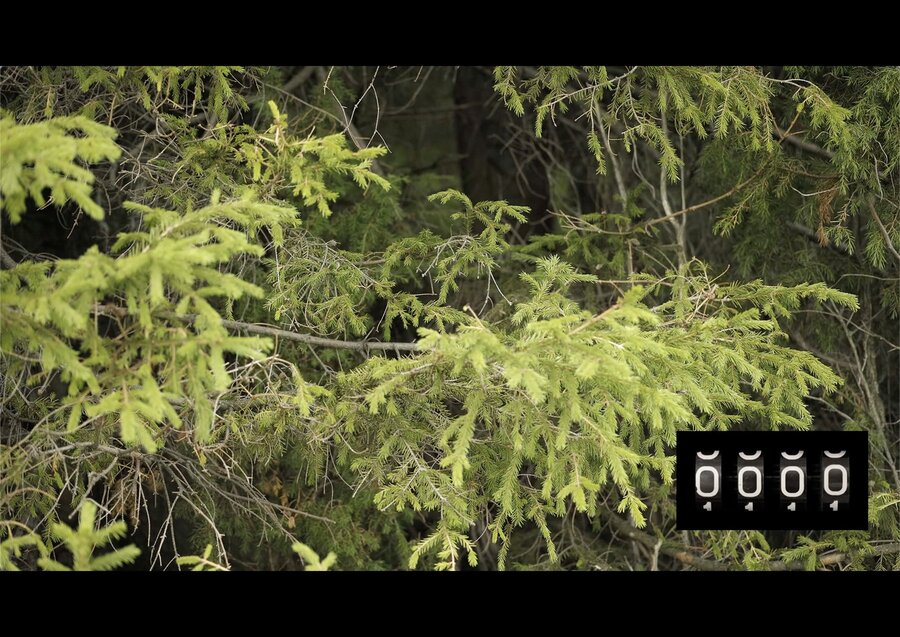
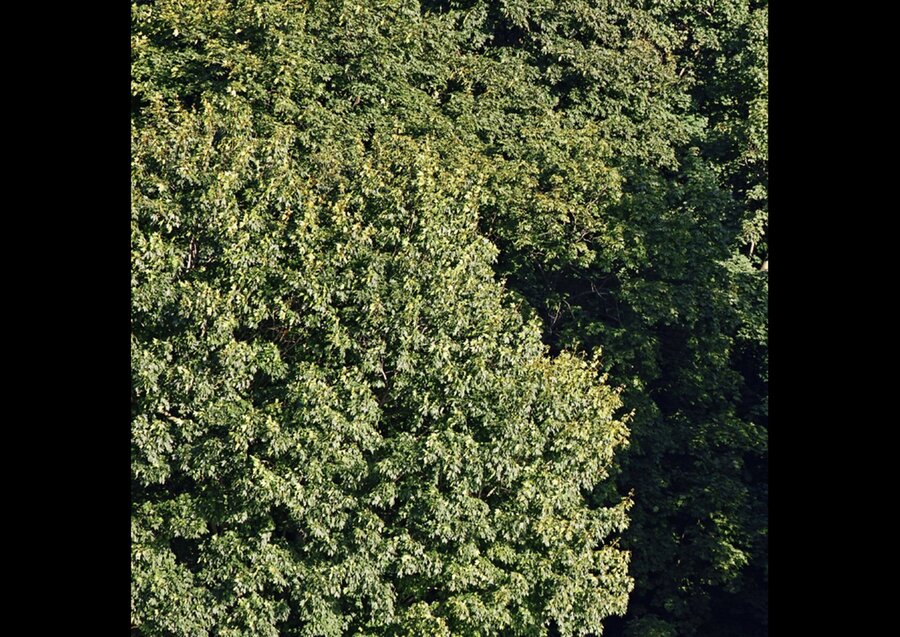
Vladislav Efimov. Around the Forest
The installation is dedicated to the practice of observing the green surface of the forest-its nature and structure. The forest’s surface speaks of its grandeur, while its details define the flow of its life. Moving through the forest provides the means to distinguish zones of permissible indistinctness from those places where close observation brings some clarity to understanding the secret life of bushes and trees. sy introducing additional movement into the method of a forest walk necessary tor a natu alist to shift positions in search of specific viewpoints-we are forced to contend with the sit uation of incomplete, discrete revelation of nature’s details. Many parts of the forest remain unnoticed and blurred; the memory of the forest adventure fades.
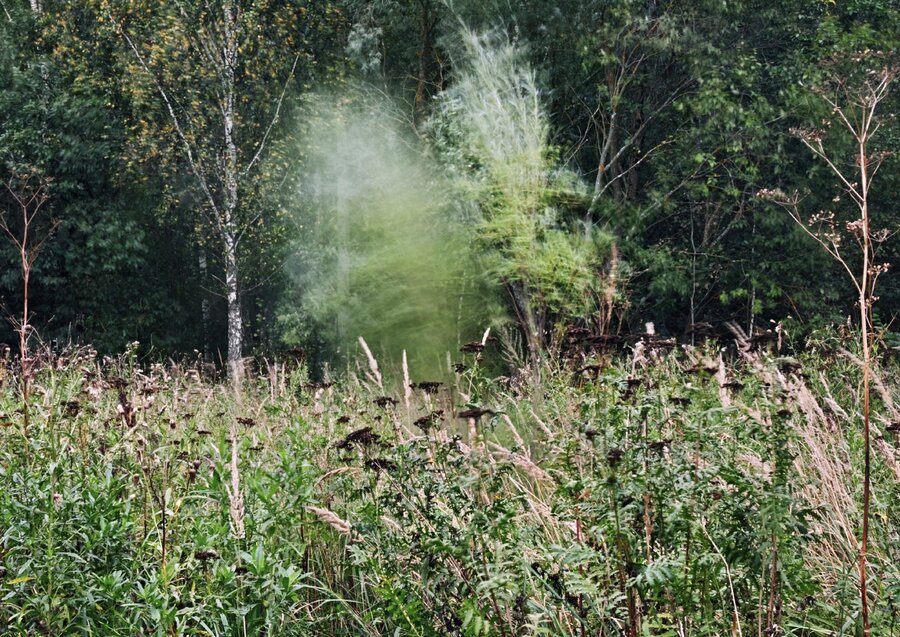
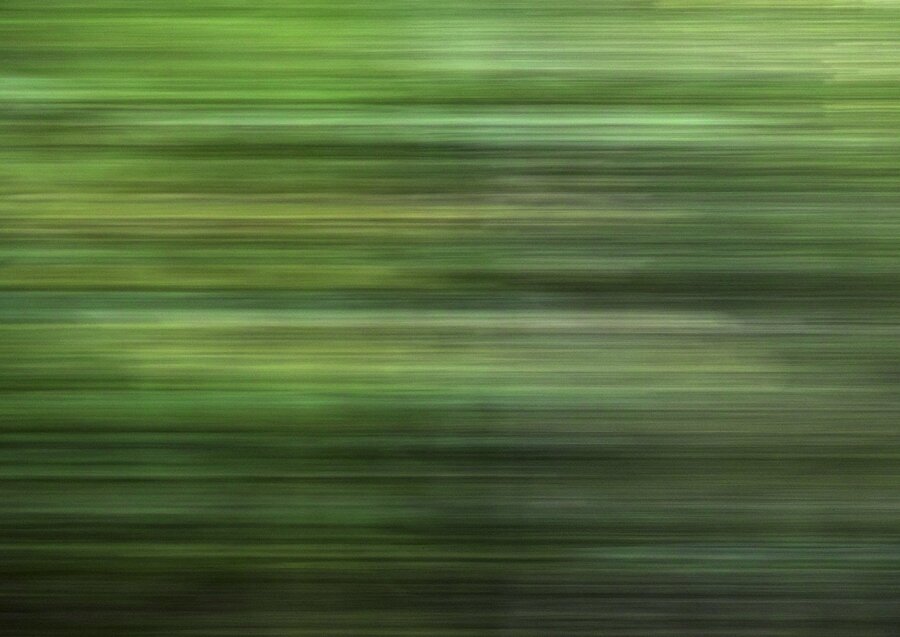
Vladislav Efimov. Around the Forest
The viewer’s linear movement along the forest’s boundaries leads to the indistinguishability of its details, leaving only the motion captured by the camera. It transforms into a simple green line, a direction, a vector of the wandering subject’s speed. The installation consists of photographs integrated into specially constructed objects, which impose varying paces and methods of viewing for the observer.
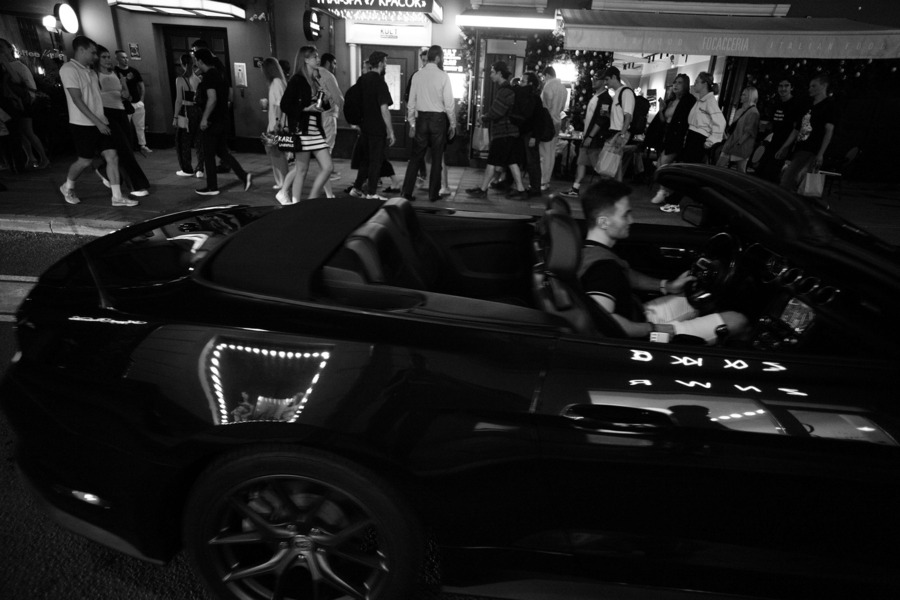
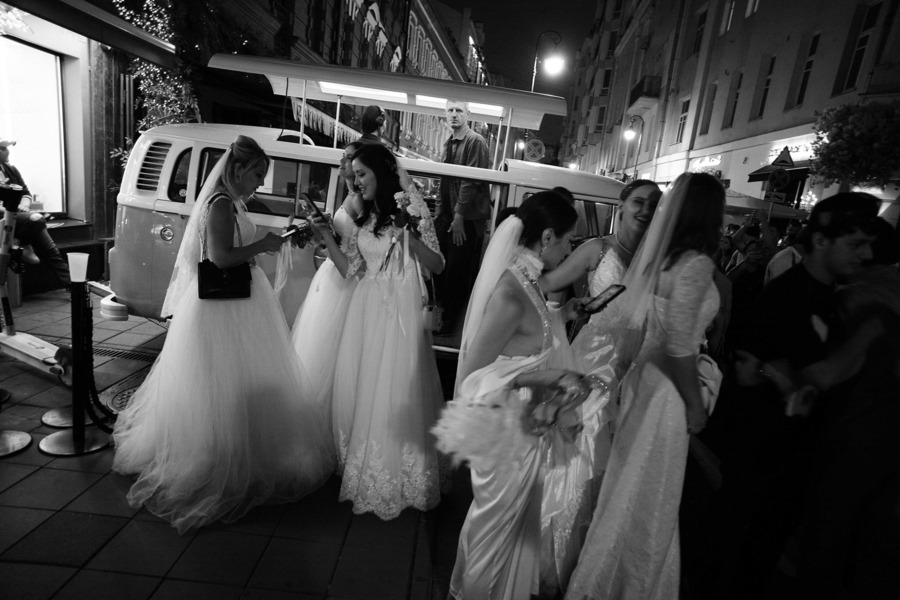
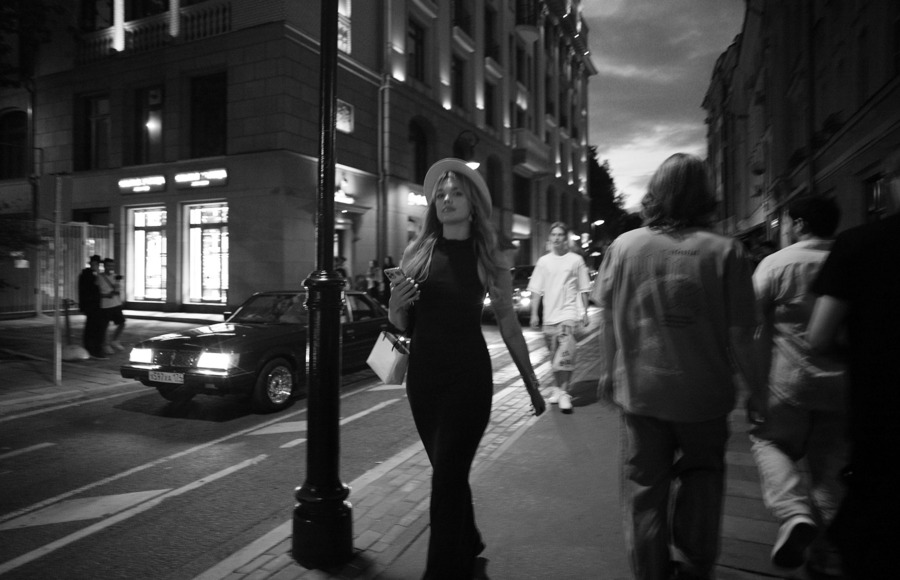
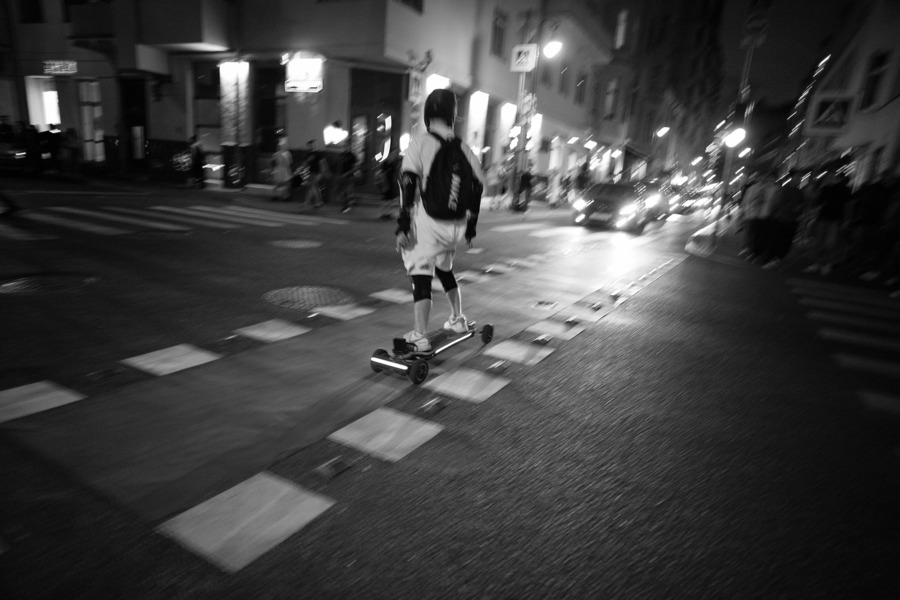
Igor Mukhin Patriki
Igor Mukhin. Patriki
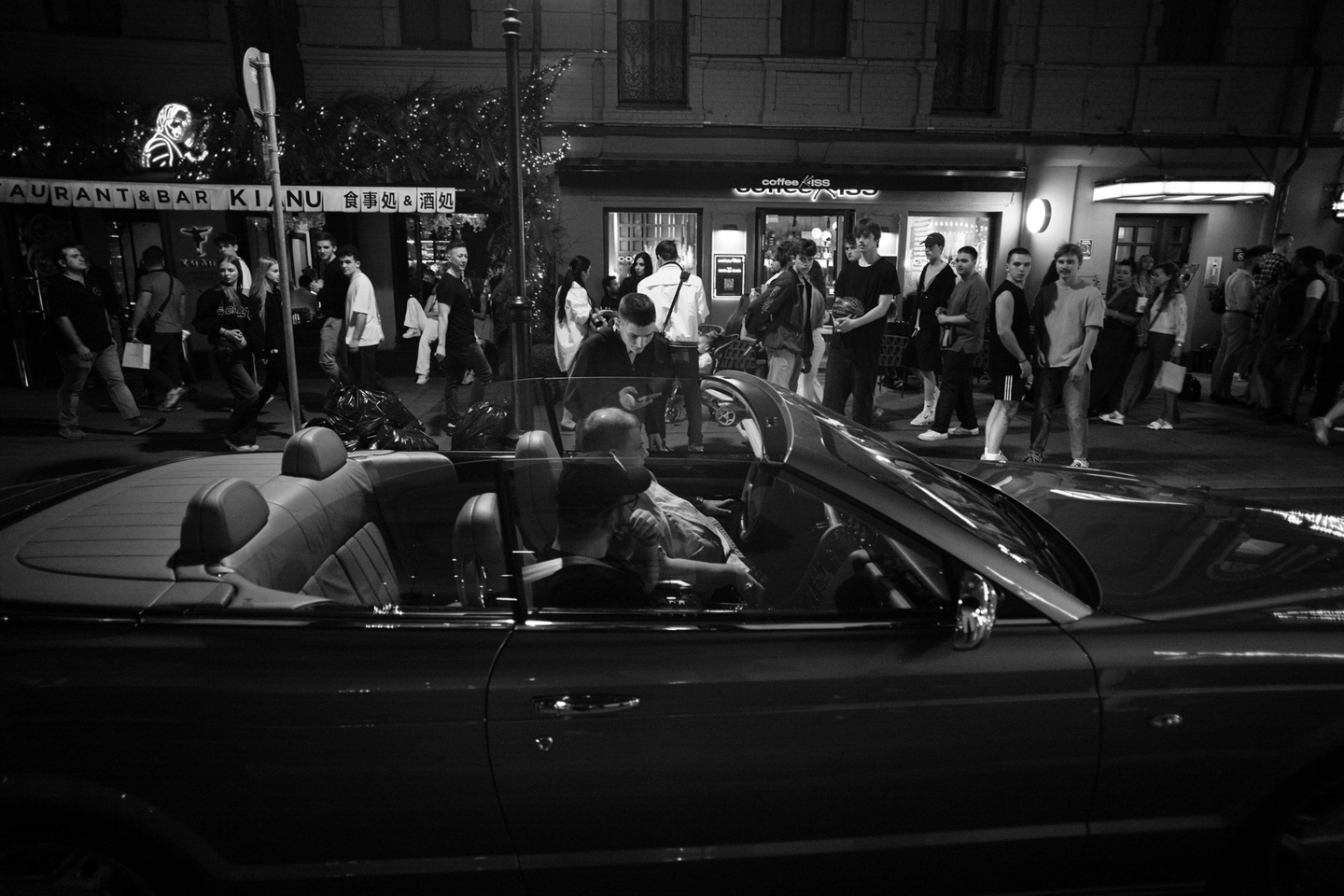
Places of power in the metropolis are constantly shifting. Eras change, a new generation of young people or a small subculture constantly takes over new urban spaces.
Igor Mukhin. Patriki
For the past five years, a small, historic neighborhood near Patriarch’s Ponds, or «Patriki» for short, has become the unofficial center of Moscow’s public life. These mystical places are described in Mikhail Bulgakov’s famous Soviet novel «The Master and Margarita.» But it seems that even here, things have come to an end.
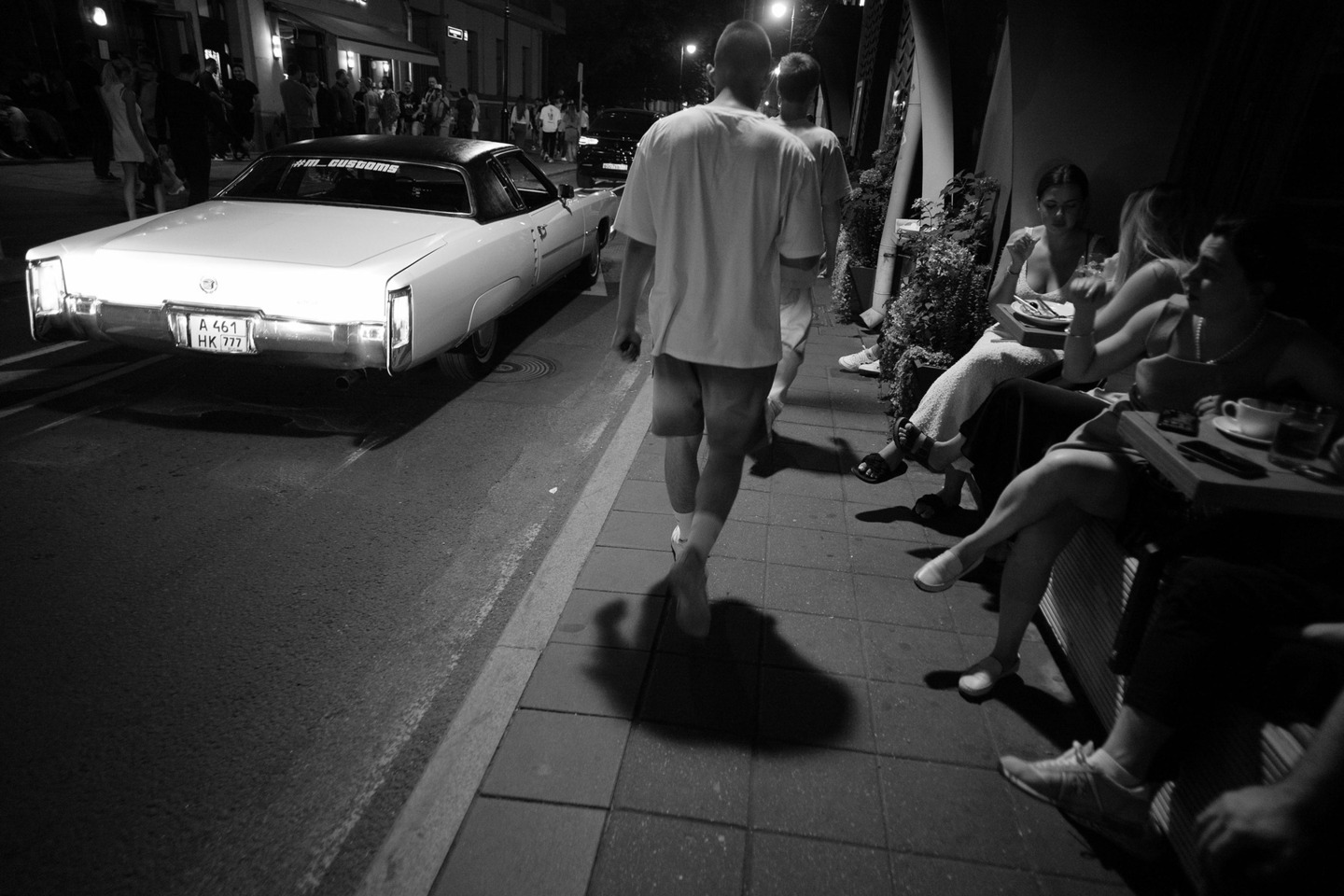
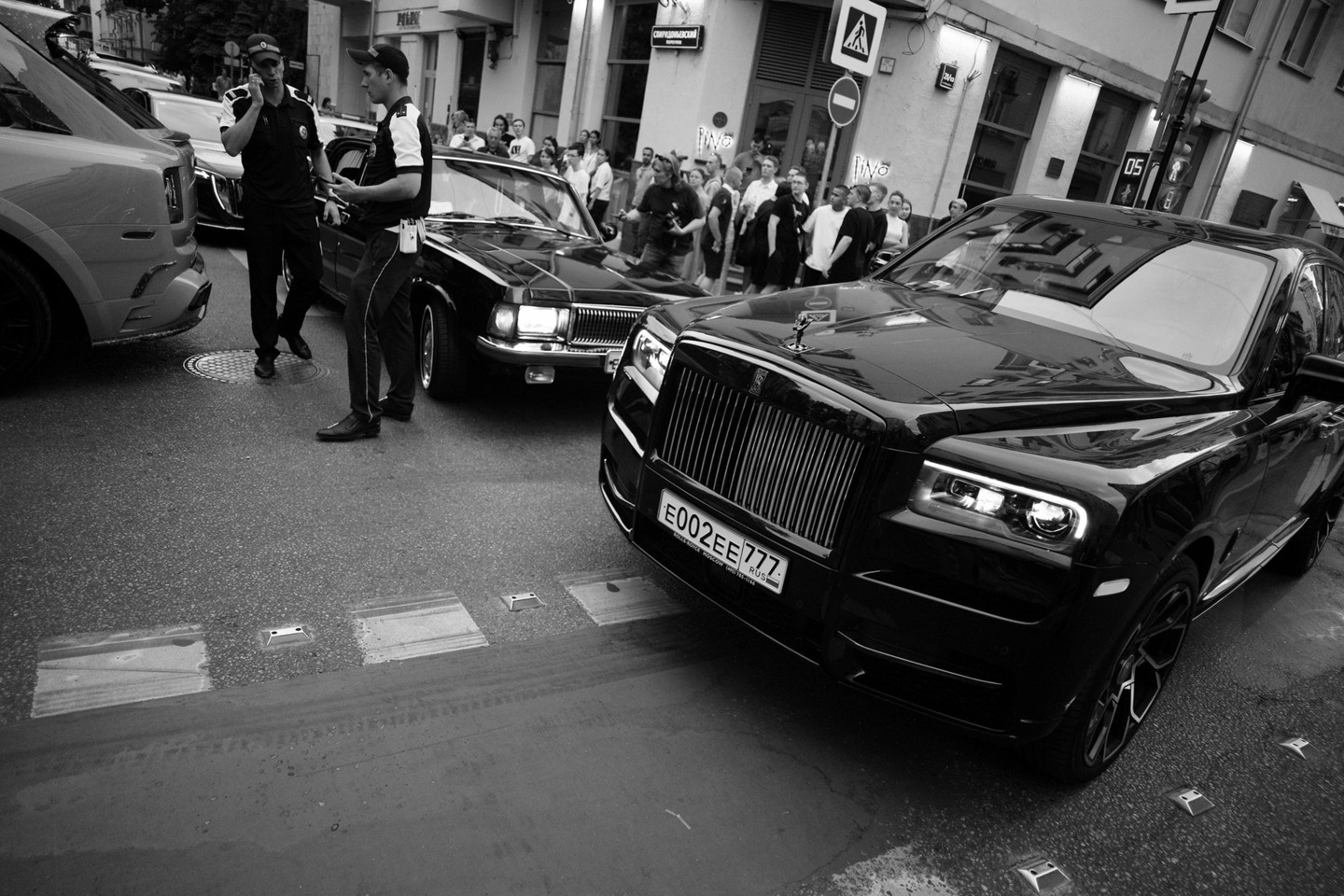
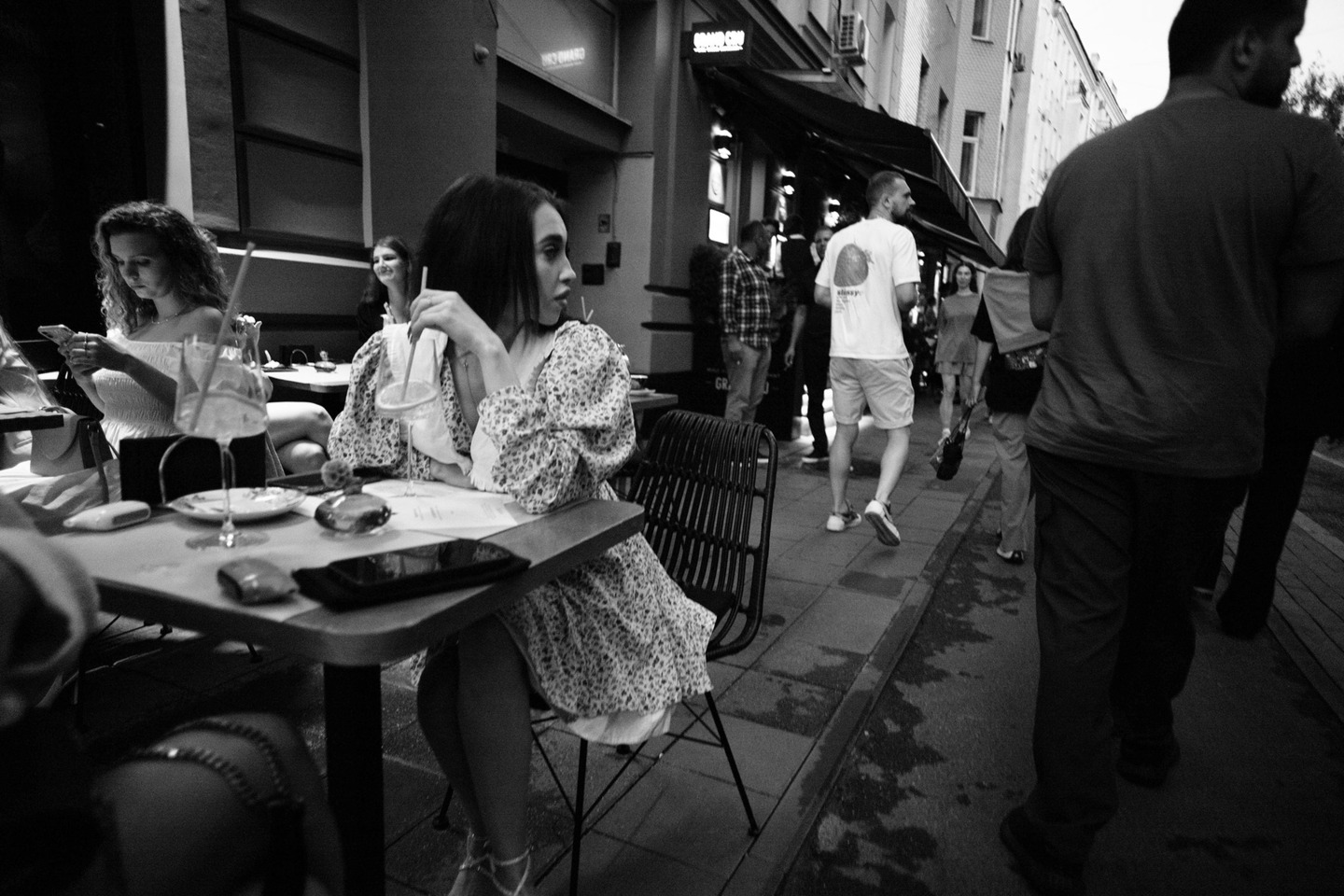
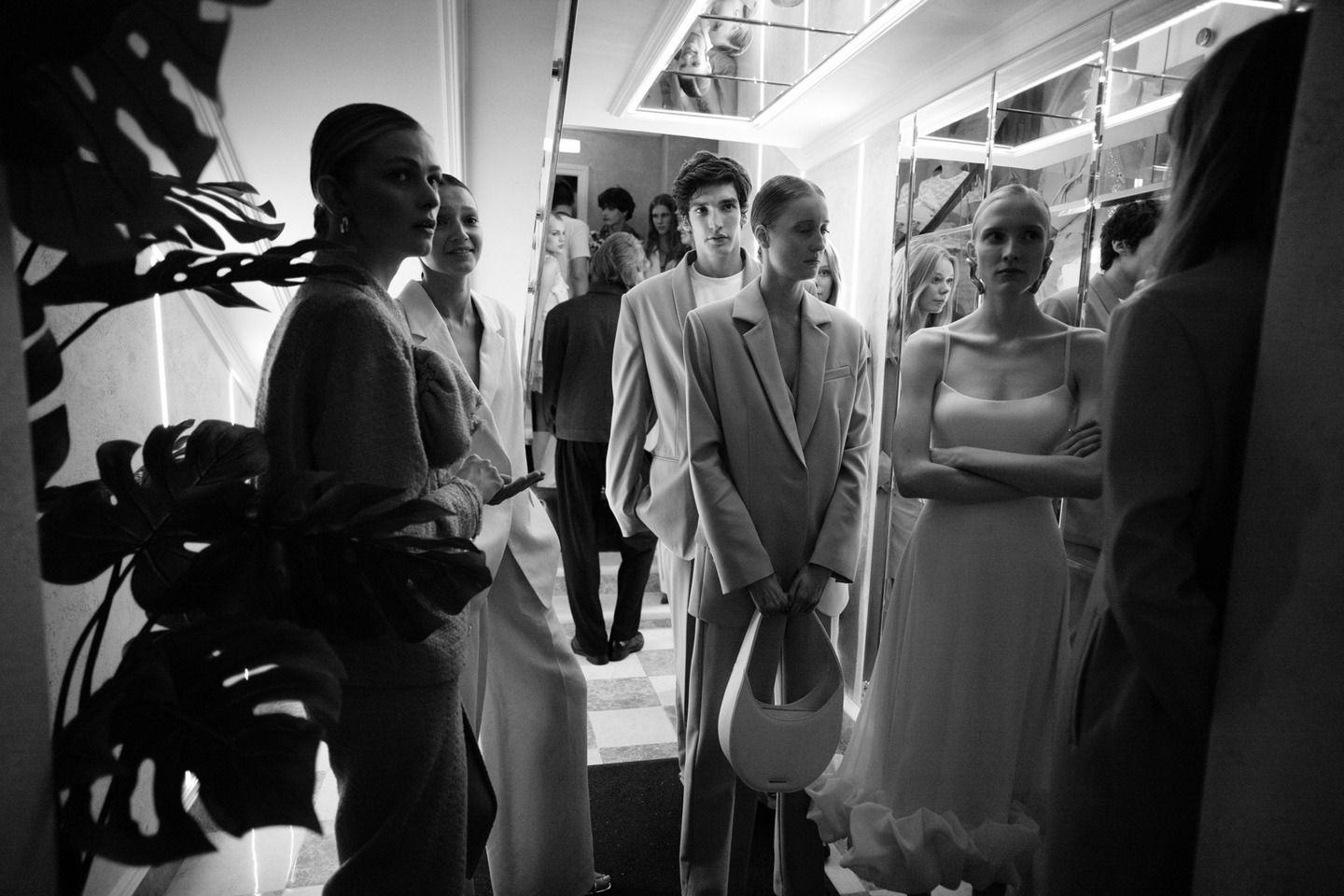
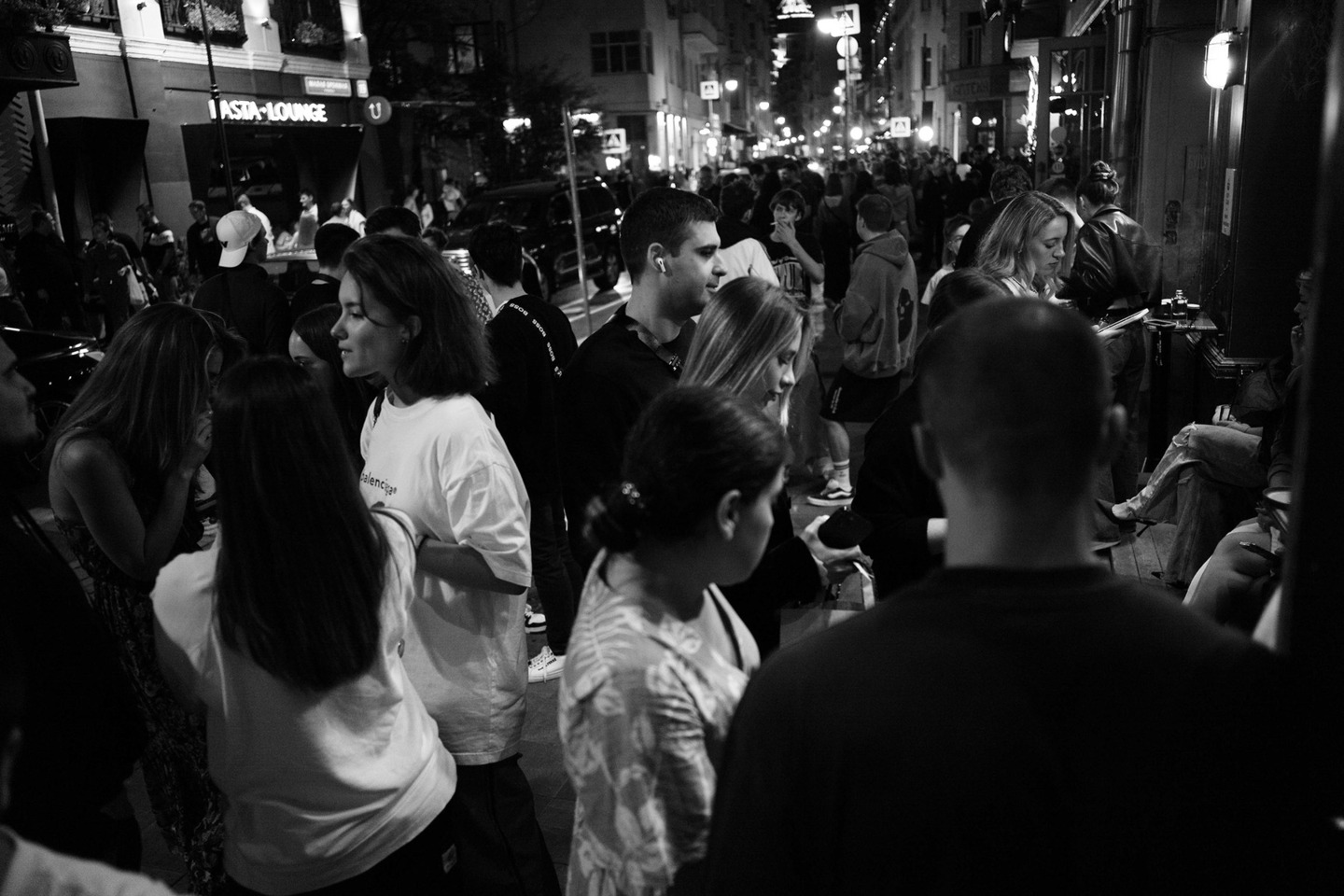
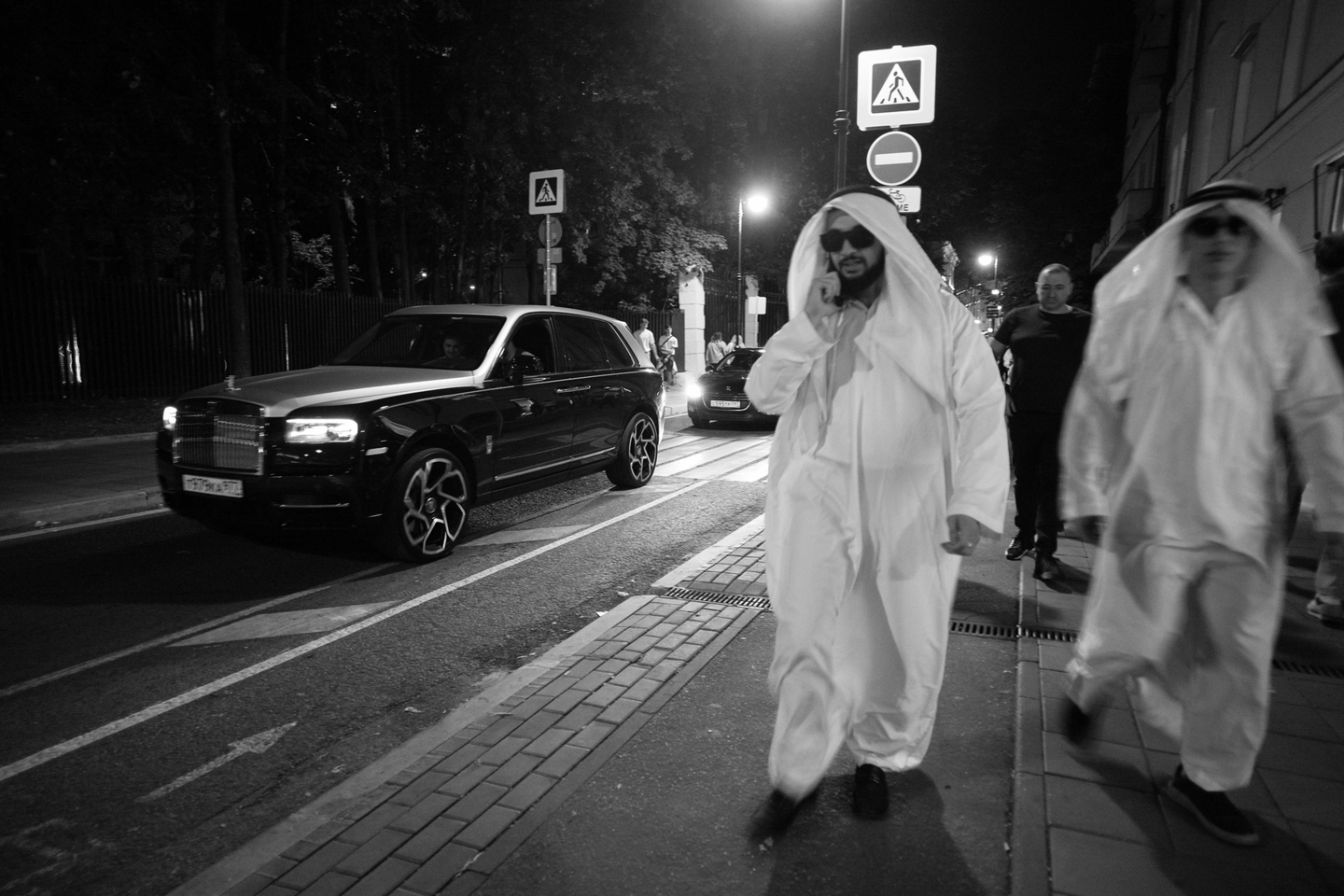
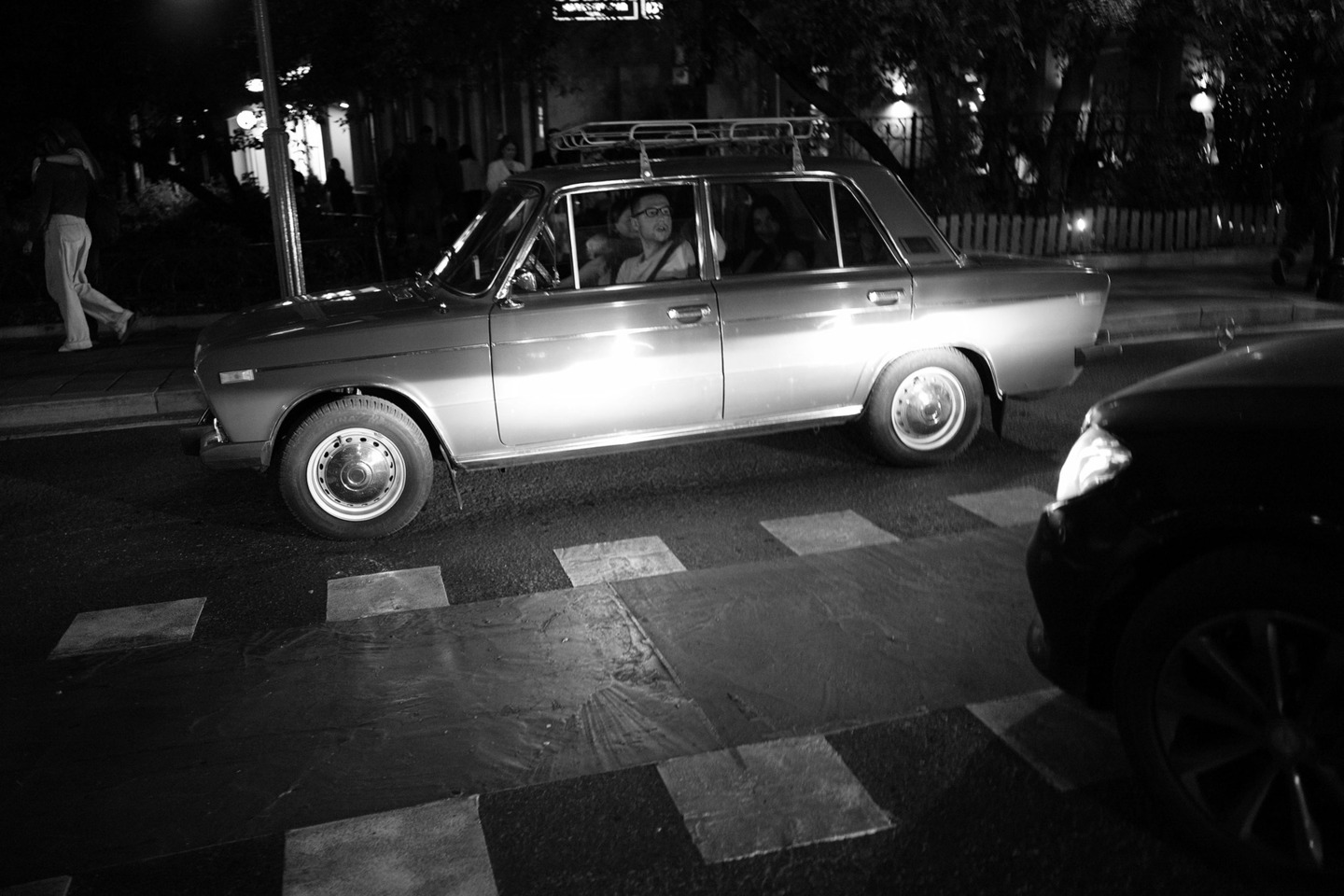
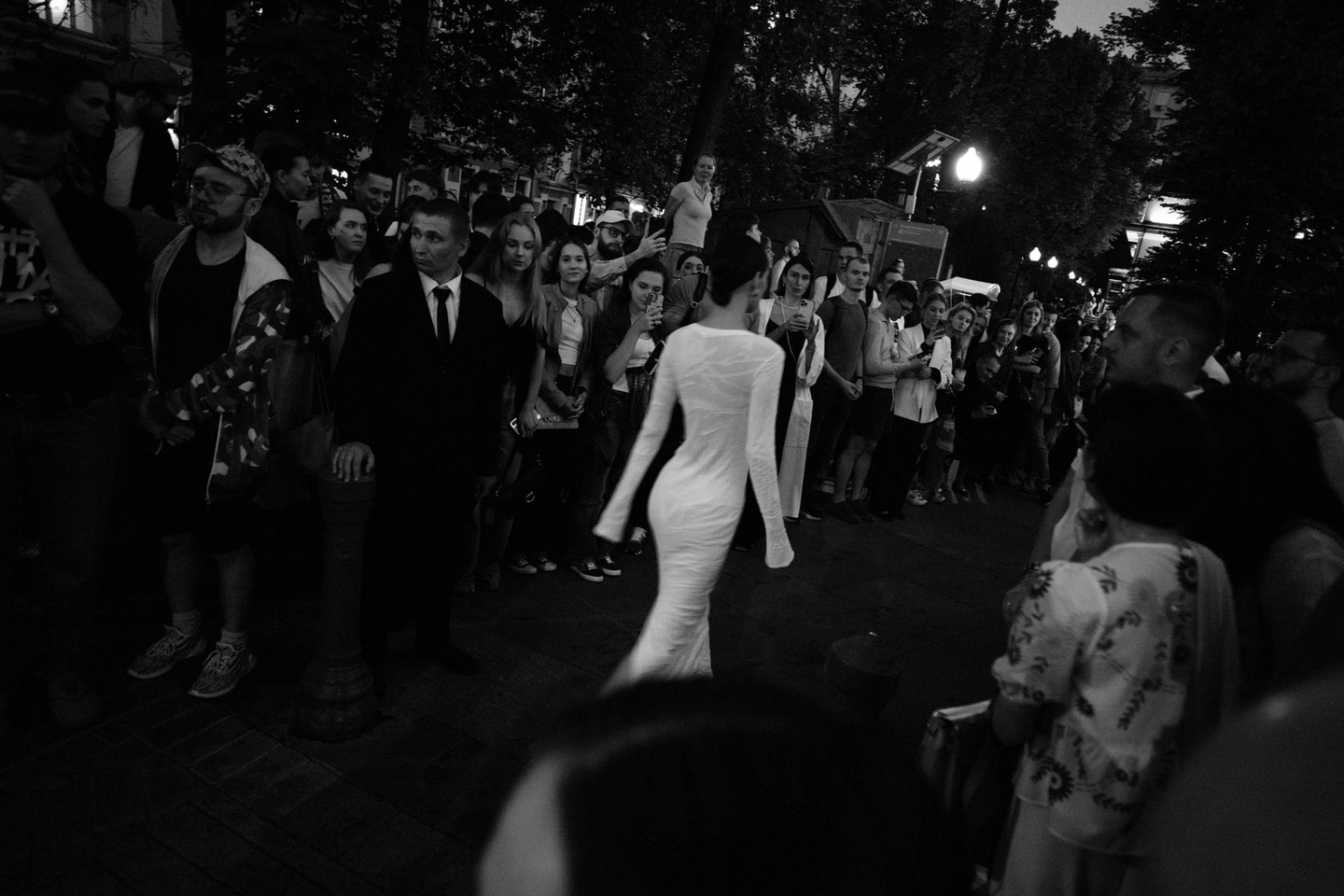
Igor Mukhin. Patriki
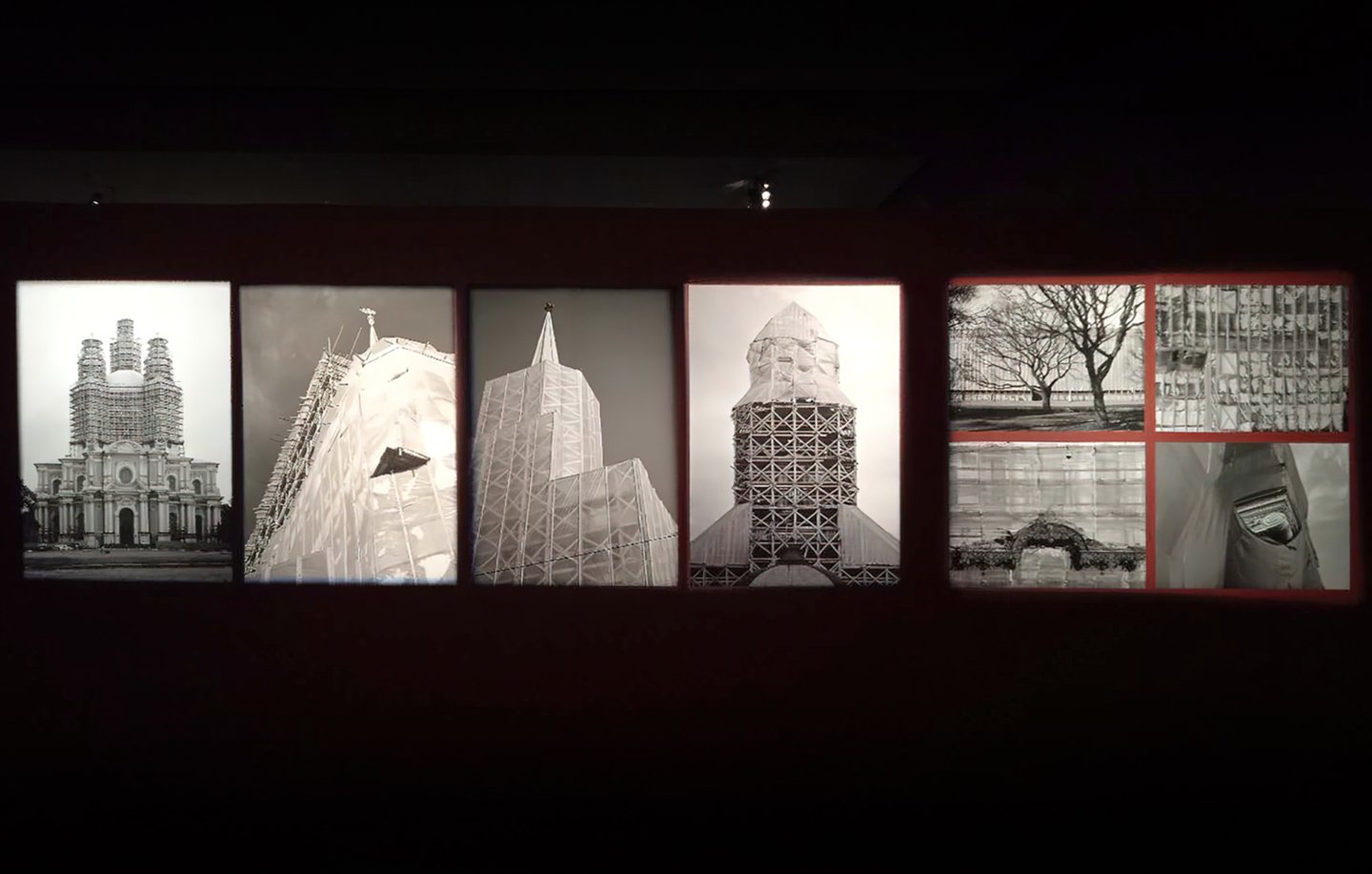
Mitya Kharshak Scaffolded city
Mitya Kharshak. Scaffolded city
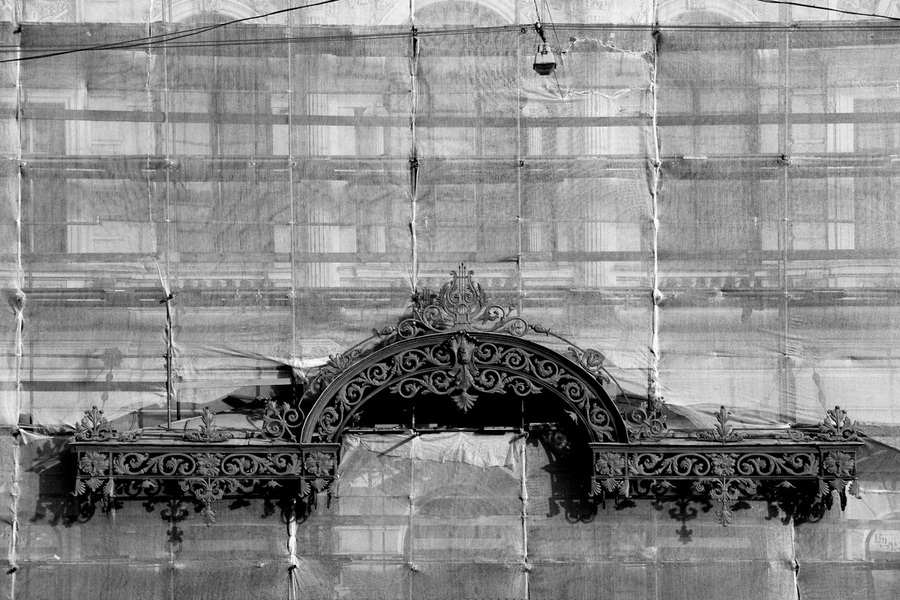
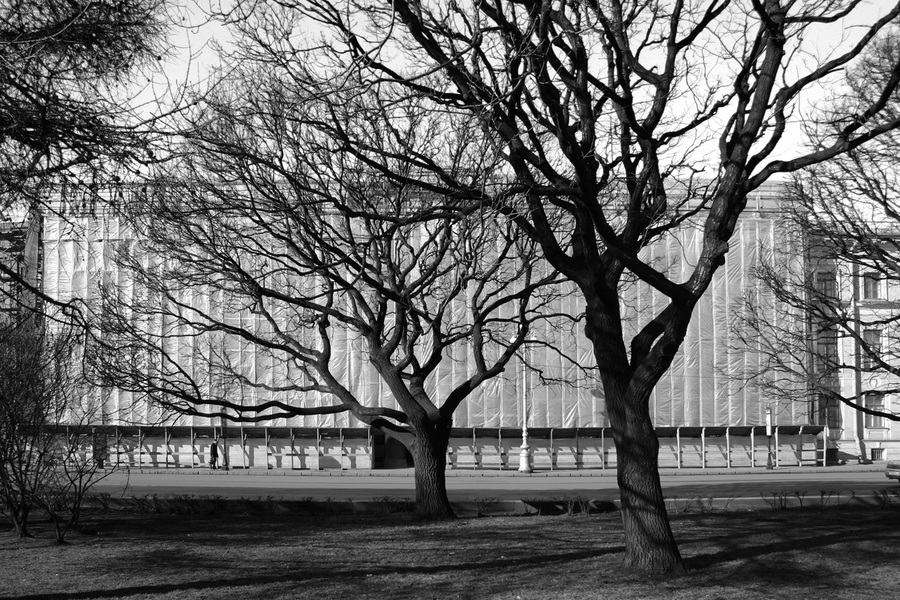
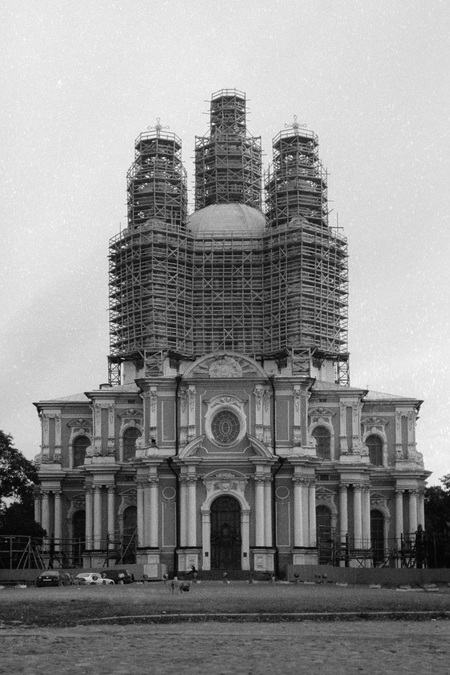
The photographic project is a study of the transformations in the urban environment of St. Petersburg, begun in 2002. During restoration work on the city’s architectural monuments, the urban environment is being transformed—in the familiar classical and baroque St. Petersburg, the voice of a young and commendably audacious constructivism begins to resonate distinctly. All the most significant examples of St. Petersburg’s historical architecture have gone through a period of having their facades masked by archaic wooden scaffolding. The scaffolding structures possess the genuine beauty of a functional object. Things are seen more clearly from a distance, and if one were to mentally rise to a bird’s-eye view of the city, the scaffolding would appear as a large-scale artistic and architectural intervention. Temporarily, they concealed the beauties of the 18th and 19th centuries beneath them, shooting forth a manifesto of a new architecture. Many of these shots have already become historical testimonies of the urban environment’s transformations in the early 21st century.
International Photography Biennale in Fujian | Mitya Kharshak | 2025
Alexander Borovsky (Head of the Department of Contemporary Trends at the Russian Museum): «Since 2002, Kharshak has been photographing the city in scaffolding. Scaffolding is a sign of a normal desire to somehow reformat the urban text towards order or, as is more often the case with us, embellishment. Meanwhile, all this scaffolding and structures, combined with the initial stable cultural messages delivered by the grand architecture, is also a text, and a most interesting one. For Christo, this text is a sign of self-assertion; Kharshak is more of an ecological-type artist: he listens, observes, and strives to preserve something vanishing, something that represents what is being lost in the heat of major recodings. The niche is so rare that, I am sure, people will be hunting for Kharshak’s works just as he now hunts for the rarities of a disappearing visual environment.»
The project, which began in 2002 on the eve of St. Petersburg’s tercentenary, now comprises about a hundred scenes. The project continues, just as the restoration work in the city’s historic center continues.
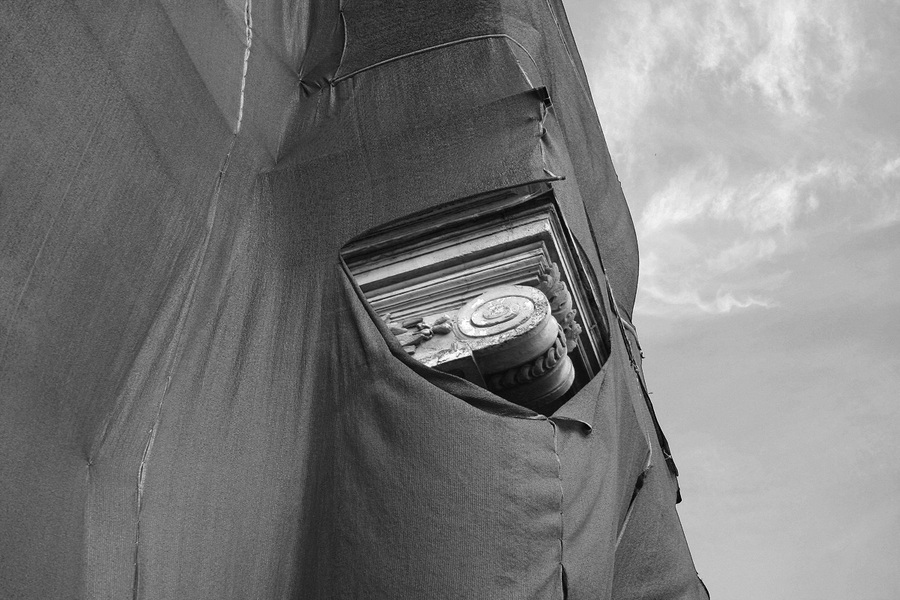
Mitya Kharshak. Scaffolded city
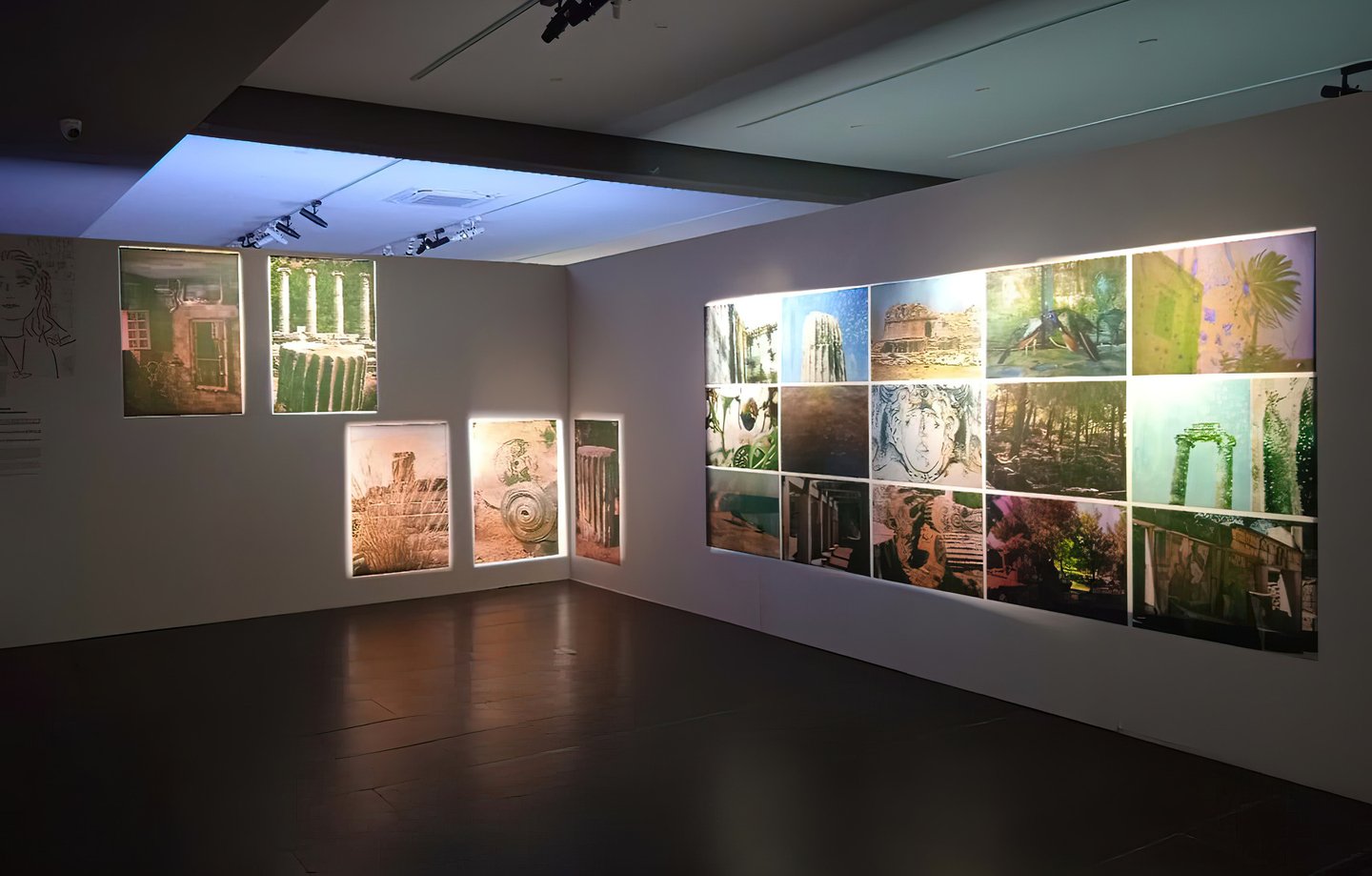
Paulina Stadnik Sine Loco (Lat. «No location specified»)
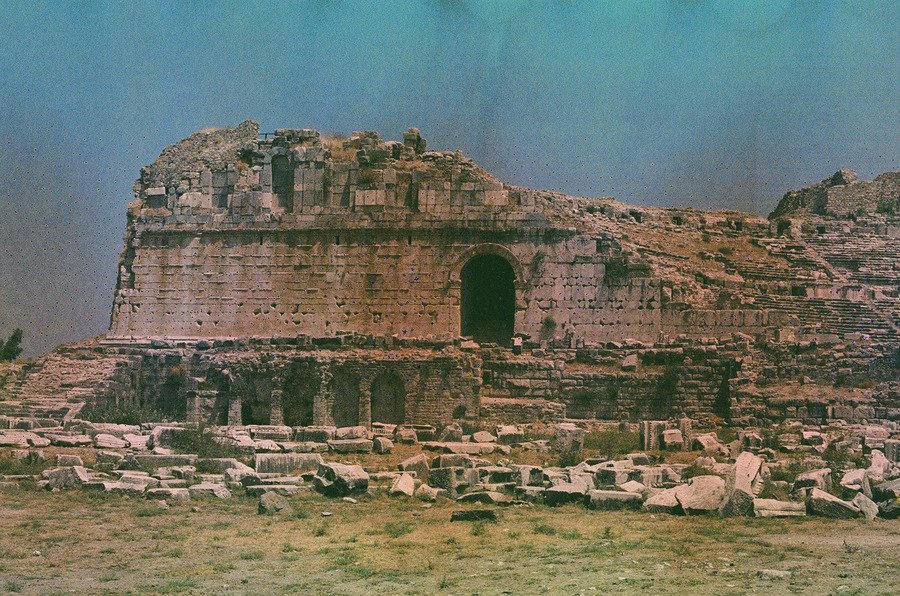
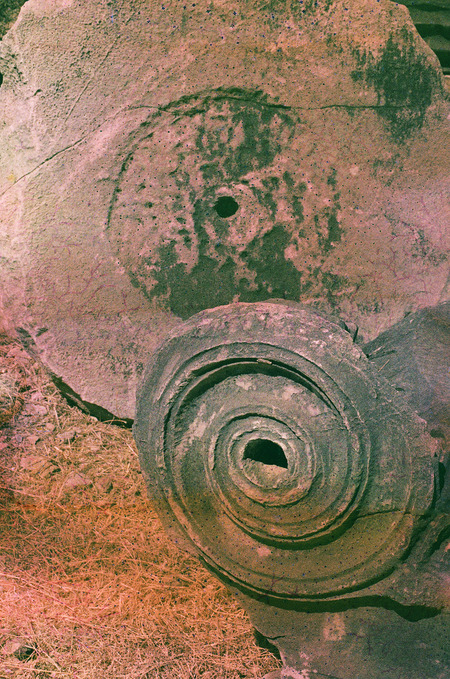
Paulina Stadnik. Sine Loco (Lat. «No location specified»)
The photographs for «Sine Loco» were taken in the territories of former Anatolia (the Aegean coast of modern Turkey, insular Greece). While working on this series, I soaked the exposed film in seawater, allowing its salts to penetrate the photographic image and affect it at their own discretion. After that, I dried the negatives and developed them. The intricate patterns that appeared on the photographs after such manipulations always remained completely unpredictable. And seawater became for me a metaphor for the Ocean of Time, in which architecture and landscape lose their connection to the past or the present.