Concept
pr
Historical Context
In the late 18th century, Classicism gained popularity in Europe, inspired by ancient Greek and Roman times, particularly after archaeological excavations intensified interest in ancient art, architecture, daily objects, and ornamentation. Enlightenment ideals also played a significant role, as antiquity was viewed as a model of rational order, harmony, and clarity, contrasting with the decorative complexity of Baroque and Rococo.
European culture influenced Russia during the 18th century. Catherine the Great implemented reforms and cultural policies that promoted the spread of Classicism. She developed the Academy of Arts and invited foreign architects and masters.
The state ideals expressed through Classicism emphasized the grandeur, civic virtue, and power of the state. This was especially evident during the Empire style, following military victories, such as in Russia in 1812.
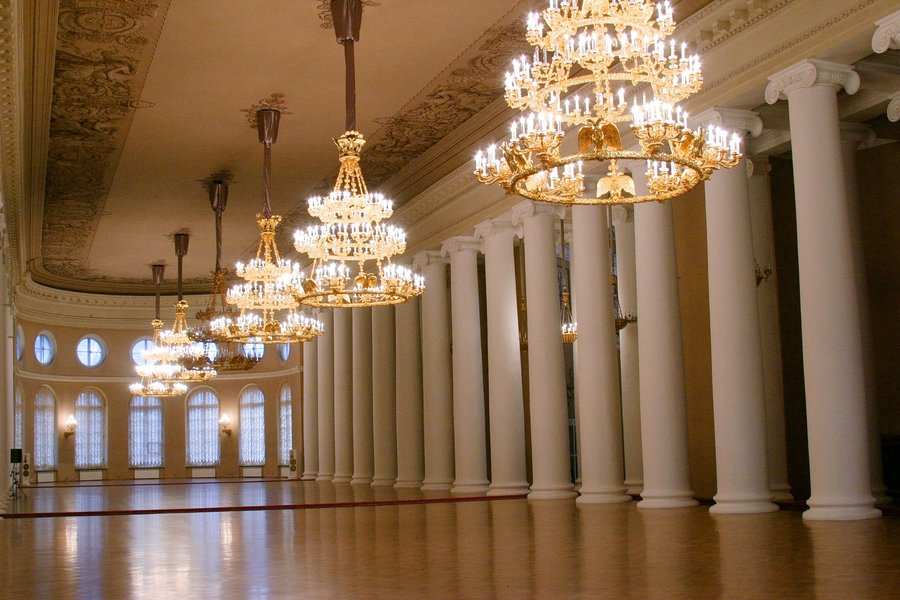
Lighting Fixture Typology
The classification of lighting fixtures from the Neoclassicism and Empire eras is based on their functional purpose and method of placement within an interior. The study identifies three primary typological groups: pendant fixtures (chandeliers), wall sconces (sconces), and freestanding multi-candle fixtures (candelabras).
Chandelier
— A multi-candle pendant light fixture designed for general illumination in formal and residential spaces.The design of a neoclassical chandelier is typically structured around a central vertical axis, from which symmetrical arms holding candleholders extend. The composition can be single-tiered or multi-tiered.
Classicism and Empire chandeliers are characterized by geometric order, rhythmic repetition of elements, and decorative ornamentation.
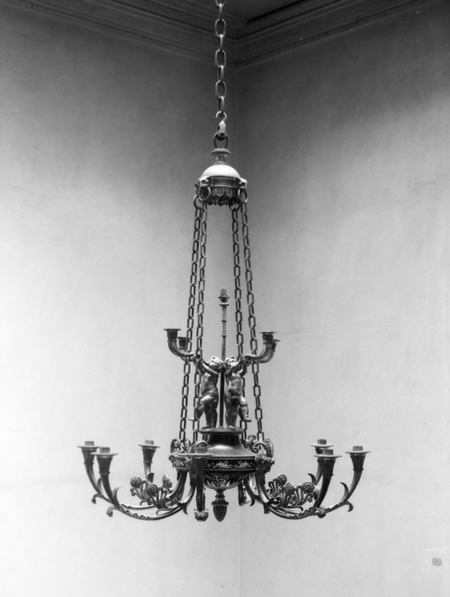
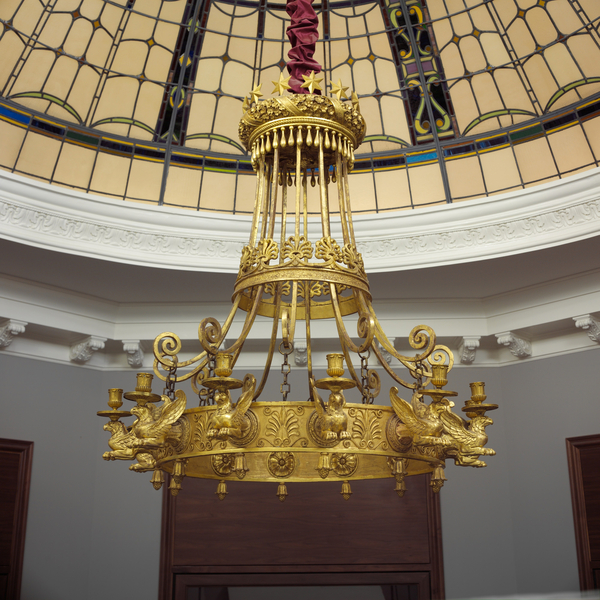
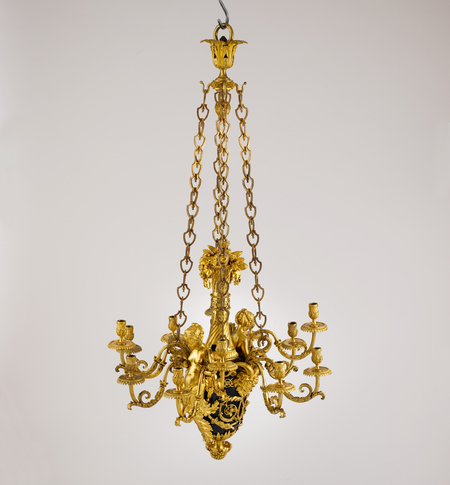
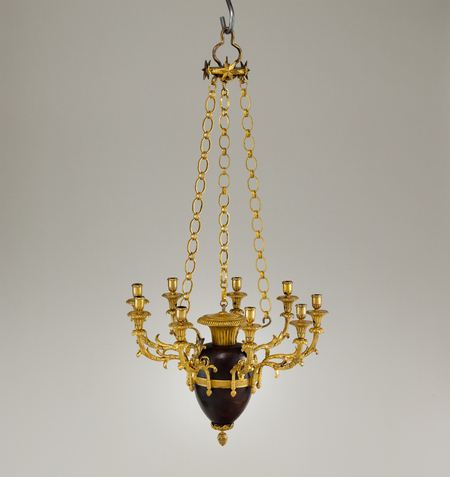
Decorative chandelier ornamentation may include bronze relief elements, sculptural details, and glass or crystal pendants. The decor either accentuates the structure or visually complicates its silhouette.
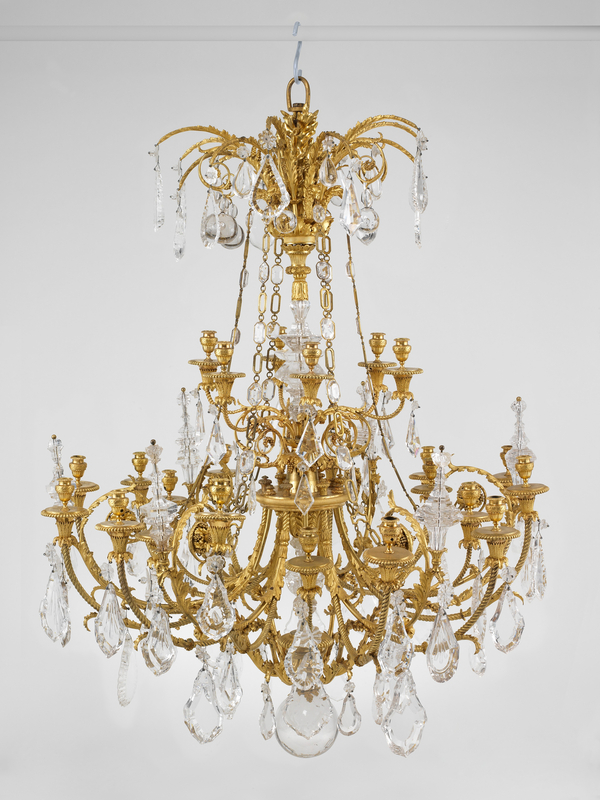
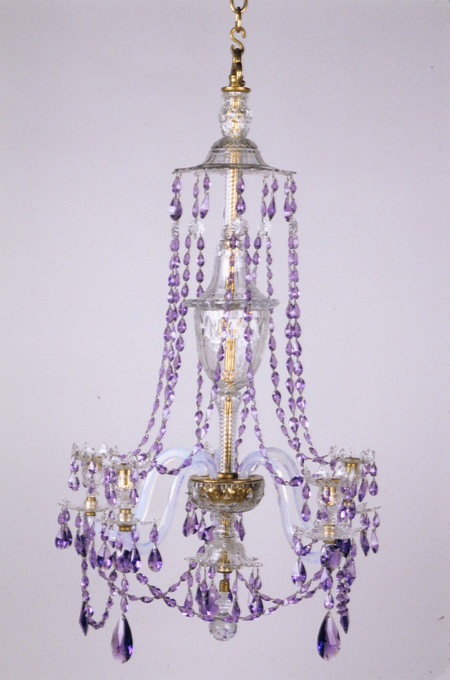
Tiered construction allows for an increase in light sources and the complication of spatial composition.
Wall Sconces (Brackets)
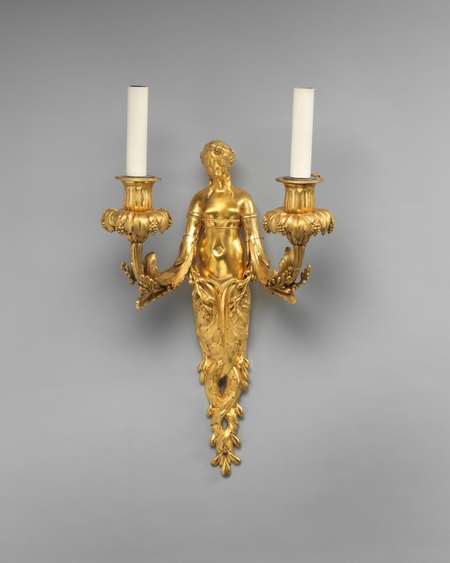
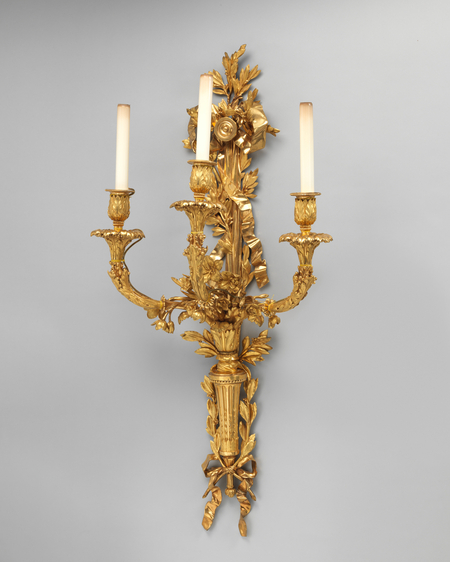
— Lighting fixtures mounted on a vertical wall surface.Unlike chandeliers, the composition of these fixtures is primarily designed for frontal viewing. The structure includes a wall mount, a decorative base, and one or more projecting horns. Classicist sconces are characterized by symmetry, a vertical orientation of the composition, and the use of architectural and botanical motifs.
Candelabra
— a multi-light fixture designed for placement on a horizontal surface.The composition typically includes a stable base, a vertical support, and several candle holders. In Classicism and Empire styles, the support can take the form of a column, vase, or sculptural figure.
Unlike pendant or wall sconces, a candelabra is a freestanding three-dimensional object designed to be perceived from various angles.
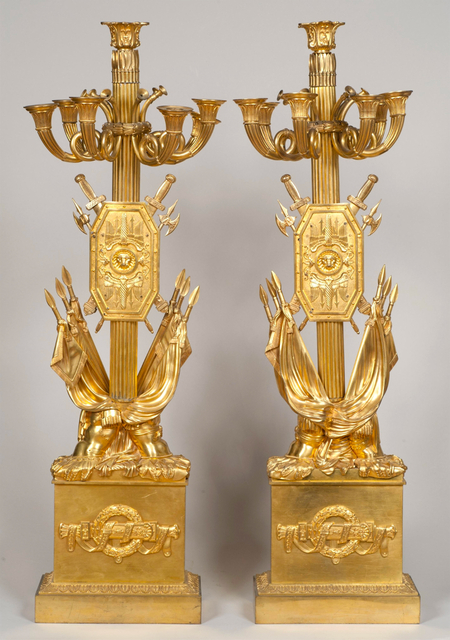
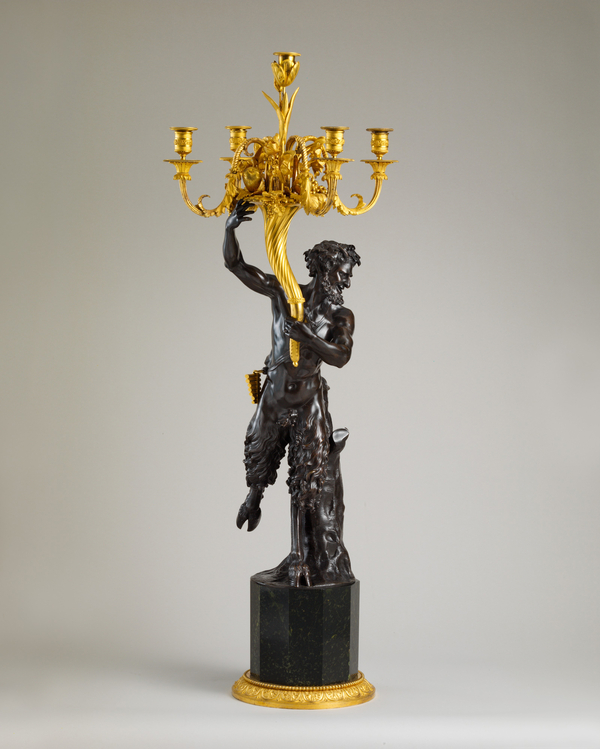
Classical candelabras vary in the design of their central support: from geometrically strict architectural forms to intricate sculptural compositions.
mini summary:
Form Generation
The shaping of neoclassical and Empire lighting fixtures often draws upon architectural principles: vertical articulation, symmetry, proportionality, and the use of classical orders. In candelabras, this manifests in the composition built upon the principle of architectural support—a massive base, a vertical fluted stem, and a top section featuring scrolling elements. This design imparts monumentality to the object, transforming it into a distinct small-scale architectural form.
Layering
Layered construction allows for the increased complexity of a lighting fixture through the sequential arrangement of elements on different levels. In multi-tiered chandeliers, the central axis connects separate horizontal groupings of arms, crystal pendants, and decorative details. The alternation of tiers creates rhythm, emphasizes verticality, and forms a complex spatial silhouette. Compositional integrity is maintained, however, through symmetry and the repetition of elements.
Cup-like shape
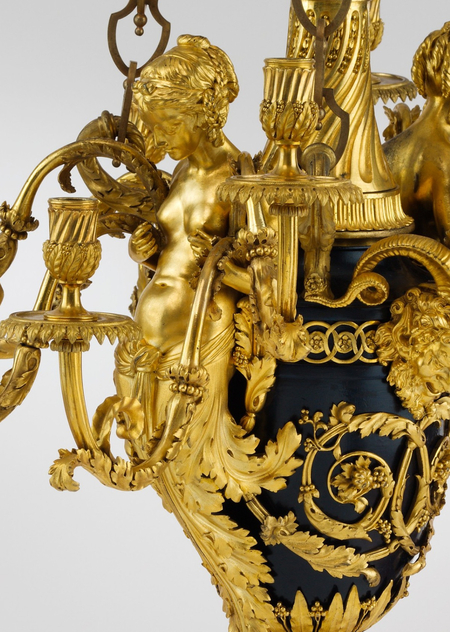
The reference to ancient heritage is visible not only in the ornamentation but also in the form of the light fixtures themselves. A characteristic example is the chandelier designed like a «Pompeian lamp,» whose central body takes the form of a wide bowl from which horns radiate. This bowl-shaped composition refers to ancient lighting devices, reinterpreted to meet the requirements of multi-candle illumination. The contrast between the dark surface of the body and the gilded decorative details emphasizes the clarity of the silhouette and the plastic expressiveness of the form.
Vascular Form
Vascular elements hold a significant place in the shaping of classicist luminaires. The central body may resemble an antique urn or vessel, forming the foundation of the entire composition.This form is characterized by a clear silhouette, symmetry, and systematic division into a base, body, and upper section.Scrolls and decorative details are arranged around the body, preserving its importance as the compositional center.