Вариант 2
Research Media on the Dynamic Identity of BBC Two
PART 1. MEDIA CONCEPT
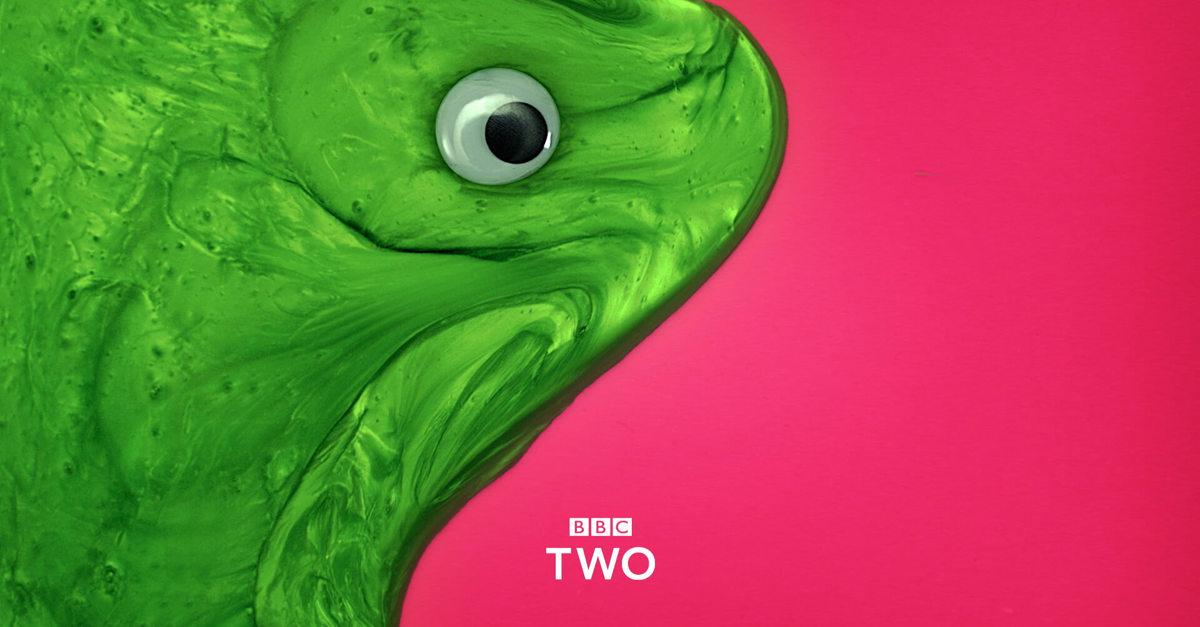
«Option 2» is an independent research media project examining the evolution of the visual identity of the British television channel BBC Two.
The famous number 2 is central to the project—it became the foundation of one of the most recognizable television identity systems in 1991. Over the subsequent decades, it has undergone changes in materials, motion characteristics, and methods of interacting with the surrounding space.
«Option 2» explores these transformations from the perspective of communication design. The media project is built upon a digital archive of opening sequences. The historical materials are systematically organized by year, visual characteristics, principles of motion, and production methods.
02. The Problem
In contemporary design practice, dynamic identities are becoming increasingly in demand, yet the principles behind their creation are often insufficiently explored in popular educational content.
Historical projects are usually presented as isolated, visually striking images or animations. Consequently, the viewer rarely has the opportunity to systematically compare works and understand what constants ensure brand recognition.
Archives of television graphics hold valuable historical materials, but studying them requires the user to independently seek sources, cross-reference dates and authors, and analyze motion and visual techniques.
«Option 2» proposes consolidating these materials into a sequential research system and presenting them in a format accessible to designers.
03. Main Idea
To investigate not isolated logos, but the principles by which a visual identity is created and evolved.Each issue answers a specific question: why two different compositions are perceived as part of the same brand, how material influences the character of a mark, what role movement plays, and what happens to an identity when its core elements change.Instead of simply curating archival images, the publication offers comparative analysis.
04. Objective
To explore the evolution of BBC Two’s dynamic identity and demonstrate how constant and variable elements shape its recognizable visual language.To make historical design decisions accessible for study through short publications, systematic archival data, analytical graphics, and practical experimentation.
05. Objectives
- Establish a vetted archive of historical BBC Two bumpers.
- Develop a classification system based on visual and historical characteristics.
- Create an editorial framework for the regular release of research content.
- Design a recognizable visual language for the media itself.
- Engineer an automated production system for standardized publications.
- Organize the verification of factual historical information and source accuracy.
- Propose analytical tools for the audience to study dynamic idents independently.
06. Target Audience
Main Classroom
Students and emerging professionals aged 18–30 who study communication design, branding, typography, motion design, and creative technologies.They share an interest in visual systems, design history, and the principles of identity building.Their primary need is to receive not just references, but an explanation of the design logic behind visual solutions.
Secondary Classroom
Practicing graphic and motion designers, art directors, visual culture researchers, and specialists interested in the history of British television design. For them, media can serve as a source of structured references, historical context, and professional observation.
Anticipated Audience Needs
— Quickly locate high-quality visual references.
— Understand the principles of constructing dynamic identity.
— Analyze historical solutions through form, material, and movement.
— Receive vetted links to original works.
— Apply learned methods in your own design practice.
— Segmentation constitutes a design hypothesis and must subsequently be validated through a small audience study.
07. Positioning
«Variant 2» is a media platform for designers interested not only in how an identity system looks but also in how it functions.
The project exists at the intersection of a historical archive, an educational publication, and a research laboratory.
Its difference from typical reference collections is the systematic analysis of visual principles and the ability to compare historical objects based on unified criteria.
The editorial promise: each issue provides one specific design insight, grounded in a historical source or a clearly defined authorial experiment.
08. Connection to Digital Humanities
The project utilizes digital humanities methods to study visual culture.Historical prologues are treated as a collection of objects, each of which can be described using metadata: title, year of release, authorship, material, method of digitizing, and type of movement.This approach allows a transition from studying individual works to a comparative analysis of visual patterns.The digital archive thus becomes both a source of historical knowledge and a design analysis tool.
09. Editorial Model
Each research publication is built upon a singular principle.ARCHIVE — archiveWe select the cover, verify the title, year, authorship, and source.DECONSTRUCT— analysisWe break down the form, material, composition, movement, and other visual characteristics.COMPARE — comparisonWe juxtapose the object under investigation with other works or periods of identity development.INSIGHT— conclusionWe formulate one principle that can be applied in contemporary design practice.
10. Media Sections
IDENT OF THE WEEKA brief study of one historical title sequence: name, year, material, movement, and design takeaway.MATERIAL STUDIESVisual explorations of materials, textures, light, and physical properties.FORM & SYSTEMComparison of static and variable elements of identity, analysis of typography and composition.MOTION ARCHIVEStudy of motion, animation, editing transitions, and narrative techniques.DESIGN EVOLUTIONThe history of BBC Two redesigns, the evolution of visual language, and changes in production technology.OPEN LABEducational assignments, surveys, and authorial experiments with dynamic visual systems.
11. Distribution Channels
Telegram—the primary platformRegular automated publications, short archival studies, visual cards, facts, links to originals, and interactive polls.VK—the platform for visual researchCarousels, detailed comparisons of historical title sequences, analytical graphics, and publications on identity evolution.YouTube Shorts / VK Clips—the video formatShort explanations of motion principles, comparative videos, and original animated reconstructions.Pinterest—the visual libraryThematic boards, collections of materials, forms, colors, and research diagrams.Project Website—the archiveA catalog of materials searchable by year, visual characteristics, and motion type, with links to original sources and extensive research texts.The main automated channel in the initial phase is Telegram. The other platforms are used for adaptations, specialized content, and the further development of the project.
12. Frequency