The Visual Language of Disaster: Body, Void, and Movement in Kamakura-Period Japanese Emakimono
Research Structure
0. Visual Research Concept
1. Introduction: The Era of Mappo and the Mechanics of the Scroll
2. Body Distortion and the Anatomy of Horror
3. Iconography of Chaos and Destruction
4. Emptiness as a Source of Tension
5. Metamorphosis and Form Decay
6. Conclusions: The Visual Code of Catastrophe
0. Visual Research Concept
Rationale for Topic Selection:The exploration of Japanese narrative scrolls from the Kamakura period is driven by a radical shift in the artistic consciousness of medieval Japan. At the turn of the 12th and 13th centuries, the refined court culture of the Heian era gave way to a time of intense samurai warfare, natural disasters, and epidemics. Within the Buddhist worldview, this period was perceived as the onset of the Mappō era—the «end of the Dharma”—when the world descends into chaos and moral decline. The pervasive feeling of total instability and the fragility of human existence required artists to abandon contemplative harmony and develop a new, expressive visual language. Studying how the masters of emakimono conveyed terror, panic, and physical suffering within a flat, horizontal format allows us to identify fundamental techniques of proto-cinematic narration—techniques that subsequently formed the foundation of all Japanese visual culture, including modern manga and animation.
Material Selection Principle for Visual Study:The chronological scope of the study covers the 12th–14th centuries—the period of the formation and flourishing of the expressive Otoko-e style («men’s painting»). The primary criterion for selecting visual material was the high degree of dramatic tension and formal expressiveness in depicting states of crisis: physical suffering, natural disasters, military conflicts, and death. The selection includes key monuments recognized as national treasures of Japan and housed in major museum collections (Tokyo, Kyoto, Nara, and Kyushu National Museums, Museum of Fine Arts Boston): «Scrolls of Hungry Spirits» (Gaki-zoshi), «Scrolls of Illness» (Yamai-no-soshi), «Scrolls of Hell» (Jigoku-zoshi), «Night Attack on Sanjo Palace» from the «Heiji War Tale» cycle, the «Scroll of the Mountain Hermit Shigi» (Shigisan Engi Emaki), as well as the series of scrolls «Nine Stages of Decay» (Kosodzu).
Principle of Study Structuring (Rubrication):The research structure is built not chronologically or narratively, but according to a formal-analytical principle—moving from the particular scale to the general and from corporeal stasis to temporal transformation. After the introductory section on scroll unfolding mechanics, the material is distributed across four thematic chapters, each isolating a specific artistic device. The first chapter is dedicated to the deformation of the individual human body and the contrast between norm and pathology. The second chapter expands the scope to mass scenes of disasters and natural catastrophes, investigating compositional dynamics and color emphasis. The third chapter focuses on the role of unpainted space on the sheet (the ma category) as a tool for rhythmic pause and psychological tension. The fourth chapter examines the principle of frame-by-frame storyboard layout using the example of the gradual disintegration of material form and its merging with the landscape.
Principle of Selecting and Analyzing Textual Sources:The theoretical framework of this research is based on a combination of classical Russian Japanese studies and contemporary museum art historical publications. The fundamental works of N. S. Nikolaeva and T. P. Grigoryeva were used to reconstruct the historical context of the Mappo period and to philosophically examine the aesthetic categories of emptiness (ma), suggestion, and the Buddhist perspective on corporeality. Catalog descriptions and essays by specialists from the Metropolitan Museum of Art and the National Museum of Kyoto helped clarify the dating, ink and mineral pigment application techniques, as well as the specific nature of the viewer’s perception when the scroll was manually unfurled from right to left. The textual sources are employed not to retell the literary narratives within the scrolls, but rather as a tool for deciphering the artists' compositional, linear, and color choices.
Key Research Question and Hypothesis:Key Question: Through what formal and compositional means did artists of the Kamakura period convey the experience of catastrophe, horror, and the passage of time within the flat horizontal scroll?Hypothesis: The expressive power of Kamakura-era emakimono scrolls is based on a proto-cinematic management of the viewer’s attention. By limiting the field of vision to the width of the opened scroll, the artist transforms static painting into a montage across time, where the effect of experiencing crisis is achieved through the combination of four interrelated techniques: grotesque distortion of anatomical proportions, aggressive compositional diagonals punctuated by flashes of cinnabar color, dramatic use of empty pauses (ma), and frame-by-frame contour deconstruction.
1. Introduction
The Mappo Era: Aesthetics of the End Times
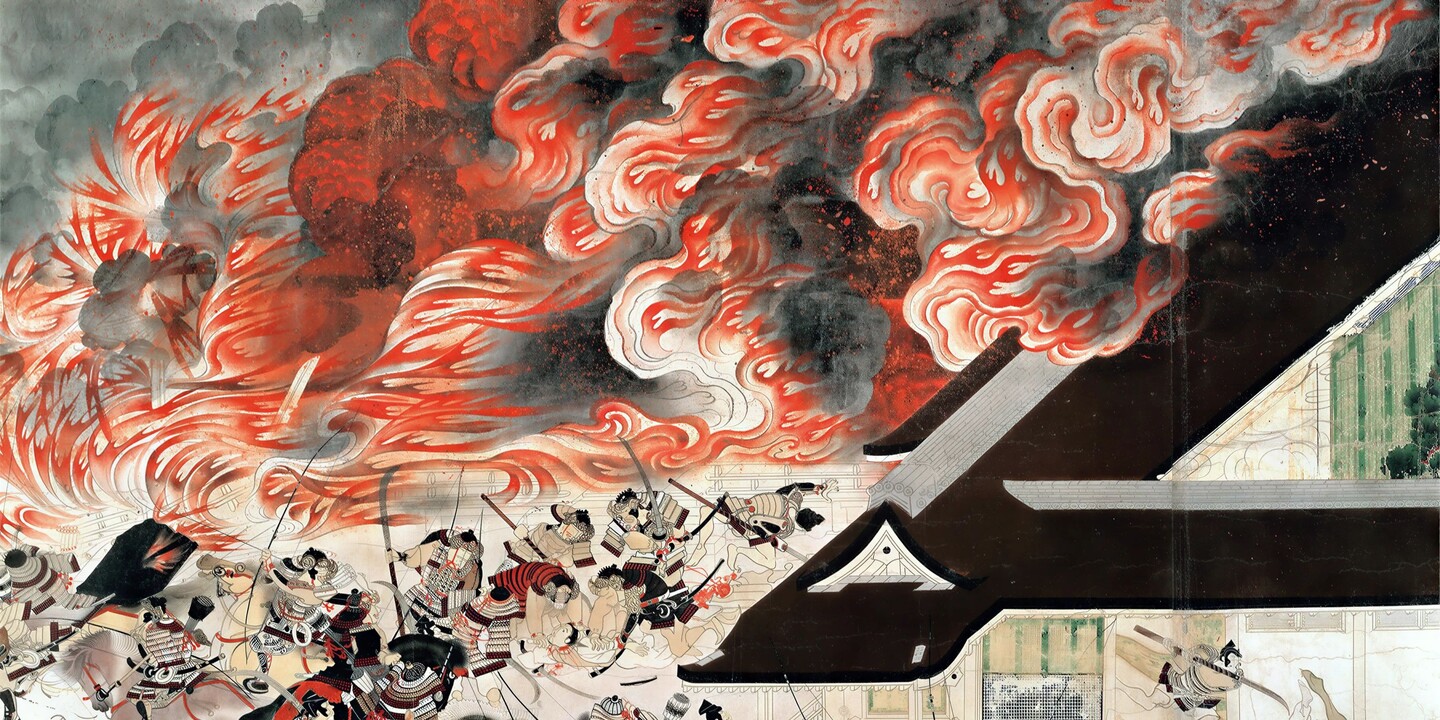
Large fragment of «Night Attack on the Sanjo Palace» (13th Century)
The Kamakura Period (1185–1333) marked a transition of power to the samurai warrior class, characterized by civil wars (the Genpei War), earthquakes, and epidemics. In the Buddhist worldview, this coincided with the arrival of Mappo—the «last age of the Dharma”—when the teachings of the Buddha declined and the world descended into chaos. The delicate, contemplative aesthetic of Heian court culture gave way to a harsh naturalism, expression, and physicality. Art ceased to be mere ornamentation and instead became a means of grappling with catastrophe and the fear of death.
The Mechanics of the Emakimono Scroll: Reading Through Time
Examples of Emaikmono Scrolls
The emakikmono scroll (approximately 30 cm high and up to 10–12 meters long) was never viewed in its entirety. The viewer unrolled it by hand to shoulder width (approximately 60–80 cm) and read from right to left, gradually rolling up the portion they had read.
This format transformed painting into proto-cinema. The artist himself directed the pace of perception—accelerating the rhythm with diagonals, slowing it with empty pauses (ma), and creating a montage-like effect when transitioning from text to image.
Chapter Summary
During the Kamakura period, the emakimono scroll transcended its role as a mere illustration accompanying text, developing its own dramatic structure. The limited width of the scroll forced artists to conceive in terms of frame, rhythm, and pause, thereby laying the foundation for a proto-cinematic Japanese language as early as the 12th century.
2. Body Distortion and the Anatomy of Horror
Mystical Grotesque: Hypertrophy and Contrast
Excerpt from the «Scroll of Hungry Spirits» (12th Century)
In Buddhist cosmology, the hungry ghosts (pretas) are starving spirits condemned to eternal thirst and hunger. XII-century artists visualize their sin through radical anatomical distortion: swollen, heavy stomachs are paired with skeletal limbs and thin necks through which no food passes.
The most chilling effect is achieved by colliding two worlds within a single frame. Invisible to humans, these spirits crawl directly into a feast or onto a street among placid, harmoniously composed citizens, rendered with smooth and noble lines.
Clinical Naturalism
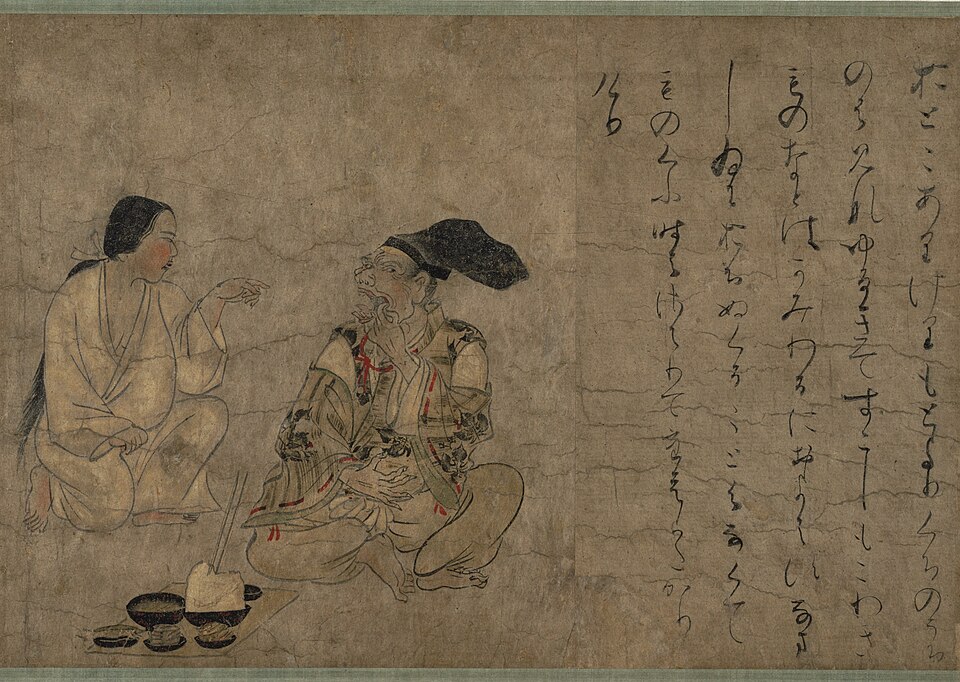
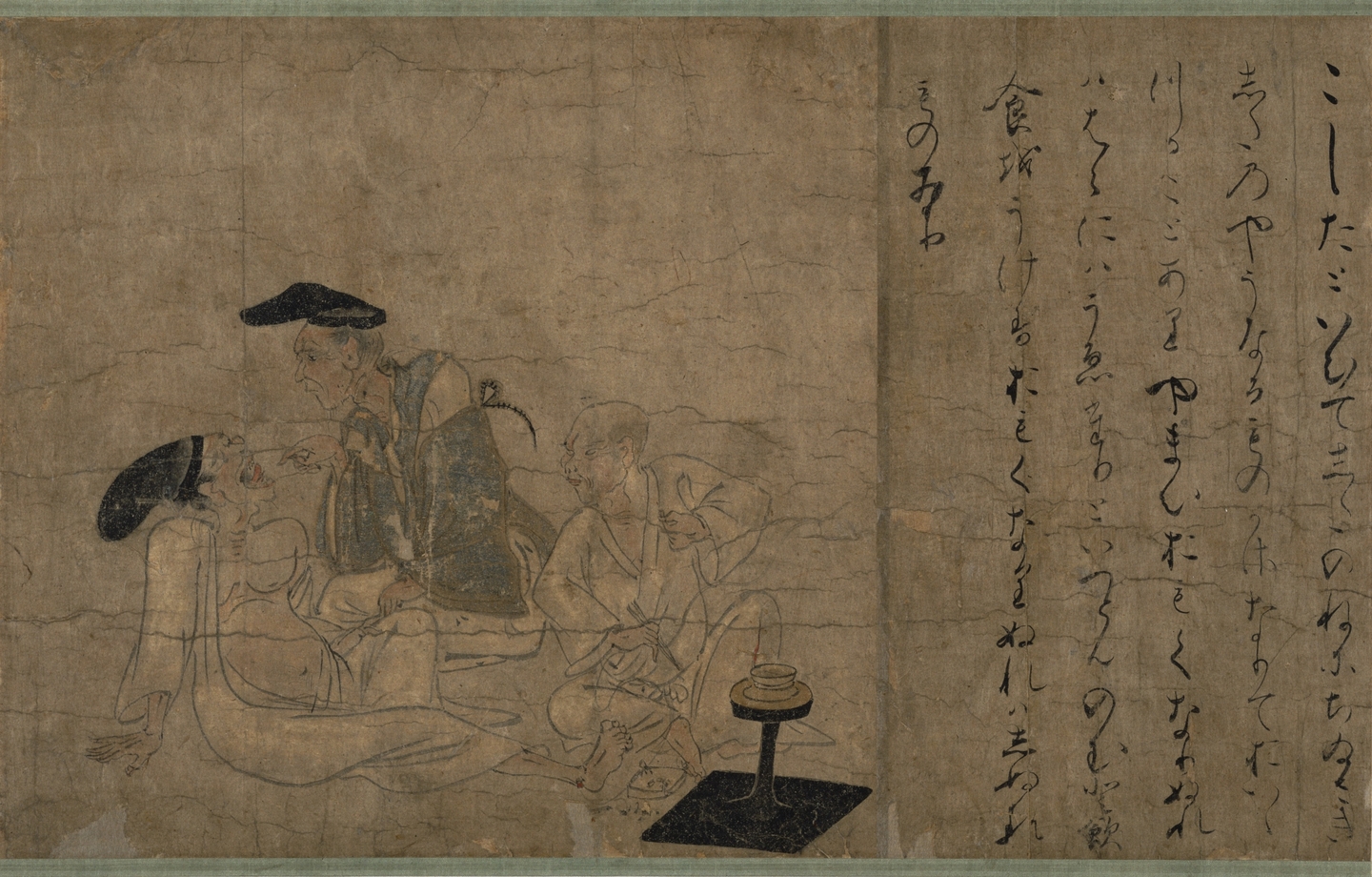
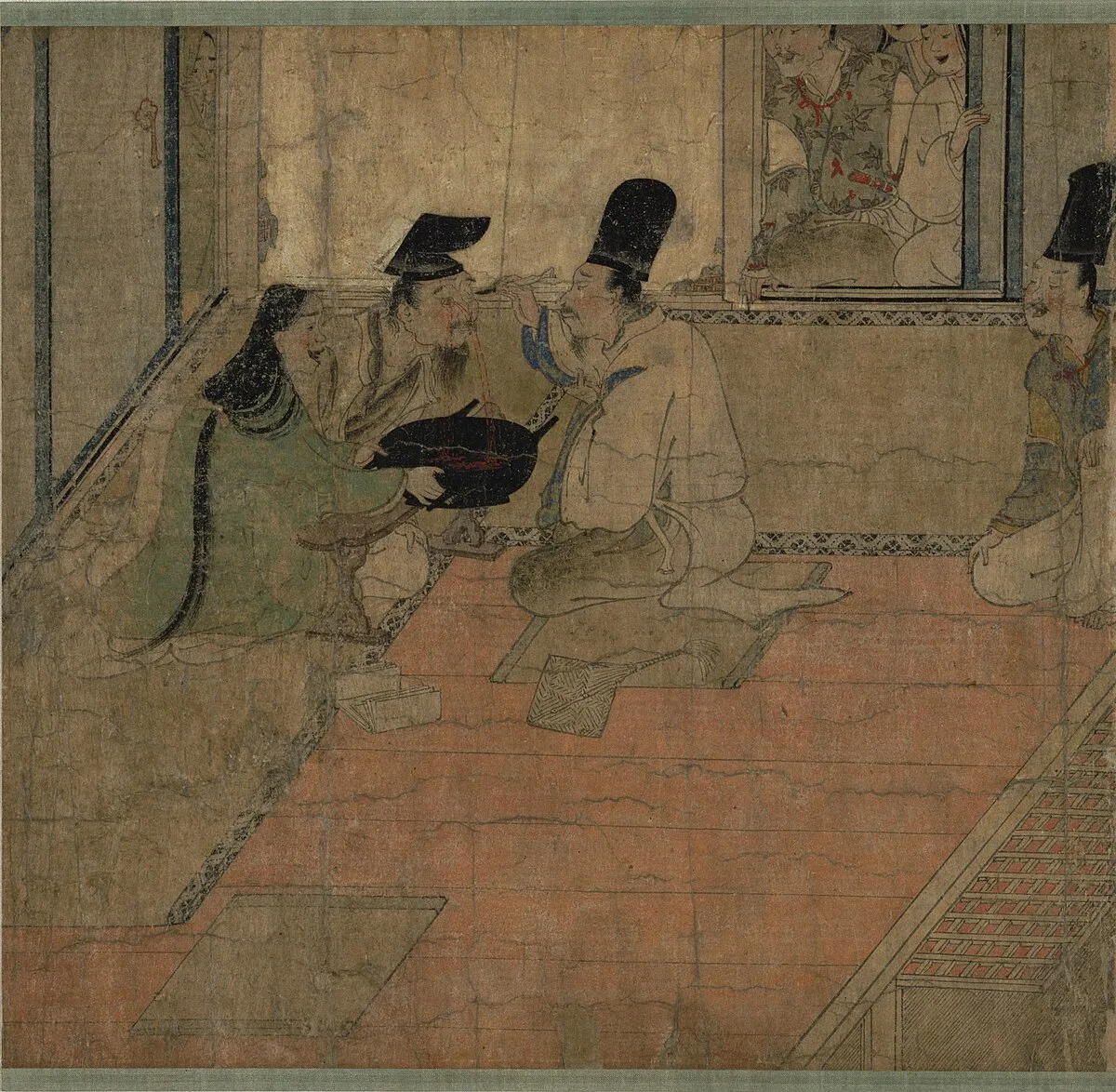
Fragments from «Scroll of Diseases» (12th century)
If the Gaki-joshi frighten with mystical grotesqueness, «Scrolls of Illness» documents actual physical ailments of the era—from insomnia and hallucinations to tumors, dwarfism, and paralysis. This is a look at the body as a fragile, vulnerable shell susceptible to decay.
The artist rejects mystical monsters but achieves psychological horror through the isolation and suffering of the protagonist. The afflicted individual is always depicted in an everyday, recognizable setting, but their posture, facial expression, or physical anomaly elicits empathy.
Chapter Summary
In Kamakura art, horror arises through the deconstruction of the human body using two techniques: the mystical grotesque (Gaki-zoshi) shocks through the hypertrophy of proportions and the clash between the ugly and the norm, while clinical naturalism (Yamai-no-soshi) frightens through a jagged contour line and the recognizability of real physical pain.
3. Iconography of Chaos and Destruction
Anatomy of Panic: Vectors of Movement and the Element of Fire
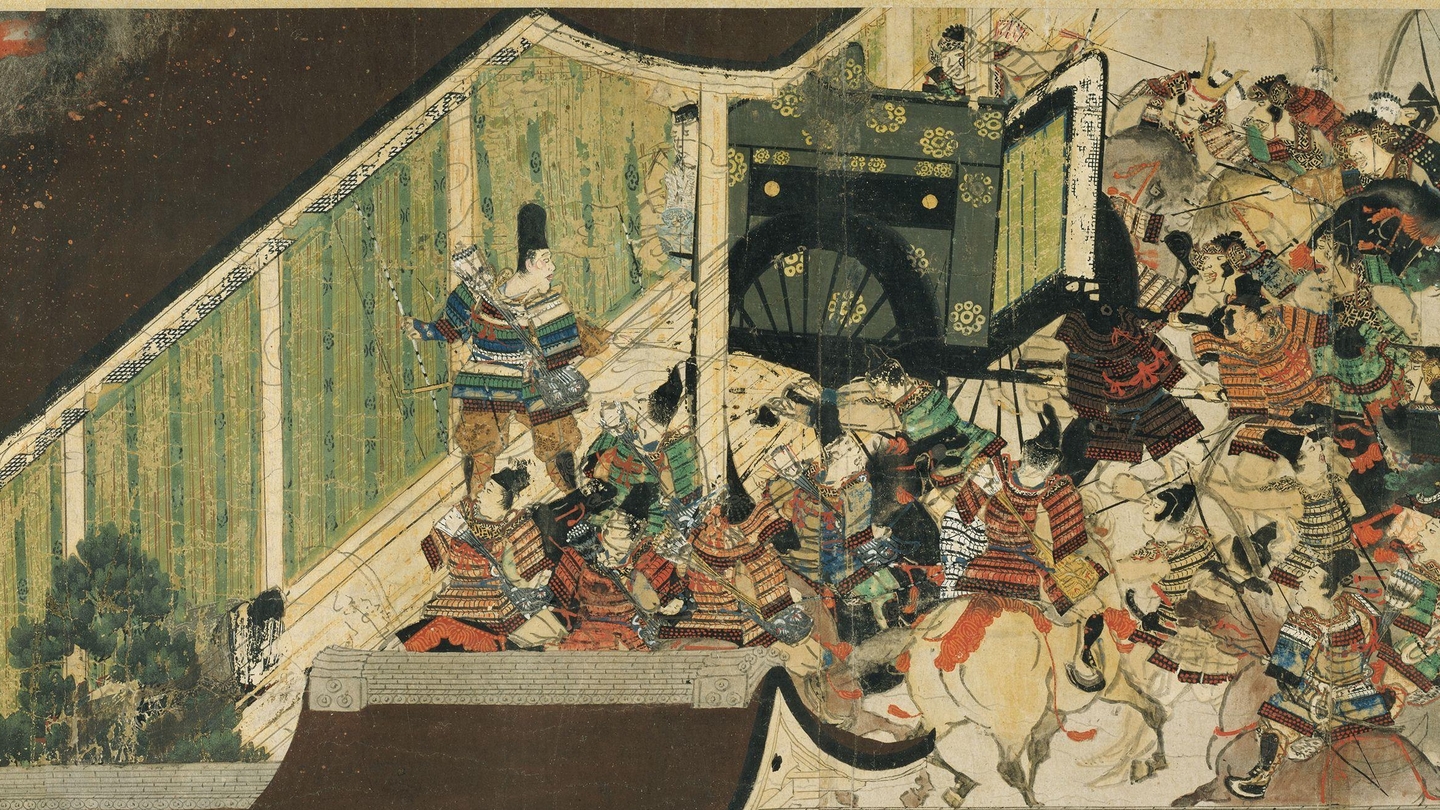
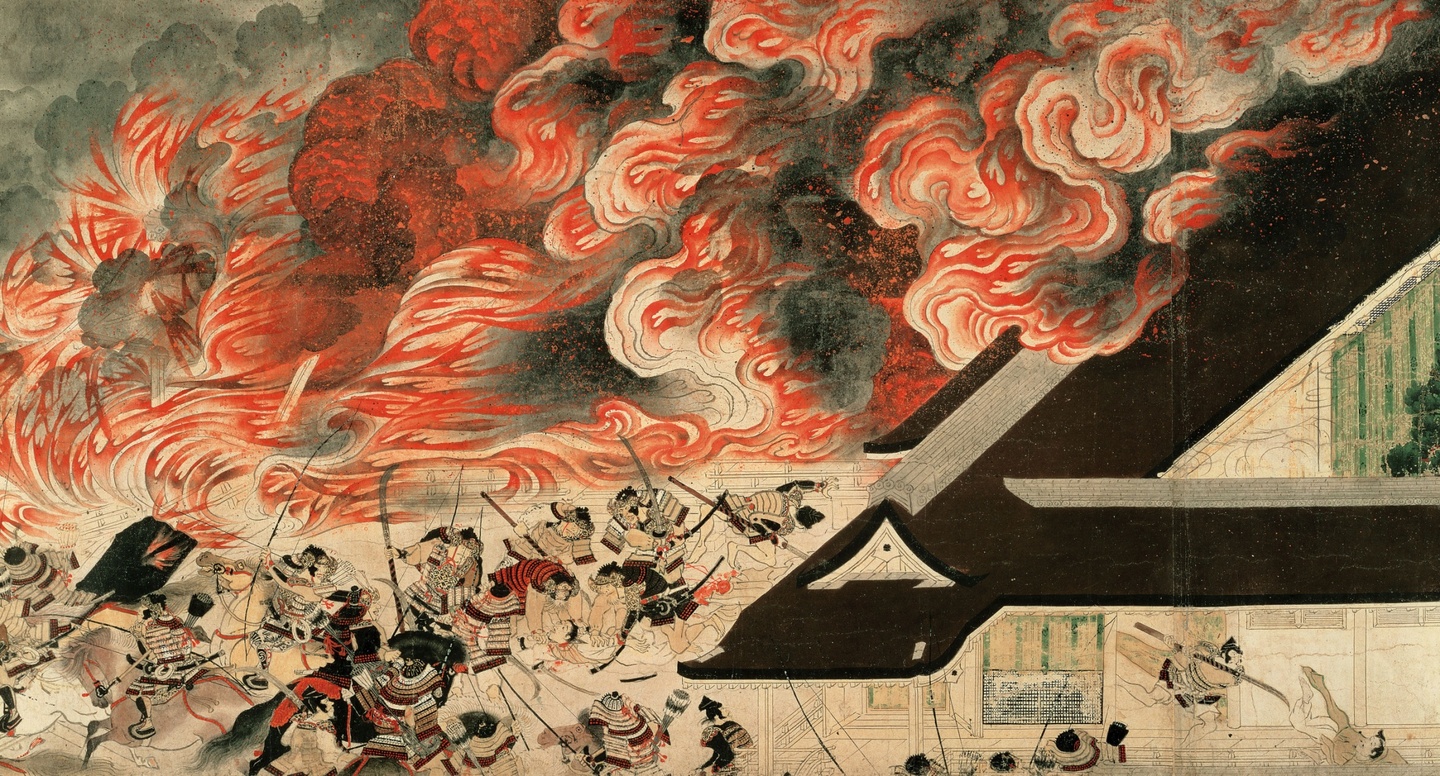
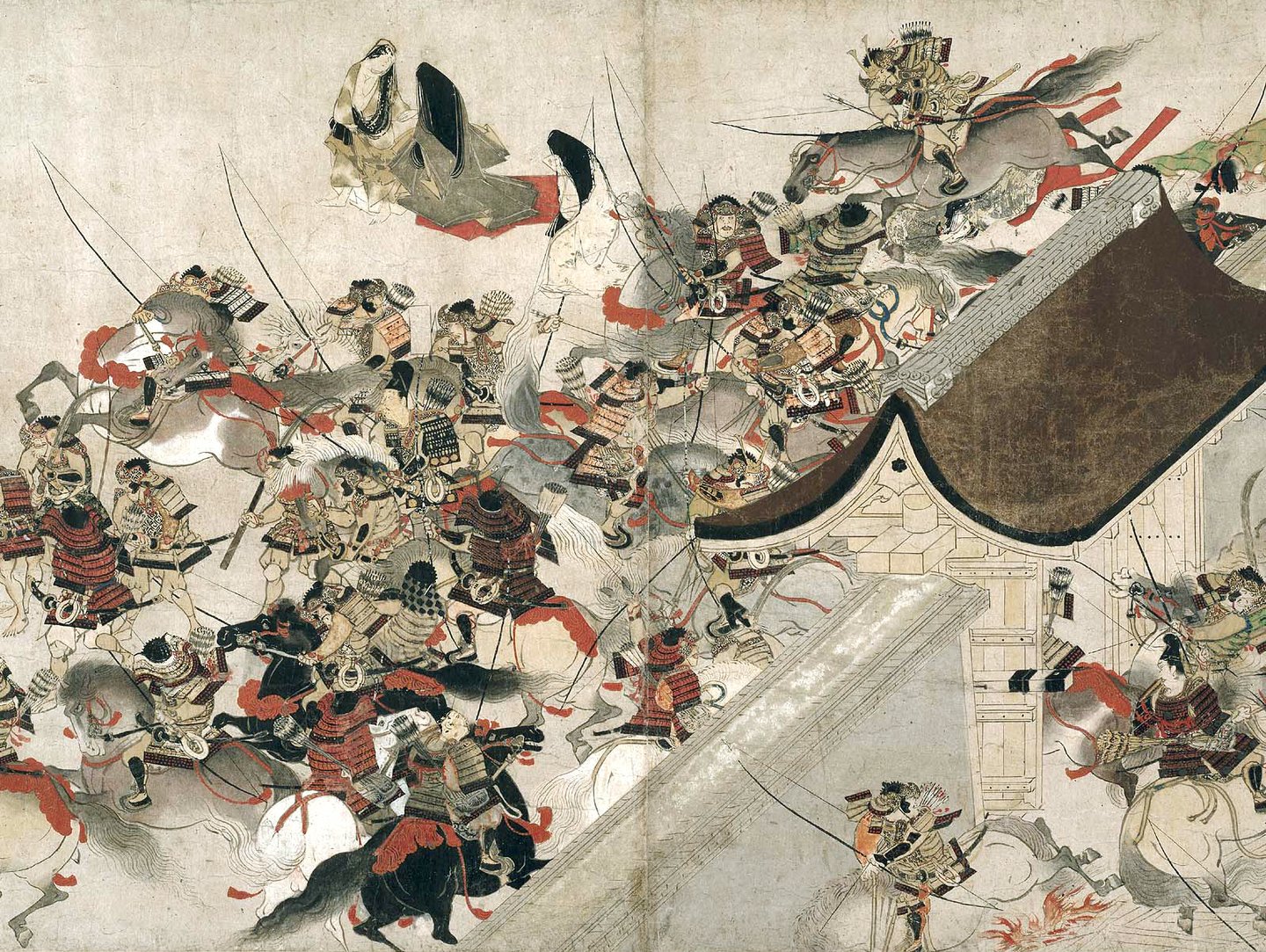
Central scene of the fire and other fragments from the scrolls «Night Attack on the Sanjo Palace» (13th century)
The scroll from the series «Tale of the Smote of Heizi» (second half of the 13th century, Museum of Fine Arts, Boston) depicts a real political coup from 1159. The artist eschews the heroic portrayal of war, presenting it instead as a blind, all-consuming catastrophe. The effect of chaos is created through the controlled dynamics of the crowd and the diagonals of fire. Hundreds of figures intertwine into a single vortex, where individual people lose their distinct identity and transform into a flow of running bodies, driven by clouds of black smoke and bright flame.
Geometry of Hell: Emptiness, Scale, and Torture