Женский образ в искусстве каменного века
Research Concept
The Stone Age is the earliest known epoch in human history. During this period, humans were just beginning to explore the surrounding world and master various ways of living.
Along with the development of human thought, a need emerged not only to perceive information but also to comprehend it, to express one’s ideas and impressions.
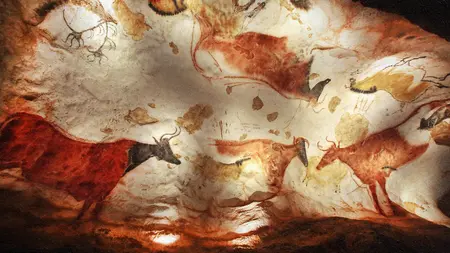
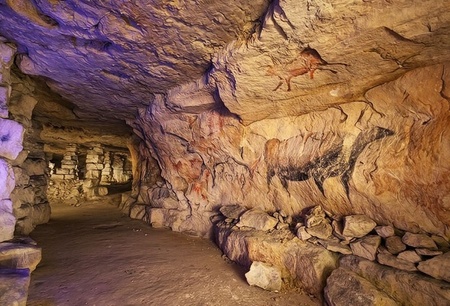
Thus, art began to take shape. The desire to express one’s perception of nature and life and to capture the surrounding world gradually appeared in cave paintings and sculptural forms.
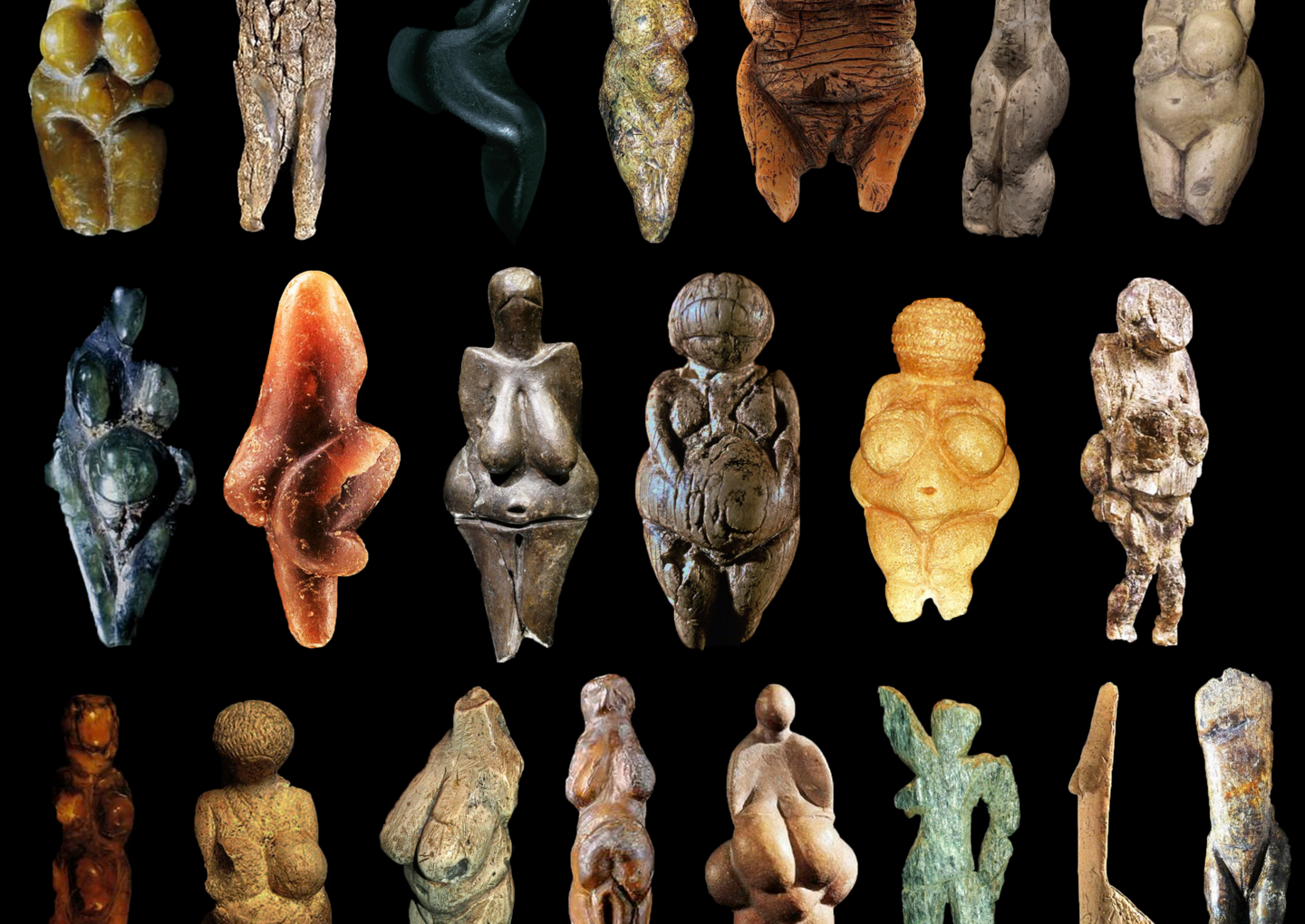
Images of women hold a special place among the monuments of ancient art from the Stone Age.
In this study, I wish to examine exclusively the three-dimensional sculptural representations of women.
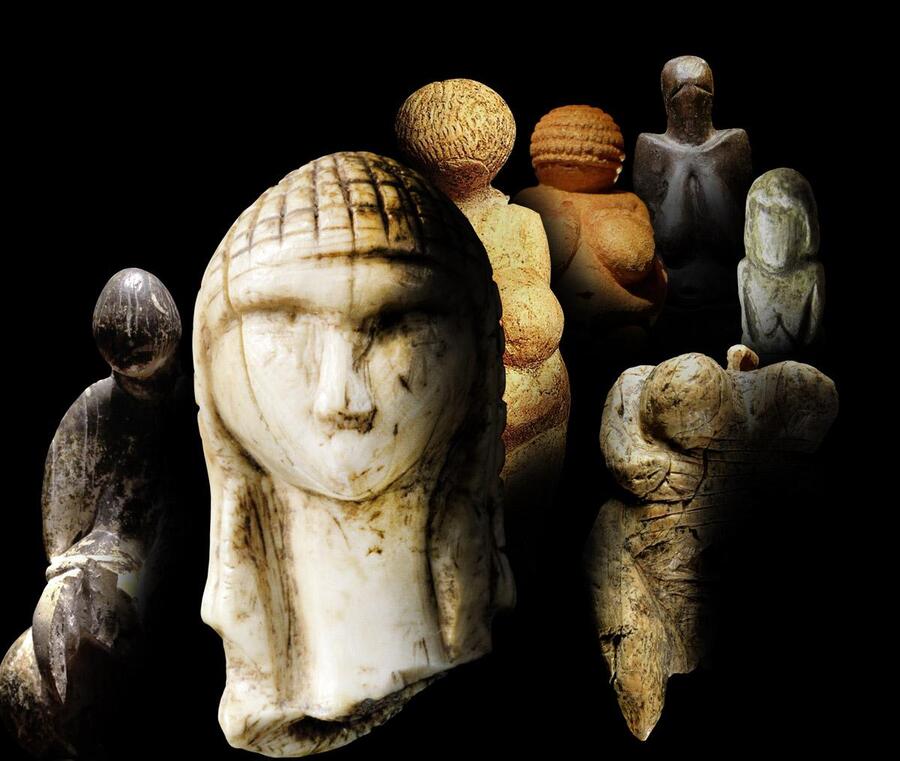
The research topic seeks to answer the question: What are the characteristics of the female image in Paleolithic sculptures? The chronological scope is limited to the Stone Age (Paleolithic, Mesolithic, Neolithic). The primary focus is on examining sculpted representations of women.The relevance of this research stems from the fact that studying the female image during this period allows for a deeper understanding of the characteristics of primitive art and the formation of the female archetype. Despite the evident age of these sculptures, they continue to intrigue researchers, archaeologists, and the general public. Furthermore, they remain subjects of scholarly discussion. Visual analysis provides an opportunity to trace whether the female image evolved across the Paleolithic, Mesolithic, and Neolithic, and what role it occupied within the culture of ancient society.The study employs a chronological logic for structuring the chapters.
Key Question: What distinctive features characterize the female figure in Stone Age sculptures?
Research Hypothesis: The female figure in Stone Age sculptures is characterized by generalized and conventional forms, an emphasis on the «obvious traits» of the female body, and a lack of aspiration toward realistic depiction of appearance. This mode of representation is likely driven by a symbolic or ritual function, serving as a unique attribute of fertility, and also reflecting stages of the female life cycle: maturation, conception, pregnancy, and childbirth.
The main objective is to determine the characteristic features of the female image in prehistoric sculpture.
Research Sections
- Research Concept2. Paleolithic • Early • Middle • Upper • Late3. Mesolithic4. Neolithic5. Conclusion6. Bibliography7. Image Sources List
Chapter 1. Paleolithic (c. 1.5 million years ago — 10,000 BCE)
Paleolithic—a vast time period, within which the majority of female sculptures, collectively known as «Paleolithic Venus figures, ” were created. Although the Paleolithic is divided into three stages—Lower, Middle, and Upper (Late)— I have divided this chapter into four sections because the discovered sculptures are unevenly distributed throughout this time span.At the beginning of each section, I will explain my rationale for this specific division.
Early Paleolithic (approximately 1.5 million — 300,000 years ago)
The Early Paleolithic—the beginning of human history. During this period, art began to take shape. A key aspect of depicting women at that time was that people did not create the figurines themselves; rather, they took objects shaped by nature that vaguely resembled the female form and minimally refined them.
Venus from Tan-Tan
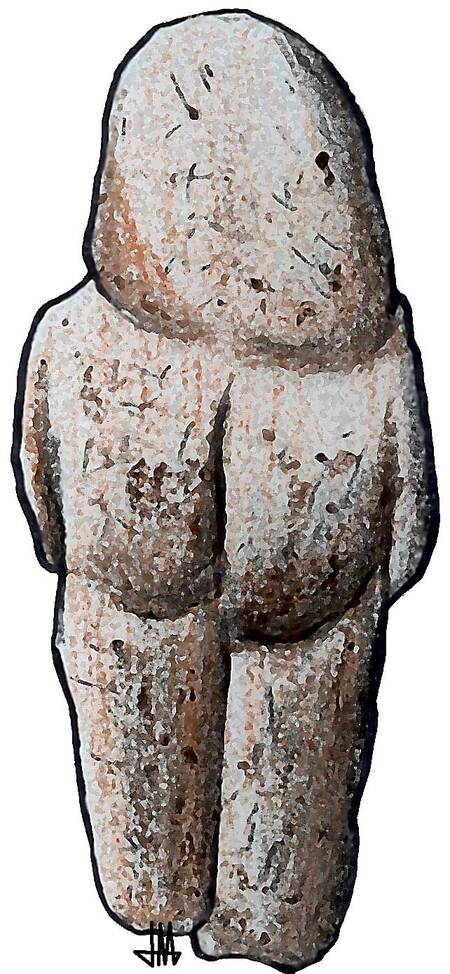
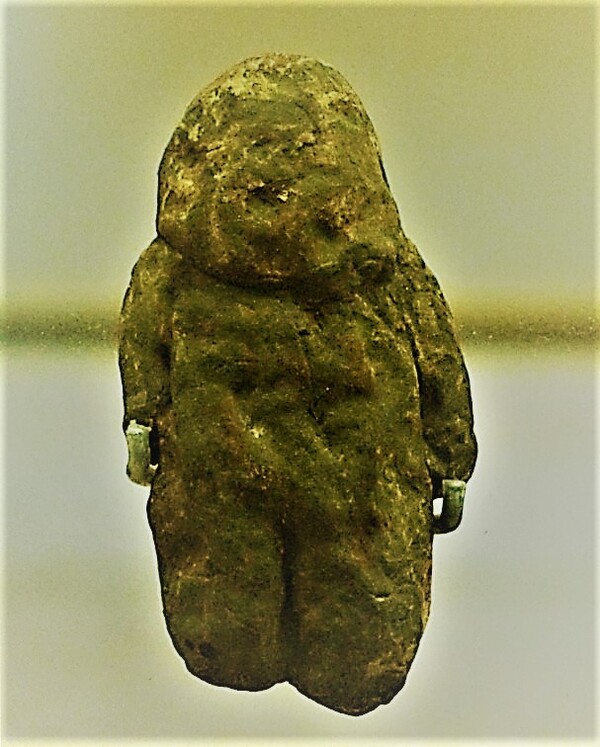
Venus of Tan-Tan, 4000s BCE
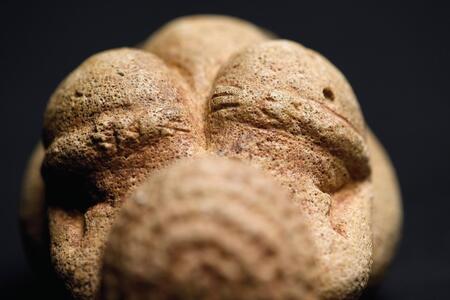
Venus from Tan-Tan was discovered on the banks of the Draa River near the Moroccan city of Tan-Tan. It is considered one of the oldest examples of prehistoric sculpture. The figure is made of metamorphosed quartzite.Parameters: Length — approximately 6 cm, Width — 2.6 cm, Thickness — 1.2 cm, Weight — approximately 10 g.Scientists have confirmed that this figurine was not created from scratch: it is a simple stone, resembling the features of a female body, which was found by a primitive person and minimally refined. Yet, even in this sculpture, one of the main features of the female form—which would be used later—can be noted: the characteristic plumpness.
Middle Paleolithic (approximately 300–100 thousand — 40–35 thousand years ago)
According to contemporary data, the Middle Paleolithic is characterized by a lack of reliably confirmed female sculptures. While there are certainly isolated finds that may date to this period, there is no definitive answer on the subject today. For instance, the Venus of Bereh-Ramah could belong to either the early or Middle Paleolithic, as its dating is highly approximate. The intentional creation of figurines began later.
Venus from Berheet-Rama
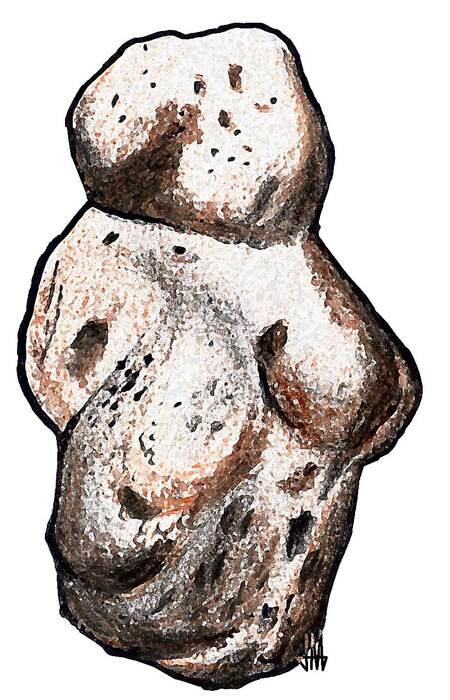
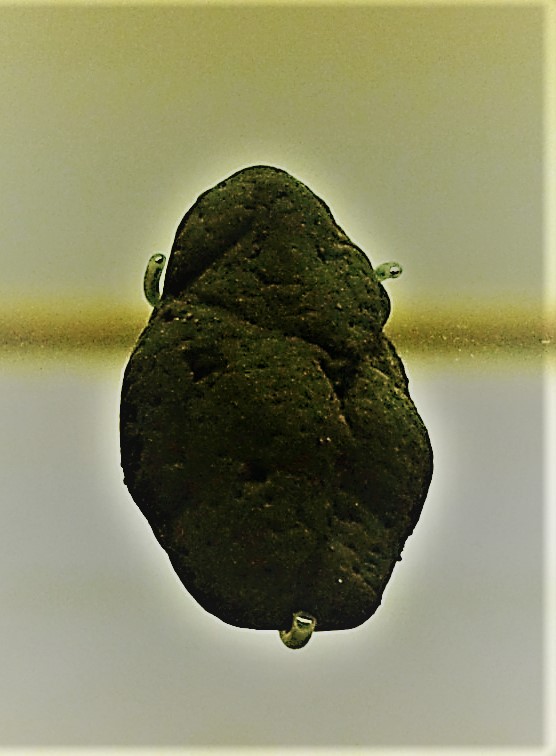
Venera from Berehat-Rama, approximately 230,000 years old
Venus of Berehath-Ram was discovered in 1981 near Ram Lake on the Golan Heights. It is an anthropomorphic stone carved from tufa.Dimensions: Length — 33 mm.Like the Venus of Tan-Tana, it is not a standalone artifact, but rather only vaguely suggests a female form. No distinct features—other than stoutness, which may be utilized later—are currently discernible.
Upper Paleolithic (40–35 thousand years ago — 10 millennia BCE)
During the Upper Paleolithic period, the greatest number of sculptures depicting the female body were created. The key word is «created, ” because it was during this era that people began intentionally crafting figurines, rather than modifying objects already made by nature that vaguely resembled the female form, as was done in the Early Paleolithic. In the Upper Paleolithic, masters began using various materials and techniques to create their works.
Venus from Hole-Fells
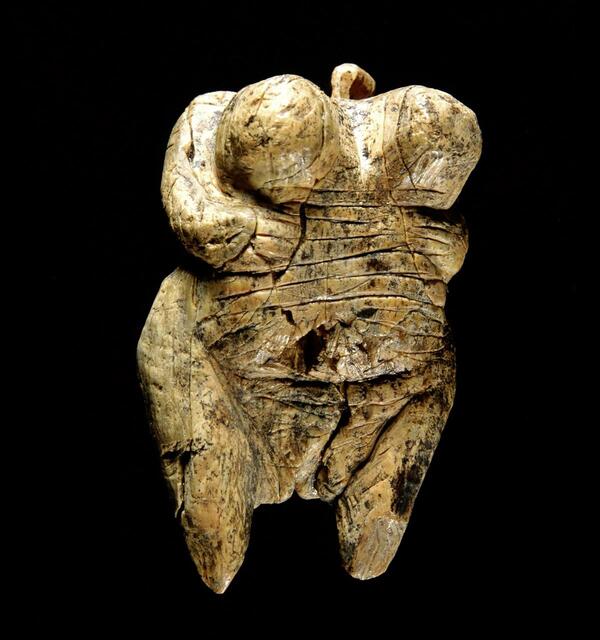
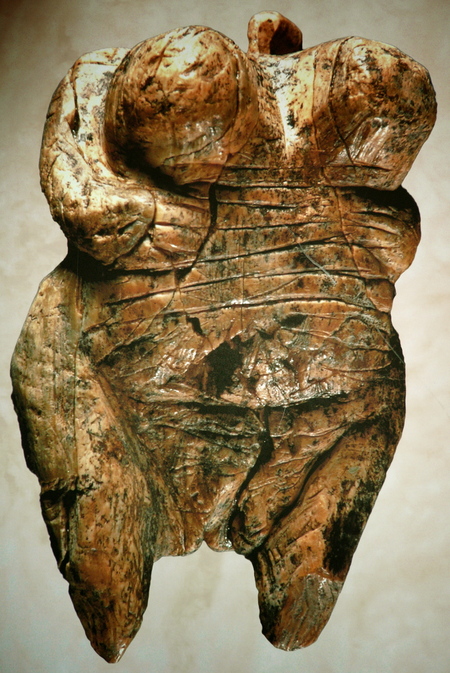
Venus from Hohle Fels (Venus of Schellklingen, Venus of Swabian), 35th millennium BCE
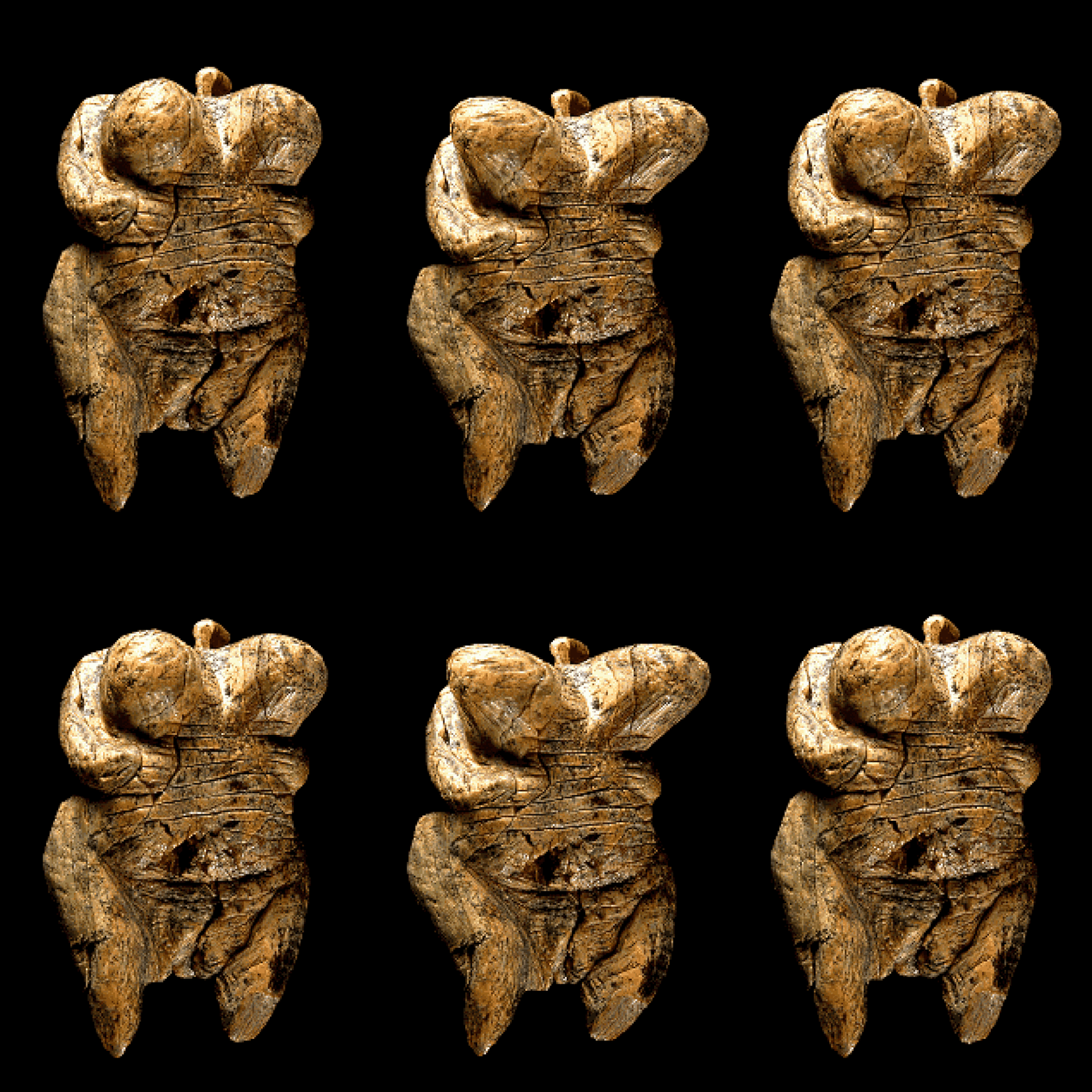
Venus from Hohle Fels, also known as Venus of Schelklingen and Venus of Swabian, was discovered in 2008 in the Hohle Fels cave in the Swabian Alps, near the German town of Schelklingen. It is the most ancient hand-made female figurine. The sculpture is crafted from wool mammoth ivory.Parameters: Height — approximately 6 cm.The statuette depicts the figure of a plump woman with a pronounced bosom and vulva. Based on these features, it can be presumed that this figurine, like subsequent ones exhibiting similar traits, may have served as a fertility amulet. Furthermore, an opening visible where the head should be suggests that the Venus was most likely used as a pendant or amulet.
Venera Galgenbergskaya
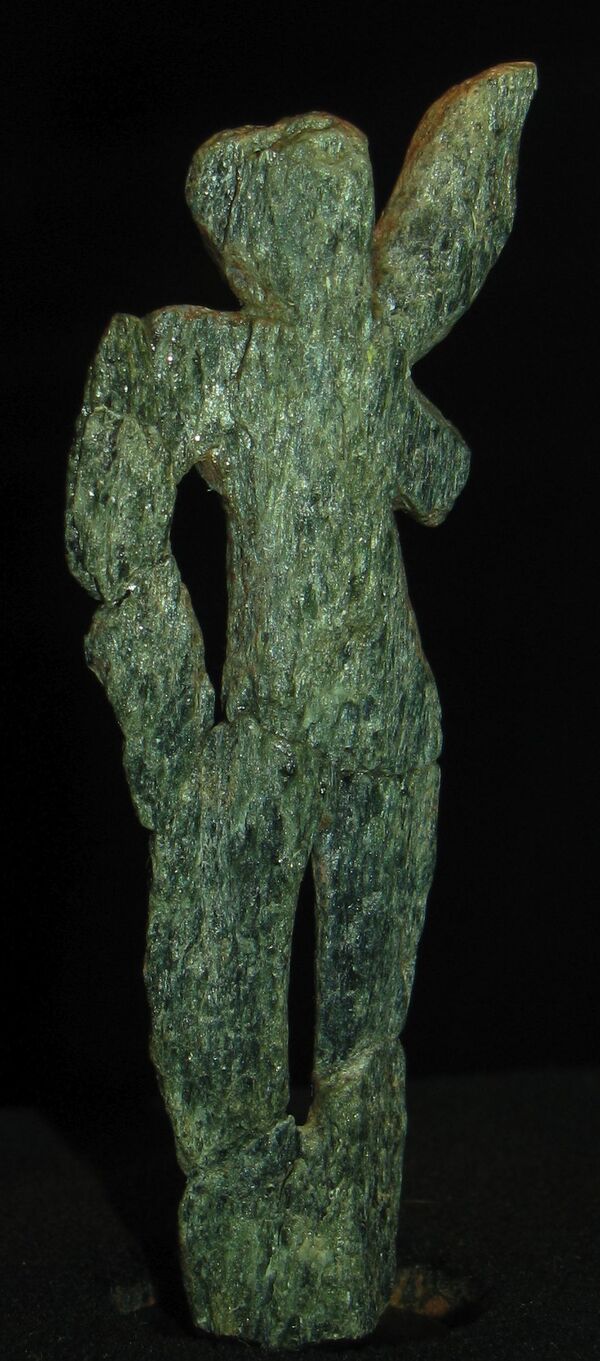
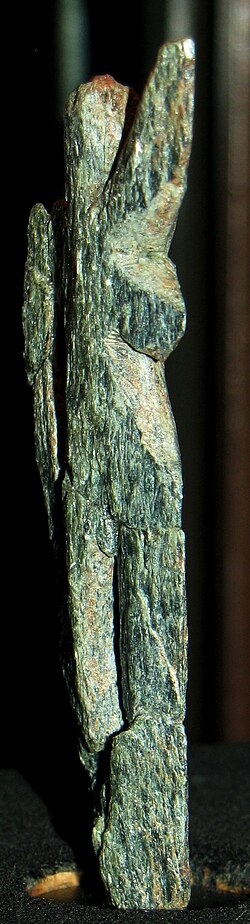
Venus of Galgenberg, 30th millennium BCE
Venus of Galgenberg, also known as the «Stratzing figurine, ” was discovered in 1988 near Stratzing in Lower Austria. The statuette is crafted from green serpentine (amphibolite schist).Parameters: Height — 7.2 cm, Weight — 10 g.At first glance, this figurine may not exhibit as pronounced features as the previous one, but upon closer inspection, one can notice that the breasts are also defined, just in a slightly different way, and the abdomen and genitalia are emphasized, although this is not as obvious. Furthermore, as is characteristic of statuettes from this period, it lacks a face.
Venera Brassampuiyskaya