Sections
- Concept
- Assembly and Rhythm
- Space as a Source of Humor
- Building Visual Gag
- Conclusions
Concept
Slapstick comedy holds a special place in the history of American cinema, because it was during the silent film era that physical action became one of the most important ways to organize comic narration. In the 1910s, as Hollywood was actively forming its own system of film production and genre models, comedy ceased to be exclusively a fixed theatrical performance and began to explore the specific capabilities of cinema. Falls, collisions, chases, fights, and unexpected interactions with objects existed in earlier comedic traditions, but film gave them new expressive possibilities: the ability to alter the scale of the image, construct complex compositions, organize action within the frame, and link separate comedic episodes through editing.The choice of this topic is driven by an interest in how physical humor transforms into a standalone visual language. Slapstick is particularly interesting to investigate from the perspective of the screen form: here, the comedic action often does not require complex dramaturgical motivation because the very process of disrupting the established order becomes the basis of the narrative. Ordinary objects lose their original functions, space transforms into an obstacle, and the sequence of actions acquires an unpredictable character.
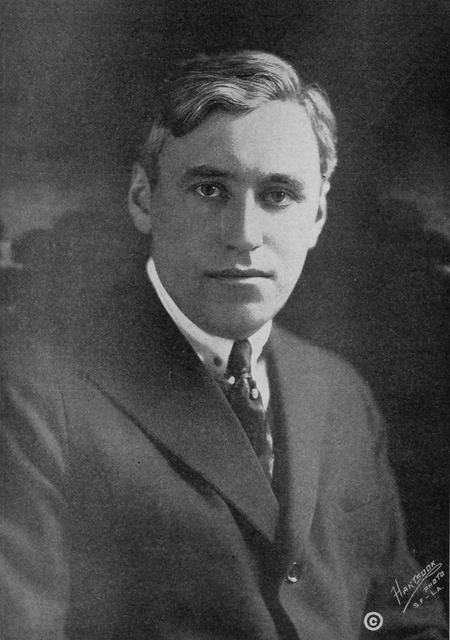
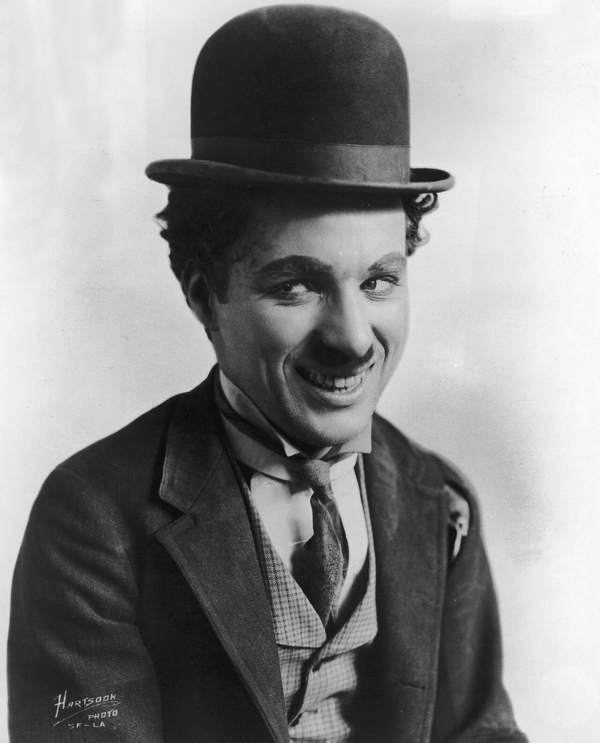
F. Hartshuck, «Mac Sennett, ” 1916 // P. Yankens, „Charlie Chaplin, ” 1915
A vital context for this research is the work of Keystone Studios, a company instrumental in the development of American comedy during the 1910s. It was here that the model of comedic narrative—built upon a high density of events, massive collisions, and a rapid escalation of chaos—gained popularity. The studio’s founder, Mack Sennett, also played a crucial role in shaping the slapstick genre in American cinema; his professional career began with appearances in circuses, vaudeville shows, and theater. «The plots of his films were based on small nuisances or everyday inconveniences, depicted in a caricatured, grotesque manner. The characters—some absurdly fat, others absurdly thin—chased each other, fought with hammers, and threw cream pies…» []
It is also important to note the contribution of Charlie Chaplin as a director and actor in slapstick comedy. «His work spanned almost the entire first century of film—from 1914 to 1967. Chaplin became a symbol of all of cinema, silent and otherwise.» In silent film, words held no meaning, so Chaplin transformed physicality, gait, facial expressions, and clumsy stunts into a universal language of emotion.
For this research, five American silent comedies from the 1910s were selected:1. «Caught in a Cabaret» (Directed by Charlie Chaplin, M. Normand, 1914)2. «His Trysting Place» (Directed by Charlie Chaplin, 1914)3. «Tillie’s Punctured Romance» (Directed by Mack Sennett, 1914)4. «The Rink» (Directed by Charlie Chaplin, 1916)5. «The Butcher Boy» (Directed by R. Arbuckle, 1917)The film selection is based on the diversity of methods used in these films to structure comic action. The study includes both short and feature films, works associated with Keystone Studios, as well as later comedies by Charlie Chaplin and Roscoe Arbuckle. This allows for a comparison of different scales and models of slapstick comedy construction.The research revolves around three interconnected mechanisms of visual comedy that form a cohesive system:1. Montage and rhythm. These control the duration of scenes, the build-up of tension through acceleration, and the organization of action over time.2. Space. It transforms the everyday and social environment into an active participant that sets the conditions for the comic action.3. Visual gag. This unifies time and environment into a specific comedic device using composition, contrast, hyperbole, repetition, and surprise.
Key Question
How does American slapstick comedy from the 1910s transform screen space, editing, and interaction with objects into independent tools for generating visual comedy?
Hypothesis
In American cinema of the 1910s, slapstick comedy develops as a distinct system of visual storytelling, where the comedic effect is generated not so much by plot progression as by the violation of conventional logic in human interaction with space and the material world. It is posited that through exaggerated physical action, unexpected object usage, spatial incongruities, repetition, and the acceleration of gags, comedy gradually acquires its own independent cinematic language. In this context, editing, composition, and the organization of screen space become not merely technical means of recording events, but direct participants in creating the comedic effect.
Montage and Rhythm
Unlike dramatic narrative, where the sequence of events is often governed by cause-and-effect logic and psychological development, slapstick is primarily built upon changes in the intensity of physical action. A minor incident can escalate into a chain of collisions, and a single gag can become the start of widespread chaos.Furthermore, this acceleration is not necessarily achieved solely through editing cuts. The duration of action within a single frame, the repetition of movements, the introduction of new participants, and the gradual complication of the existing situation all play a vital role.
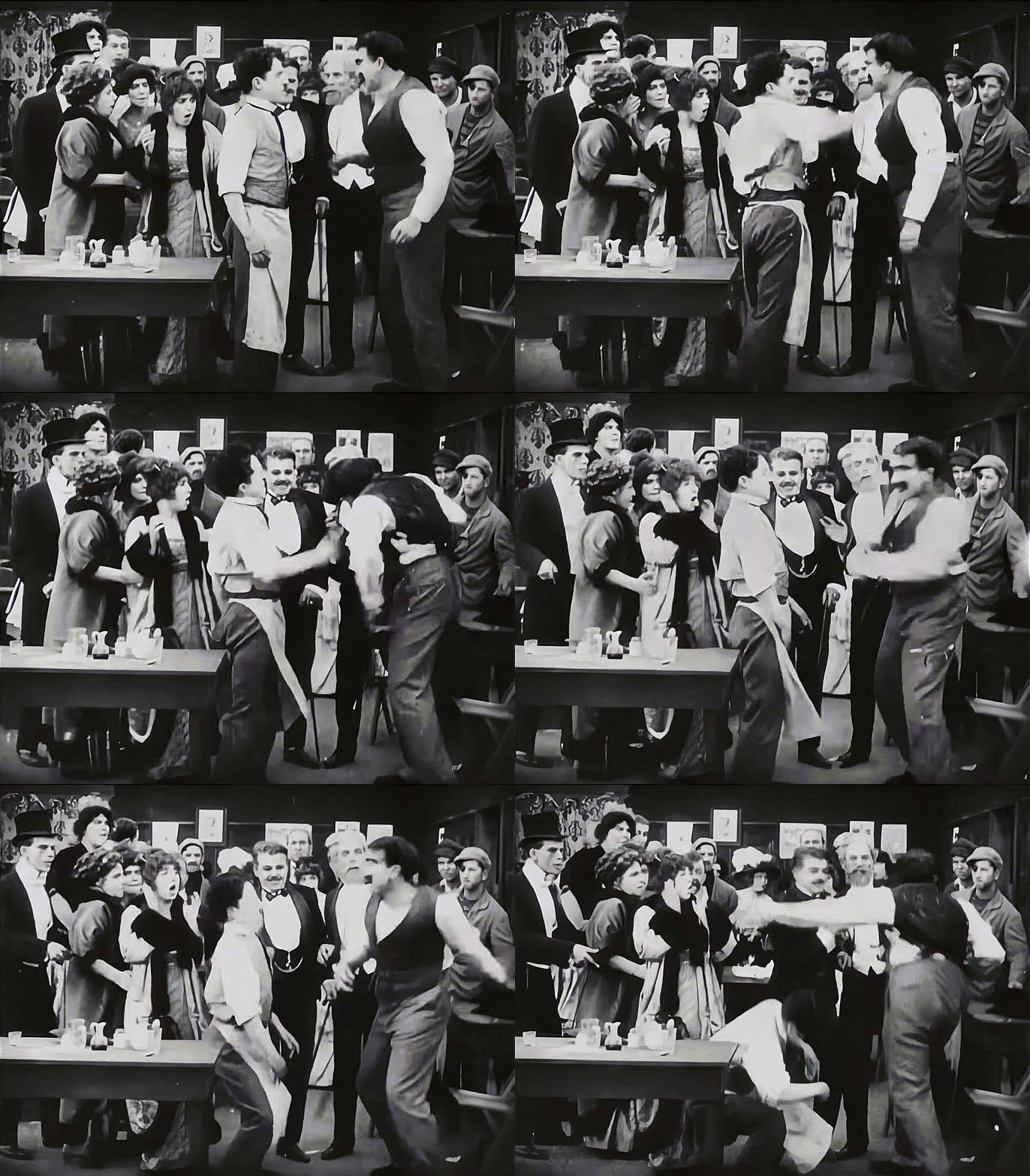
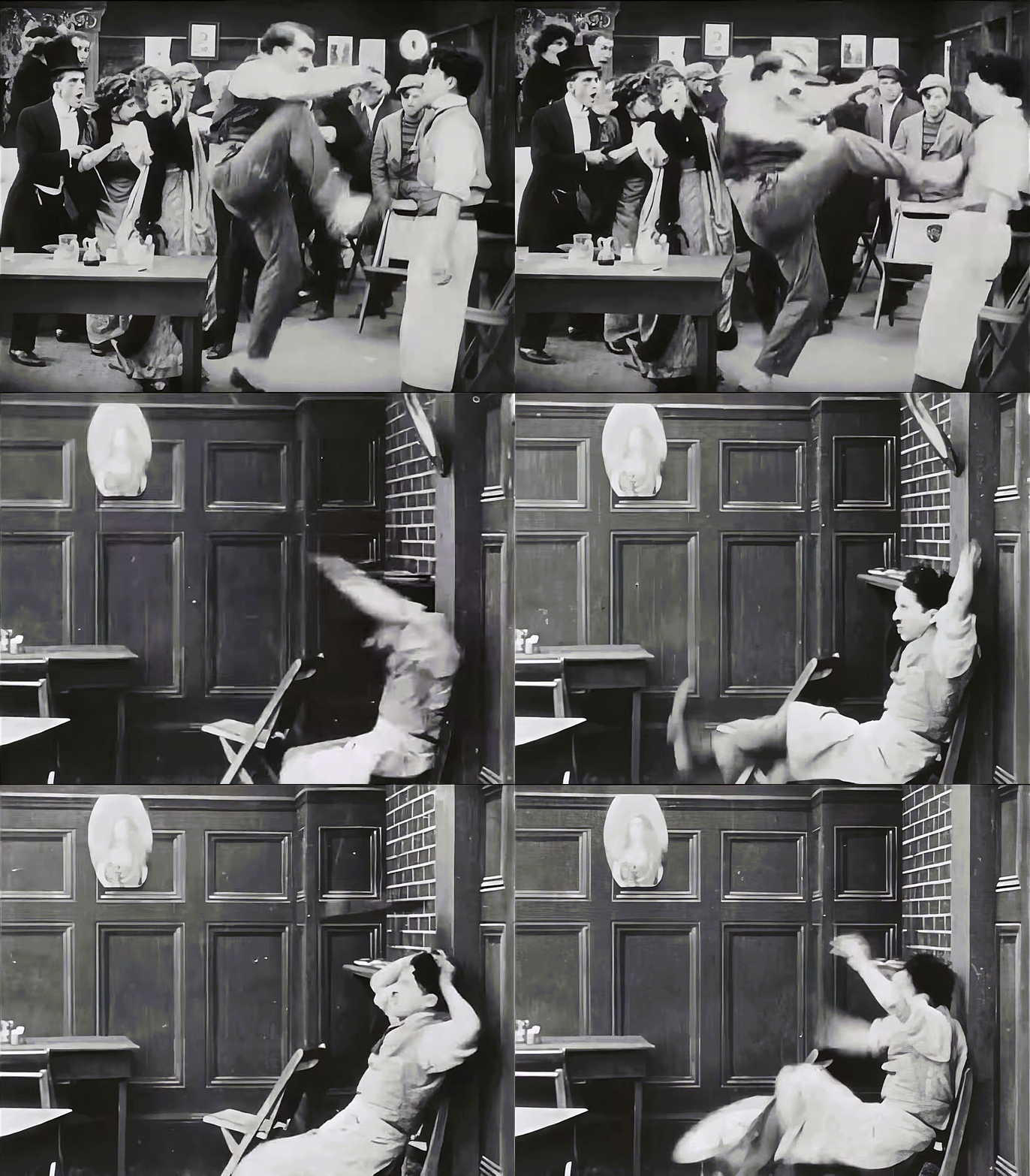
Stills from the film «Caught in a Cabaret» (Dir. Charlie Chaplin, M. Normand, 1914)
In the final part of the film «Caught in the Cabaret» (1914), the principle of accumulation is created. The comedic effect develops here through the successive involvement of new participants in the conflict. One action provokes a reaction, which, in turn, causes the next collision.
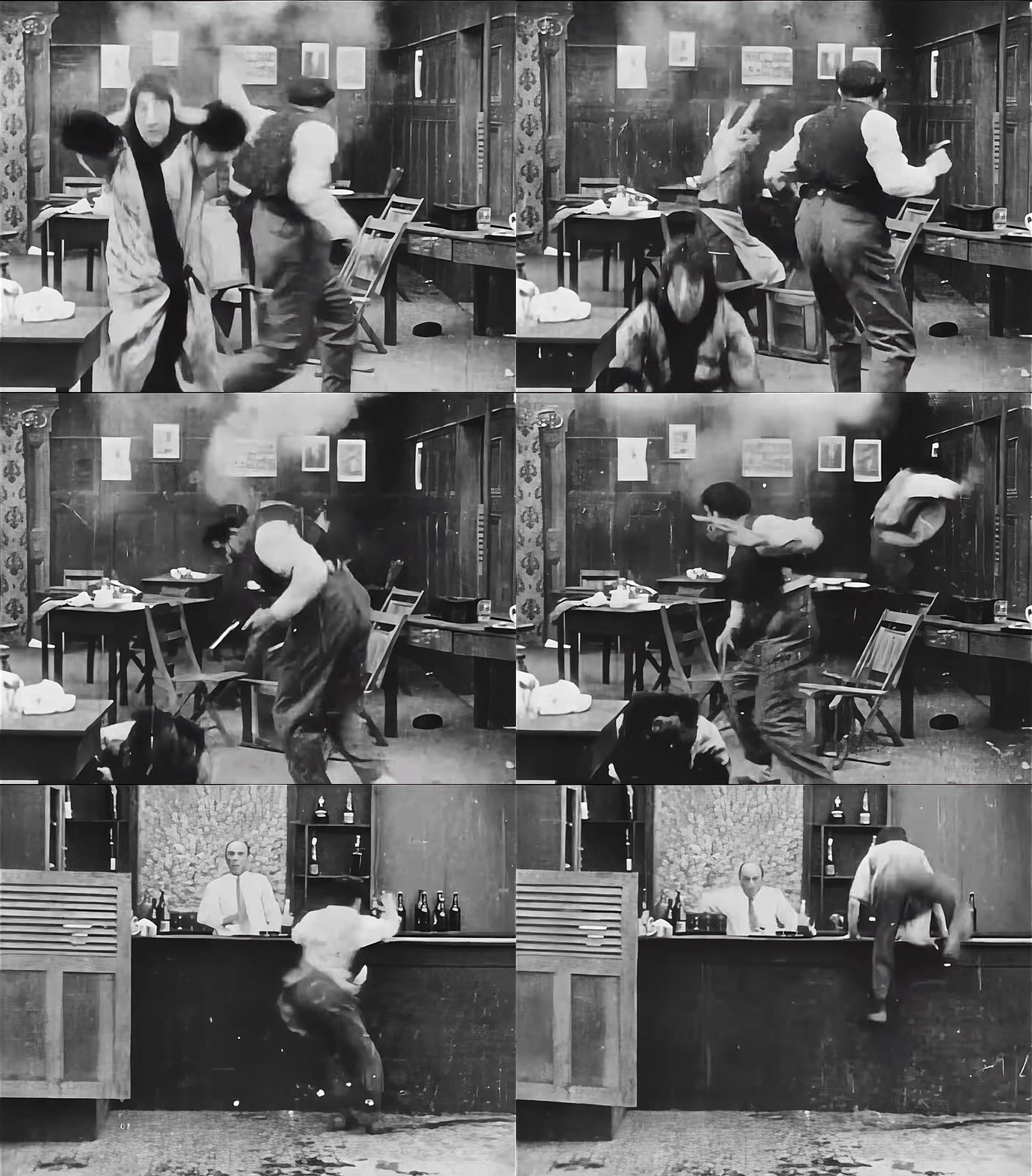
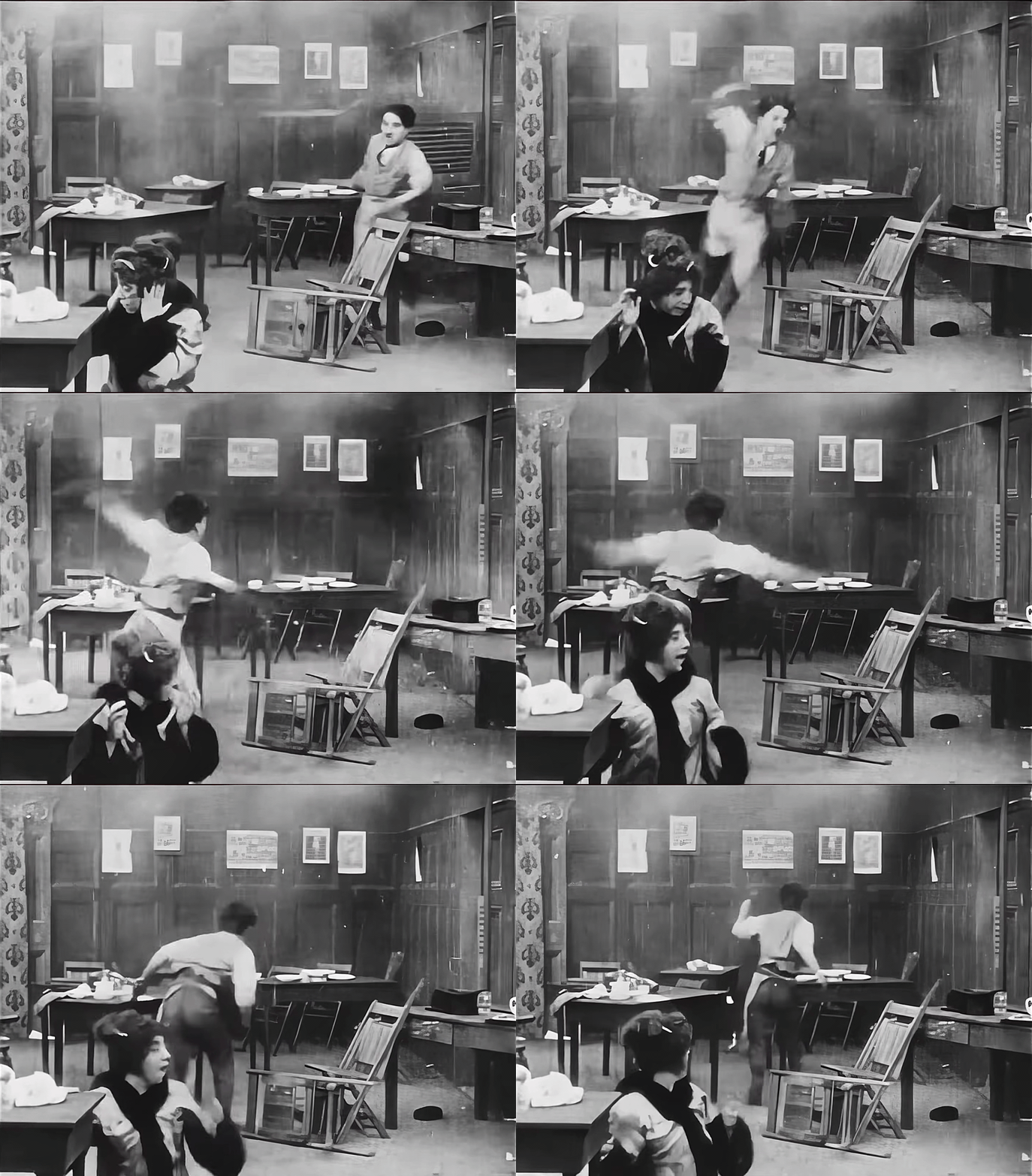
Stills from the film «Caught in a Cabaret» (directed by C. Chaplin and M. Normand, 1914)
In the following scenes, the rhythm in the cabaret only intensifies, creating the effect of complete chaos and absurdity.
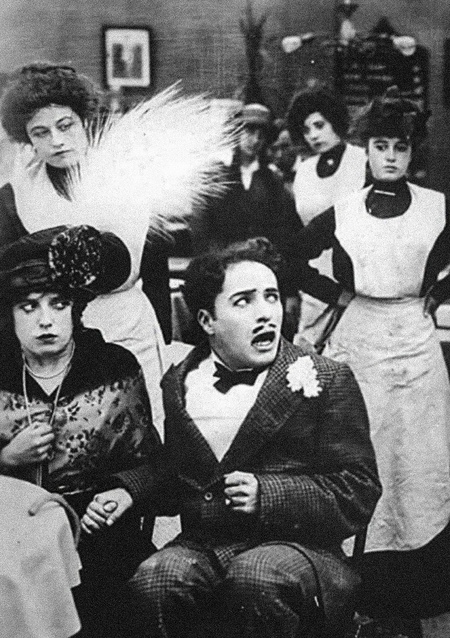
For the most part, the cabaret serves as a stage for buffoonery involving tumbles, slips, and cartwheels, as well as punches, kicks, and slaps… This syncopation reminds us of the farcical nature of what might otherwise be mistaken for the characters' vicious cruelty. It is a true buffoonery of circumstances: there is little plot, but many fights and absurd incidents that demonstrate the actors' ability to create real chaos.
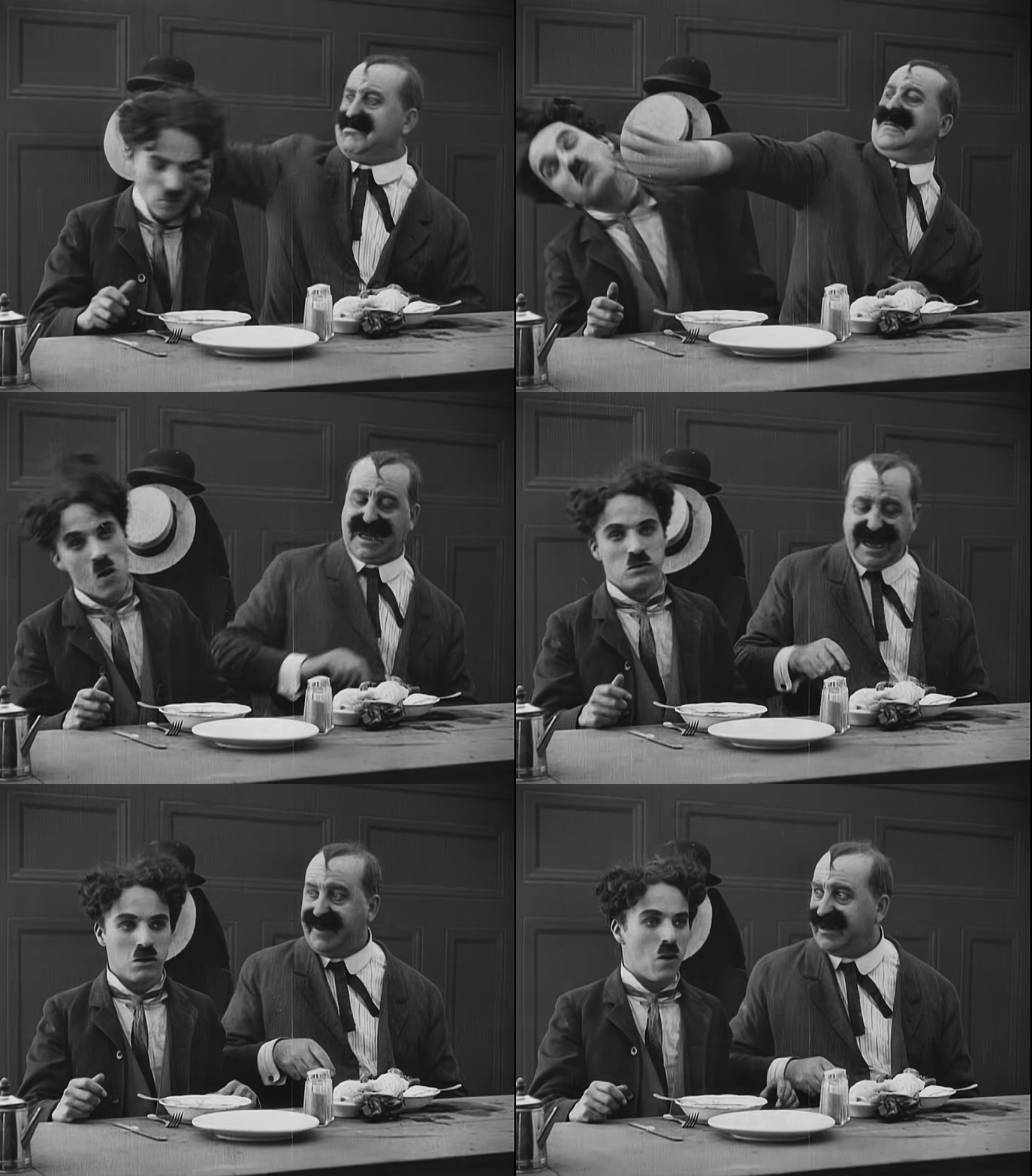
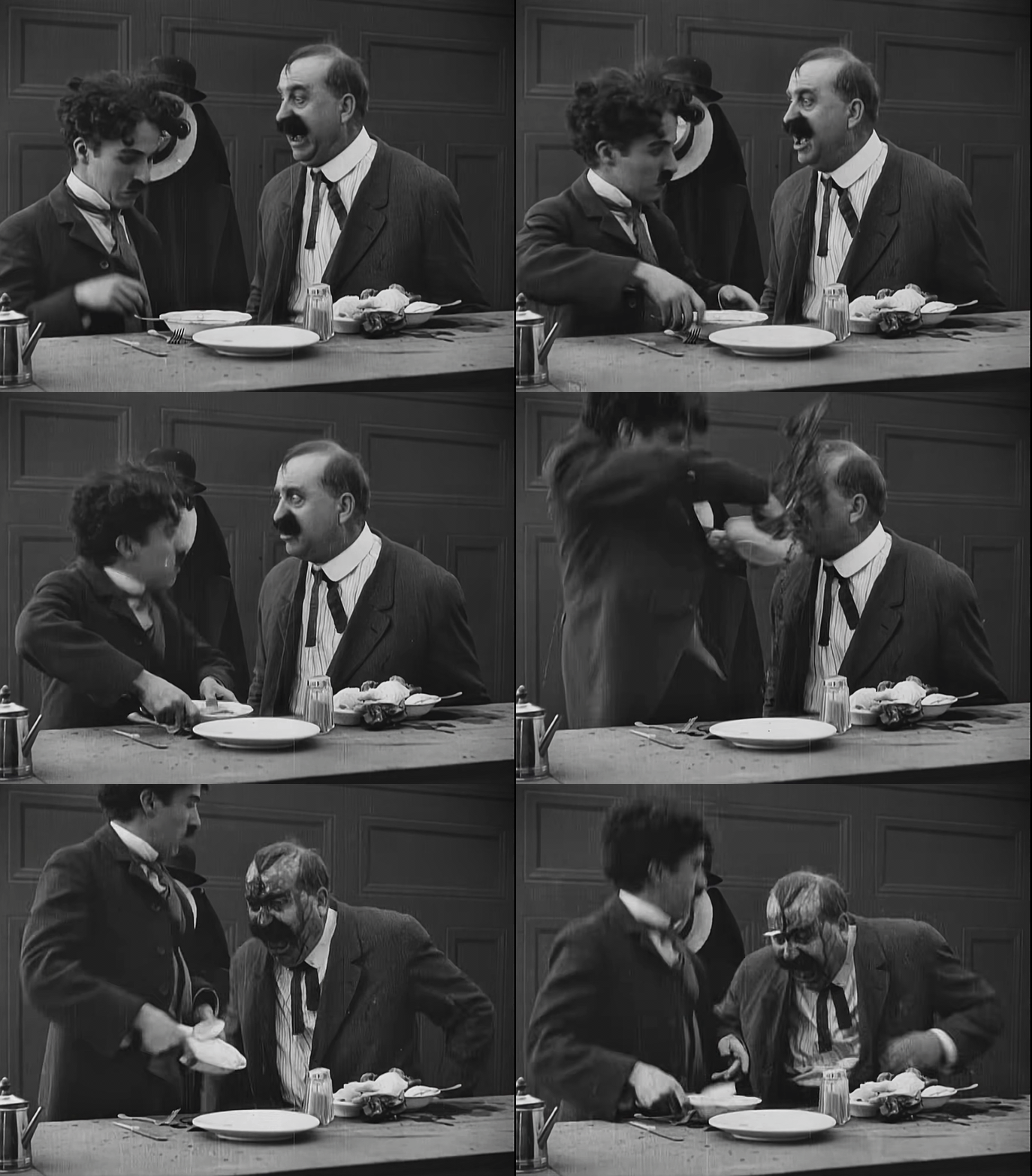
Stills from the film «His Trysting Place» (directed by Charlie Chaplin, 1914)
A similar principle of building comedic effect is present in the film «His Place for Dates» (1914).It all starts with a slap, and the action swiftly escalates into a fight between Charlie Chaplin and Mack Swain.
Still from the film «His Trysting Place» (Dir. Charlie Chaplin, 1914)
Next, the conflict (and its comedy) escalates into a mass brawl involving the bartender and other patrons.
This film is full of buffoonery, yet it possesses a storyline that complements the physical clashes. The buffoonery in this work is used more skillfully than in other short films of that era where violence was the sole objective, as in «Caught in a Cabaret» [].
Indeed, the disagreements between the two main characters will continue into the resolution.
Parallel editing plays a significant role in the development of the action in this film, creating a comedic effect from multiple angles.
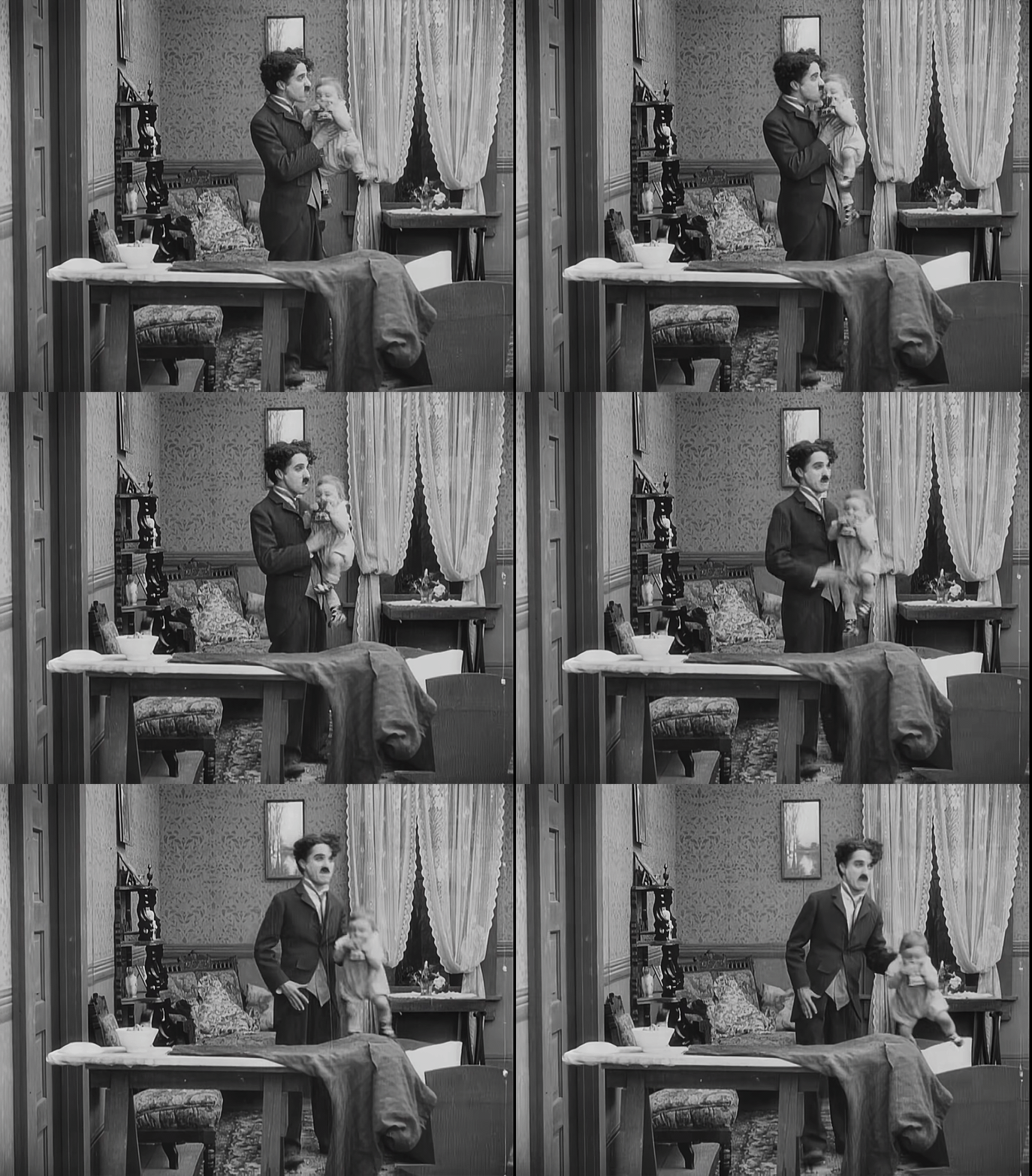
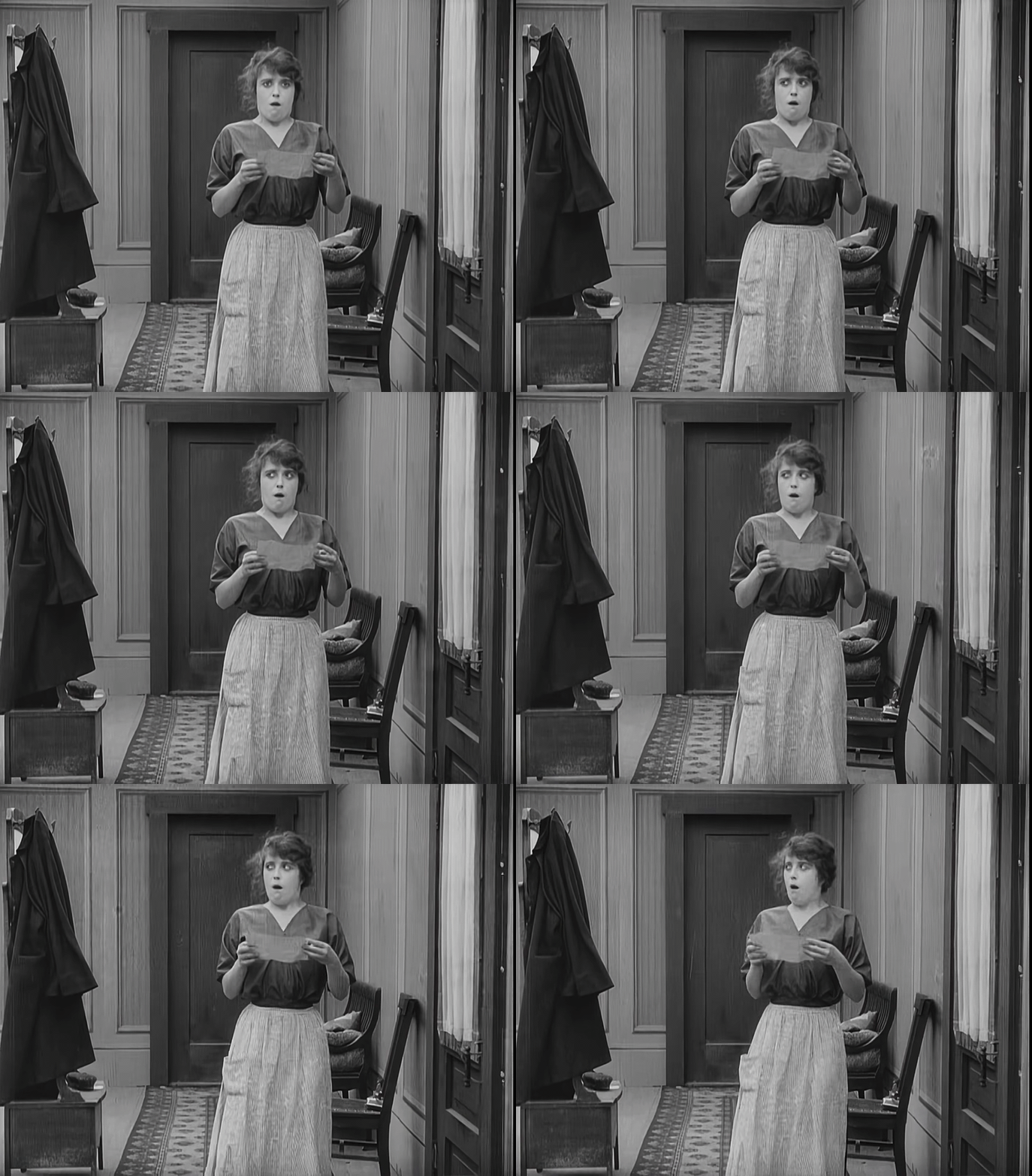
Stills from the film «His Trysting Place» (Dir. C. Chaplin, 1914)
Irony. The viewer sees both storylines simultaneously and has a complete picture of what is happening, while the characters are restricted to their locations. When the camera alternates between showing the husband, Clarence, who suspects nothing, and the wife, who has already found incriminating evidence in the next room, laughter arises from the characters' naivety.
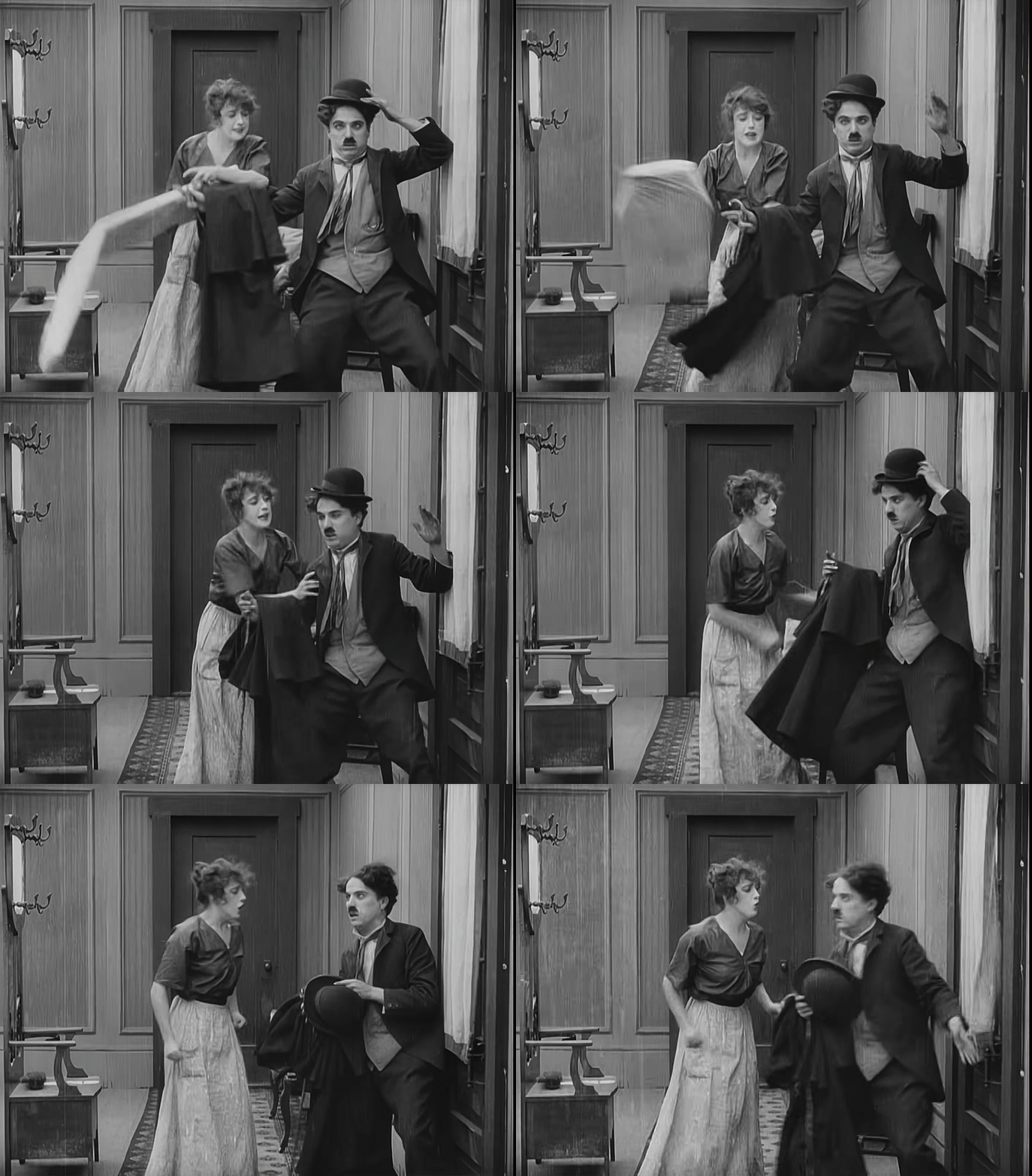
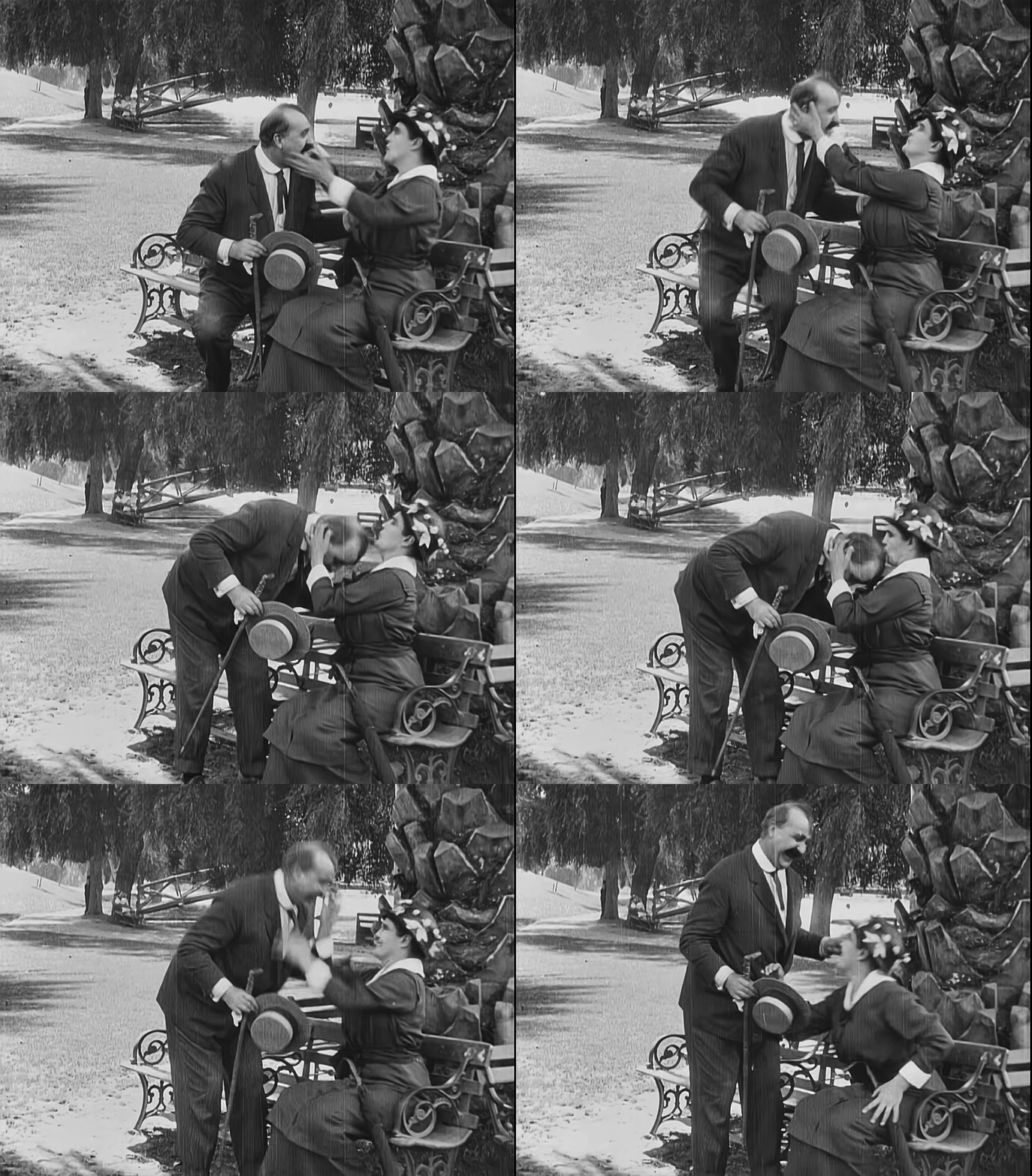
«His Trysting Place» (directed by Charles Chaplin, 1914)
Comic contrast of characters and situations. The sharp juxtaposition between two opposing worlds adds absurdity. In the film, the mundane conflict and shouting in Clarence’s apartment instantly give way to Ambrose and his wife’s kisses, transforming both families into grotesque caricatures.
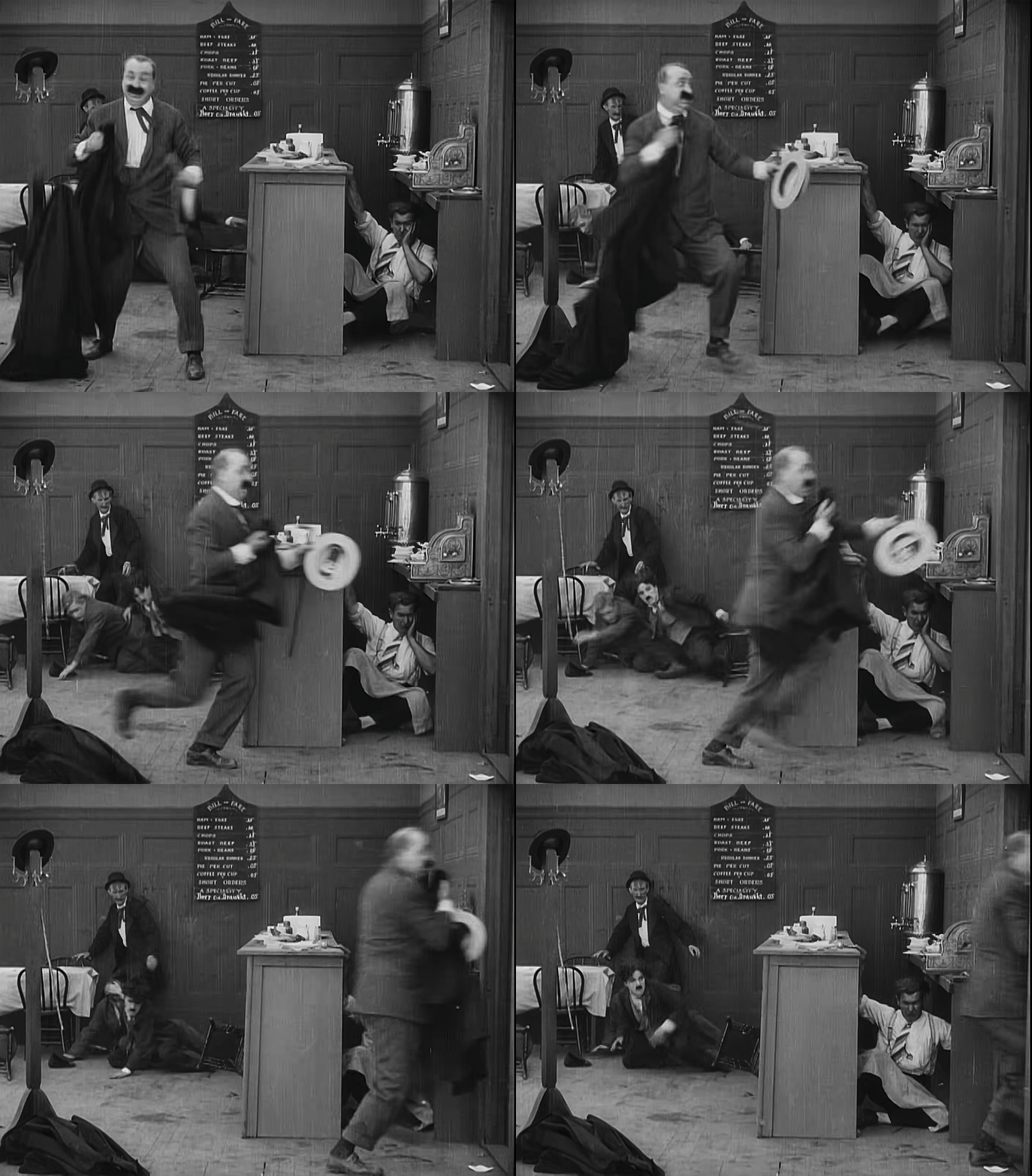
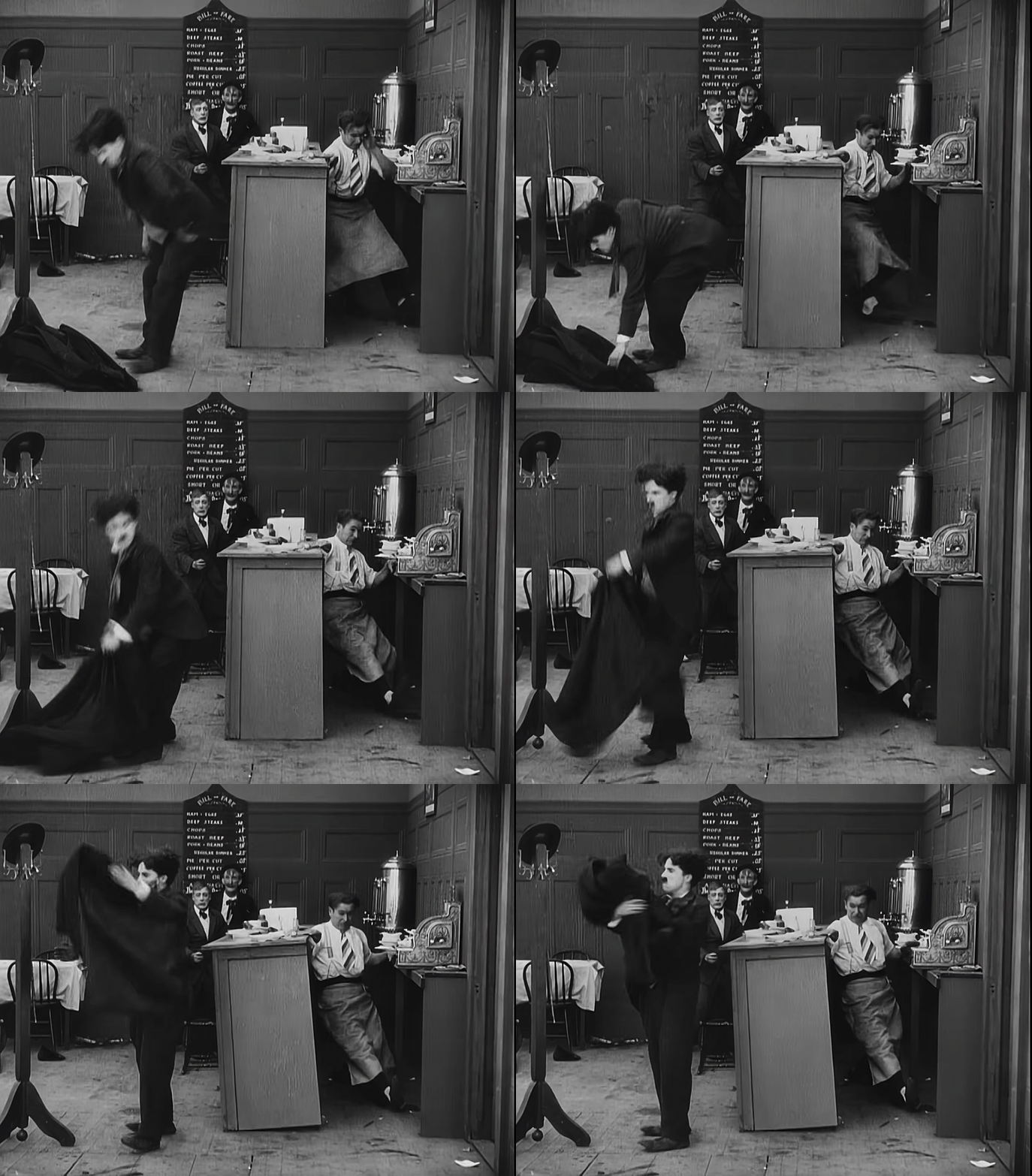
Stills from the film «His Trysting Place» (Dir. Charles Chaplin, 1914)
Symmetry and Rhythmic Acceleration. When similar actions occur in different locations with a slight delay (for instance, one character takes the wrong coat, and a couple of seconds later, a second character repeats the same mistake in another frame), a gag repetition emerges.