
CONCEPT
Visual effects have spent decades tackling the problem of altering an actor’s appearance through makeup and prosthetics. However, with the advancement of computer graphics, cinema has gained the ability to literally «rewind time”—through digital de-aging and aging.
At first glance, the task seems simple: one only needs to superimpose a young face onto an old one. However, the human brain is incredibly sensitive to the slightest inconsistencies in facial expressions, skin texture, and eye sheen. This problem is known as the «uncanny valley.» When a digital face looks nearly real, but with minor flaws, the viewer experiences discomfort.
The goal of this visual study is to trace how the VFX industry has evolved from early, clumsy attempts at manual morphing to neural networks capable of generating photorealistic faces in real time, and how de-aging technologies have overcome the «uncanny valley.»
INDEX
1. Introduction: The Uncanny Valley Problem and Early Experiments.
2. Phase 1: Manual 2D Morphing and Initial Steps (2006–2014).
3. Phase 2: The Revolution of Facial Tracking and the «Marvel Era» (2015–2019).
4. Phase 3: Neural Networks and Machine Learning (2019–2020).
5. Phase 4: Contemporary Photorealism and Generative AI (2023).
6. Technology Comparison and Comparative Analysis.
7. Conclusion: Ethics and the Future of Digital Immortality.
PHASE 1: MANUAL 2D MORPHING AND FIRST STEPS (2006–2014)
Before the era of mass 3D facial capture, an actor’s aging was achieved manually. Rotoscoping artists drew the actor’s face frame-by-frame in 2D editors, and animators then «stretched» a younger texture over the older one.
A striking example of this approach is the film «X-Men: The Last Stand» (2006). The scene featuring young Charles Xavier and Erik Lehnsherr specifically utilized 2D morphing. While the result seemed like a breakthrough at the time, it now looks like a «claymation mask»: there was no realistic facial expression, the skin lacked pores and micro-details, and the eyes appeared glassy.
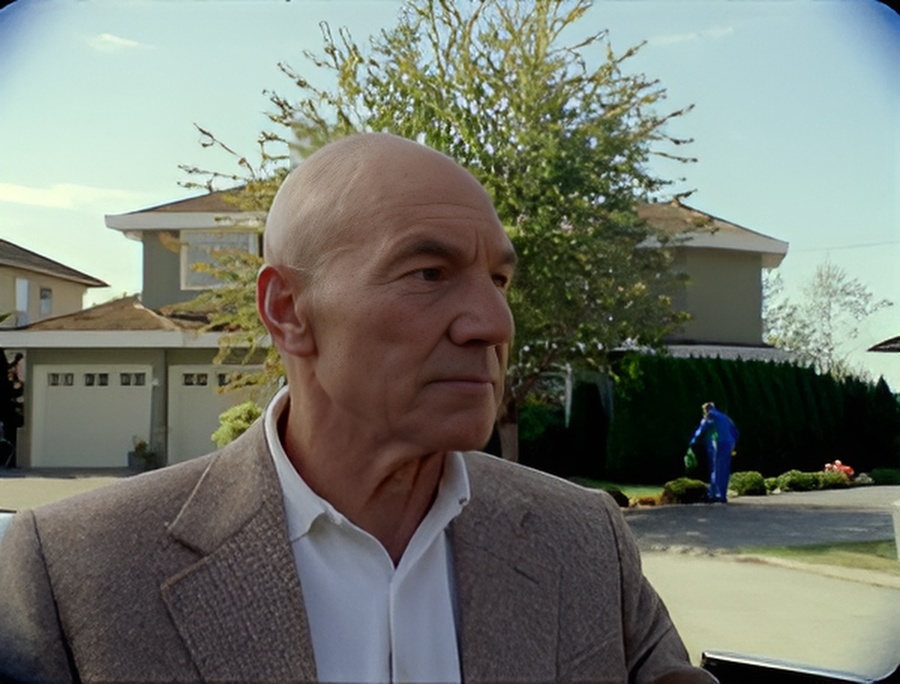
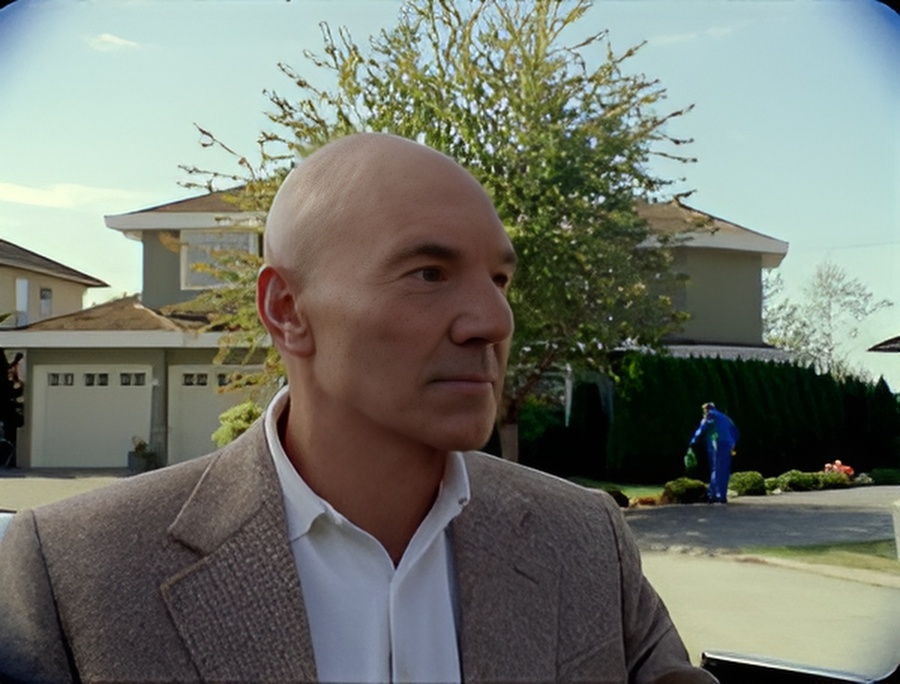
A still from the movie «X-Men: The Last Stand,» 2006. Digital de-aging of Patrick Stewart. The distinctive «clay-like» skin texture characteristic of early 2D morphing is visible.
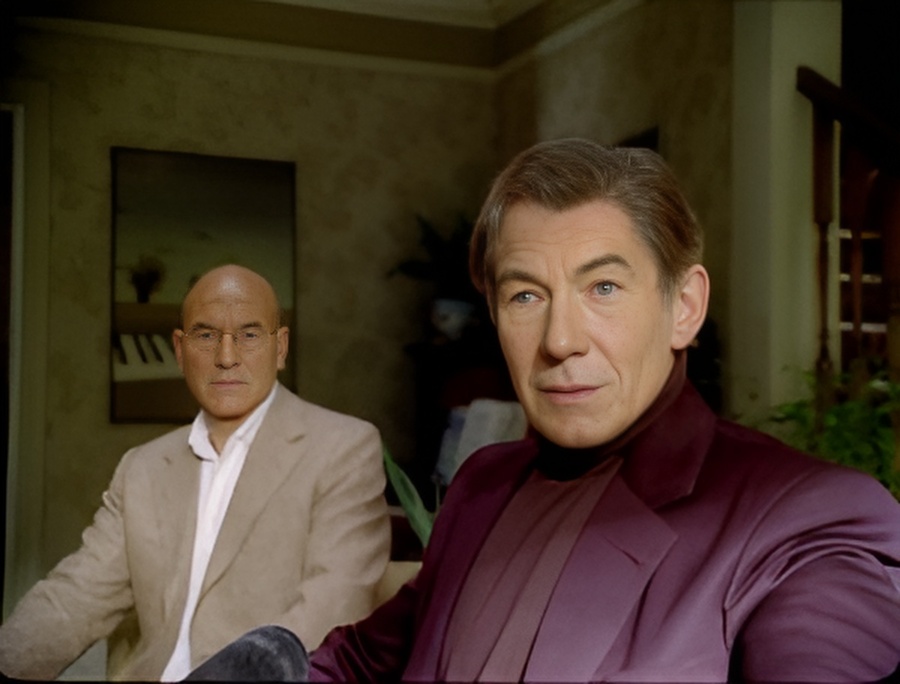
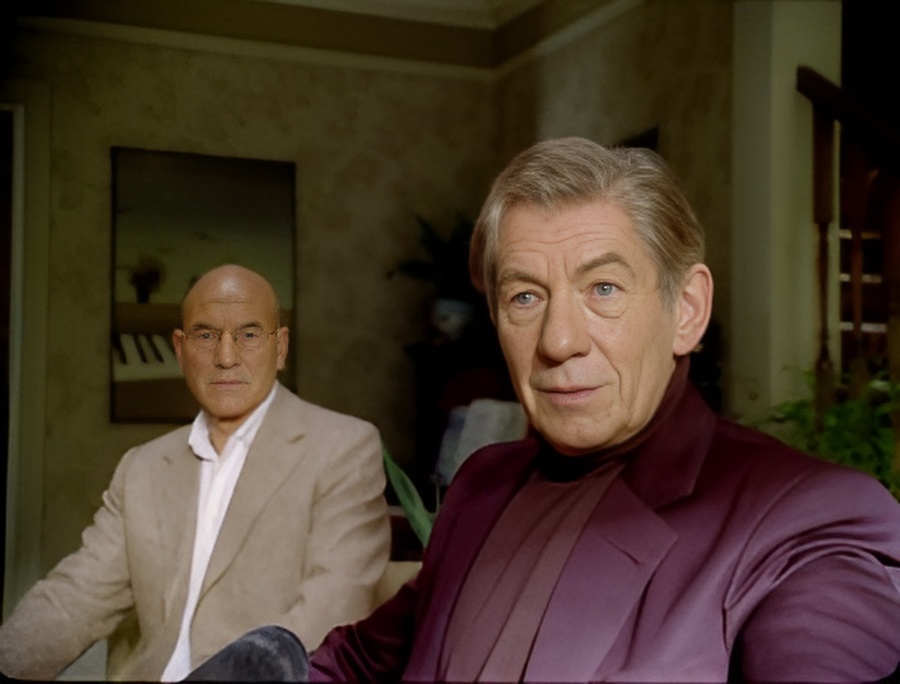
A still from the film X-Men: The Last Stand, 2006. Digital de-aging of Ian McKellen. The characteristic «clay-like» skin texture of early 2D morphing is visible.
The same method was applied in the film Tron: Legacy (2010), where Digital Domain studio created the digital Kevin Flynn. A complex helmet was used to capture the face, but the final render still revealed its computer-generated origin—this was especially noticeable on the lips and teeth.
Kevin Flynn portrayed by Jeff Bridges. A frame from the film Tron: Legacy, 2010. An attempt at a full 3D recreation of the actor’s face.
Kevin Flynn as portrayed by Jeff Bridges. A still from the film «Tron: Legacy,» 2010.
STAGE 2: THE FACE TRACKING REVOLUTION AND THE «MARVEL ERA» (2015–2019)
This breakthrough occurred when the Lola VFX studio began using sophisticated 3D facial tracking. The method works by capturing the actor’s facial texture, creating a digital 3D model, and then using specialized software to transfer the actor’s expressions onto that model in real time.
«Ant-Man» (2015) was the first film where this method yielded an impressive result—the young Michael Douglas (Hank Pym) looked almost perfect. But the true showcase for the technology was «Captain Marvel» (2019), where they needed to de-age Samuel L. Jackson by 25 years throughout the entire film.
Frame Comparison: Samuel L. Jackson in «Captain Marvel,» 2019. Left — the original frame, right — the result of digital rejuvenation. Lola VFX Technology.
The main problem the artists had to solve was the eyes and skin. The eyes are the most complex element because they reflect light and exhibit micro-movements. The Lola VFX artists used scans of the young Jackson and composited them onto the actor’s current footage. Despite the high level of detail, in certain angles, the skin still appeared too smooth, lacking the natural wrinkles that appear when smiling.
PHASE 3: NEURAL NETWORKS AND MACHINE LEARNING (2019–2020)
The next step involved using Machine Learning algorithms. Studios stopped manually «drawing» youth—now neural networks were trained on actors' archival footage and generated youthful faces based on that data.
The film «The Irishman» (2019) by Martin Scorsese became the most ambitious project in this field. ILM (Industrial Light & Magic) developed a unique system: actors wore helmets equipped with three cameras that captured facial expressions with millimeter precision. Then, a neural network, trained on old films featuring Robert De Niro, «infilled» the youthful skin while preserving every subtle facial microexpression.

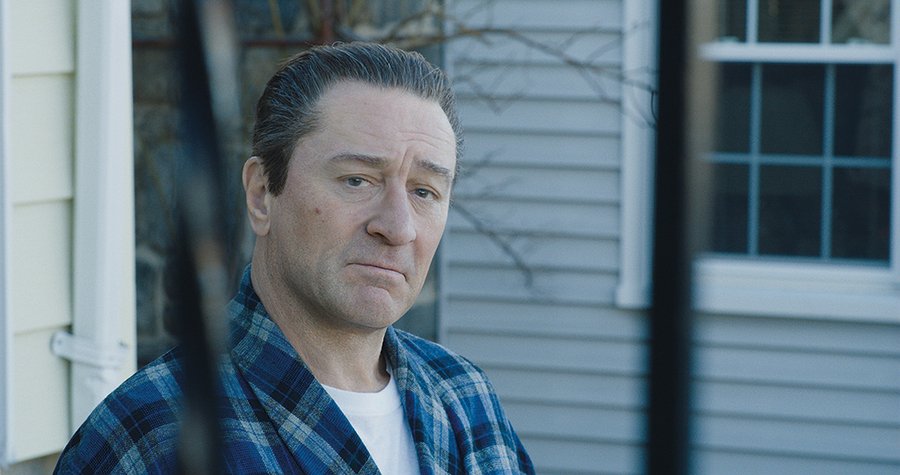
Comparison: a young Robert De Niro in the film «The Irishman» (right) and his real appearance during filming (left). The neural network recreated the skin texture but failed to alter the actor’s gait.
However, a different problem emerged here: if the face looked photorealistic, the body and gait revealed the actor’s actual age. De Niro moved like a 76-year-old man but looked 30. This showed that de-aging cannot exist in a vacuum—it requires complete bodily synchronization.


Comparison: Young Robert De Niro in the film «The Irishman» (right) versus his actual appearance during filming (left). The neural network recreated the skin texture but failed to alter the actor’s gait.
In the series «The Mandalorian» (2020), ILM studio pushed technology further, using a Deepfake-like technique to recreate a younger Luke Skywalker. The neural network was trained on all available footage of Mark Hamill and generated the face in real time.
Frame from the series «The Mandalorian,» 2020. Digital recreation of young Luke Skywalker using neural networks.
PHASE 4: CONTEMPORARY PHOTOREALISM AND GENERATIVE AI (2023)
By 2023, technology reached a point where digital aging became virtually indistinguishable from reality. In the film Indiana Jones and the Dial of Destiny (2023), ILM studio once again utilized neural networks, but this time they trained the AI on all of Harrison Ford’s archival footage, including amateur videos and early interviews.
A frame from the film «Indiana Jones and the Dial of Destiny,» 2023. Digital rejuvenation of Harrison Ford in the film’s prologue.