Navigation
- Concept
- The Significance of Zoomorphic Imagery in Ancient Egyptian History
- Sekhmet: The Lioness as a Symbol of Destruction
- Montu: The Falcon and Bull as Symbols of Military Might
- Set: The Image of the Mysterious Animal
- A Comparison of Zoomorphic Imagery in War Deities
- Conclusion
- Bibliography
- Image Sources
Concept
Ancient Egyptian art is intimately connected with religion, mythology, and humanity’s perception of the world around them. Depictions of gods, animals, and various mythical creatures held a significant place in Ancient Egyptian culture. They were found on the walls of temples and tombs, in sculpture, reliefs, everyday objects, and ornamentation. Furthermore, the ancient Egyptians represented their gods not only in human form but also as animals or beings with a human body and an animal head. Such images are particularly fascinating because the deity’s external appearance was often linked to their character, functions, and significance within the religious system.
Focus of Study and Material Selection
In my research, I intend to examine the zoomorphic and anthropozoomorphic figures of war gods in Ancient Egyptian art. I am interested in why animal forms were chosen to represent deities, what meanings were ascribed to them, and how various concepts of power, danger, protection, and destruction were conveyed through their external appearance. Special attention will be paid to how animals became part of religious symbolism and why their depictions held not only artistic but also semantic significance.
To understand this topic, it is important to look back at the early stages of ancient Egyptian culture. The precursors to the use of animal imagery can be traced back to the pre-dynastic period, when animals played a significant role in people’s lives. They were part of the natural environment—a source of food and danger—and could also be perceived as creatures possessing extraordinary abilities. By observing animal behavior, the ancient Egyptians could link them to specific natural phenomena and qualities. Gradually, these ideas began to be reflected in art and religious iconography.
However, it is important to note that the appearance of zoomorphic imagery was not a sudden event.
Religious concepts and methods of depicting gods developed gradually over a long period. Early animal depictions were not always representations of specific deities, but could carry symbolic or ritual significance.
Over time, various forms of depicting deities became prevalent in Ancient Egyptian art: anthropomorphic, when the deity was represented as a human; zoomorphic, when it was depicted as an animal; and anthropomorphic-zoomorphic, which combined human and animal features. This diversity allowed for the expression of complex ideas about the divine nature.
The connection between animal motifs and the theme of war is also important.
In ancient Egyptian culture, military power was associated not only with actual battles but also with concepts of protecting the state, the Pharaoh’s authority, combating enemies, and maintaining cosmic order. Consequently, deities linked to war and defense could take the form of animals associated with might, aggression, endurance, or danger. Furthermore, the significance of the animal imagery was not always straightforward: the same force could be perceived as destructive and, simultaneously, essential for protection.
The key research question
What role did animal imagery play in revealing the character and functions of war gods in Ancient Egyptian art?
Hypothesis
I hypothesize that the selection of animals to depict war gods in Ancient Egypt was connected to specific qualities and symbolic meanings that the ancient Egyptians ascribed to those animals. I believe that through zoomorphic and anthropomorphic imagery, various concepts of divine power, aggression, protection, and destruction were conveyed, and the distinctive physical appearance of the gods helped reveal their character and functions.
The Significance of Zoomorphic Imagery in the History of Ancient Egypt
The tradition of depicting deities in the form of animals emerged in Egypt even before the formation of a unified state. Its origins can be traced back to the pre-dynastic period (c. 5000–3100 BCE), when animals held a significant place in people’s lives, their perceptions of nature, and religious rituals.
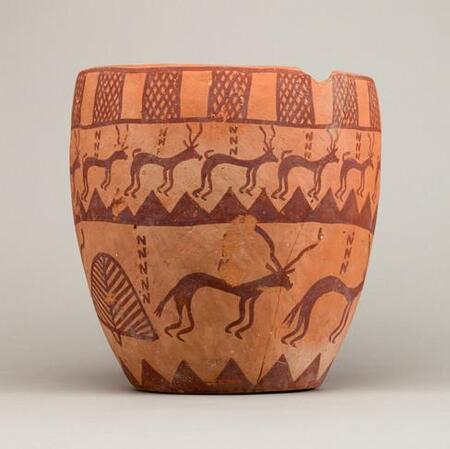
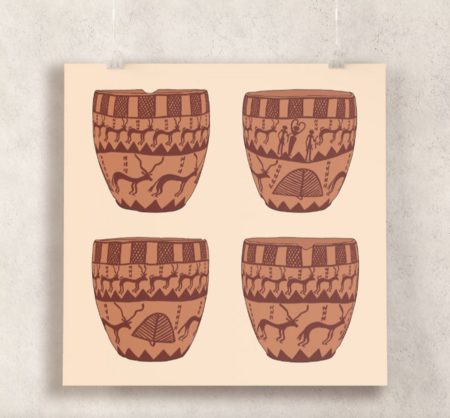
«Antelope in the Valley of the Desert: Nakada Pottery» 3650–3300 BCE Acquired by The Metropolitan Museum of Art from Maurice Nahman in Cairo in 1912. The Metropolitan Museum of Art, New York.
One of the early manifestations of a special regard for animals was in images found on everyday objects, ritual items, and objects associated with power. One example is a bowl depicting running antelopes.
As Egyptian religion evolved, animal imagery gradually became associated with specific deities. During the Early Dynastic Period (c. 3100–2686 BCE), many gods already possessed recognizable animal symbols. By the Third Dynasty (c. 2686–2613 BCE), some important forms of divine iconography achieved a more stable appearance. These images continued to be used throughout the entirety of Ancient Egypt’s history.
Sekhmet: The lioness as a symbol of destruction
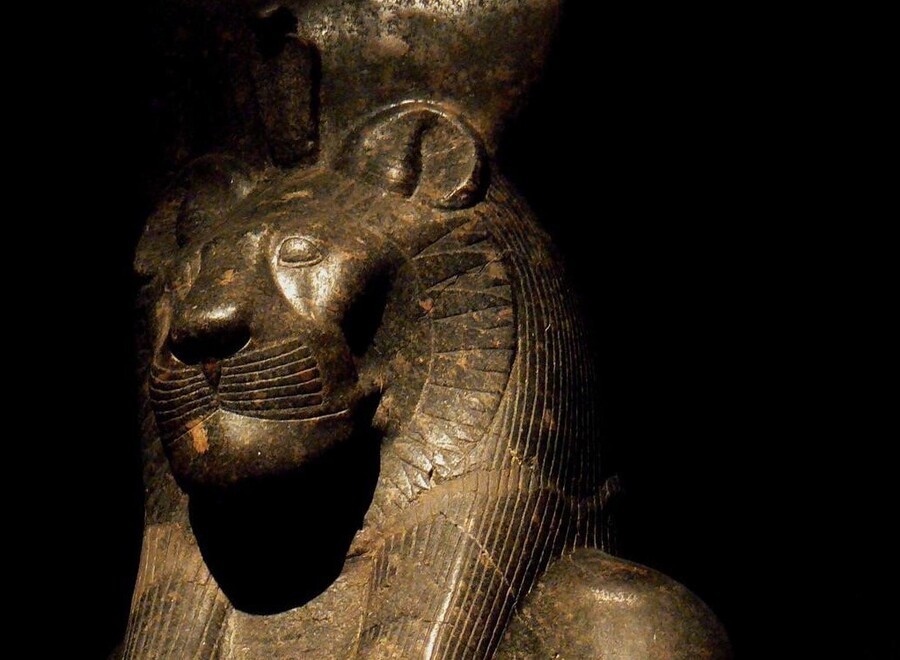
Sekhmet is one of the most famous goddesses associated with war and destruction. Her name translates to «Mighty One.» She was depicted as a woman with the head of a lioness, often adorned with a solar disk and a royal cobra on her head.
Statue of Sekhmet. Granodiorite. Reign of Amenhotep III (1386–1353 BCE), 18th Dynasty. (Egyptian Museum, Turin)
In nature, the lioness is a powerful and dangerous predator, capable of being associated with aggression, hunting, and superiority over other creatures. Through this image, the Egyptians conveyed the goddess’s destructive power.
However, Sekhmet was not exclusively a goddess of war.
She was also associated with illness, epidemics, protection, and healing. It was believed that she could both inflict sickness and help people recover from it. Therefore, her image held a dual meaning: danger and simultaneously protection.
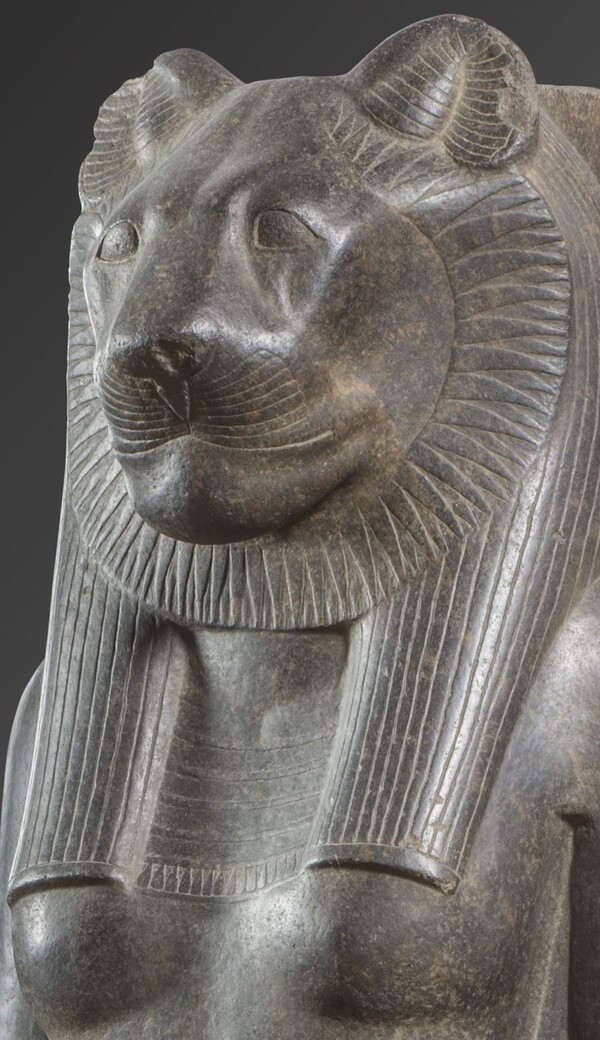
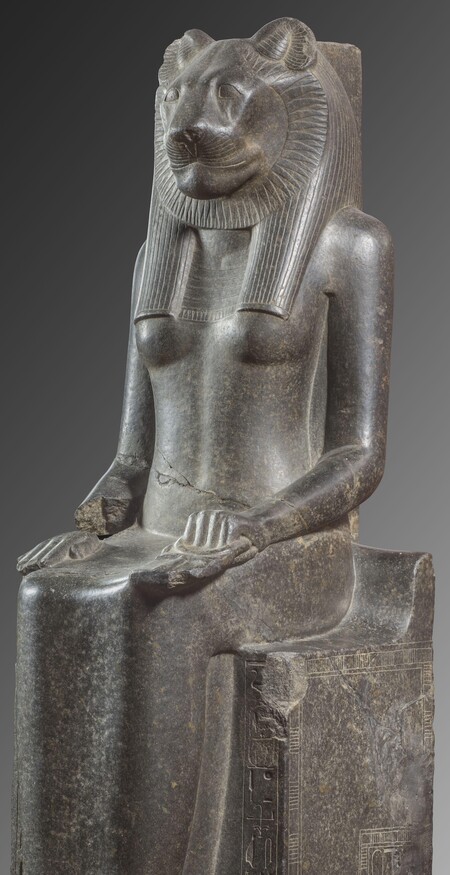
Statue of the goddess Sekhmet. 1390–1353 BCE. Egypt, Mut Temple. Acquired by Vitaliano Donati, 1759.
A well-known example is the granodiorite statue of Sekhmet from the Metropolitan Museum of Art’s collection. Her depiction features a rigid posture, a serene human body, and an expressive lioness head. This combination creates an interesting contrast: outwardly, the goddess appears still and majestic, yet her animal form hints at a destructive power.