11/07 | Tuesday
Tobolsk Prisoners
A special-purpose detachment, composed of soldiers and officers from the Imperial Garrison, was responsible for guarding the Tobolsk prisoners. The detachment consisted of 6 officers and about 350 soldiers, along with machine guns… The people who ended up there were the most reliable, steadfast, and devoted to the revolution…
Izvestiya TSK i Petrogradskogo Soveta Rabochikh i Soldatskikh Deputatov, No. 218The entire former Tsar’s family lives in a separate, completely isolated house guarded by seven posts of officer sentry duty. A small yard, surrounded by a solid high fence, is sectioned off for walks. In the summer, there was a balcony from which the family occasionally appeared—they could be seen from the street. Patrolling squads traverse the block from evening until dawn. In addition, a duty half-squad is assigned daily, making the security more than adequate. Once or twice a month, the family attends church, which is across the street from the house. During this time, the duty half-squad seals off the entire area, and no one is in the church except for the family. The entire detachment is housed nearby, on the side of the house where the family resides. The security commissioner I. S. Pankratov and his assistant, warrant officer N. V. Nikolsky, live here. All correspondence passes through the commissioner. The commissioner and commander, Colonel Kobylinsky, are always present during duties, both at the church and the house. Entry into the house is permitted only with the consent of the commissioner or the commander. The commissioner weekly sent telegrams to the Provisional Government regarding the state of the security… I arrived in Tobolsk on September 18th and have not seen any crowds near the house to this day, nor were any crowds gathering. All newspaper reports are pure nonsense… …The detachment is quite reliable and performs its duty excellently; it was all selected by the regimental committee. There was no talk of the former Tsar’s family being transferred, yet rumors have begun appearing in the newspapers. …The mood of the population of Tobolsk is not cause for concern. No monarchist movements or agitation are audible, and should any arise, they will be suppressed by the detachment itself. There were no demonstrations, nor any attempts at them.Captain S. V. Aksyuta
Day, No. 201 Daily News • Kaledin withdraws from the Cossack front. • The Ukrainian Rada withdraws from the Ukrainian front. • The Council of People’s Commissars demands the issuance of 10 million rubles from the State Bank. • The Moscow Military Revolutionary Committee dissolved the Moscow City Duma. • Telegrams have been received from several armies on the front reporting imminent famine threats. • V. M. Purishkevich, F. F. Yusupov, the Duke of Leuchtenberg, and others were arrested in Petrograd. • 1,200 wagons of food cargo destined for the capital are stuck on the Samara–Zlatoust Railway…
To the Siege of the Winter Palace
At the initiative of a commission established under the Provisional Government to document the Winter Palace, a new commission was formed to ascertain the extent of the destruction. The commission was headed by V. A. Vereshchagin, the chairman of the previous commission. A. V. Benoué, Prince V. N. Argutinsky-Dolgorukov, S. P. Yaremich, N. E. Lansere, and others were involved in the commission’s work. The commission found that three grenades, in addition to rifle and machine gun bullets, entered the Winter Palace. Two grenades, presumably from the Peter and Paul Fortress, struck Alexander III’s room, whose windows face the Neva embankment. Fortunately, this room did not contain any artistic items of special value. The third grenade, likely fired from the General Staff, entered a second-floor hall through a window where junior officers were present. According to the commission members, the following three rooms were the most severely damaged: Alexander II’s, Nicholas I’s, and Alexander III’s. These rooms were completely ransacked. Tables were broken and overturned, and stuffing came out of chairs. Curtains were ripped off, and so on. It was in this room that a distinguished work of art was lost: the famous portrait of Nicholas II in a cassock, painted in oil by the late artist V. A. Serov in 1900. The commission carefully gathered the fragments of the portrait scattered on the floor, hoping to restore it… …Relatively few items of artistic value were destroyed, as the most precious pieces had been hidden or evacuated to Moscow at the time. The commission believes that the historical rooms of Alexander II and Nicholas I can be restored, provided all stolen items are returned… So far, only a bronze vase, a sample, and a nephrite cup have been recovered… The Hermitage, adjacent to the Winter Palace, fortunately suffered no damage…
In the Peter and Paul Fortress
In the Yekaterininsky Curtain In a rather large cell, without beds, furnished with mattresses scattered on the floor, were 42 people—28 cadets from the Nikolaev Engineering School, one officer, nine boys between the ages of 15 and 18 from a unit of wounded soldiers, two cadets from the Pavlovsky School, one from the Mikhailovsky School, and a delegate from the front. They are treated well. The cadets only complain about a lack of toiletries and bread… No charges have been brought against them, and no interrogations have been conducted to this day…
In the Trubetskoy Bastion …Eleven cadets from the engineering school are held in Cell No. 40. The cadets recount terrible details about the moments they experienced when they were being led into the Peter and Paul Fortress and upon their initial arrival at the fortress. Along the way, the Red Guards and sailors escorting them stopped several times, lined up the cadets, and threatened to fire on them. On Troitsky Bridge, it was decided to throw them into the Neva… More conscientious sailors and a commissar defended them. Since they arrived in the cell, according to their accounts, all danger has passed…
Theatre Chronicle On November 5, a meeting of all artists and staff from state theaters was held in the auditorium of the Mariinsky Theater to discuss the reopening of state theaters that had closed on Saturday, October 28, due to grave events in the capital… The meeting decided to reopen the state theaters on Thursday, November 9. Furthermore, November 6, 7, and 8 were declared days of mourning…
The Alexandrinsky Theater will reopen on November 9 with the play «The Living Corpse, ” commemorating the anniversary of Tolstoy’s death, which is performed on November 7. This play is being produced at the initiative of the Literary Foundation. At the Mariinsky Theater, the opera „Samson and Delilah“ will be staged on the opening day.
Performances at the Musical Drama Theater continued without interruption. Attendance reached approximately one-fifth of full capacity. The theater is currently preparing to resume productions of „The Bohemians“ and „The Stone Guest.“
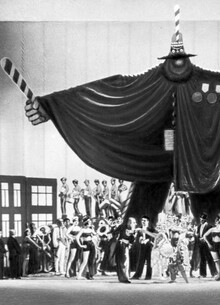
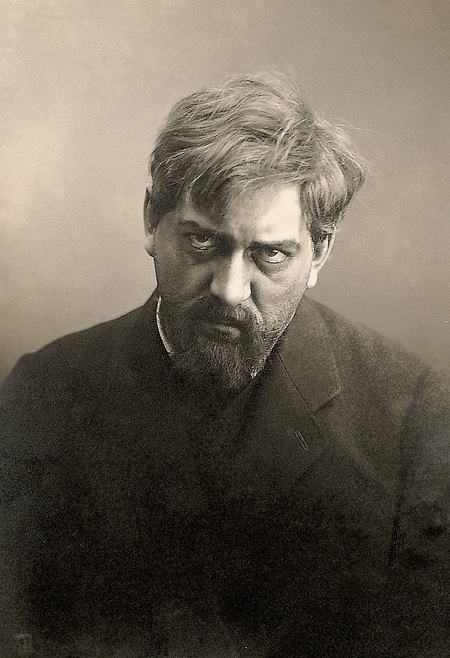
Photo: The play „The Living Corpse.“ Fedya Protasov — N. Khodotov
11/08 | Wednesday
MOSCOW UNDER SIEGE Days Experienced
One of the buildings affected during the fighting near Nikitsky Gate
Moscow Gazette, No. 243 Moscow seemed to awaken from a terrible nightmare… Thunder boomed, and the air was thick with dread. The tram had stopped, but the telephone still rang… Ordinary citizens, whose nerves were frayed to the breaking point, had to stand by the receiver for half an hour, only to despairingly hang up without an answer… Since no one knew anything, people began consuming fantastic rumors. Some reported «reliably» that the Kremlin had been blown up, others that the Bolshoi and Maly Theatres were destroyed…
Artillery Fire Ambulances sped through the streets. Trucks carrying soldiers and «Red Guards» flew past, each truck guarded by a forest of bayonets… The usual shop fronts had their typical wooden shutters, but they were nervously shaken. Exhausted citizens behaved in extreme agitation. On Dolgorukovskaya, near Chichkin, a crowd attempted to storm a dairy shop. Two soldiers guarding order raised their rifles and began firing into the air. Panic. Women’s screams. The crowd scattered to the sides… …By night, the firing seemed to subside. A rumor spread that a truce had been called for negotiations… In various places across Moscow, a sinister glow spread… The streets, consumed by darkness—were deserted. As if everything had died… All gates were locked, and many building entrances were boarded up. «Building guards» patrolled the courtyards and at the gates… And suddenly… the artillery began to roar again…
A New Morning… But today, there was no way to learn anything about the fate of loved ones and acquaintances stuck «in the thick of it»… The telephone was dead… That morning, Muscovites saw, for the first time, the cart tracks on the streets filled with refugees. …Their own Moscow «refugees, ” stripped of shelter and reduced to destitution overnight. Tales spread from person to person about how our selfless youth had worked during those days. Students, gymnasium students, vocational trainees, and female students—they all instantly transformed into „flying medics.“ Ignoring the danger lurking on every corner, they rushed to offer their services to organizations, flooding first-aid stations… Housing committees announced: „Starting tomorrow, rations will only be issued in quarters of a pound.“ „It’s beginning!“ an ordinary citizen thought—»…Hunger is approaching.» But the alarm turned out to be unfounded. The quarter-pound ration lasted only two or three days, after which the relieved citizen received his full half-pound serving…
…On November 3rd, a weary, ravaged civilian heard the news in the morning: «Peace. It’s all over…» On the first day of this «peace, ” no one believed it yet… They were still afraid to venture into the areas where the „main military actions“ had taken place. But on November 4th, the populace bravely walked out of their homes, and before them, in all its tragedy and horror, stood „Destroyed Moscow“…
Uprooted cobblestones, shattered glass The government building—roofless. Against it, on the tram tracks, lies the corpse of a killed horse… I walk down Nikitskaya Street. I see the smashed windows of the Conservatory’s concert hall… I emerge onto Tverskaya Street. Almost across the entire pavement—opposite Keller’s store—is a „trench“… Shop windows are broken, and signs have been torn down and shattered… A yawning emptiness in the stores. „They looted, ” the crowd murmurs. Cannons still stand in Skobelevskaya Square—the very ones that had been sowing death and destruction just the day before… And the second day of „peace“ brings another dark, eerie night: the streetlights have not yet been lit…
On Sunday, the tram ran Where it was possible, where the wires were not broken… On Sunday, streetlights flickered timidly in places. On Monday, it seemed that „real life“ was beginning to resume. The installation of tram wires began. Some areas started leveling the pavement and sweeping glass from the sidewalks. Glass was being fitted into smashed shops and apartments… And only the telephone remained lifeless… Yet yesterday, Muscovites read the „Decree on the Press“ with pleasure. And from today on, the press, after eight days of involuntary silence, revives once more…
R. M.
Siege of the Kremlin
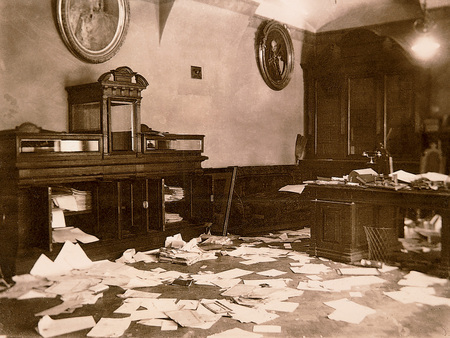
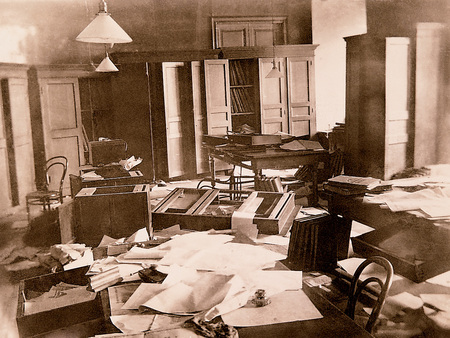
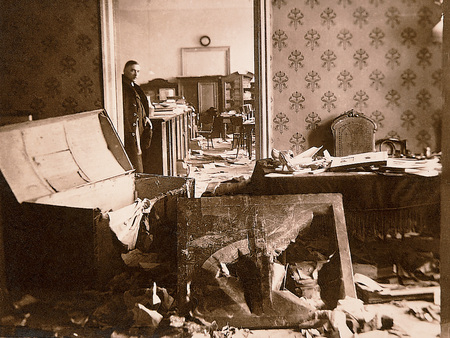
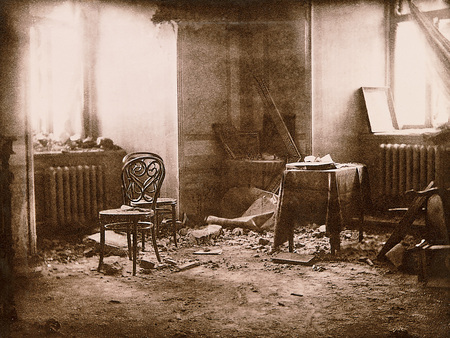
Nikolaevsky Palace after the assault
The shelling of the Kremlin with artillery began on October 31st. Initially, they fired directly from Nikolskaya Street. Then, they fired from Zamoskvorechye from the «Eynem» factory, from Skobelevskaya Square, and from Shviva Gorka. The first to be hit by the shells was the Nikolaevsky Palace—the entrance porch was destroyed…
Russkaya Slovo, No. 245
There were numerous hits on the Chudov Monastery… One shell entered the icon-bookshop and injured the monastery’s official doctor. Two halls in the metropolitan quarters of Chudov Monastery were destroyed, one of which housed the Petrograd Metropolitan Veniamin. During the shelling, Metropolitan Veniamin, Archbishop Mikhail of Grodno, Bishop Arseny, and the monks moved the relics of Saint Alexy from the main church to the basement, where Patriarch Ermogen was imprisoned during the turbulent times. The brethren found refuge from the shells here… The bombardment of the Kremlin was especially severe on November 1 and 2, and again after the peace was signed on the night of November 3. During this period, the Assumption Convent was damaged… Apparently, the lower part of the central dome of the Assumption Cathedral was penetrated by a six-inch cannon. A hole, three arshins in diameter, was formed there… The fresco paintings on the cathedral’s vaults were damaged. The Nikolskiye Gates were heavily damaged. The gates were pierced by shells in several places. The ancient icon of Saint Nicholas the Wonderworker, which hung over the gates and survived in 1812, was torn down… The clock on the Spasskaya Tower was pierced. The clock stopped at 1:05. On November 3, Metropolitan Tikhon of Moscow and Bishop Nestor of Kamchatka arrived at the Kremlin… The arrivals inspected the Kremlin cathedrals and monasteries. Those who inspected saw a pool of blood in the square, from the side of the high altar of the Assumption Cathedral. A junior officer had been killed here several hours before their arrival.
ALL-RUSSIAN CHURCH COUNCIL
Metropolitan Tikhon of Moscow was elected the All-Russian Patriarch. Amidst the height of the bloody events in Moscow, one of the most significant acts in Russian church life took place…
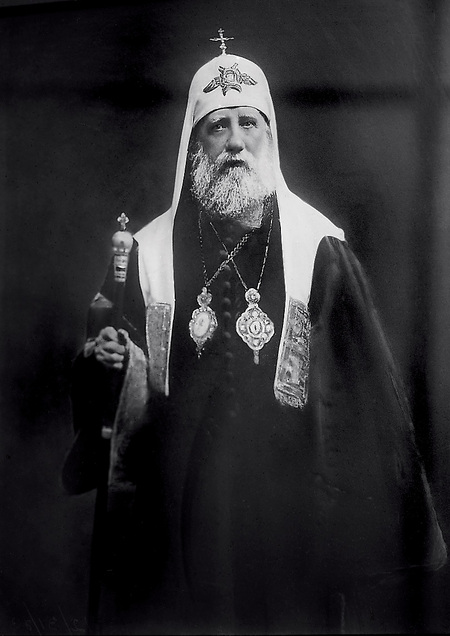
Moscow Gazette, No. 243 Election of the All-Russian Patriarch On October 30 and November 2 and 3, plenary sessions were held, during which it was decided: given the current circumstances, the election of the patriarch must take place immediately… Thirty candidates were nominated. Among them, besides metropolitans and archbishops, were Archimandrite Shavelsky, Archimandrite Lyubimov, and A. D. Samarin. Three ballots were cast. In the first ballot, Archbishop Antonius of Kharkiv received the most votes (159 out of 309); in the second, Archbishop Arseniy of Novgorod (129 votes out of 305); and after the third, Metropolitan Tikhon (162 votes out of 291). It was decided that these archpastors were candidates for the patriarchate. According to ancient custom, the names of candidates for the patriarchal throne were to be written and placed in a special ark before the icon of the Vladimir Mother of God in the Assumption Cathedral. Following the solemn service, the name of one of them was to be drawn from the ark and announced. He whose name was drawn was considered the elected patriarch. Since the Kremlin was locked down and services could not be held in the Assumption Cathedral due to massive damage from shelling of its domes, spires, and walls, the cathedral members found themselves in great difficulty… On Saturday, November 4, a cathedral plenary session took place. Monastic Elder Alexey of Zosima’s Desert requested the floor and stated that the election of the patriarch needed to be held immediately during a service at the Cathedral of Christ the Savior. The icon of the Vladimir Mother of God and icons of Moscow saints were to be brought there in a procession from the Assumption Cathedral. The cathedral agreed with Elder Alexey’s proposal…
On November 5, the election of the All-Russian Patriarch was held in the Savior’s Temple with remarkable solemnity. Much effort and care were expended to secure permission to take the Vladimir Mother of God icon from the Dormition Cathedral and transfer it to the Savior’s Temple. Permission was granted on the condition that the clergy accompany the icon without vestments and without carrying a lantern. It was not even permitted to travel along the main streets, only through the side alleys. After long waits, the cathedral was opened, and the clergy were ordered to immediately retrieve the miraculous icon and depart. Many wept upon seeing the terrible devastation inflicted upon the cathedral by artillery shelling: a massive hole gaped in the main dome… the floor and the marble pavement were covered with over half a yard of bricks and debris from the vaults and domes; all the windows were blown out. …Finally, the relic was borne in procession with bell ringing to the Savior’s Temple. The Savior’s Temple began filling with worshippers starting at 8 a.m.; the center of the cathedral was reserved for the members of the Council. Three metropolitans, up to 40 archbishops and bishops, and over 100 archimandrites and priests—members of the Council—gathered at the altar. At 10 a.m., the liturgy began, officiated by Metropolitan Vladimir and Veniamin with 9 archbishops, 2 protodeacons, 16 archimandrites, and metropolitan priests and 16 priests and deacons. At the appointed time, Metropolitan Vladimir read a special prayer, and then proceeded from the center of the cathedral to the marble pavement, where a table with the chest containing the names of the candidates for the patriarchal throne had been moved. Metropolitan Vladimir cut the silver cord, removed the seal, and opened the chest; Archimandrite Alexy made the sign of the cross, removed his cowl, and drew one of the slips from the chest, handing it to Metropolitan Vladimir. The Metropolitan unrolled the scroll… …The long years of service were acknowledged, and then the bells of Moscow’s churches began to toll. After the service, which concluded at two o’clock in the afternoon, a special delegation proceeded to the Trinity Outpost, where the candidates for the patriarchal throne were celebrating a service in the temple. One of the delegates addressed Metropolitan Tikhon with a statement… The new patriarch replied that he «accepts this appointment and speaks nothing against it.»
Areas of shelling
St. Basil’s Cathedral …Two artillery shells struck the dome of the «Entrance of the Lord into Jerusalem.» From the exterior, looking toward the main entrance, the hole in the dome resembles a wound with swollen edges. Inside, however, a fragment of the shell, weighing five pounds, hit the royal gates, shattering its star and tearing the vestment of the throne. The depiction of God Savovaf on the dome’s ceiling is completely destroyed, and the ceiling plaster lies on the entry floor. Almost all the windows of the external corridor circling the cathedral have been pierced or broken by shelling from Zamoskvoretskaya Street. One bullet struck the window of the Trinity Relic’s throne and punctured the left door of the royal gates…
At Nikitsky Gates …The fire engulfing the houses near the Nikitsky Gates was so intense that even at House No. 15 on M. Bronnaya, one could read the newspaper at night…
Povar’skaya Street The five-story building on the corner of Trubnikovskiy Lane is riddled with shell holes in six places… The Church of Boris and Gleb, constructed in the neoclassical style, presents a heavy picture of destruction. Parts of the bell tower were destroyed by shells, the church dome was punctured in two places, and one of the gables was severely damaged…
At the Telephone Exchange How will the telephone system function?… The telephone exchange is destroyed. The chaos that reigns there now is indescribable. All the wires are torn, the distributors are ruined, and delicate, expensive equipment has turned to dust. Reconstruction will proceed by number sequence. First—the smaller numbers, up to ten thousand. And even for that, it will take at least a month, provided that a sufficient amount of spare materials and parts can be found… The situation with the «higher» numbers is even more dire. There is nothing to restore them with. Everything necessary will have to be ordered entirely from abroad…
In Lefortovo The military complex in Lefortovo—comprising the sprawling grounds of the Alekseevsky Military School, three cadet barracks, and the Astrakhan barracks with a hospital, separated from the city by the Yauza River—was a military theater. On Sunday, October 29, before noon, artillery shelling began against the military school, where a small garrison of about one hundred and fifty cadets was defending itself. The shelling came from multiple directions. The cadets—who had no part in the military actions and were only present at this alien feast—endured dreadful hours. The youngest suffered particularly hard, having to survive several anxious nights and go without meals. Only after the school was surrendered could they venture out to examine the ravaged field… It was a gray autumn day, drizzling. Two columns of Bolshevik troops were marching toward them from the barracks… The soldiers tried to sing, but it wasn’t going well… The mood of the victors was subdued, gloomy… Conscience was restless: dark deeds lay behind them, and the same awaited ahead; there was no light to be seen. Along the Yauza River, about a dozen breaches from artillery shells gaped open. Not a single pane of glass remained intact…
Russkoe Slovo, No. 245 Postponement of Elections to the Constituent Assembly Yesterday, the meeting of the Moscow City Commission for the elections to the Constituent Assembly took place. The Commission concluded that holding the elections in Moscow on November 12th was impossible. However, the Commission believes that these elections can be held on November 19th, provided that freedom of speech, press, assembly, and other rights are guaranteed.
Early Morning, No. 245 Victims of the Civil War Mortuaries are still overflowing with bodies… Relatives and acquaintances spend the entire day identifying and preparing the deceased for burial. Most of those killed are young, healthy, sturdy individuals. It is currently impossible to determine the exact number of victims… Cadets in the Bottyr Prison All arrested cadets are currently being held in the Bottyr transit prison. There are over 400 of them in total. The cadets will be sent to the military commander for transfer to army units. A neutral commission of representatives from socialist parties has submitted a petition for the cadets' swift release…