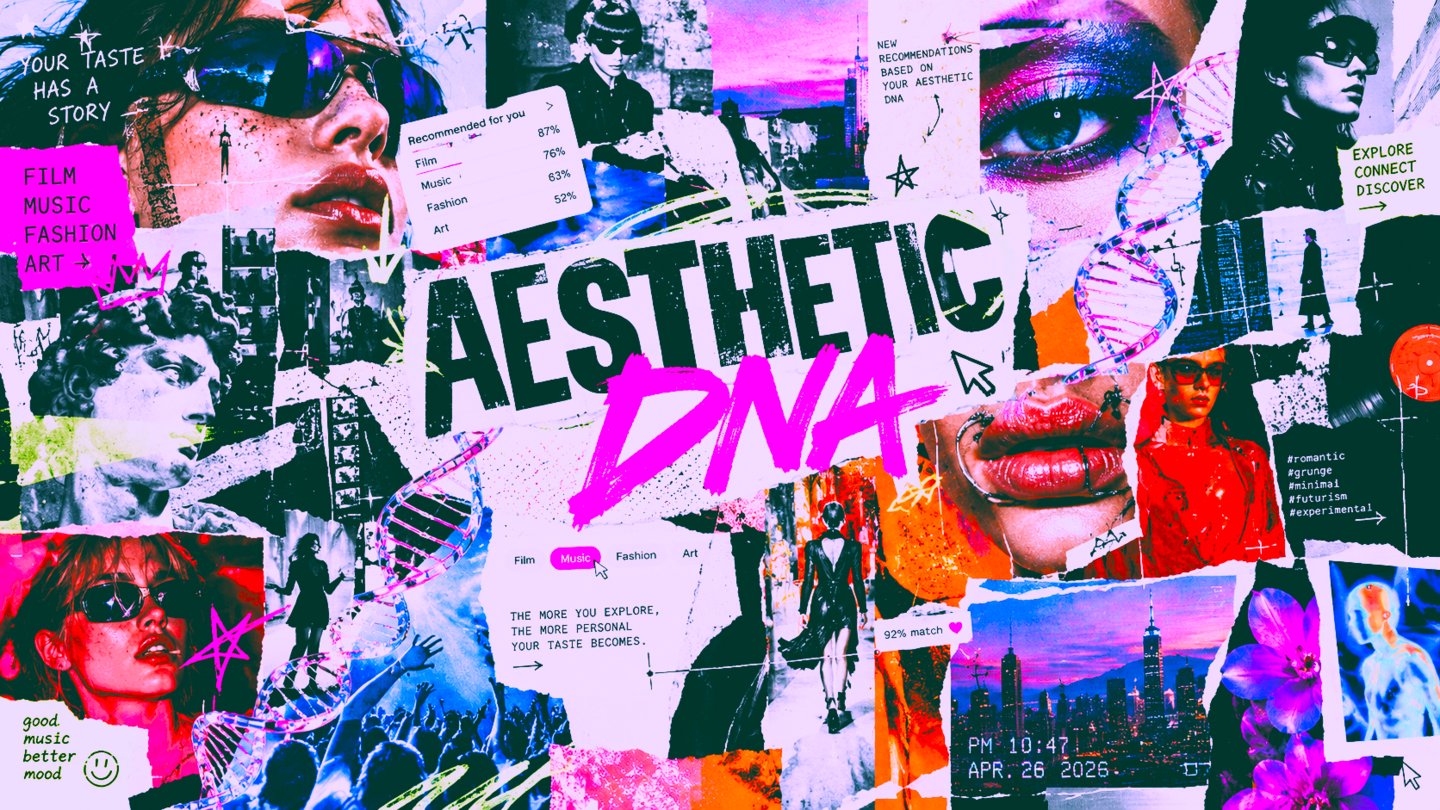
Concept
AESTHETIC DNA—a digital media platform exploring various manifestations of art: cinema, music, fashion, photography, and visual arts. The project is centered around a personalized recommendation system that helps users discover cultural works not just by title, but through associations, color, mood, and aesthetic characteristics. This media platform unites works from different art forms, uncovering the connections between them.The main goal of the project is to help users discover new things based on their individual taste, push beyond familiar interests, and better understand their own aesthetic preferences. Through searching, recommendations, and engaging with the content, the user gradually shapes their Aesthetic DNA—a personal taste profile that helps find unexpected cultural connections and works that could become new favorites.
Semestermatic Plan for Six Months
Main content idea
AESTHETIC DNA — a media platform designed to help users explore their own taste and discover art through associations. The content is not structured around news, reviews, or individual works, but rather around the connections between them: color, mood, image, sound, or aesthetics can link a film, a music album, a photograph, a fashion look, and a piece of art.The primary goal of the content is not merely to inform the user about art, but to engage them in the search, help them uncover unexpected cultural connections, and gradually reveal their aesthetic preferences. Therefore, the publications must support the media’s core function—the recommendation engine—and give the user a reason to search, select, save, and explore.
2. Key Content Principles
1. Associativity. Begin engaging with artworks not by title or author, but by color, mood, image, sound, or sensation.2. Interconnections Between Art Forms. Unite film, music, fashion, photography, and visual art through a shared aesthetic to reveal unexpected relationships.3. Personalization. Involve the audience in content selection using polls, reactions, saves, and recommendations that account for individual preferences.4. Exploration Over Lecture. Present information about artworks and artists in an accessible and concise format, leaving room for independent study.5. Visual Expressiveness. Utilize collages, mood boards, color palettes, stills, covers, and typography as complete tools for conveying ideas.6. The Discovery Effect. Every publication must introduce the user to something new: an unfamiliar artwork, an unexpected connection, or an unusual discipline.7. Interactivity. Encourage the audience not just to view and read, but to participate—to choose, compare, share associations, and form their own collections.
3. Formats and Recurring Features
Content must support the digital media format: publications can appear on the website, Telegram, and social media, adapting to the specific characteristics of each platform.
4. Six-Month Thematic Plan
The plan is built on the principle of gradual immersion: initially, the user becomes familiar with the media and learns to search through associations; next, they explore connections between different art forms and their personal preferences; and finally, they begin to independently curate cultural collections.
Month 1. FIND YOUR FREQUENCY
Monthly Concept: Introduction to AESTHETIC DNA and the principle of discovering art through color, mood, and association.
Planned Content: — COLOR CODE: «If blue were music, ” „Red in cinema, ” „Art in shades of pink.“ — MOODBOARD: Curations on themes such as „Night City, ” „Slow Sunday, ” and „Nostalgia.“ — YOUR TURN: Polls on favorite colors, visual imagery, and musical moods. — DEEP DIVE: An introduction to the idea of associative searching and media possibilities.
Monthly Outcome: Students familiarize themselves with the project’s concept and learn to discover works through their own sensations and associations.
Month 2. EVERYTHING IS CONNECTED
Monthly Concept: To demonstrate how cinema, music, fashion, photography, and art are interconnected through shared aesthetics, imagery, and mood.
Planned Content: — CROSSOVER: «The film that sounds like a music album, ” „The album that looks like a movie, ” „Fashion influenced by art.“ — DISCOVER MORE: Recommendation chains where one piece leads to another, including across different art forms. — DEEP DIVE: Features on visual motifs, artistic influences, and connections between works. — YOUR TURN: Interactive assignments where students search for similarities between images, music, and films.
Monthly Outcome: Users begin to perceive different art forms as an integrated system and actively explore works beyond familiar categories.
Month 3. WHAT’S YOUR AESTHETIC?
Monthly Concept: To help the audience explore their own taste, identify common threads in their favorite works, and develop a personal aesthetic profile.
Planned Content: — AESTHETIC DNA: An interactive test, «Describe Your Taste in Five Choices”—where the user selects images, music, films, and visual motifs. — MOODBOARD: Curations featuring various aesthetic directions—romantic, dark, minimalist, experimental. — YOUR TURN: Image and cover art comparisons, polls featuring film stills and fashion styles. — DISCOVER MORE: Recommendations for works that align with the user’s identified preferences. — DEEP DIVE: Articles on how aesthetic taste is formed and what elements can unify diverse works.
Monthly Outcome: Users begin to better understand their own preferences and become familiar with the concept of Aesthetic DNA—a personalized profile of aesthetic taste.
Month 4. OUT OF YOUR COMFORT ZONE
Monthly Concept: Encouraging the audience to step beyond familiar preferences and discover works, artists, and movements they have not encountered before.
Planned Content:
— DISCOVER MORE: «If you like this—try something completely different”—unexpected recommendations based on familiar works. — CROSSOVER: Transitions between different art forms, such as from a favorite film to an unfamiliar music genre or artistic movement. — DEEP DIVE: Introduction to lesser-known artists, works, and aesthetic movements. — YOUR TURN: Polls gauging the willingness to try new things, select unfamiliar works, and move beyond one’s own taste. — AESTHETIC DNA: Observations on how user preferences change after engaging with new content.
Monthly Outcome: The audience expands its scope of cultural interests, and the recommendation system helps find new things without losing connection to individual tastes.
Month 5. FOLLOW THE THREAD
Monthly Idea: To explore the chains of association between works and show how one image, color, sound, or idea can connect different eras and art forms.
Planned Content:
— CROSSOVER: Chains linking several works—for example, from one song to five paintings, photographs, or films. — COLOR CODE: An exploration of a single color across various art forms, from cinematic shots to fashion looks and album covers. — DEEP DIVE: Publications focusing on recurring visual motifs, symbols, and aesthetic techniques across different works. — DISCOVER MORE: Curated selections where each work serves as a starting point for further investigation. — YOUR TURN: An invitation for the audience to independently construct association chains and share unexpected connections between their favorite pieces.
Monthly Outcome: Users learn to independently discover cultural connections, delve deeper into topics that interest them, and actively participate in content creation.
Month 6. YOUR TASTE, YOUR WORLD
Monthly Concept: To synthesize the findings of aesthetic preference research, showcase the individuality of each taste, and weave the discoveries from previous months into a personal cultural worldview.
Planned Content: — AESTHETIC DNA: Publications on personal aesthetic profiles and curated selections based on user preferences. — DISCOVER MORE: Recommendations for «What else might you like?» taking into account the user’s journey and emerging interests. — CROSSOVER: Unexpected connections between works discovered in preceding months. — YOUR TURN: Creation of a collective user selection featuring the community’s favorite discoveries. — MOODBOARD: A communal moodboard reflecting the community’s aesthetics and mood. — DEEP DIVE: A concluding publication, «Six Months of Discovery, ” featuring a collection of the most compelling works, associations, and cultural connections.
Monthly Outcome: Users gain the opportunity to visualize how their aesthetic taste has been shaped, share their findings, and continue exploring art through personalized recommendations.
5. How to structure content throughout the month
To prevent the thematic plan from devolving into six separate campaigns, it is best to maintain consistent sections and only change the content to align with the theme of the month.
Content Samples
For this project, it is best to use a combination of a website and social media. The website should serve as the primary platform for interactive mechanics, recommendations, and in-depth materials, while social media can be used to attract the audience through visual posts, short videos, and polls. Each piece of content can have two levels: a short visual version for social media and an extended version on the website, where users can view the works, explore the connections between them, and receive personalized recommendations.
1. COLOR CODE — «Blue is More Than Just a Color»
Publication Concept: To demonstrate how a single color evokes different emotional responses across cinema, music, photography, and visual art.
Primary Format: An Instagram carousel post and an interactive visual collection on the website.
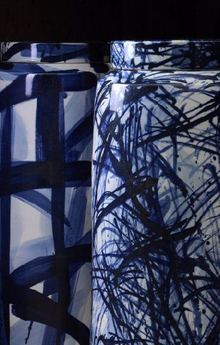
Visual Concept: A carousel of 7–9 slides, designed in a unified blue palette with accents drawn from textures, shades, and visual associations. Each slide features a work from a distinct artistic domain—a film frame, a music album cover, a photograph, or a painting. Adjacent to the image will be the title, artist, and a brief description of the mood the visual conveys.Publication Structure:1. Cover slide with the question: «If blue were a feeling, what would it be?» 2. A selection of blue frames from film. 3. Music albums with blue covers. 4. Photographs and artworks in blue tones. 5. A comparison of different associations with the color blue. 6. A final slide with a question for the audience.Website Implementation: An interactive gallery featuring filters by art medium and links to the works' dedicated pages. Users will be able to explore color associations and discover related pieces.Additional Social Media Content: A Stories poll titled «Which blue is closest to you?» with options featuring multiple images.Objective of the Publication: To introduce the audience to the principle of associative searching and demonstrate how a single color can unify works from diverse fields of art.
2. MOODBOARD — «The City That Never Sleeps»
Publication Concept: To convey a single mood across various art forms, demonstrating how film, music, photography, and visual imagery can create a similar emotional impression.
Primary Format: A visual moodboard for social media and a dedicated thematic page on the website.
What it will look like: A large collage featuring nocturnal city photographs, film stills, music album covers, and works of art. All images are unified by the atmosphere of the night city—neon lights, wet asphalt, window reflections, and the feeling of solitude amidst urban hustle. The design utilizes dark blue, violet, and pink hues.Publication Structure:1. A cover titled «The City That Never Sleeps.» 2. A collection of night city photographs. 3. Film scenes sharing a similar mood. 4. Music albums and tracks that evoke the night’s atmosphere. 5. Works of art featuring similar colors and imagery. 6. A final selection with transitions linking to each piece.Website Implementation: A dedicated mood page where the images are accompanied by the titles of the works, brief descriptions, and links to related materials. Users can navigate from a photograph to a film or music album connected by the shared atmosphere.Social Media Content: A short video with a sequential transition of images set to a music track, the publication of a playlist, and an Instagram Story poll asking, «Which track fits this mood?»Goal of the Publication: To demonstrate that works of art can be discovered not only by title or author, but also by emotional state, atmosphere, and association.
3. CROSSOVER — «If a Film Were a Fashion Trend»
Publication Idea: To explore how the visual language of cinema reflects in fashion, showcasing the connections between films and clothing through silhouettes, color palettes, lighting, and atmosphere.
Primary Format: An Instagram carousel post and a visual article on the website.
What it will look like: A series of visual comparisons where film stills are placed alongside fashion looks that share a similar aesthetic. For example, a black-and-white film still from the noir genre is paired with a fashion shoot built on contrasting shadows, strict silhouettes, and minimalist accessories. Graphic lines, captions, and color accents highlight the similarities between the images.Publication Structure:1. A cover featuring the question: «If this film were clothing, what would it look like?» 2. A still from the selected film and a brief description of its visual aesthetic. 3. The first fashion look that echoes the film in color and silhouette. 4. A second look that conveys the atmosphere and character of the characters. 5. A third look featuring repeating details, lighting, or composition from the still. 6. A final collection with links to the film, the fashion shoots, and other related works.Website Implementation: A visual article comparing film stills and fashion looks. Each image can be opened to learn the title, author, or designer and navigate to other objects with a similar aesthetic.Additional Social Media Content: Reels featuring transitions between film stills and corresponding fashion looks. In Stories, users can be prompted to choose which look best captures the film’s aesthetic.Goal of the Publication: To demonstrate how AESTHETIC DNA connects different art forms, helping to discover new works through visual similarities and aesthetic associations.