Navigation
I. Concept II. Genesis of the Genre: Works by Artists Before the Second Half of the 16th Century III. Vanitas Still Lifes of the Second Half of the 16th Century IV. Vanitas Still Lifes of the First Half of the 17th Century V. Vanitas Still Lifes of the Second Half of the 17th Century
Concept
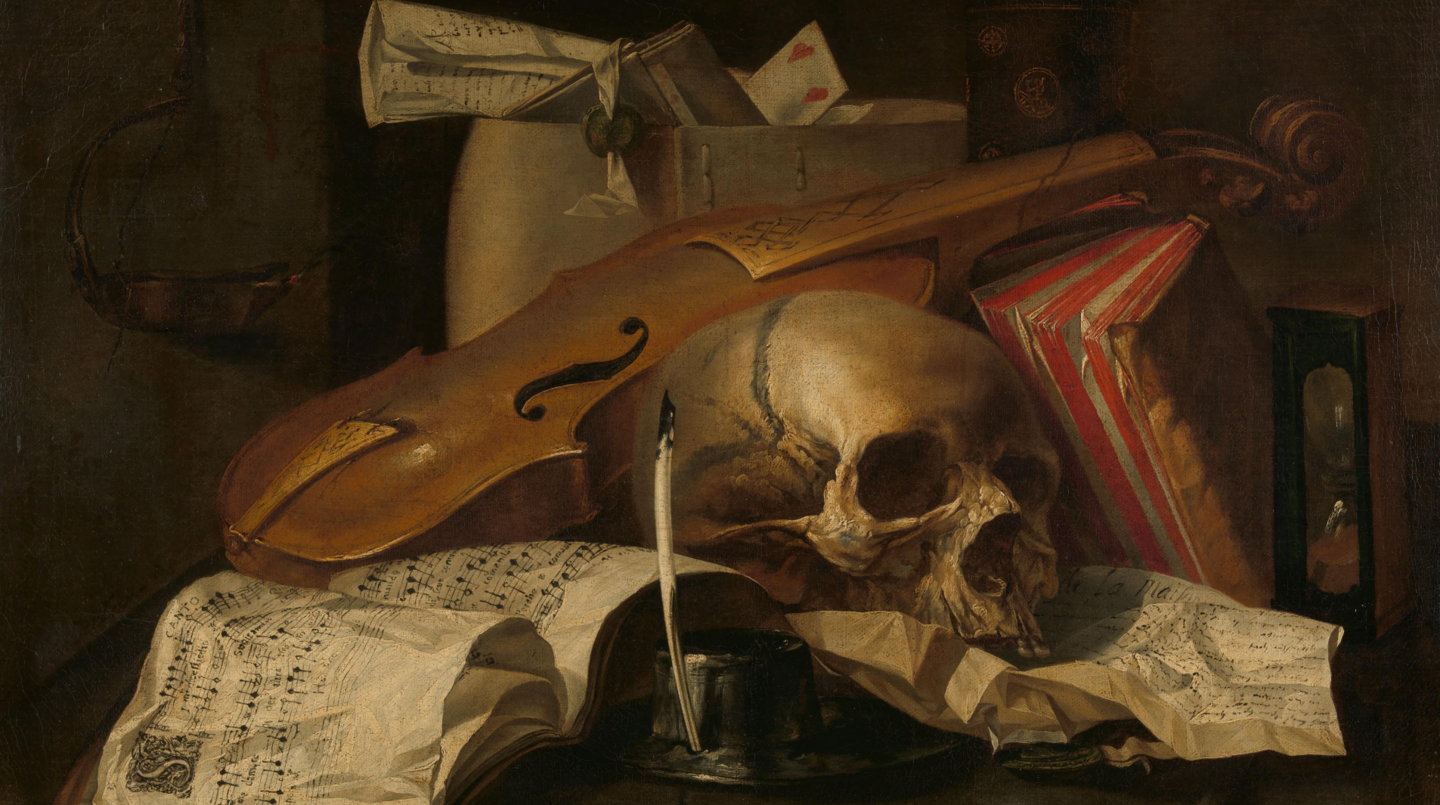
The theme of the finitude of life and the equality of all people before death has appeared in art very early on. For instance, as far back as the Medieval period, the genre of memento mori existed, which depicted «Dance of Death.» Participants in the dance represented all social classes, signifying that every person was equal before death. Many Dutch Baroque artists addressed this same theme in the 16th century, amidst the difficult times of the Dutch Revolt—the struggle of the Seventeen Provinces for independence from Spanish rule. Initially, vanitas paintings were not standalone works of art—small still lifes featuring a skull or another symbol of death were placed on the reverse side of portraits to remind people of the transient nature of life. The imagery on the back of the painting provided a contrast to the main depiction of the living person. By 1550, vanitas had become an independent genre. Because this genre was popular for almost a century and a half, in my research, I decided to track how the content of these still lifes changed, as such a long span of time meant the methods of conveying the work’s central idea could not have remained the same. For this study, I analyzed numerous still lifes, sorting them by date of creation to identify certain trends. My focus was on the depicted objects, their arrangement, their interplay with one another, and their relationship to the vanitas concept. For textual sources, I selected books and articles that provided analysis of the symbols used in the paintings and information on the history of the Netherlands during that period, in order to identify patterns in how the content of vanitas still lifes evolved. In my research, I aim to confirm or refute the hypothesis that, although the core idea of the paintings remained the same, the manner in which it was conveyed changed significantly by the end of the genre’s popularity.
Genre Genesis: Works Pre-16th Century
Before vanitas became a standalone genre, still lifes with a similar theme existed as part of other paintings. For instance, they could be painted on the reverse side of a portrait of a living person. Yet, the core idea remained the same: to remind the viewer of the finite nature of life.
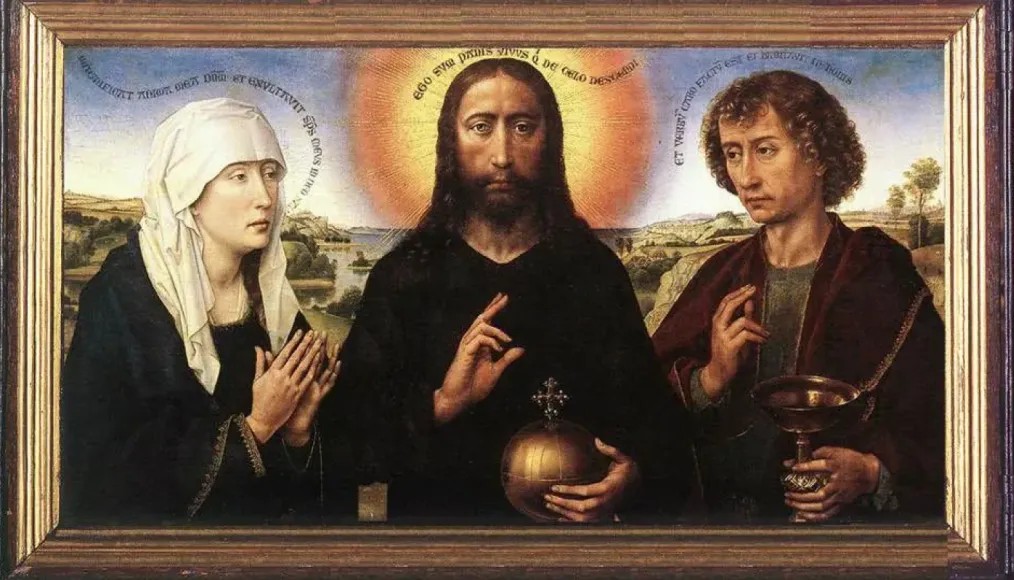
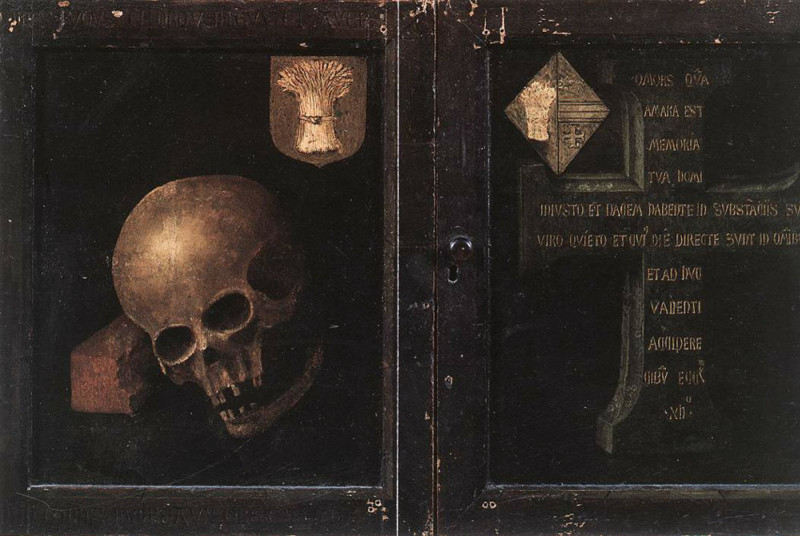
Rogier van der Weyden. «Triptych of Marriage.» 1450–1452.
The crest of the Braka family is featured on the latch.
https://www.rijksmuseum.nl/nl/collectie/object/Vanitas-stilleven--9502c2fdc15f3db4eaf2b3e8f0975bcf (Accessed November 15, 2026)