Concept
Our history is inextricably linked to nature. Even before the first writing, science, or early agricultural communities emerged, humans began to understand the world around them, partly through visual imagery. Early humans, whose lives revolved around the struggle to survive and sustain themselves, found meaning in representation, with animals being one of their first inspirations. Amazing silhouettes of the fauna they shared the planet with began appearing on cave walls, bones, and stones.Primitive creativity is one of the most fascinating areas of art history. It is not merely a beautiful reminder of humanity’s long and complex history—it is an archive of data that has allowed us to comprehend that era. Today, the works of these ancient creators remain an indispensable source of information about extinct fauna.
Research into ancient drawings within the context of biology first began in the mid-19th century, around the same time that the first ancient art artifacts featuring silhouettes of extinct animals were discovered. Currently, this field is undergoing a genuine renaissance thanks to advancements in new technologies.
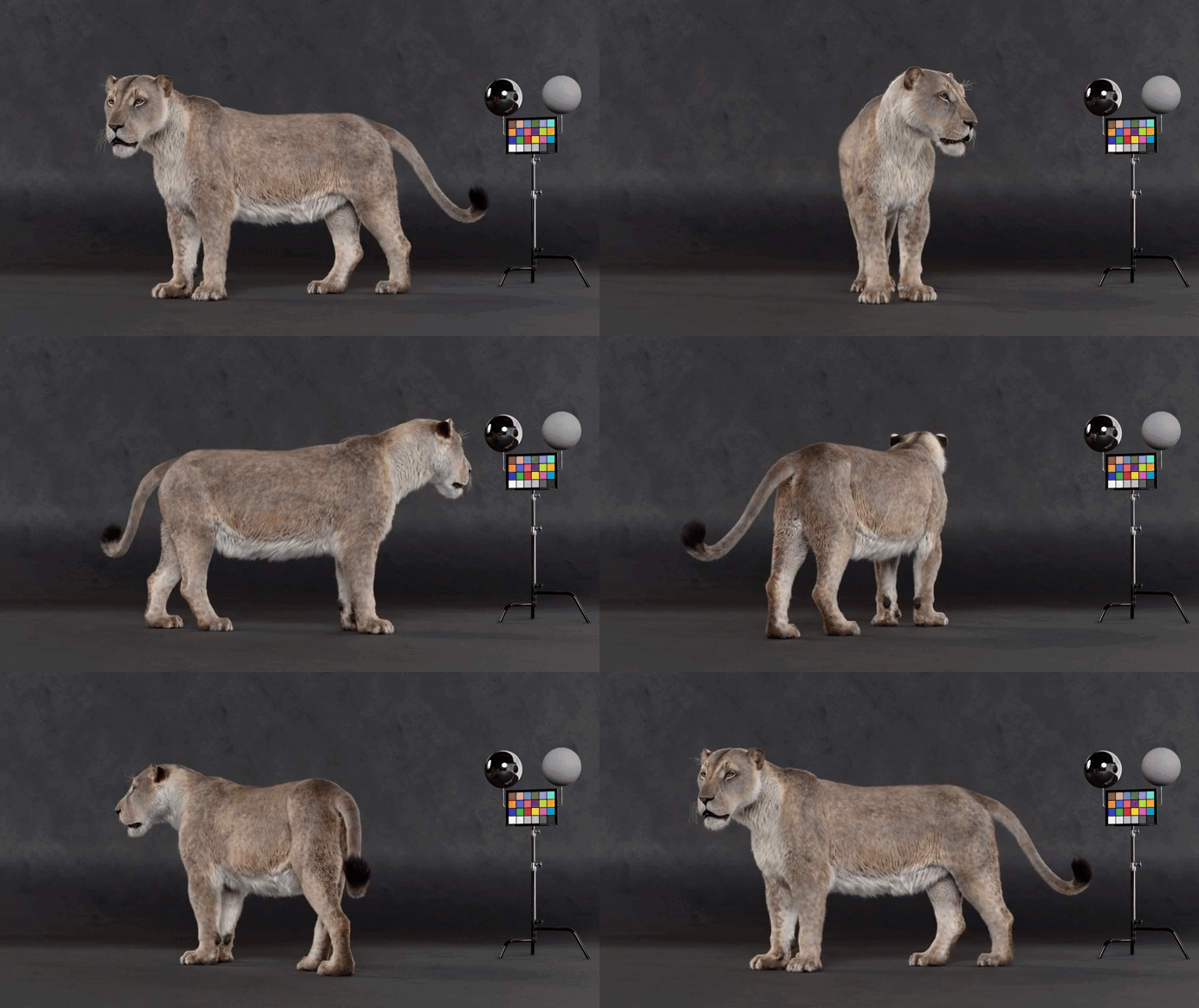
Contemporary 3D reconstruction of the Eurasian cave lion, based on the latest research in cave paintings. Artist: Joanna Kobierska
The intersection of biology and art genuinely fascinates me, which is why I wanted to explore this phenomenon:
the majesty of ancient beasts inspired human creativity, leading to the revival of their vanished appearance centuries later.
The objective of this study is to examine the information derived from the analysis of prehistoric creative works, specifically focusing on the appearance and behavior of extinct animals. Attention must be paid to the specifics of how this data was obtained and to understanding the history of the concept of the prehistoric era. Considering all of this, I selected serious academic works that have contributed to the development of this field, as well as articles by reputable authors that synthesize and structure historical research. While reading these texts, I reconstructed a complete picture of how this field emerged, how it progressed, and what discoveries were made within it. Based on this, portraits of animals were compared before and after landmark studies, allowing for an assessment of the genuine contribution of ancient creativity.
The central question is: how would our understanding of extinct fauna be without prehistoric art?
My hypothesis is that without it, our knowledge of ancient animals would be fragmented. After all, if the bones and rare mummies (which more often belong to juveniles and do not always retain their living coloration) only allow us to determine a rough outline of the animal, then the ancient artist was a direct witness, conveying the appearance of the adults—their lively form, behaviors, distinctive coloring, and even the social structure of the herd.
Until the mid-19th century, concepts of extinct animals were highly specific. Christian tradition asserted that humanity, created in God’s image, appeared late in history. To prove its ancient origins, scientists required irrefutable evidence. Between 1812 and 1853, numerous studies were conducted that illuminated the antiquity of humankind. Human remains and tools were discovered within geological formations dating back to the era of mammoths, cave lions, and bears—animals believed to have gone extinct long before the arrival of humans. A landmark discovery is the set of stone tools dating from the mastodons (mammoths and woolly rhinoceroses) unearthed by Jacques Boucher de Pertes in the Menscher-le-Abbaye sand quarry in the Somme region.
Stone tools from Menhirs-le-Abville, Somme, France. 500,000–300,000 years ago.
The artifacts served as the first substantial evidence of the coexistence of mammoths and humans; however, this discovery did not cause scientists to completely revise their views. In 1858, Joseph Prestwich and Hugh Falconer discovered stone tools also linked to the bones of extinct species. By comparing these with Jacques Boucher de Pertuiset’s find, they achieved recognition for ancient humans within the scientific community in 1859.
Flint knife found in the Brixham Cave. 34,500–40,000 BCE.
However, the skepticism of some conservatives had yet to be broken. Even the researchers who believed in the antiquity of our lineage doubted the intellectual capabilities of our ancestors. Although primitive art had already been discovered back then, it was dismissed as a forgery or as belonging to other eras. The people of that time were deemed irrational—incapable of creating anything complex or truly beautiful.
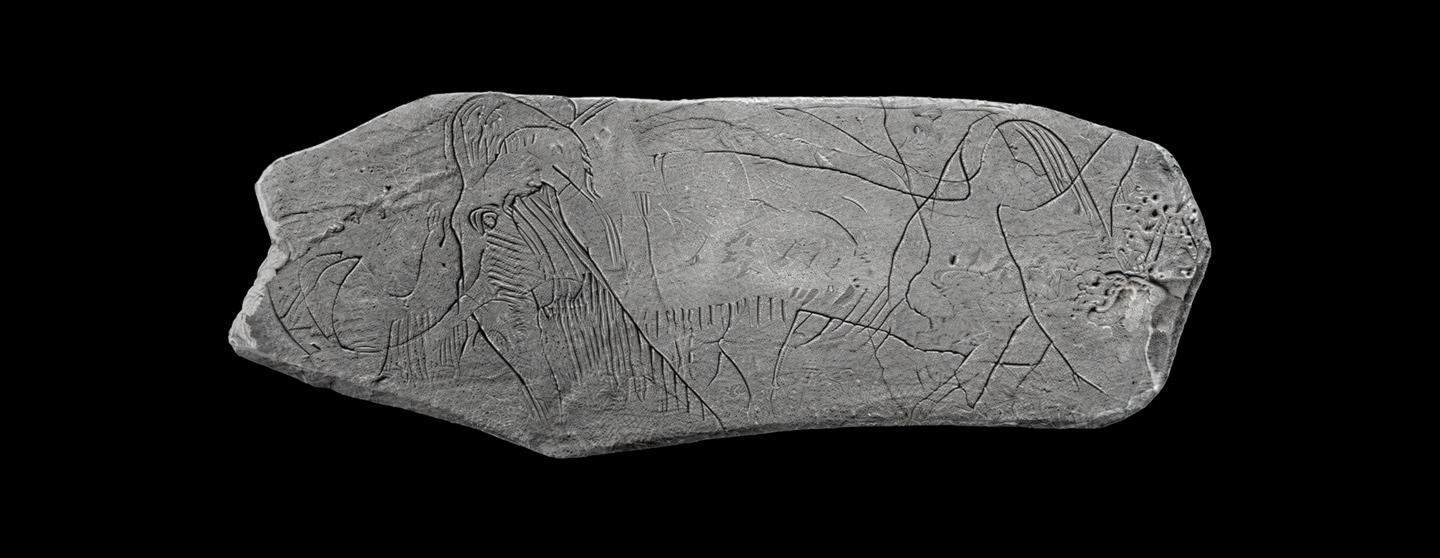
The discovery that convinced the vast majority and inaugurated a new era of prehistoric art studies was a fossilized mammoth tusk fragment bearing an image of the animal itself.
Mammoth from La Madeleine. 15,000–10,000 BCE
This discovery changed everything. People could no longer dismiss ancient humans as mere barbarians incapable of creation.
The Mammoth Ivory from La Madeleine became a landmark find because it depicted a species of extinct fauna directly on a part of the animal itself. All previous examples of prehistoric art were created on reindeer bones and did not contain images of ancient animals, which made them easily susceptible to being mistaken for mere fakes. The mammoth drawing confirmed that ancient humans coexisted with the giants of the north and were sufficiently advanced to require art. Furthermore, which is highly relevant to my research, this discovery helped paleontologists rethink reconstructions of extinct species.
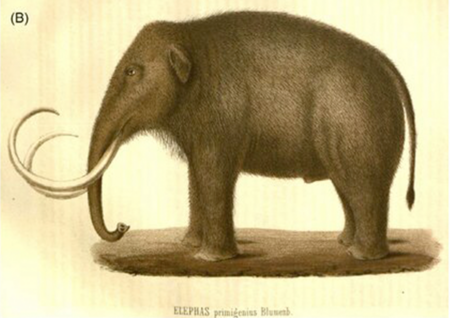
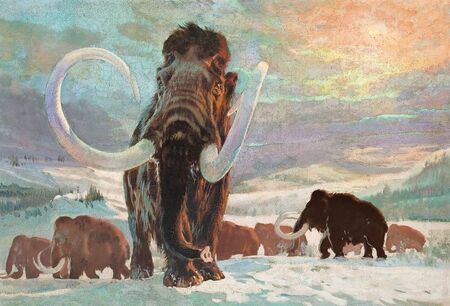
Perceptions of mammoths before and after the discovery of «Mammoth La Madeleine»
Stylistic Conventions: Distinguishing Between Real Biology and Artistic Affiliation
To use prehistoric art as a source of information about extinct species, one must first determine the accuracy of the ancient authors' representation of reality.
Several types of «distortion» of an animal’s proportions in ancient art can be identified:
1. Twisted perspective
2. Hunter’s perception
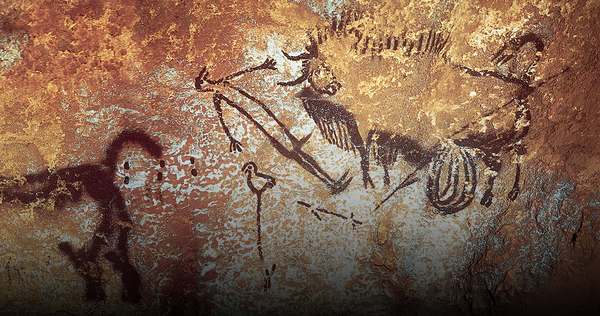
3. Shamanistic imagery
Twisted Perspective (from French perspective tordue) is an artistic technique found in prehistoric art where different parts of an animal’s body are depicted in a single drawing from multiple viewpoints simultaneously. This term was introduced into scientific discourse by the French archaeologist and Paleolithic researcher, Abbot Henri Breuil, in the early 20th century while studying cave paintings in France and Spain. Its essence lies in separating the real anatomy of animals from the artistic conventions employed to convey features that are invisible under standard perspective.
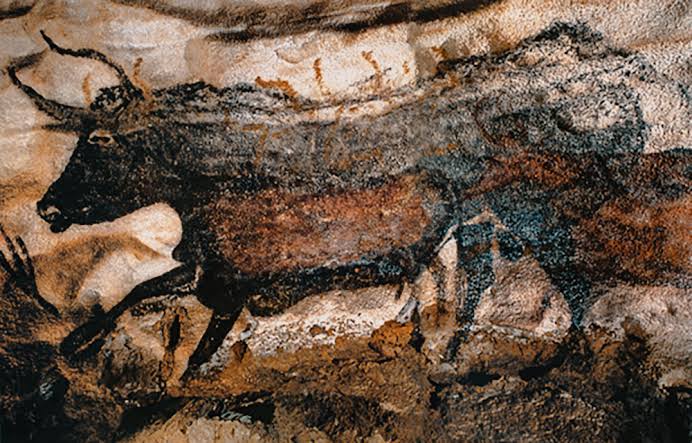
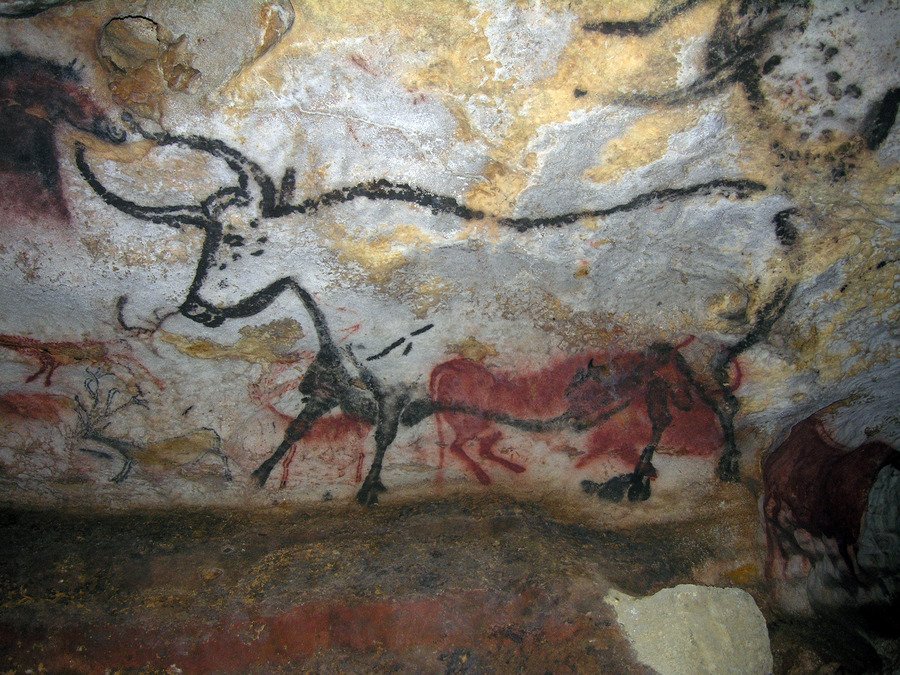
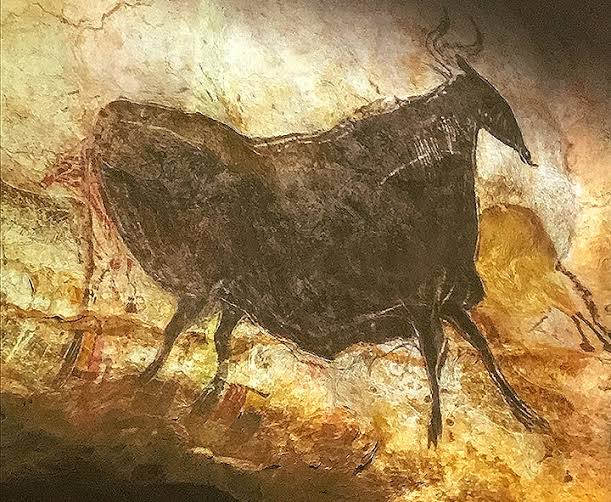
Examples of twisted perspective: the horns are unnaturally placed and twisted into a «crescent moon.»
Hunter Perception—this refers to how the brain of a prehistoric person (and even a modern one) reacted to stimuli. Contour is the first thing the brain perceives—clear, understandable boundaries of an object that can be easily processed during an attack. Profile is the most informative format. In this view, the hunter sees all the animal’s characteristics (head line, hump, spine arch, bulk, tail, four legs) and can easily assess its size, condition, and vulnerable points. For this reason, 90% of rock art is depicted in this manner. Superstimuli—ancient artists exaggerated the parts of the animal they deemed most important for hunting or most dangerous to life, and conversely, omitted or significantly minimized uninteresting features. Almost all ancient depictions are created according to these principles. By understanding this, we can distinguish between real anatomical features and intentional or unintentional exaggerations.
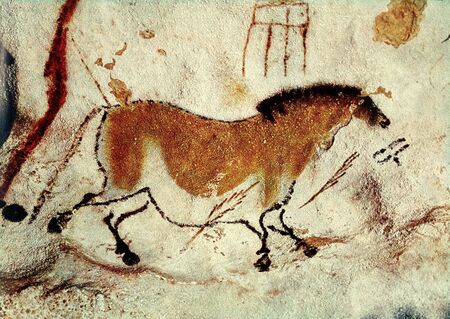
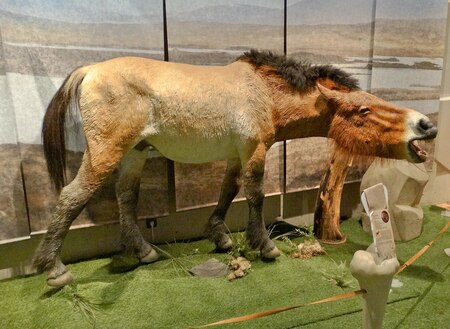
A comparison of the Chinese horse and the modern reconstruction of the Ice Age European horse.
Shamanic imagery refers to depictions of hybrid beings, composed of parts of animals and humans—a fascinating phenomenon that illustrates the human experience in states of altered consciousness. These images must be clearly distinguished so they are not confused with actual species.