CONCEPT
During the 10th–12th centuries, illuminated manuscript painting flourished in Western European art, visually explaining the structure of the world and warning against the consequences of sin in an accessible and understandable manner.
In medieval bestiaries, common animals like foxes, wolves, or whales could possess traits of the Devil, and Hell itself was often depicted as a giant, toothed maw («The Mouth of Hell»).
Bestiaries — illustrated books about real and mythical beasts, created for moral or didactic purposes.
Nearly a thousand years later, at the end of the 20th century, extreme musical genres emerged—Black Metal and Death Metal.
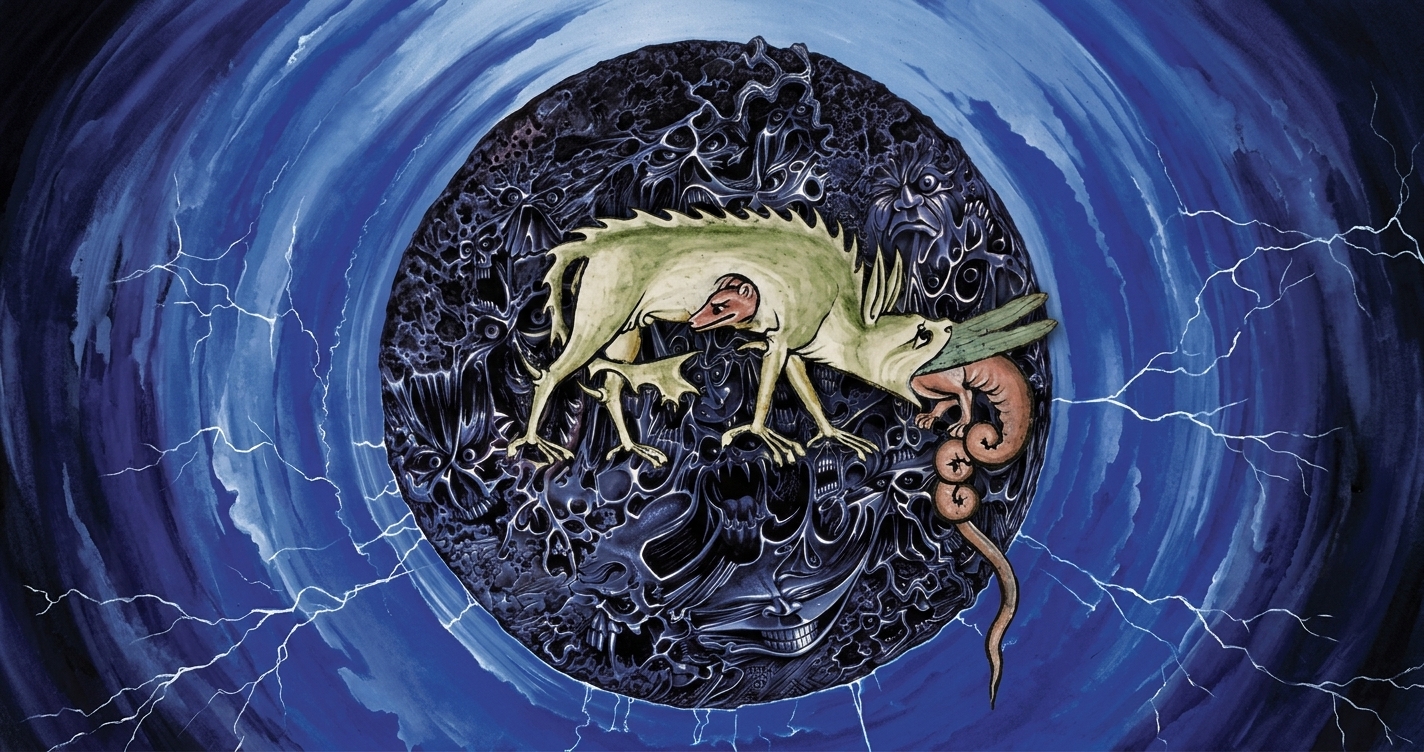
Album covers, much like the genres themselves, sought to evoke in the viewer feelings of horror, anxiety, and contact with the supernatural world by utilizing the same mystical symbolism and visual aesthetics found in bestiaries.
Despite the vast temporal distance and entirely different objectives, the authors employed very similar artistic techniques.
КЛЮЧЕВОЙ ВОПРОС
What artistic techniques and themes from X–XII century manuscripts and bestiaries have transferred to black and death metal album covers?
Why did medieval visual language become the basis for symbolism?
My hypothesis is that extreme metal artists (consciously or intuitively) draw upon the canons of pre-Romanesque and Romanesque miniature painting.
СТРУКТУРА
The study is broken down into five chapters that allow for a sequential and in-depth examination of the topic.
Comparisons offer a visual demonstration of similarities in composition, silhouettes, and details.
CHAPTER 1. The Beast’s Maw. The Image of the «Mouth of Hell» and the Cunning Whale
The entrance to the underworld—one of the primary and most intuitive images used to represent the space of hell.
Session 1. Entrance to Hell as the Beast’s Maw
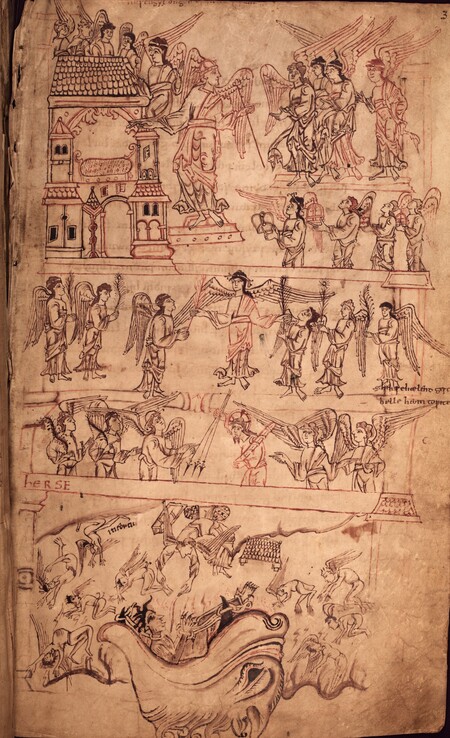
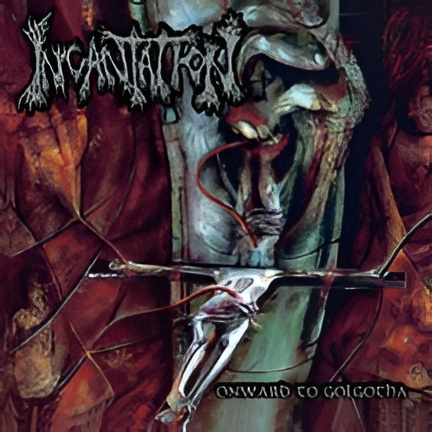
Unknown Anglo-Saxon master. Miniature from the Junius Manuscript. c. 1000 / Mircha Gabriel Efthimie. Onward to Golgotha. 1992.
In art from the 10th–12th centuries, a striking visual image was created for this—the «Hellmouth.» Instead of ordinary doors or a cave, the entrance to Hell was depicted as an open, beastly maw with sharp fangs, which swallows sinners.
This image is closely linked to medieval bestiaries describing the whale Aspidochelon. According to legend, the monstrous, enormous sea creature lured fish with its sweet breath directly into its mouth, and sailors mistook its back for an island, built a campfire on it, and then sank to the bottom along with the beast. For a person of that era, the whale was a tangible embodiment of the Devil, who entraps people in a trap.
In the album art for death metal, this technique works in exactly the same way: the composition’s center is often a massive, fanged maw or a vortex that sucks bodies into the abyss.
The mouth at the bottom of the leaf functions as a visual void from which there is no return.
Pair 2. The Leviathan’s Closed Throat
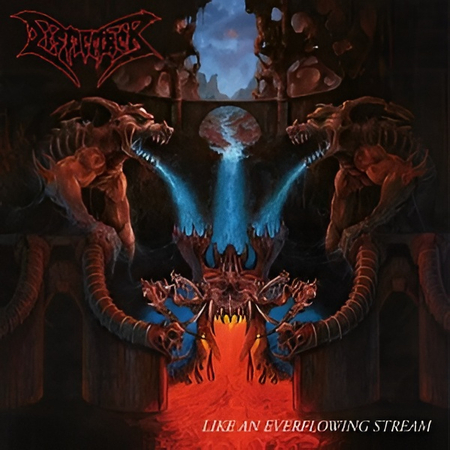
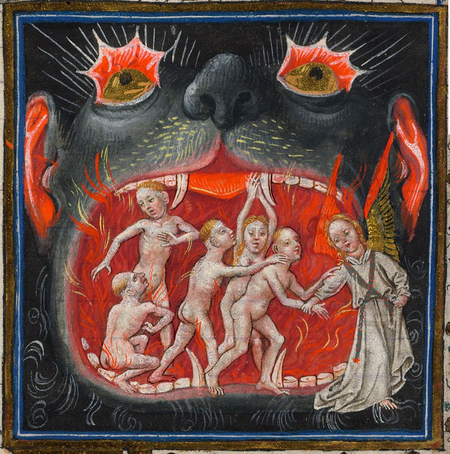
Dan Segrave. Like an Ever Flowing Stream. 1991 / Unknown English Master. Miniature from the Winchester Psalter. c. 1150
In the miniature from the Winchester Psalter (1150), God is depicted as the jaws of a monster, which an archangel locks from the outside with a key. Inside this maw, there is no free space—it is densely packed with the heads of kings, monks, and common sinners, which snakes and demons are biting. Illustrator Dan Siegel on the cover of Dismember (1991) employs a very similar technique: the entire space surrounding the heroes transforms into living, toothed flesh. The flow of blood and heat emanating from the «maw» literally draws the viewer into the monstrous belly.
Beyond visual similarity, both images share a biblical motif.
The album title, «Like an Everflowing Stream,» subtly references the Book of Amos from the Bible («Let justice roll on like a river, righteousness like a never-failing stream!»).
The «Winchester Psalter» is a Christian liturgical book from the Old Testament.
The main difference is the conceptual distinction—which leads to a visual one—between bestiaries and death/black metal bands.
Images of Hell in bestiaries are didactic scenes. An angel leads children out of the burning space of the Devil. This is primarily rooted in Christian beliefs. However, on the cover of the Swedish death metal band Dismember, Hell is depicted as subtly welcoming. There are no restrictions, and no soul would be prevented from entering Satan’s «gates.» This perfectly aligns with the album’s theme: brutal violence, crime, and death.
Session 3. The Aspidohelon Whale Trap
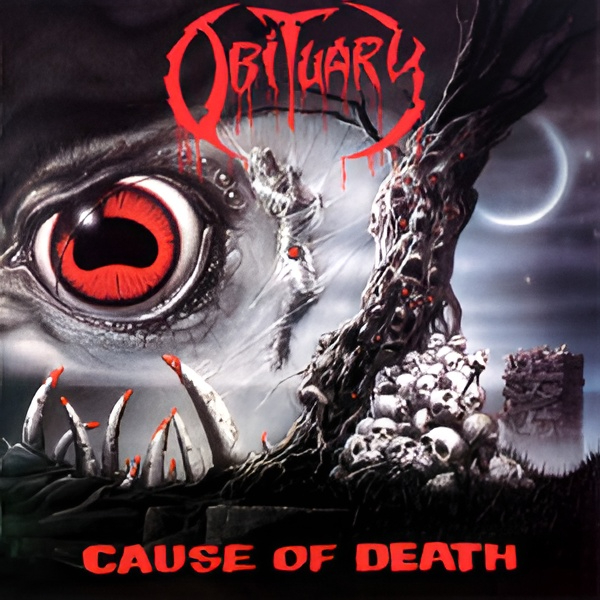
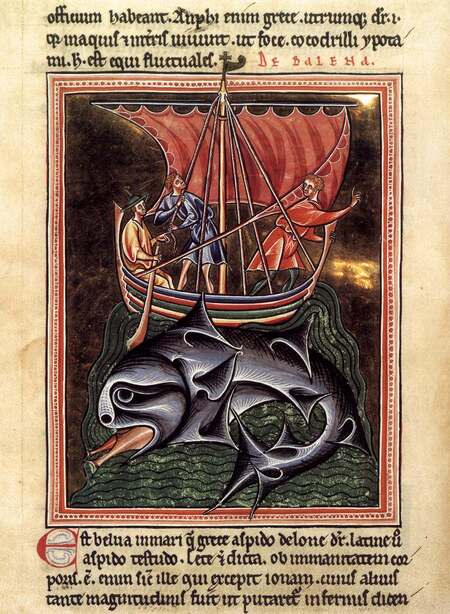
Michael Whelan. Cause of Death. 1990 / Unknown English Master. Miniature from the Ashmolean Bestiary. c. 1200
The imagery and symbolism on the cover of the death metal band Obituary aligns with a medieval miniature from the Ashmolean Bestiaries, yet the essence of the depicted narratives is completely different.
In the «Bestiary of Æschmol» (c. 1200), the whale is depicted in two distinct scenes. Below, unsuspecting fish swim into its mouth, while above—upon its back, which is overgrown with trees—sailors suffer the turmoil of the sea. Nature itself becomes a part of the monster’s body. Yet, shafts of life-affirming light break through the encroaching mass of heavy clouds in the distance, hinting at the possibility of a positive outcome.