Concept
Japanese narrative scrolls, emakimono, allow us to examine how a static image conveys movement and the unfolding of events. Unlike a painting, which the viewer perceives as a whole, the scroll unfolds gradually—it is unrolled from right to left, revealing individual sections. The viewer sees sequentially revealed episodes. This characteristic makes emakimono fascinating material for studying visual narrative.
«Much like a book, a hand scroll is intended for individual or small group viewing: it is held in hand, and only a few viewers interact with it simultaneously.» [1]
The topic was chosen because it allows for the study of movement as a result of the interaction of artistic elements. Body posture, character gestures and gazes, figure placement, and spatial organization help convey action and direct the viewer’s attention. The connection of an individual episode to neighboring scenes is also important.
Main question: What techniques did artists use to create a sense of movement and the development of action in a static image?
The hypothesis posits that dynamics are formed on two levels: within the scene—through poses, gestures, movement directions, and composition; and at the level of the work itself—through the gradual unfolding of the scroll and the connection of episodes into a narrative.
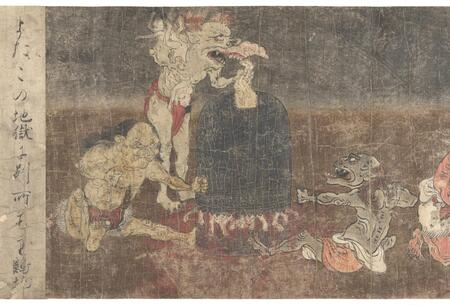
When selecting the artworks, their historical provenance, narrative nature, and the potential to trace specific compositional techniques in particular fragments were taken into account. The core material consists of the «Shigi-san Engi Emaki, ” the „Ban Dainagon Emaki, ” and the „Heiji Monogatari Emaki.“ These allow for a comparison of depictions of miraculous events, mass scenes, and military confrontations. The „Genji Monogatari Emaki“ is used as an additional example of a more restrained narrative, where interior space and the stillness of figures are important.
The research is structured thematically: first, it examines the gestures and poses of the characters, followed by the composition and the distribution of figures in space. A separate section is dedicated to the sequence of episodes and the role of the scroll format in the perception of time. Specific fragments are analyzed and visual solutions are compared in each section.
The foundation of this work will be the visual analysis of reproductions of entire scrolls, individual scenes, and details. Every selected fragment must illustrate a specific technique for conveying movement or organizing the narrative.
The objective of this research is to determine how the interaction of figure plasticity, composition, and the sequential unrolling of the scroll creates a sense of movement in Japanese narrative painting from the 12th to 13th centuries.
Kinesics: Gestures and Poses
The sense of movement in emakimono is conveyed not only through the depiction of the action itself. The posture of the characters, the direction of their gazes, and their reactions to events are no less important. Even static figures can create a feeling of motion if their gestures are connected.
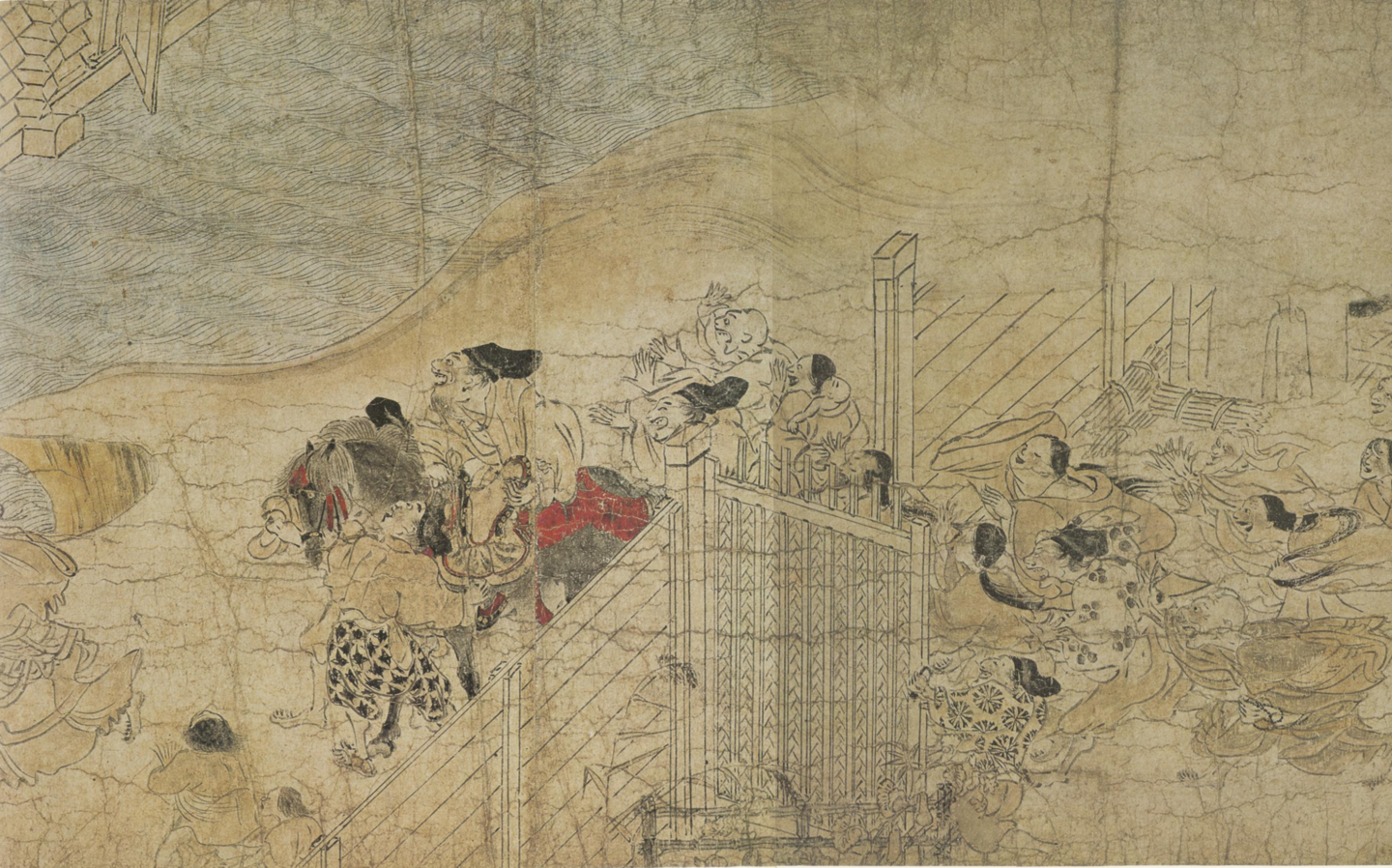
Movement as a reaction to an event. «Sigisan Engi Emaki, ” 12th century. An episode of a flying barn.
«Sigsan Engi Emaki» // Flight of the Sky.
In the episode featuring the flying barn, the action revolves around the unusual movement of an object. The reactions of the surrounding people help the viewer grasp the scale of the event: some characters follow the barn, while others watch it receding. The direction of their gazes and movements connects the individual figures into a single scene.
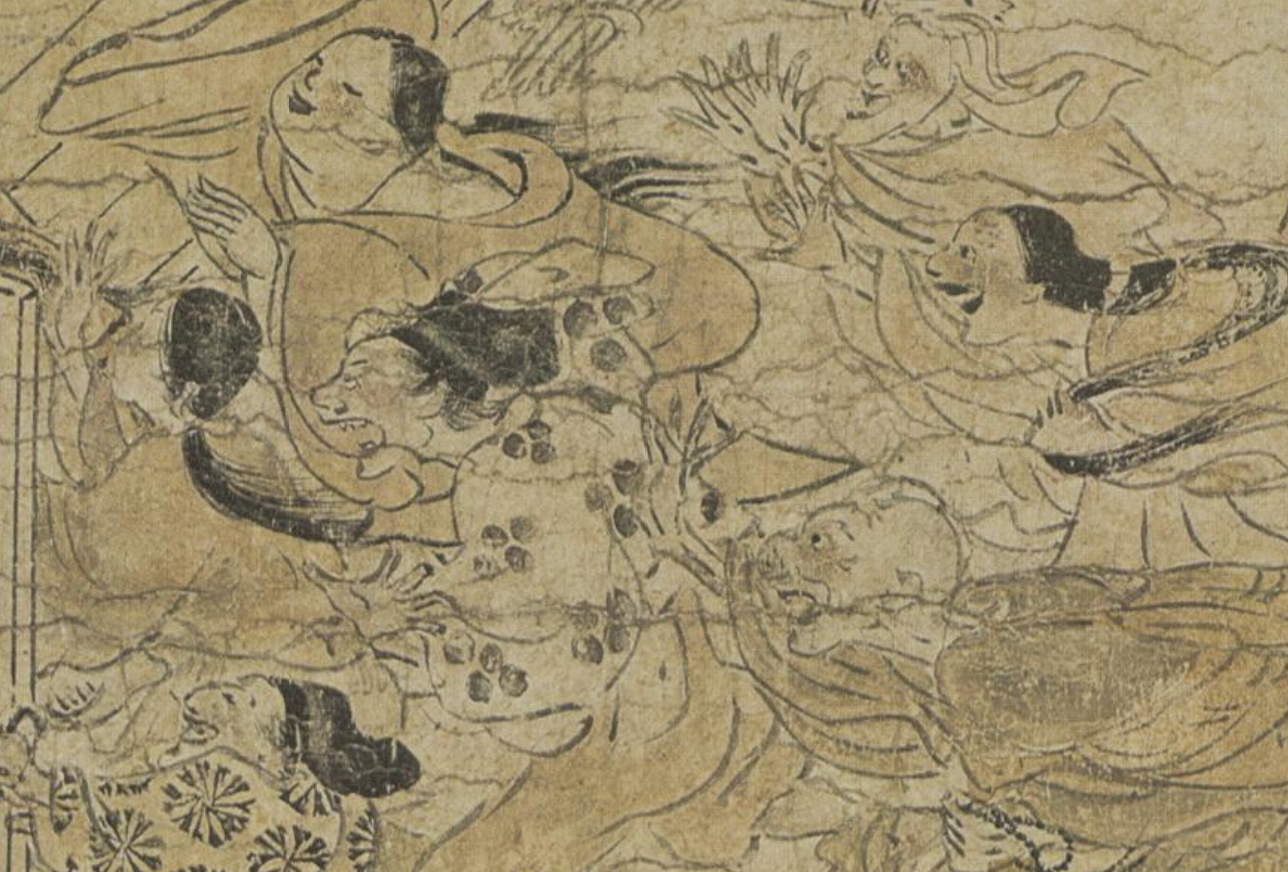
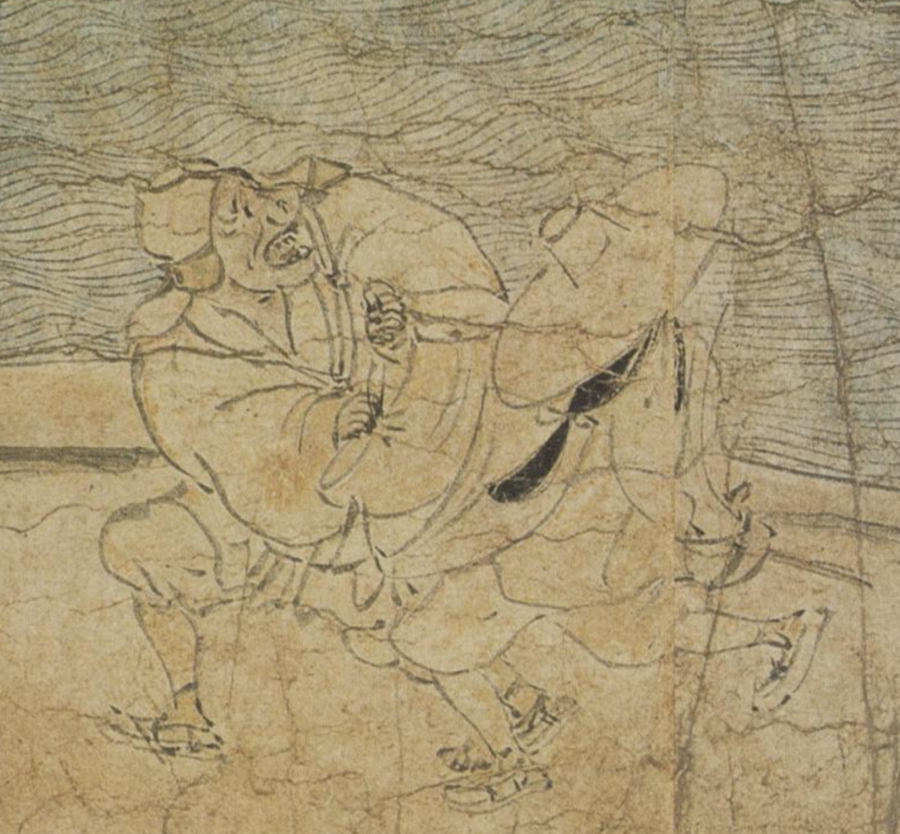
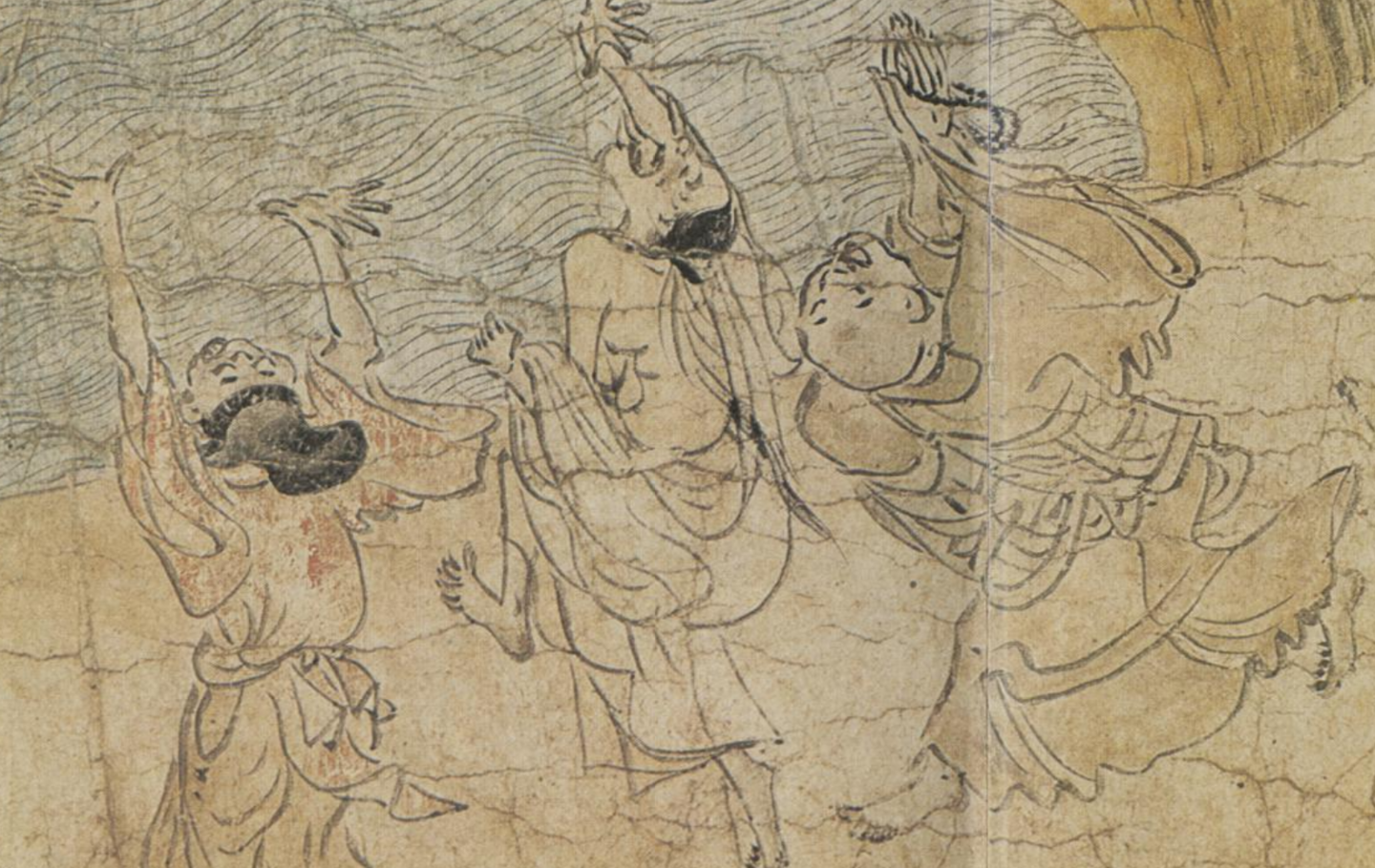
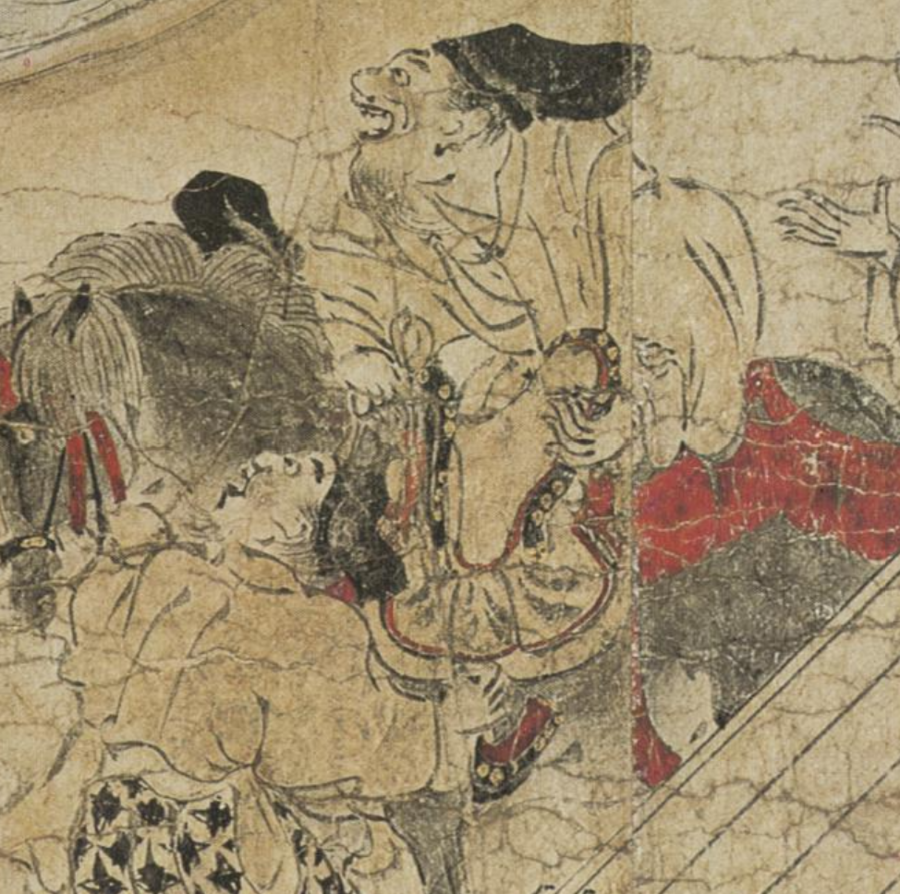
People’s reaction to what is happening.
Willmann, Anna. «Japanese Illustrated Handscrolls.» In Heilbrunn Timeline of Art History. New York: The Metropolitan Museum of Art, 2000–. http://www.metmuseum.org/toah/hd/jilh/hd_jilh.htm (November 2012)