Navigation
Concept
I. Disruption of Subjective Perception (The Dissolution of the «Self») II. Sensory Overload of Perception III. Disruption of Temporal Perception IV. Perception Failure Through the Deconstruction of the Cinematic Medium V. Spatial Disruption: Uncertainty and the Collapse of Perceptual Anchors VI. Perception Failure Through the Effect of Documentary Authenticity VII. Somatic Perception Failure (Sensory Vulnerability)
Conclusion Bibliography Image Sources
Concept
The choice of research topic stems from the author’s interest in the horror genre and how fear functions in cinema in general—what generates it. In classic horror, everything is quite clear: there is almost always a source of threat—a monster, a ghost, a killer, or some other antagonistic figure. Fear in this context is built around the anticipation of encountering this «something» and the reaction to it. The viewer understands where the danger lies, and the tension arises from the anticipation of that confrontation.
But a logical question arises: is it possible to have horror without a discernible threat figure? Can a film be frightening if it has no antagonist? And if so, what generates fear in those cases?
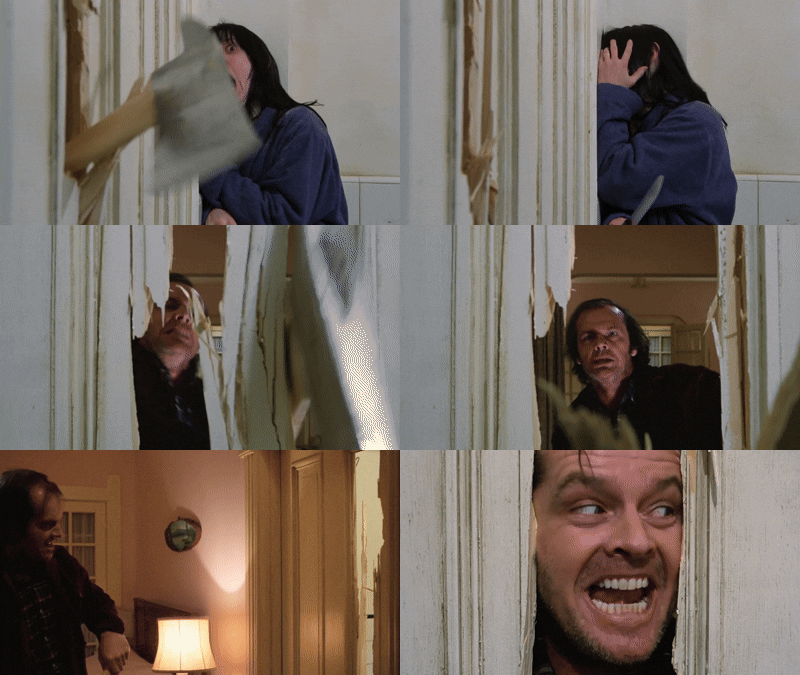
1. Stills from the film «The Shining» (1980), directed by Stanley Kubrick
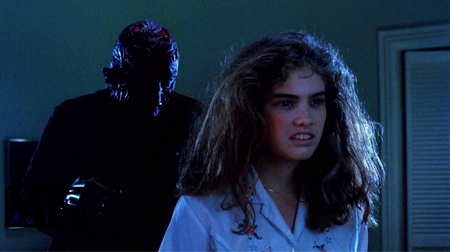
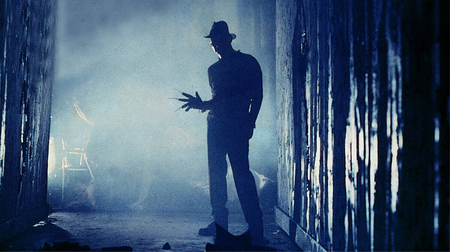
2. Stills from the film «A Nightmare on Elm Street» (1984), dir. Wes Craven
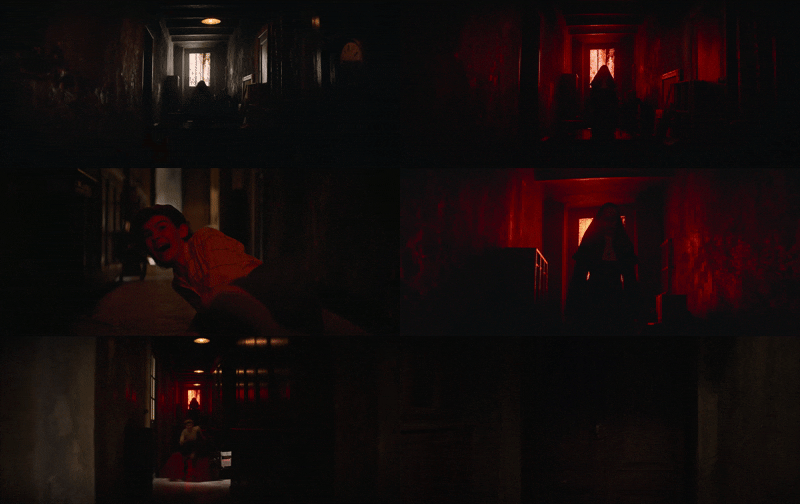
3. Stills from the film «The Nun II» (2023), directed by Michael Chaves
This question shifts the focus from the usual level of plot to the level of form—to how the image, sound, and time are structured within the film. In this approach, what happens becomes less important than how it is perceived. Fear stops being a reaction to a specific object and begins to arise from the process of perception itself—from the viewer losing a stable point of reference.¹
The study examines films that can be classified as experimental cinema or liminal forms—art-horror, analog horror, or pseudo-documentary practices. This selection is based on the fact that what matters here is not genre affiliation, but the methods of generating anxiety. These films often work not through narrative, but through sensation—through the state they immerse the viewer in.¹
The unifying factor across the entire list is the various forms of perceptual failure. This can be repetition and looping, where time ceases to feel linear; fragmentation, where the image does not cohere into a complete picture; distortion of space; sound overload or, conversely, an anxious void. In some cases, the medium itself begins to behave unstably—the image breaks down. Each film works with its own type of failure—as if something in the perception «snaps.» At some point, it becomes difficult to understand what is happening at all or how to piece it together. And it is precisely this feeling of disorientation that creates the characteristic effect of unease.
¹ Martin G. N. Why Do You Like Scary Movies? A Review of the Empirical Research on Psychological Responses to Horror Films [Electronic resource] // Frontiers in Psychology. — URL: https://www.frontiersin.org/articles/10.3389/fpsyg.2019.02298/full (accessed on: 04/23/2026)
The central question addressed in this research is: can cinema evoke fear not through threat, but through the very disruption of perception? And if so, precisely how does this mechanism operate?
The hypothesis suggests that the fear in such films does not stem from a specific object, but rather from the breakdown of the very system of perception.³ Repetitions, looping, distortion of time and space, and strange manipulations of sound and image—all of this gradually disorients the viewer. At some point, it becomes difficult to grasp what is happening, where one is within the film, or by what rules it operates. Uncertainty also plays a crucial role: there is no clear explanation, no discernible source of threat to latch onto. Consequently, anxiety arises spontaneously—not as a reaction to something concrete, but as a state of being.² The dread comes not from what you see, but from your inability to understand how to perceive it.
² Aldana Reyes X. Beyond Psychoanalysis: Post-millennial Horror Film and Affect Theory [Electronic Resource] // ResearchGate. — URL: https://www.researchgate.net/publication/272274985_Beyond_psychoanalysis_Post-millennial_horror_film_and_affect_theory (Accessed: 04/23/2026)
³ Krysanova T. Psycholinguistic and cognitive-semiotic dimensions of constructing fear in horror films [Electronic Resource] // East European Journal of Psycholinguistics. — URL: https://eejpl.vnu.edu.ua/index.php/eejpl/article/view/735 (Accessed: 04/23/2026)
I. Disruption of Subjective Perception (Dissolution of the «Self»)
Maya Deren’s film Meshes of the Afternoon (1943) is a key work of American film avant-garde and is considered one of the most influential experimental films of the 20th century. It largely set the direction for cinema in the 1950s and 60s and influenced the visual language of Surrealism, including the work of David Lynch.
The film is structured like a dream—non-linear, repetitive, with blurred boundaries between reality and imagination. However, the focus is not on the «dream» itself, but on how perception is fractured through it. Actions repeat; the protagonist returns home again and again; the same objects transition from one scene to the next. Yet, each time there are subtle shifts, creating the feeling that you are stuck in a loop, but you cannot quite grasp what is changing. This shatters the sense of time as a linear progression and induces disorientation.¹
The disruption of perception is amplified by a system of wandering images—particularly the key and the knife, which sharply substitute for one another through editing cuts. At one point, one object transforms into another, and conventional logic simply ceases to function. This generates a feeling of instability: the safe instantly becomes potentially dangerous.
This tension is intensified in the scene at the table, where three versions of the protagonist appear. They do not attack each other, but their interaction still feels anxious—they merely sit and look at one another, and this alone is enough to evoke a sense of internal conflict. When the protagonist carrying the knife enters this scene and places it in the center of the table, the image of the knife becomes key once more: it connects the different episodes and intensifies the sense of hidden threat, even though no direct action occurs.
¹ Martin G. N. Why Do You Like Scary Movies? A Review of the Empirical Research on Psychological Responses to Horror Films [Electronic Resource] // Frontiers in Psychology. — URL: https://www.frontiersin.org/articles/10.3389/fpsyg.2019.02298/full (Date accessed: 04/23/2026)
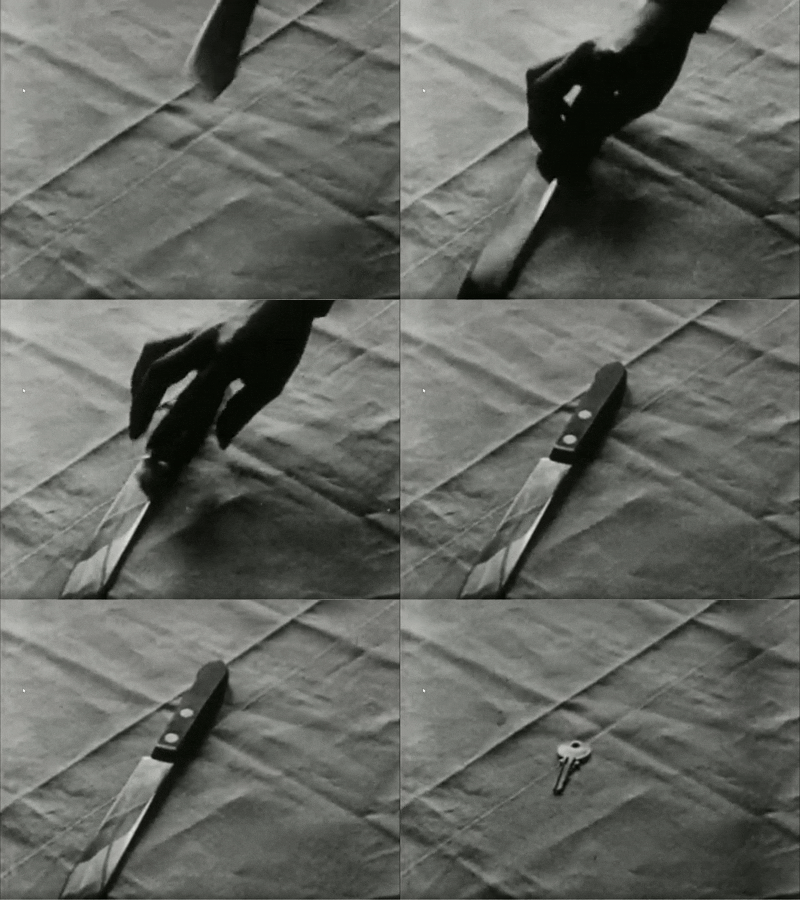
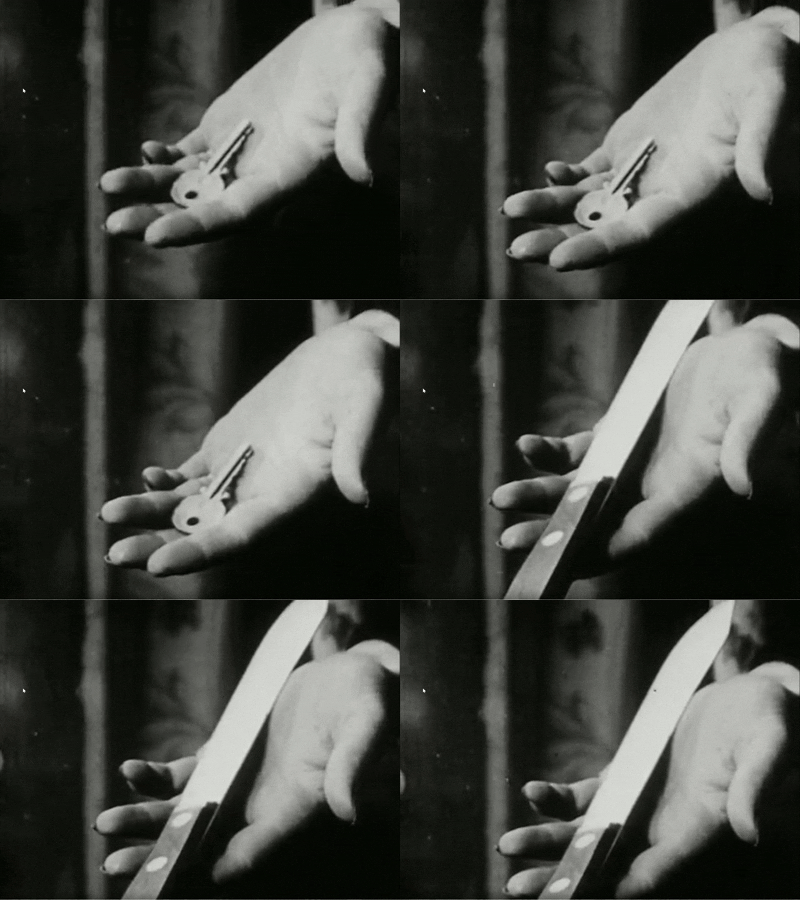
Stills from the film «Afternoon Nets» (1943), directed by Maya Deren
Stills from the film «Afternoon Nets» (1943), directed by Maya Deren
This motif then receives a harsher emphasis. In the scene where the heroine lies in bed, the knife is deliberately highlighted and brought to the foreground—it literally spills out of the frame’s space and begins to command attention. At one point, the tension dissipates: the heroine strikes the man, but instead of the expected reaction, a strange splice occurs—his face morphs into an image of a sea surface. This transition shatters the cause-and-effect logic, seemingly ejecting the viewer from the scene into another state of perception. Violence is not recorded as an event but dissolves into an image, which makes the moment even more unsettling.
Another crucial aspect is the use of shadows. In the film, they exist separately within the frame, without characters. Because of this, they begin to be perceived almost as autonomous entities, adding to the sense of unease and reinforcing the feeling that space does not adhere to conventional laws.
Stills from the film «Afternoon Nets» (1943), directed by Maya Deren
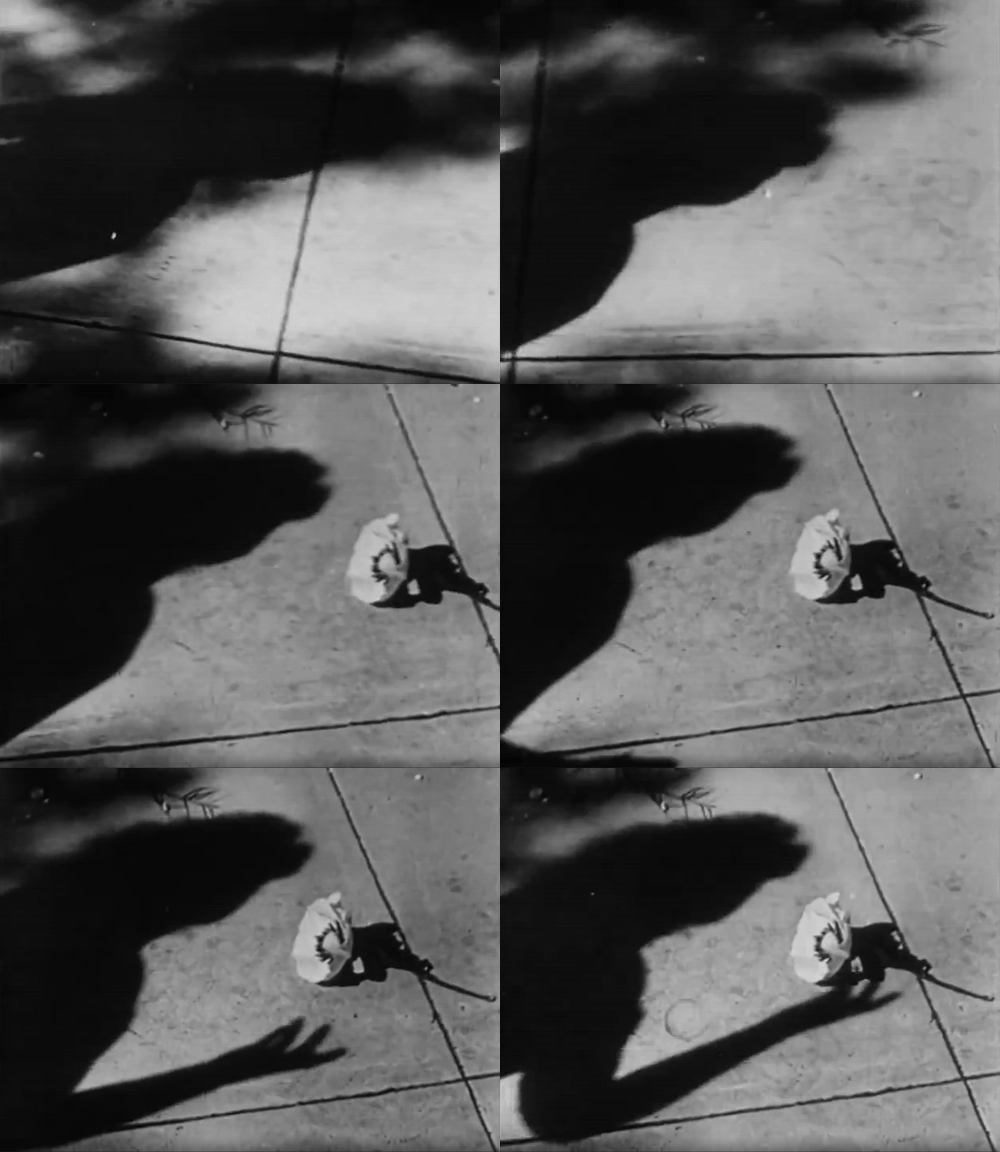
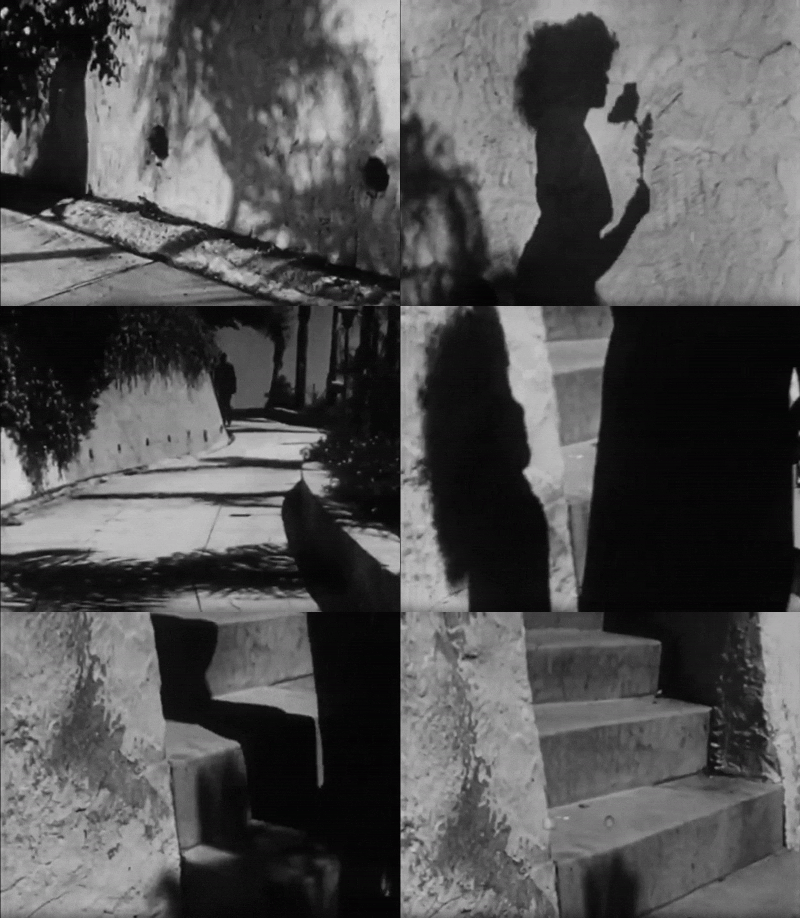
Stills from the film «Afternoon Nets» (1943), directed by Maia Deren
The appearing figure in black, with a mirror instead of a face, also does not resemble a classic «monster.» Rather, it is a reflection of the protagonist herself or her doppelgänger—something that mirrors her actions, thereby intensifying the sense of identity disintegration. What is crucial here is that the threat does not come from the outside—it seems to arise from within perception itself.
The soundtrack composed by Taichi Ito plays a special role in disrupting perception. Sharp, rhythmic sounds function like sudden physical blows, disrupting the smoothness of perception and heightening tension. Here, the sound does not illustrate the image; rather, it forms an independent rhythm that affects the viewer on an affective level.²
Ultimately, the fear in the film arises not from a specific threat, but from the breakdown of the very sense of reality. The repetitions, shifts, strange behavior of objects and imagery, and the fragmentation of the protagonist—all of this creates a state in which it is impossible to fully understand what is happening. And it is this sensation of instability that becomes the source of anxiety.
² Aldana Reyes X. Beyond Psychoanalysis: Post-millennial Horror Film and Affect Theory [Electronic Resource] // ResearchGate. — URL: https://www.researchgate.net/publication/272274985_Beyond_psychoanalysis_Post-millennial_horror_film_and_affect_theory (Date accessed: 04/23/2026)
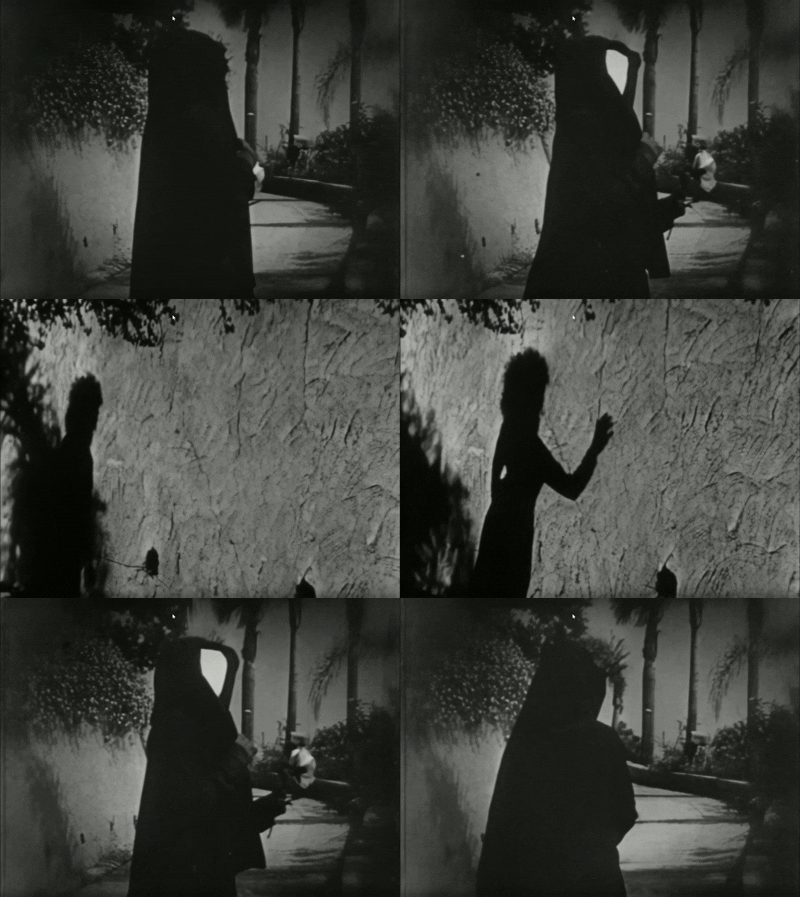
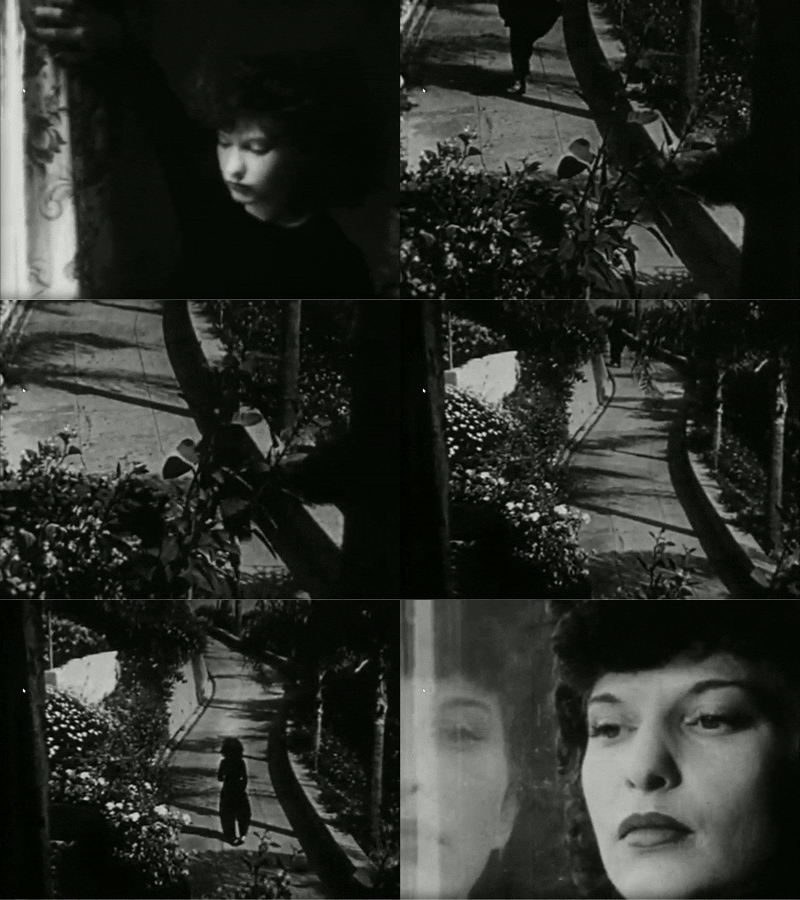
Stills from the film «Afternoon Nets» (1943), directed by Maya Deren
II. Sensory Overload of Perception
Unlike Maya Deren’s film, where anxiety arises from a dreamlike and illogical structure, David Lynch’s «Alphabet» (1968) generates fear through a direct breakdown of perception. There is no cohesive space or discernible plot here: the short film is assembled from animated inserts, repeating sounds, and abrupt visual transitions. Nothing cohere into a unified picture, and the viewer quickly loses their sense of footing—it becomes difficult to grasp what is actually happening.
Sound plays a profoundly important role. A repeating children’s song featuring the alphabet, screams, and obsessive, monotonous noise create a sense of overload—as if there is too much information, and the brain simply cannot cope.³ The sound literally presses down on the viewer: it disrupts the rhythm and causes an almost physical tension.² The contrast is especially effective—calm, safe children’s voices suddenly collide with sharp, unpleasant sounds. This fractures familiar associations, leading to anxiety.
The imagery follows a similar trajectory. Initially, the animation appears almost benign: letters, simple shapes, something resembling children’s drawings. But gradually, it begins to distort. The letters seem to be «born,» they deform, and the image becomes increasingly strange and even viscerally unpleasant. The space fills with something viscous, alien, reminiscent of flesh. This results in a smooth, yet intensely uncomfortable transition from the familiar to something utterly foreign.
² Aldana Reyes X. Beyond Psychoanalysis: Post-millennial Horror Film and Affect Theory [Electronic Resource] // ResearchGate. — URL: https://www.researchgate.net/publication/272274985_Beyond_psychoanalysis_Post-millennial_horror_film_and_affect_theory (Accessed on: 04/23/2026) ³ Krysanova T. Psycholinguistic and cognitive-semiotic dimensions of constructing fear in horror films [Electronic Resource] // East European Journal of Psycholinguistics. — URL: https://eejpl.vnu.edu.ua/index.php/eejpl/article/view/735(Accessed on: 04/25/2026)
Stills from the short film «Alphabet» (1968), directed by David Lynch
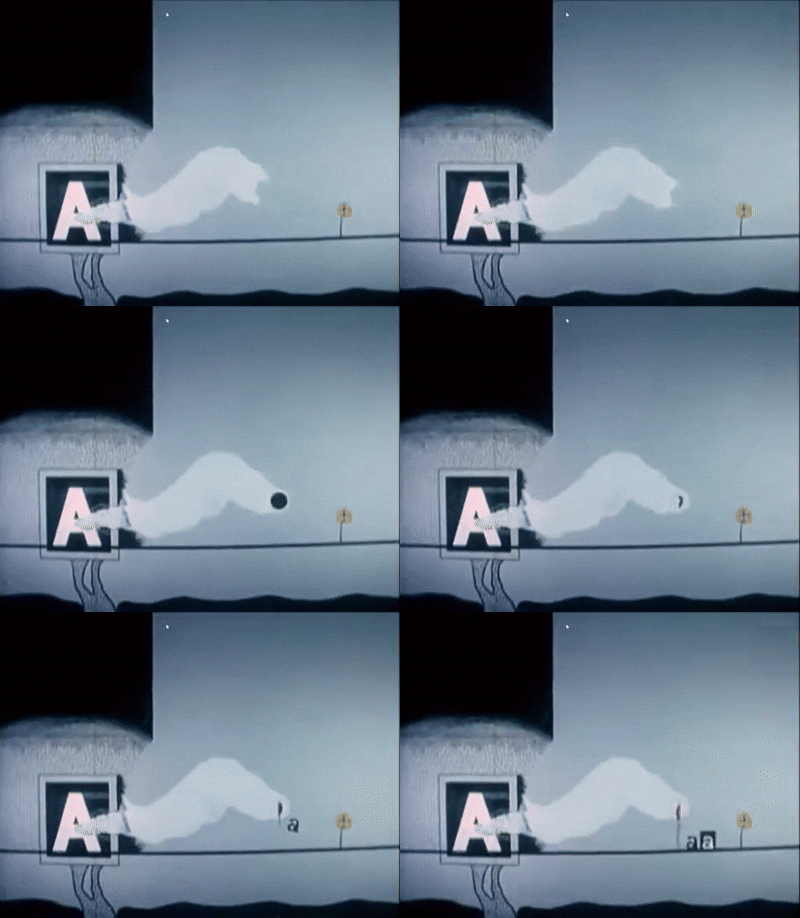
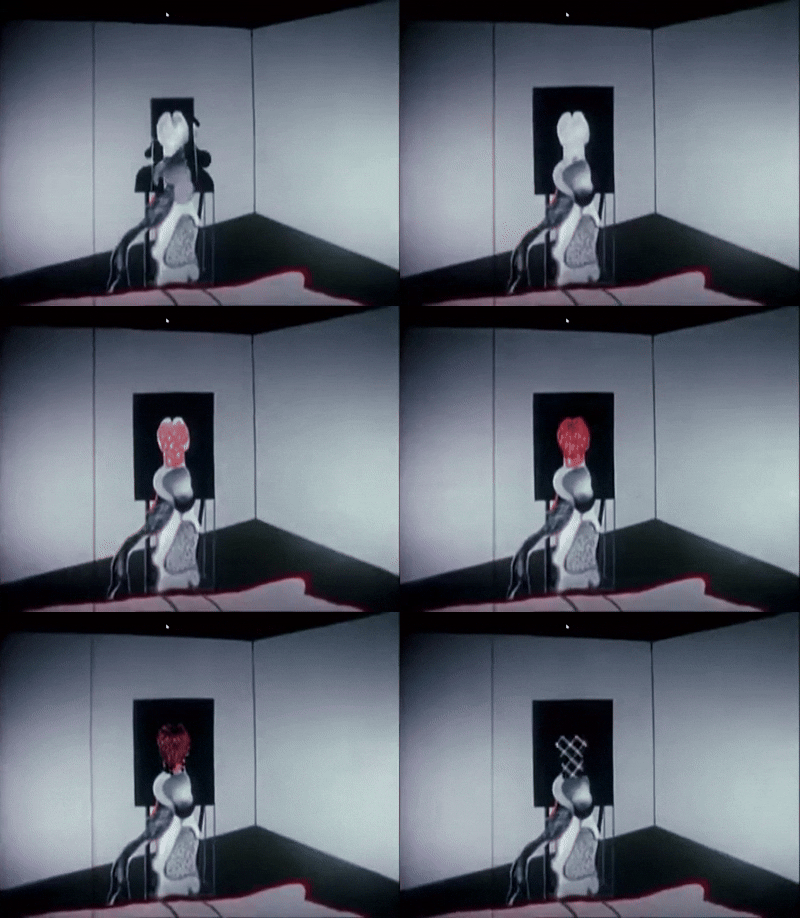
Stills from the short film «Alphabet» (1968), directed by David Lynch
Sound and image amplify each other, and the tension gradually builds. When the real girl appears, it becomes even more unnerving. Because of the jarring editing, her movements seem strange, her facial expressions unnatural, and the uncanny valley effect arises due to the contrast between her white face and the black background. The human figure here is not calming; instead, it makes everything even more unstable.
Ultimately, the fear in the film does not stem from a specific image or event. It emerges because the very act of perception begins to break down. The sound is oppressive, the image is distorted, and the montage shatters coherence—leaving the viewer in a state of overload where it becomes impossible to properly synthesize what is happening. This very sensation becomes the primary source of anxiety.
Stills from the short film «Alphabet» (1968), directed by David Lynch
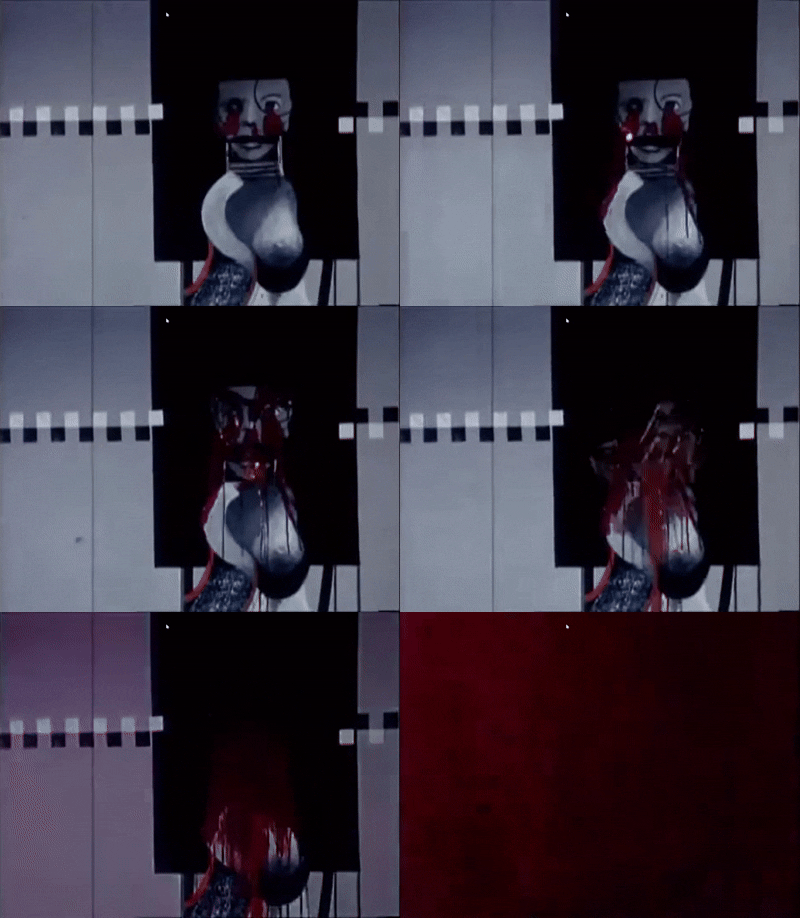
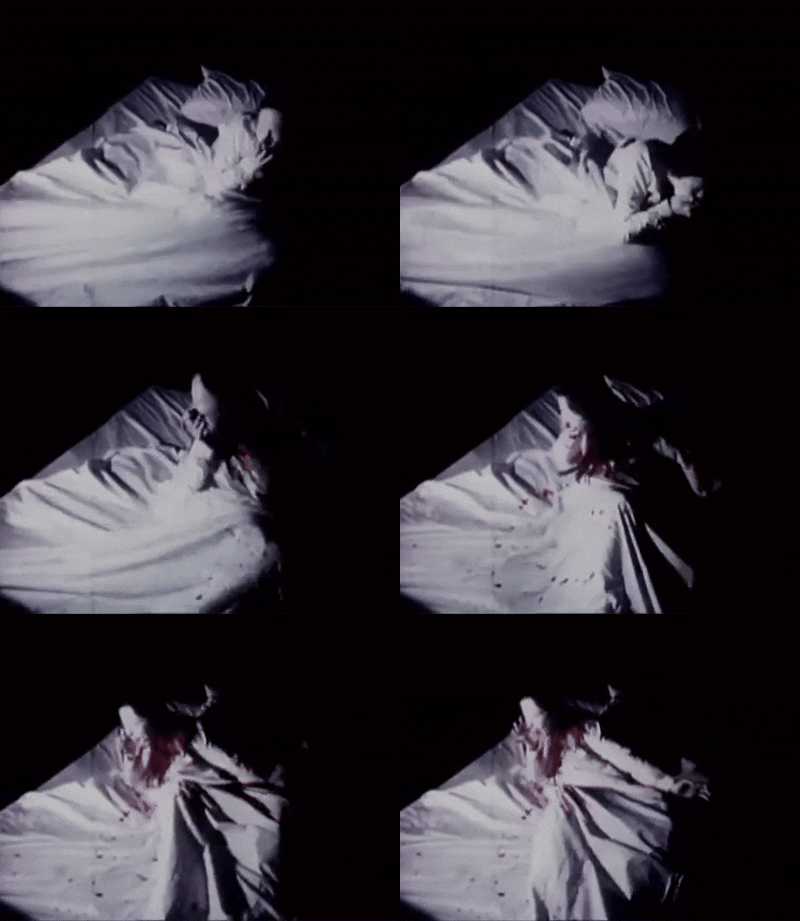
Stills from the short film «Alphabet» (1968), directed by David Lynch
III. Temporal Perception Glitch
In Martin Arnold’s film, Passage à l’acte (1993), anxiety emerges from the strange manipulation of time. The core material is a snippet from a classic Hollywood film: a routine scene of a family breakfast, nothing suspicious at first. But as this material is processed, it transforms from the mundane and familiar into a source of tension.
The primary technique involves working with rhythm and duration, and the looping of specific temporal segments. The same short fragment is repeated multiple times, fragmented. Movements begin to become «stuck"—characters seem to twitch, rewind, and get trapped in the same action. Formally, the scene continues, but these repetitions stretch it out, making it appear unnatural. Ordinary gestures—picking up a cup, turning one’s head—are distorted into something strange, almost mechanical.
Stills from the film «Passage à l’acte» (1993), directed by Martin Arnold
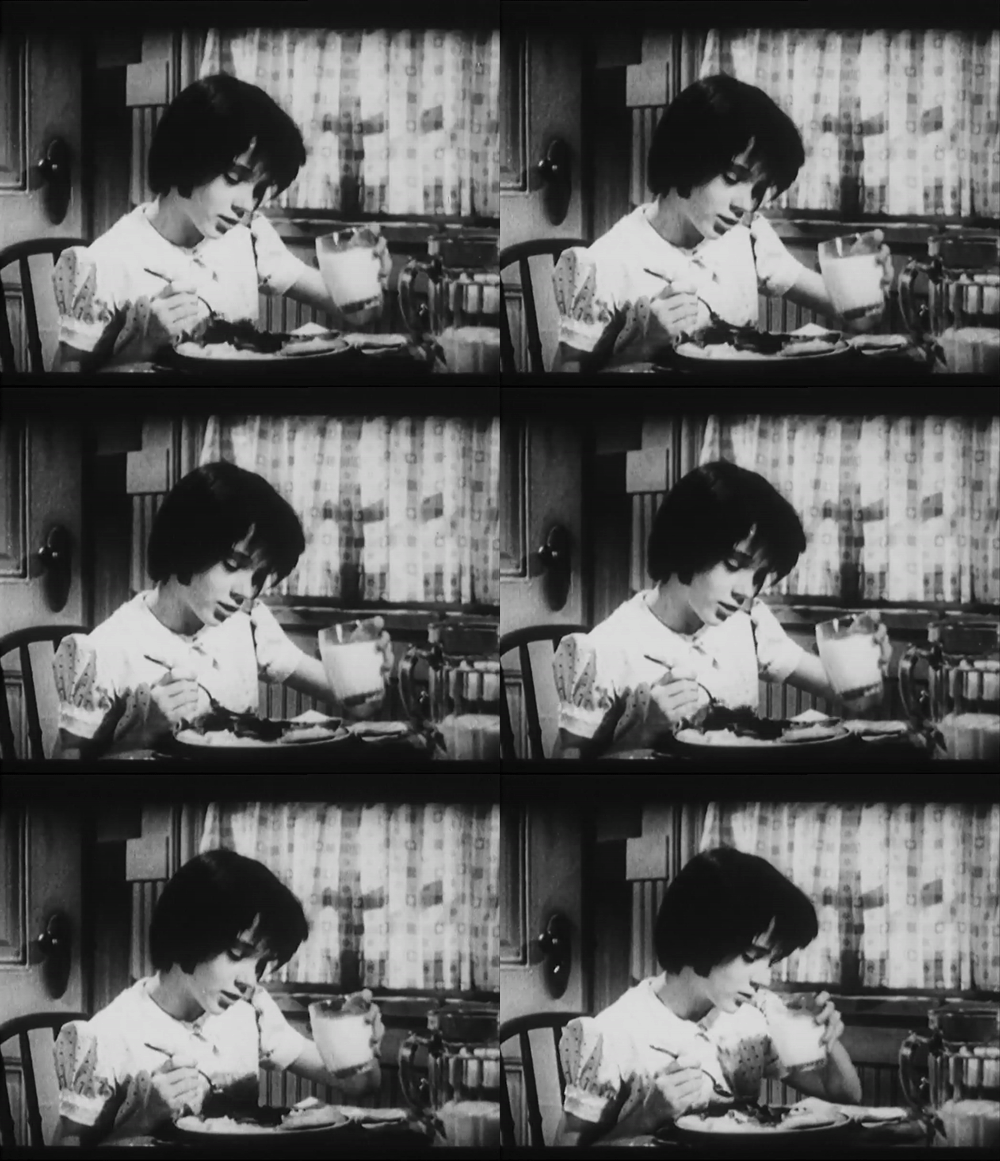
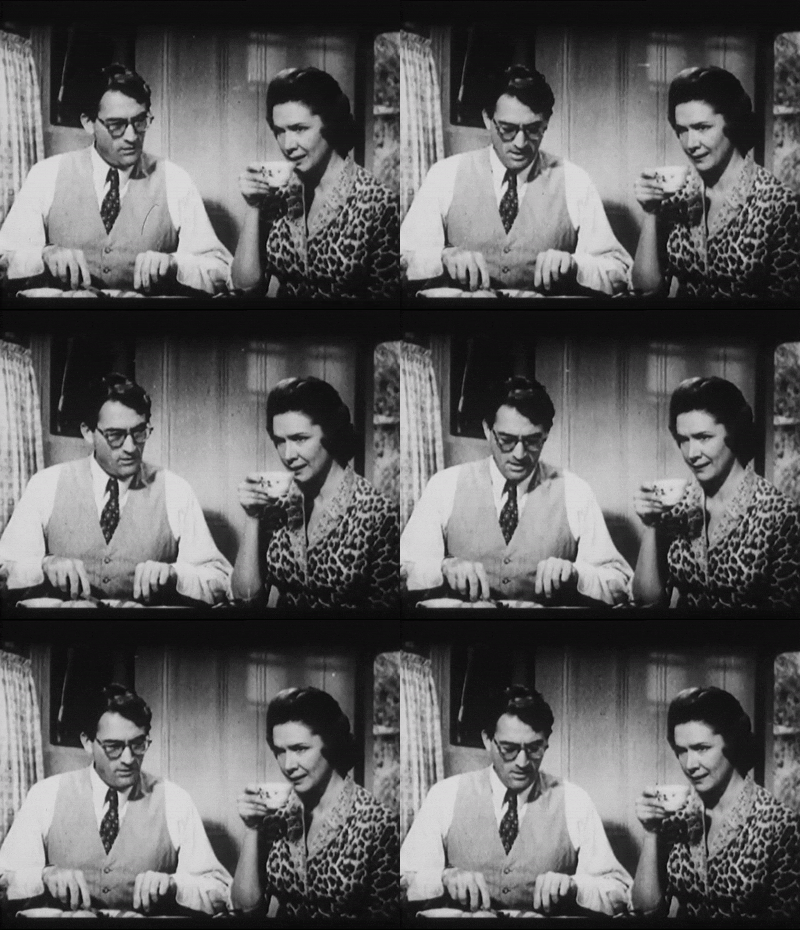
Stills from the film «Passage à l’acte» (1993), directed by Martin Arnold