Avant-garde is a comprehensive term for artistic movements that emerged in Europe at the turn of the 19th and 20th centuries, seeking innovative approaches and content while expressing a protest against established norms. This period profoundly influenced the development of modern art.
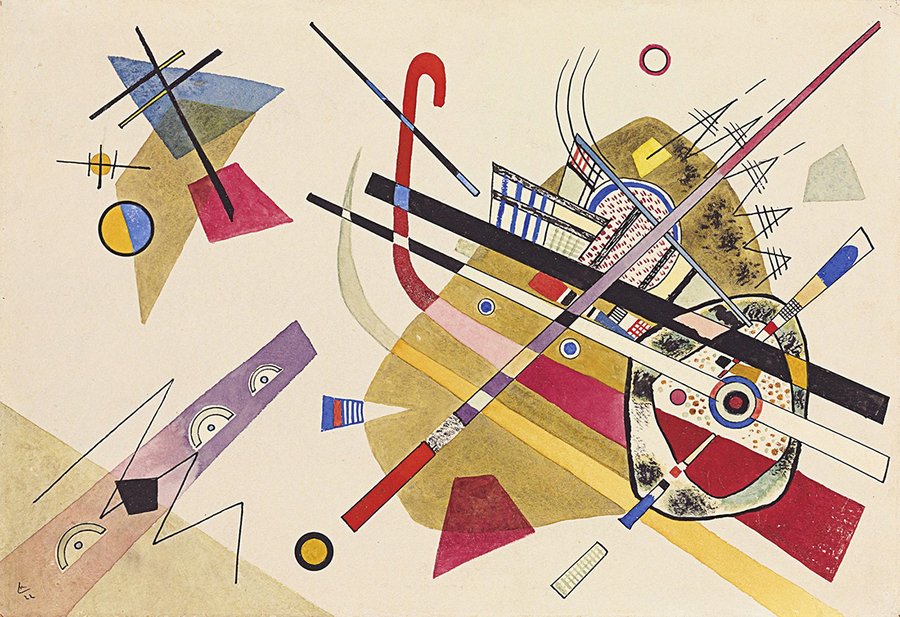
Wassily Kandinsky, Composition VIII. 1923. Canvas, oil. Solomon R. Guggenheim Museum, New York.
The choice of topic for this visual study is driven by the uniqueness of the 1920s–1930s period—a time when alternative paths for the development of animation were being formed.
Artists, in their pursuit of new directions for animation art, embarked on experiments and made numerous discoveries.
This period presents a unique opportunity to explore alternative approaches to animation, diverging from those dominant at the time. Examining this field broadens the understanding of animation’s potential as an artistic medium capable of expressing diverse ideas and emotions. European avant-garde animation, in contrast to the commercial American animation exemplified by studios like Disney and Fleischer, has been explored less.
European animation avant-garde of the 1920s and 1930s, intentionally distancing itself from the commercial and realistic approach of American animation, formed its own unique artistic language built on exploring the possibilities of abstract expression, experimenting with visual techniques, and striving for the fusion of the arts.
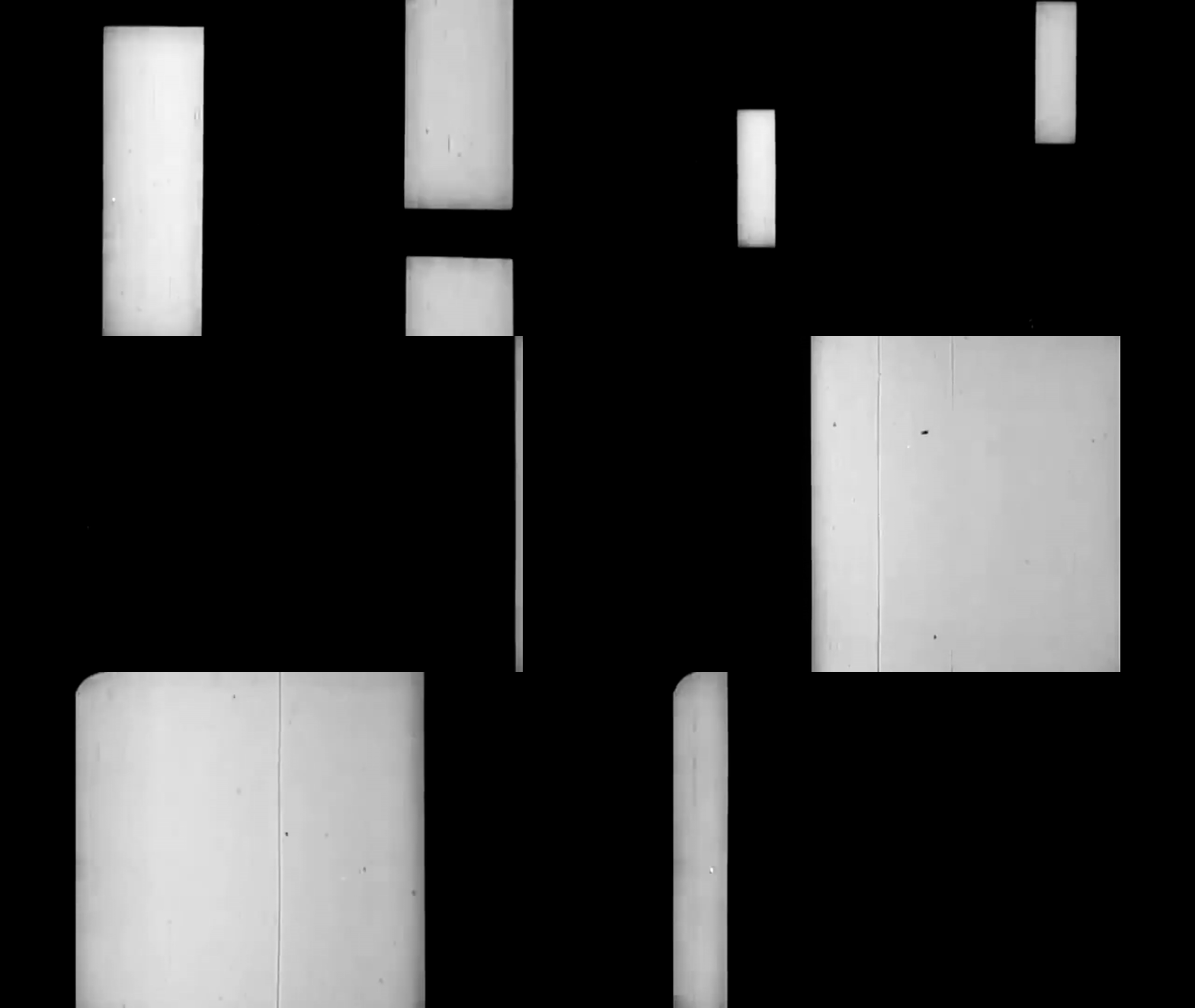
Rhythm 21, 1921, Hans Richter
This language significantly influenced the development of experimental animation and independent cinema, demonstrating that animation could be not merely entertainment, but a high art form.
A Night on Bald Mountain, 1933, Alexander Alexandrovich and Claire Parker
This study is centered on the visual analysis of animators' works. The animated pieces selected from each artist’s oeuvre were chosen based on how effectively they reflect the key characteristics of the avant-garde style: abstraction, experimentation with form and materiality, interdisciplinary fusion, and the use of innovative techniques. This approach allows for a tracing of the avant-garde’s visual language, the identification of commonalities and divergences among artists and techniques, and an assessment of their contribution to the development of animation art.
Context and Historical Background
During the period between the two World Wars, the world of art underwent numerous transformations. New art movements emerged, such as Dadaism, Surrealism, and Constructivism. Each movement sought to discover new forms of artistic expression.
Kurt Schwitters, New Merz Picture, 1931, Art House Galleries, Amsterdam.
These changes also affected animation. While Hollywood focused on commercial animation, European avant-garde artists saw it as a form of high art. They intentionally rejected realism and narrative, focusing instead on experiments with abstraction, rhythm, and movement.
Lotte Reininger: Silhouette Magic
The Adventures of Prince Achmed, 1926, Lotte Reiniger
Lotte Reiniger pioneered silhouette animation. One of her most famous works, «The Adventures of Prince Ahmed, ” is a fairy tale created using cut-out cardboard silhouettes. Despite the limitations of silhouette technique, Lotte Reiniger created complex, detailed visuals and dynamic scenes in her work.
The Adventures of Prince Achmed, 1926, Lotte Reiniger
Rainergger employs complex compositions, creating an illusion of depth and space despite the flatness of the silhouettes.
The Adventures of Prince Achmed, 1926, by Lotte Reiniger
The Adventures of Prince Achmed, 1926, Lotte Reiniger
Abstract Symphonies
Hans Richter and Viking Eggeling also experimented with abstract animation.
Rhythm 21, 1921, Hans Richter
Richter was a German avant-garde artist. The main «characters» in his animated film, «Rhythmus 21, ” are rectangles and squares in white, black, and gray. The geometric shapes move dynamically, shrinking, expanding, and overlapping one another in a rhythmic sequence.
Rhythm 21, 1921, Hans Richter
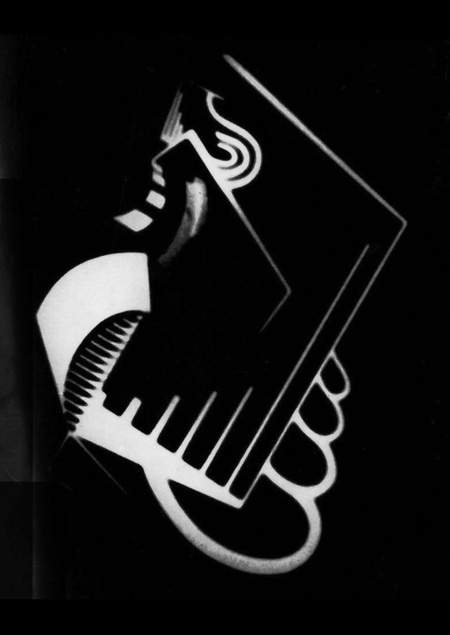
Viking Eggeling was a Swedish avant-garde artist. His film, «Symphonie Diagonale,» consists of intricate geometric shapes that progressively transform on screen. The entire piece was shot as stop-motion animation, with the artist meticulously moving paper cutouts frame by frame.
Sinfonia Diagonale, 1924, Viking Eggeling
Symphonie Diagonale, 1924, Viking Eggeling
Both animated films consist of geometric shapes, lines, and fields of color. The animations are black and white, and rhythm is a key element. The geometric shapes move and transform in accordance with a specific rhythm, creating a sense of visual music. The arrangement of the figures establishes visual balance.