The traditional Javanese costume is not a static museum exhibit, but a living visual system. This study traces the evolution of Javanese attire—from the strict courtly canons and sacred batik patterns to the bold experiments of contemporary high fashion. The main idea of the project is to show how fundamental national elements retain their cultural identity and strength while adapting to the aesthetics of the 21st century.
Historical Origins
This section explores the pure forms of traditional Javanese national costume, which originated within the context of court culture. The analysis focuses on the traditional kebaya kutubaru blouse and the geometry of the kain jarik textile draping. These elements are examined not merely as clothing, but as enduring visual archetypes that shape the unique architectonics and plasticity of the silhouette.
The classic Kebaya Kutubaru blouse with a central chest insert forms a sophisticated and refined feminine silhouette, blending the modesty of court etiquette with the drape of fine fabric.
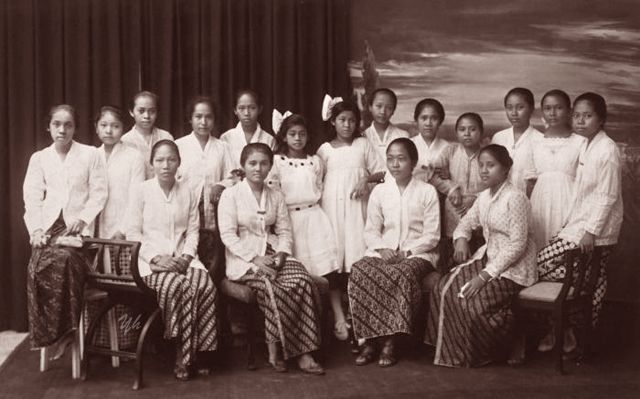
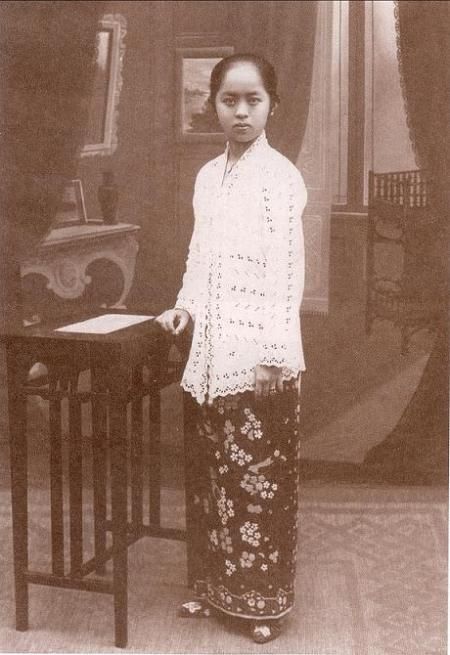
The traditional chemise showcases the pure architecture of the garment, where the dense spiral draping of the single piece of fabric around the torso emphasizes the body’s natural lines without complex tailoring.
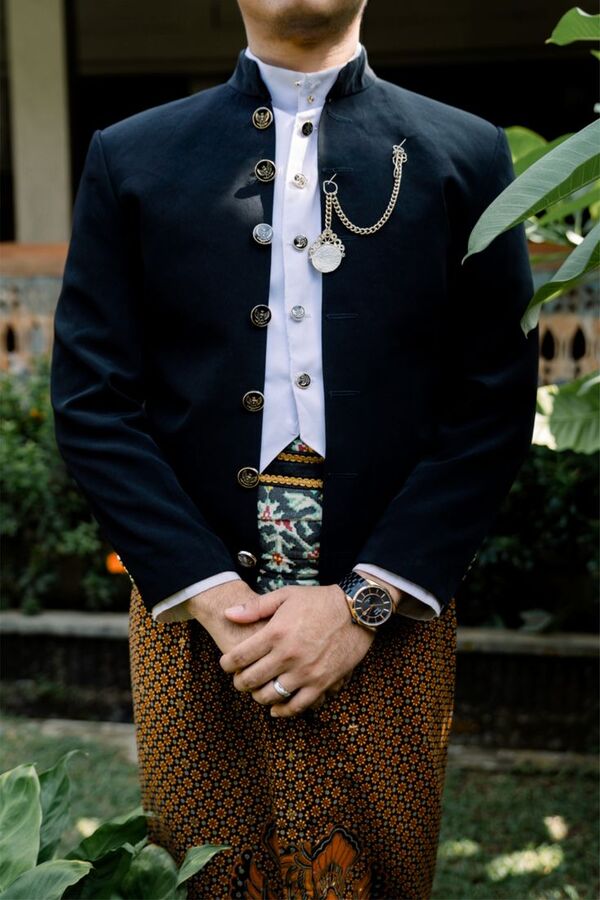
The men’s ensemble—featuring a tailored, capless jacket and rigorous draping—embody the restrained dignity and social hierarchy of Javanese aristocracy.
Semiotics of Batik
In Javanese culture, batik transcends mere decorative textile; it functions as a complex visual language and a marker of social status. Sacred motifs—such as the diagonal pattern of parang rusak or the wings of the mythical sawat bird—were historically reserved exclusively for members of the royal family. The geometry and rhythm of these motifs transmit the philosophy of power, spiritual protection, and the harmony of the cosmos.
The continuous diagonal lines of the Parang Rusak pattern symbolize the untamed power of ocean waves, inner will, and the spiritual fortitude of the ruler.
The motif of the satvat, depicting the wings of the mythical bird Garuda, endows the costume with a sacred protective function and underscores the divine legitimacy of power.