Navigation Menu
Research Question and Hypothesis
The Industrial World Becomes Visible
Human Being within the Industrial City
Trade and Unemployment
Who Has the Right to Represent Paris
New Perspectives and the Struggle for the Image of the Era
Conclusion
Bibliography
Image Sources
Research Question and Hypothesis
Around the turn of the 1920s and 1930s, photographic publications about France continually turned to themes of metallic structure, the working body, transportation, commerce, and urban crowds. The recurrence of these motifs allows us to pose a question about the general issue of the era. Humanity finds itself within an environment being transformed by machinery, the organization of production, and the mass circulation of goods and images. The economic crisis makes it particularly evident that technological advancement does not guarantee employment or a stable position for everyone.This study compares Germaine Krull’s Métal (1928), Moholy-Nagy’s Paris (1931), Ilya Ehrenburg’s My Paris designed by El Lissitzky (1933), and La France travaille with the photographs of François Collard (1932–1934). The research question is: how did industrial modernization and the crises of the late 1920s–1930s create a common set of problems across these four photo-books, and how does a new photographic culture allow for different portrayals of humanity’s place in this world?Hypothesis: The four projects share a common historical and cultural foundation: the restructuring of the relationship between human beings, labor, and technology during industrial modernization. The economic and political crises of the early 1930s intensify the question of whether technological development aligns with societal well-being. The new photographic culture provides the authors with methods to explore this issue: unconventional angles, fragments, close-ups, montage, and the integration of text with imagery. The differences between the books illustrate which aspects of the overall historical situation become visible within each publishing project.
Next, we can distinguish the different phases. «Métal» was released in 1928, prior to the 1929 global crisis, reflecting the process of modernization. The French crisis deepened in the early 1930s; unemployment became the subject of a social mobilization, including the «Hunger Marches» of 1932–1933.
The Industrial World Becomes Visible
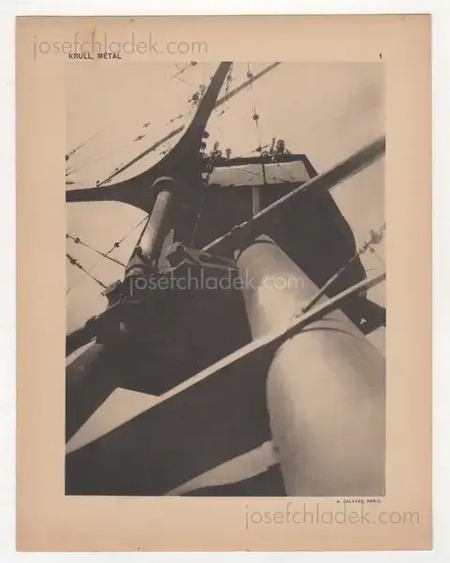
The large industrial structures of Krull and the architectural-transport overlays of Moi Ver define an environment shaped by technological action. Pipes, supports, facades, and automobiles form a dense system of directions. In Krull’s work, a single object expands to the size of a visual world; in Moi Ver’s, several urban spaces are incorporated into one image.
The historical connection runs through the industrial modernization of the 1920s. The expansion of the automotive industry and the shift in production methods were accompanied by new ways of selling and advertising [8].
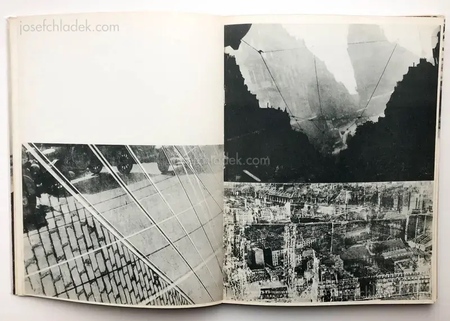
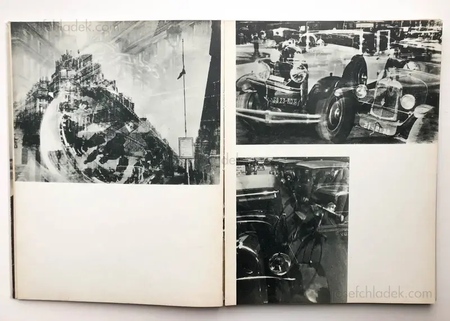
Left: My Version, «Paris.» 1931. Architecture and the intersection of spaces. Right: My Version, «Paris.» 1931. Transportation and urban movement.
Left: Germen Krull. «Metal.» 1928. Eiffel Tower. View through metallic supports. Center: Germen Krull. «Metal.» 1928. Eiffel Tower. Intersection of supports. Right: Germen Krull. «Metal.» 1928. Eiffel Tower. Metallic supports and the lower platform.
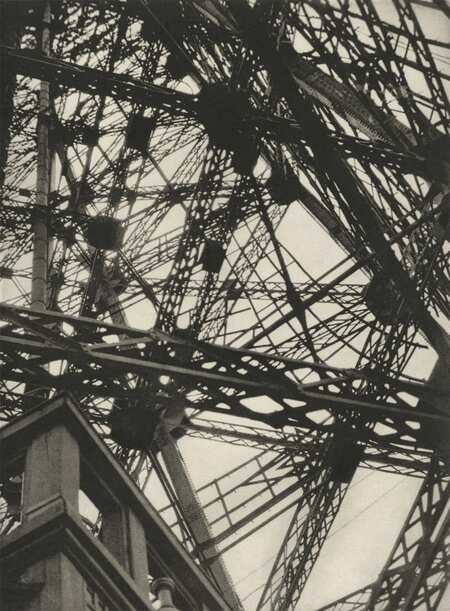
On these sheets, the Eiffel Tower appears through the intersections of its metal framework. The association of these images with this motif is based on the research of Kim Sichel [11]. The recognizable monument can be viewed as a disorienting space: the gaze follows the supports, loses the overall silhouette, and then reassembles the structure.
Thus, the cultural sign of Paris becomes the subject of technical vision. For our hypothesis, it is significant that modernization changes the very ways we see an existing object. The perspective transforms a city landmark into an experience of scale, weight, and interconnected parts.
Left: Germen Krull. «Métal.» 1928. Toothed Mechanism. Center: Germen Krull. «Métal.» 1928. Instrument and Part Geometry. Right: Germen Krull. «Métal.» 1928. Mechanism with Gear Transmission System.
The circle approaches gears and instruments. They can be compared by how the parts engage and how one component transmits motion to another. Complex mechanisms themselves become works of art.
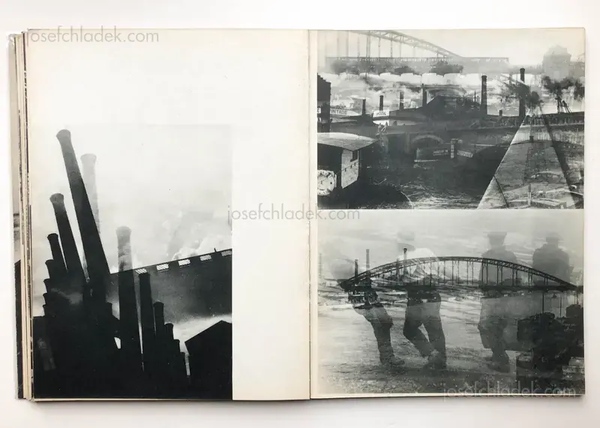
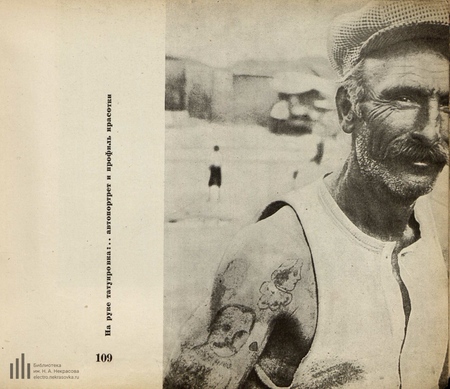
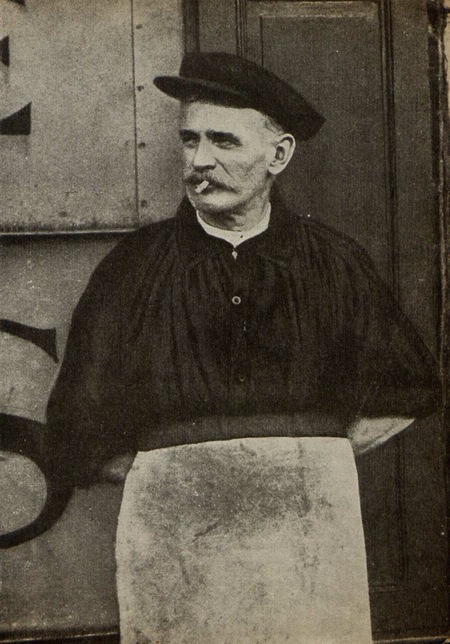
Left: My Version, «Paris.» 1931. Industrial environment and human figures. Right: Ilya Erenburg, El Lissitzky (design). «My Paris.» 1933. Worker portrait.
In My World, figures coexist with pipes and bridges, while in Krull, metal supports nearly fill the frame. In Erenburg, the proximity to the worker is such that his posture and tattoo are visible. The shift in scale changes the object of observation: from the urban environment to the experience of a specific individual.
The Human Within the Industrial City
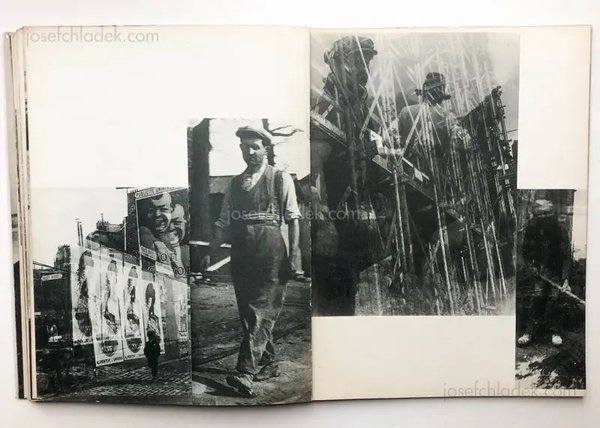
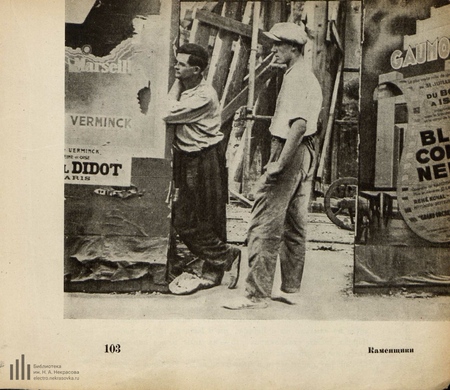
Left: My Version, «Paris.» 1931. Worker in the system of overlaid images. Right: Ilya Erenburg, El Lissitzky (design). «My Paris.» 1933. Workers on the street.
In 1926, industry employed about a third of Parisian residents who listed a profession in the census [13]. Three books depict this labor from different perspectives. My Verne places the worker amidst factory structures. Ehrenburg captures stonemasons against a wall adorned with posters, while Collar guides the reader into a workshop where one can see who is working on what.
François Coller (photographic project), Pierre Herbert (text). «La France travaille. Couture et Mode.» 1932. Cover.
François Collar (photographic project), Pierre Gerber (text). «La France travaille. Couture et Mode.» 1932. Workshop, materials, and finished garments.
François Coller (photographic project), Pierre Herbert (text). «La France travaille. Couture et Mode.» 1932. Salon and garment work.
By 1929, Paris boasted around two hundred fashion houses—about ten times more than in 1914. Sewing remained a common profession for women [13]. In the Collar issue, the finished dress is displayed alongside a photograph of seamstresses at work. Thus, the story about Parisian fashion includes the women who made these garments.
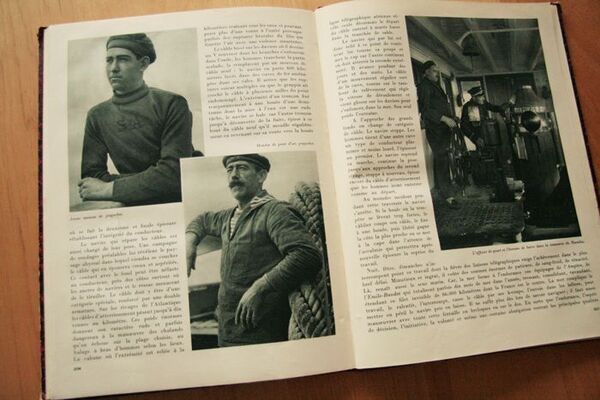
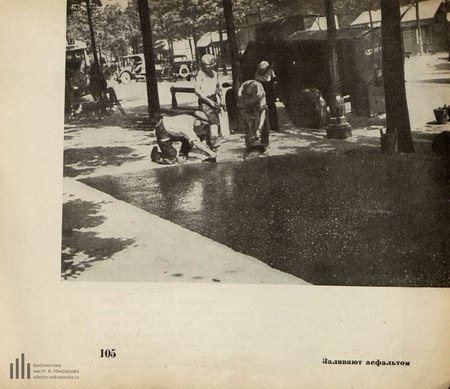
Left: François Collar (photographic project). «La France travaille. Mariniers et bateliers.» 1932–1934. Portraits and the professional environment of river workers. Right: Ilya Ehrenburg, El Lissitzky (design). «My Paris.» 1933. Street labor.
During the crisis years of 1932–1934, the publisher Horizons de France released a series detailing how the country functioned. Separate issues were dedicated to river transport, railways, and automobiles [3]. Collar’s portraits of river workers are included in a narrative about the logistics of transport. Erenburg depicts workers pouring asphalt onto the street. He showcases the labor that an passerby might overlook.
Left: My View. «Paris.» 1931. Cart and Urban Landscape. Center: My View. «Paris.» 1931. Water and Surface Rhythms. Right: My View. «Paris.» 1931. Market, Labor, and Material.
Over the decade following 1919, the number of workers at the Citroën factory on the Quai de Javel rose from 4,500 to over 31,000 [13]. In Paris, alongside the flow of automobile traffic, handcarts and manual handling of goods remained present. The automobile was changing the streets, but the city still relied on people to transport and unload goods by hand.
Trade and Unemployment
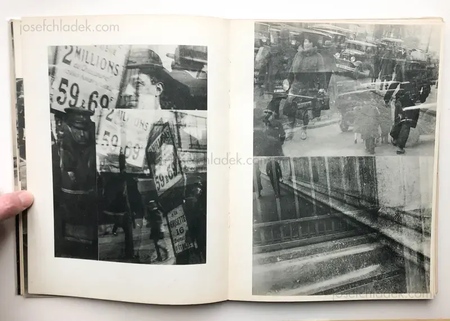
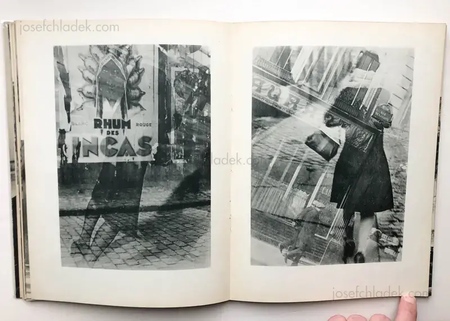
Left: My Version, «Paris.» 1931. Prices and Street Trade. Right: My Version, «Paris.» 1931. Advertisement and Cargo Transport.
Ilya Ehrenburg, El Lissitzky (design). «My Paris.» 1933. Street advertising.
In the early 1930s, prices and incomes were falling [3]. The photo by Ehrenburg shows a stall offering customers the opportunity to pre-order roast beef or steak as part of a Saturday promotion. At Moy Ver, an advertisement for rum is overlaid onto the figure of a passerby. The images illustrate how goods were advertised in the street: Ehrenburg’s sign reads as a direct address to the buyer, whereas at Moy Ver, it becomes part of the urban flow.
Ilya Ehrenburg, El Lissitzky (design). «My Paris.» 1933. Book Stalls.