Navigation
| Research Concept| Introduction| 1. The Historical Connection Between Humanity, Nature, and Play| 2. Humans as Part of the Natural Environment| 3. Human Use of Nature| 4. Limitations of Natural Resources and the Consequences of Human Decisions| 5. Comparative Analysis of Play Models| Conclusion| Bibliography
Research Concept
The research examines how board games reflect the relationship between humanity and the environment. The focus is not simply on the depiction of nature on the game board, but on how the interaction with nature is embedded within the game’s rules and mechanics.
The relevance of this topic stems from the growing view that board games are increasingly seen not just as a form of recreation, but as a tool for modeling complex societal and ecological processes. For instance, the article «Green Across the Board» (2020) by Christopher Fjellingsdal and Christian Kökner investigates the potential of using board games to discuss environmental issues and to offer a more accessible explanation of complex environmental processes [2].
The novelty of this study lies in comparing different ways of depicting human-nature interaction specifically through the structure of board games. Unlike research primarily dedicated to ecological education or specific educational games, this work concentrates on comparing game models: how commercial board games and games designed to solve ecological challenges represent humanity’s dependence on nature, the use of its resources, and the consequences of human activity.
Board games in which the interaction between humanity and nature is central to the gameplay process are selected for this study.
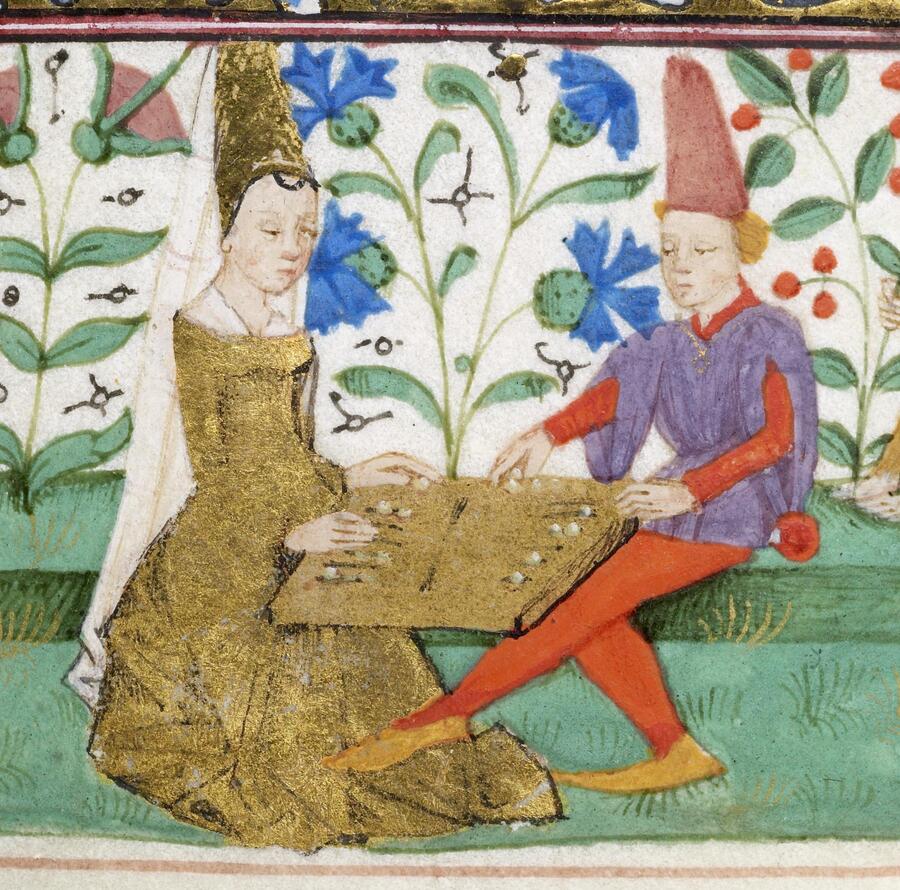
Miniature from a Medieval Hours Book, circa 1460
The research is divided into three areas: — Humans as part of the natural environment. — Human use of nature. — Resource limitations and the consequences of human decisions.
Oyen Fink’s philosophical reflections on play as a unique world with its own rules will form the theoretical basis of the study. Scientific articles on ecological modeling and the official rules of the board games under consideration are also utilized.
Angie Levine — Clifftop Weybourne
The objective of this research is to determine how board games depict the interaction between humans and nature and what perceptions of these relationships are shaped by the game rules.
Hypothesis — board games create their own models of humanity’s relationship with nature, portraying it as a source of resources, a space for exploration, or an interconnected system dependent on human decisions.
Introduction
Play is not just a way to pass free time; it is an opportunity to create a world of one’s own with its own rules and conditions. The German philosopher Eugen Fink, in his work «Oasis of Happiness: Thoughts on the Ontology of Play» (1957), examines play as an independent phenomenon of human life. In his view, the playful world exists separately from everyday reality, yet remains connected to it. Using imagination, a person creates situations and images through which they can view the surrounding world in a different way [1].
This idea can also be applied to board games. The game board often becomes a kind of miniature replica of the real world, and the rules determine how players can interact with it. Furthermore, the participant is not merely observing what is happening; they actively influence the course of events—making decisions, utilizing available resources, and confronting the consequences of their actions.
The ambient world as a game format
Gamified forms help make complex environmental processes more understandable. Instead of abstract explanations, people encounter concrete situations and can see how their decisions affect the game space [2].
This work will address human dependence on the natural environment, the utilization of its resources, and the consequences that human actions can bring about.
1. The Historical Connection Between Humans, Nature, and Play
The connection between humanity and nature was reflected in games long before the advent of modern tabletop strategy. In ancient times, game imagery and mechanics were often linked to how people conceptualized the structure of the world around them, explained natural phenomena, and organized their daily lives.
For instance, in Ancient Egypt, there was a game called Mehen, whose playing board was shaped like a coiled serpent [7]. This image was associated with a deity of the same name, which, according to Egyptian mythology, protected the sun god Ra during his nightly journey [8]. In this game, the serpent image was not merely a decorative element; it became part of the representation of the world’s order, as only by reaching the serpent’s head could a player join Ra in the afterlife. Nature was perceived as something possessing an intrinsic power. The game space reproduced less the actual surrounding environment and more how nature itself could influence the game and human life.

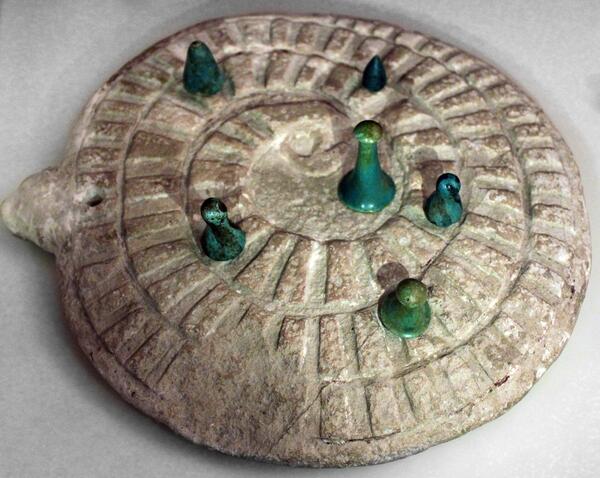
The game board for Mehen, Egypt
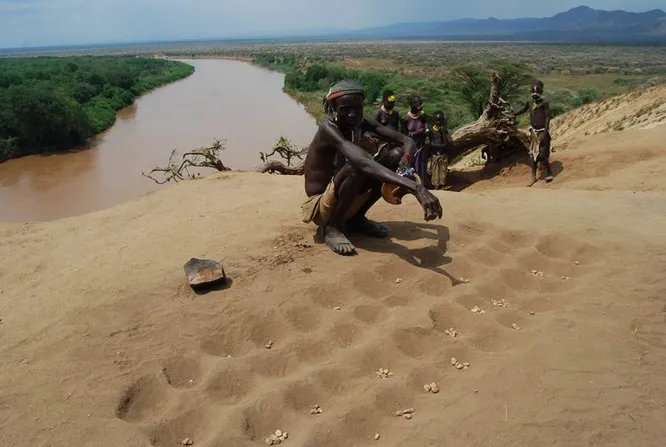
Another characteristic connection with nature can be found in Mancala family games. Their mechanics are built around moving seeds or pebbles between the indentations of the game board. The process itself resembles sowing: the player distributes the game elements, moves them, and aims to gain an advantage through careful calculation. In Asia, girls play this game because it is believed to teach household management [9]. Here, the connection to nature manifests not so much through mythological imagery, but through the replication of actions associated with agriculture. Natural materials become part of the game, and the game’s mechanics themselves evoke the processes of cultivating and distributing a harvest.
Mancala Game Board, Kenya
These examples illustrate two different ways in which human relationships with the environment are reflected. In one case, the game conveys conceptions of nature as a part of the world’s structure; in the other, it reproduces practical human interaction with it. In contemporary board games, this connection develops further: the environment becomes a game system where players can explore territories, utilize resources, transform natural conditions, and confront the consequences of their own decisions.
This shift is particularly significant. While ancient games portrayed the relationship with nature through mythological figures and isolated subsistence activities, in the modern games under discussion, it becomes the foundation of the gameplay mechanics. This allows us to trace how the role of humanity changes—from a participant trying to comprehend the world to a user and transformer of natural resources.
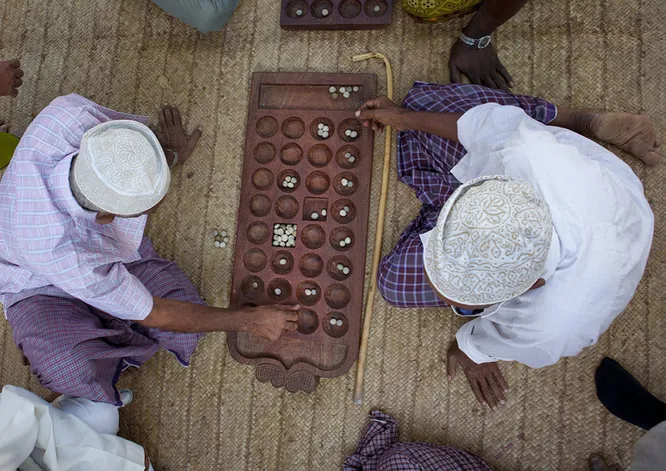
The Mancala Game Process
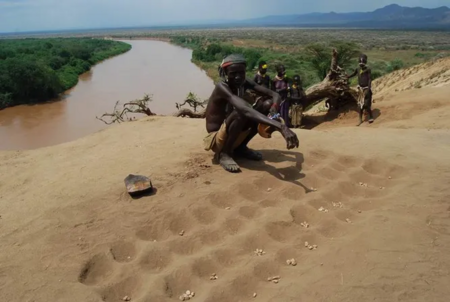
The Mancala Game Process
1. Humanity as Part of the Natural Environment
Human life is largely dependent on environmental conditions. Climate, topography, water availability, and fertile land influence where people can live, what they can do, and how they develop their settlements. In board games, this type of dependency often becomes part of the core gameplay rules.
Catan Game Board
A good example is the board game Catan (1995). Its game board consists of plots with various landscape types: forests, mountains, hills, pastures, and fields. Each territory is associated with a specific resource that players acquire depending on the placement of their settlements and the outcome of the dice roll [5]. This means that the development of a settlement is largely determined by the natural areas adjacent to it.The player must consider not only their own needs but also the location of other plots. It is impossible to secure all necessary resources independently, so players must seek suitable territories, negotiate with other participants, or compete against them. Consequently, the natural conditions become one of the main factors influencing the game strategy.
Catan Game Versions
However, the depiction of nature in Catan is quite abstract. The game hardly accounts for real natural processes, ecosystem characteristics, or landscape changes. Each territory is effectively represented as a source of a specific resource. Therefore, the game illustrates humanity’s economic dependence on nature more than the complexity of its structure.
2. Human Interaction with Nature
Beyond environmental dependence, a crucial aspect of the relationship between humanity and nature is the utilization of its resources. People explore new territories, cultivate the land, grow plants, raise animals, and extract necessary materials. In many board games, these very actions form the foundation of the gameplay.
This is especially evident in the game Agricola (2007), which focuses on agricultural development. Players must manage a small farm: till the soil, grow grains and vegetables, raise livestock, and gradually expand their dwelling. At the same time, players must strategically allocate actions and ensure there are enough resources to meet the family’s needs [6].